
For IB students sitting exams in May 2028 (started DP1 in August 2026).
The best May 2028 IB economics study advice is to learn each topic through a repeating cycle: concise notes, retrieval, diagram practice, applied questions, feedback, and correction. Begin that cycle in DP1, then increase timed exam practice gradually so that technique develops alongside knowledge rather than being added at the end.
Economics can initially feel like a subject built from definitions. Yet marks are usually earned through connections: how a change moves through a model, who gains or loses, what assumptions matter, and why a policy may work differently across circumstances. Knowing the definition of indirect taxation is useful. Explaining its effects precisely, with a correctly labelled diagram and balanced evaluation, is the deeper skill.
This guide explains how May 2028 students should make notes, what to practise, how often to practise it, which materials fit the current syllabus, and where SL and HL preparation diverge.
Your IB Economics 2028 study checklist
A reliable plan should include:
- syllabus-mapped notes for microeconomics, macroeconomics and the global economy
- regular retrieval of definitions, assumptions and causal chains
- diagrams drawn from memory, not copied while looking at notes
- current real-world examples connected to specific syllabus points
- short responses before full essays
- timed data-response practice
- HL quantitative and policy practice where applicable
- an error log that turns feedback into the next study task
- careful preparation for the internal assessment portfolio
RevisionDojo brings these elements together in its IB Economics resource hub, where students can move between Study Notes, Flashcards, the Questionbank, Model Essays, grading tools and Predicted Papers without losing the syllabus thread.
Which syllabus applies in May 2028?
As of 21 October 2026, the IB's public Economics page identifies the course first assessed in 2022 as the current SL and HL syllabus. Its published structure covers introduction to economics, microeconomics, macroeconomics and the global economy, using economic models, real-world issues and key concepts.
The official IB Economics curriculum page does not currently show a replacement Economics course beginning with the May 2028 examination session. Students entering DP1 in August 2026 should therefore study the current guide unless their school receives a later official update. Your teacher and programme coordinator remain the decisive sources because schools have access to official programme documentation and announcements.
The detailed May 2028 examination timetable has not yet been published on the IB's public exam-schedule page. Final session dates, local start times, authorized materials and administrative instructions should not be guessed. Check them with your coordinator when the IB releases the relevant documentation.
Under the currently published assessment model, SL has Paper 1, Paper 2 and the internal assessment portfolio. HL has those components plus Paper 3, the policy paper. The published subject briefs give Paper 1 as 1 hour 15 minutes and Paper 2 as 1 hour 45 minutes at both levels; HL Paper 3 is also 1 hour 45 minutes. Confirm these arrangements again during DP2 in case the IB issues session-specific changes.
Make notes that prepare you to answer questions
A beautiful notebook can create the feeling of progress while quietly avoiding the work that produces it. Good economics notes are not compressed textbooks. They are tools for reconstructing an argument under pressure.
For each subtopic, create a compact page with six elements:
- essential definitions in precise economic language
- assumptions behind the relevant model
- one diagram drawn and labelled correctly
- a causal chain using arrows or short linked statements
- one current real-world example with enough context to use accurately
- evaluation prompts, such as time period, stakeholder effects, elasticity, magnitude and implementation constraints
For example, notes on a price ceiling should not stop at a definition and diagram. They should trace the movement from the controlled price to quantity demanded, quantity supplied, shortage, possible non-price allocation and unintended consequences. They should also identify conditions under which those consequences may be larger or smaller.
Use the IB Economics Study Notes to check coverage, then close them and reproduce the explanation yourself. The Economics Flashcards are better suited to definitions, relationships and quick retrieval than to learning complete essays. AI Chat can clarify a stubborn concept, but verify explanations against your course materials and convert the answer into something you can reproduce independently.
What to practise and how often
Frequency matters because economics contains several related but distinct skills. A student who writes only essays may neglect calculations and diagrams. A student who memorizes diagrams may struggle to interpret an unfamiliar article.
During DP1
After each lesson, spend 15-20 minutes reducing the material into your topic-page format. Complete two focused sessions each week, each lasting roughly 45-60 minutes. One can cover retrieval and diagrams; the other can cover a short response, calculation or applied question.
Draw 3-5 relevant diagrams from memory each week. Practise one analytical paragraph weekly and one longer response every two weeks once your teacher has introduced the necessary structure. The purpose is not speed yet. It is learning what a complete explanation looks like.
From the start of DP2
Keep weekly retrieval, but increase application. Complete one timed section each week, alternate between Paper 1-style extended responses and Paper 2-style data response, and review every answer against the mark guidance or teacher feedback. HL students should add regular Paper 3 calculations and policy analysis.
In the final 8-10 weeks
Move towards one full timed component each week, while protecting time for correction. A completed mock that is never analysed has limited value. Record every weakness as a specific action, such as “label equilibrium price and quantity,” “show both sides of the welfare effect,” or “evaluate using the information in the extract.”
The IB Economics Questionbank supports focused practice by topic, while Economics Model Essays can help you compare structure and depth after attempting a response. RevisionDojo's grading tools and Economics Essay Marker can provide another feedback layer, but teacher judgment should remain central.
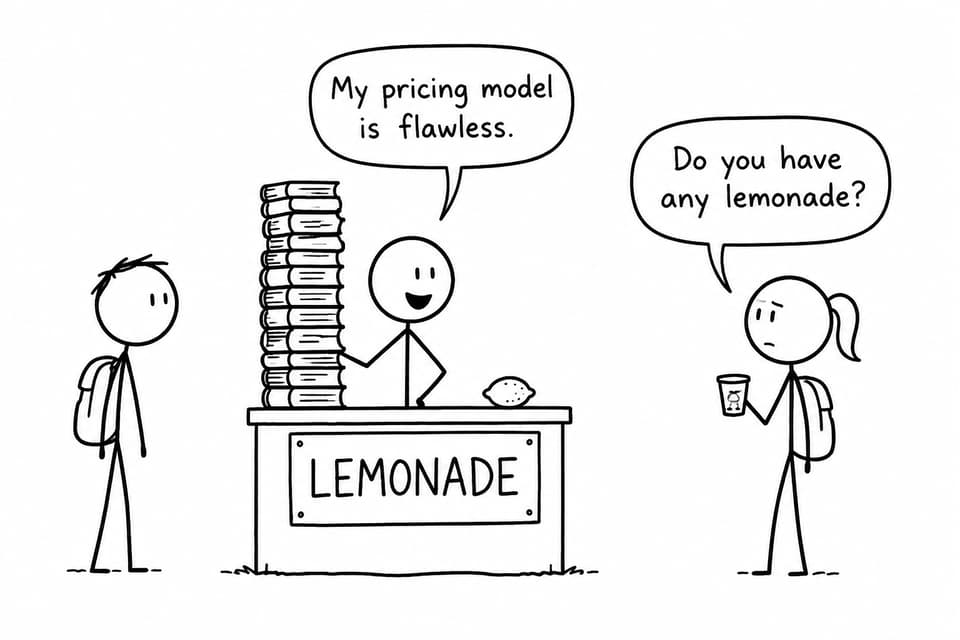
An economic model is useful only when it remains connected to the situation it is meant to explain.
Choose practice materials that match the syllabus
The safest sequence is simple. Start with your school's current IB guide and course outline. Use official specimen materials and teacher-authorized questions to understand the assessment format. Then use syllabus-aligned practice platforms to build volume without drifting into irrelevant content.
RevisionDojo's topic-by-topic Economics revision guide helps organize study around the current units. The Questionbank is useful for isolating a weakness, while Mock Exams test whether several skills hold together under time pressure. Economics Predicted Papers can provide additional simulation, but no prediction resource can guarantee what will appear in May 2028.
For the internal assessment, use your teacher's instructions and the official criteria. Under the currently published rules, both SL and HL students prepare three commentaries of no more than 800 words each, based on articles from three different sources. The commentaries cover different syllabus units other than the introductory unit and apply different key concepts. Reconfirm these requirements before submission, particularly article dates, documentation and school deadlines.
RevisionDojo's Coursework Library can help you observe organization and criterion awareness. It should be used to understand standards, never to copy wording, analysis or examples. Tutors can also help diagnose why a response is underdeveloped, especially when the student has already attempted it.
Common habits that lose Economics marks
Answering the topic instead of the command term
A student may know everything about inflation yet fail to evaluate an anti-inflation policy. Circle the command term and identify what the answer must do before writing. “Explain,” “discuss” and “evaluate” require different depth and balance.
Treating diagrams as decoration
Every axis, curve, equilibrium and shift should be clearly labelled. Refer to the diagram in the written analysis and explain the movement step by step. A diagram without an accompanying chain of reasoning rarely carries the argument by itself.
Using vague examples
“Taxes were used in Europe” is too broad to support analysis. Record the country or economy, policy, relevant market or objective, approximate period and economic connection. Avoid memorizing numbers unless you can source and use them accurately.
Evaluating through memorized phrases
Writing “it depends on the time period” is not meaningful evaluation until you explain why. Connect the time period to lags, adjustment, expectations or the policy mechanism. The same principle applies to elasticity, stakeholder effects and unintended consequences.
Failing to learn from completed work
The solution is an error log with three columns: what went wrong, why it happened, and what you will practise next. RevisionDojo's AI grading can make feedback faster, but the real gain comes when feedback changes the next answer.
How HL and SL preparation should differ
SL and HL students share the central habit of applying theory to real situations, but HL requires greater breadth and quantitative confidence. HL students study additional material within the syllabus and sit Paper 3, which emphasizes policy and numerical work. Their preparation should therefore include calculations, interpretation of results and policy recommendations alongside essays and data response.
SL students should not mistake fewer assessment demands for permission to revise superficially. Paper 2 still requires accurate use of extracts, diagrams and economic reasoning. The IA task is broadly shared across levels, although its contribution to the final subject grade differs under the current assessment model.
A sensible HL plan adds one focused quantitative session each week once the relevant material has been taught. Practise writing formulas, substituting values, showing working, applying units and interpreting the answer economically. A number without interpretation is unfinished economic reasoning.
Build a system that can survive a busy diploma
The strongest plan is rarely the most elaborate one. It is the one a student can continue during deadlines, internal assessments and difficult weeks. Keep the cycle small: retrieve, apply, receive feedback, correct, and return later.
RevisionDojo serves as the ultimate IB resource because that whole cycle can happen in one place. Study Notes and Flashcards rebuild knowledge. The Questionbank and Mock Exams develop application. Predicted Papers add realistic simulation, while AI Chat, grading tools, the Coursework Library and Tutors help students identify what to improve next.
Your specific next step is to open the RevisionDojo Economics Questionbank, choose the most recently completed syllabus topic, answer five questions without notes, and turn every error into one entry in your correction log.