
If you have ever finished a novel and felt strangely proud, and then opened a Paper 2 prompt and felt completely blank; you are not alone.
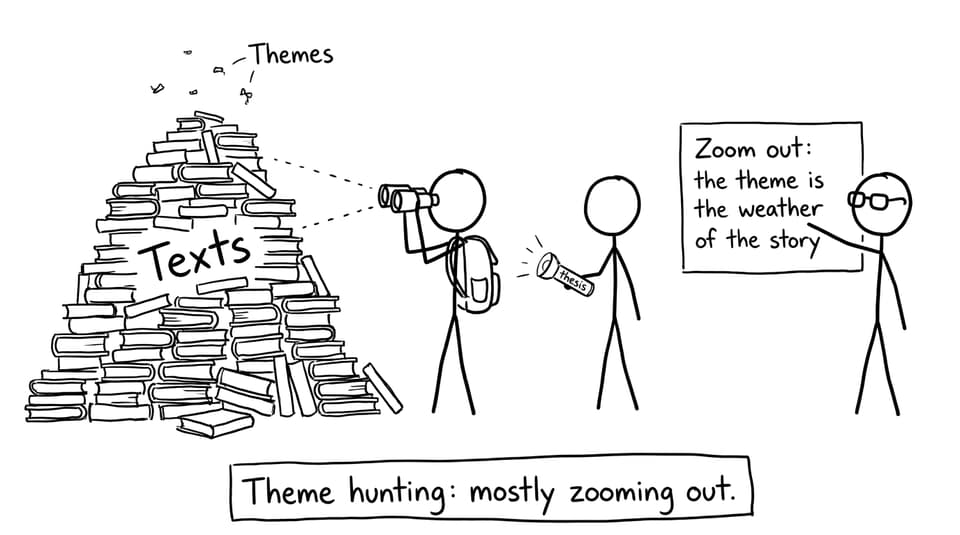
In IB English, themes are often the missing bridge between “I read the text” and “I can write something examiners reward.” A theme is the text’s repeat obsession: the idea it keeps turning over, like a coin rubbed smooth. When you can name that idea precisely and show how the writer constructs it, your paragraphs stop sounding like summaries and start sounding like analysis.
This guide breaks down the key themes in IB English Literature and gives you practical ways to turn them into thesis statements, evidence plans, and comparative angles.
A fast IB English theme checklist (before you write)
Use this quick scan when you are revising or planning an essay in IB English:
-
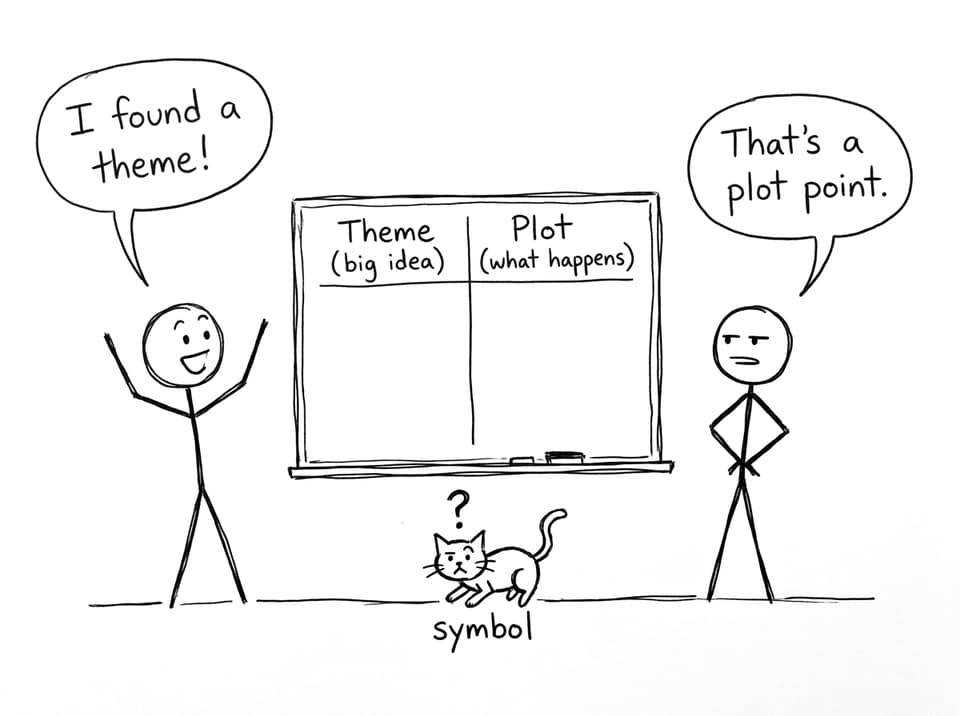
Write the theme as a claim, not a word (e.g., not “power,” but “power rots moral judgment when unchecked”).
-
Find patterns: repeated images, conflicts, settings, silence, contrasts.
-
Choose 2-3 techniques that carry the theme (structure, imagery, narration, tone, symbolism).
-
Collect “pressure moments”: turning points where the theme becomes unavoidable.
-
Link to assessment: Paper 1 needs a narrow thematic line; Paper 2 needs a comparative thematic lens.
If you want a deeper method for this, keep this open: How to Identify and Discuss Themes in IB English Texts and Define “Theme” in Literature | IB English Analysis and Essay Guide.
Key themes in IB English Literature (and how to analyze them)
Below are ten high-frequency themes that show up across the texts many students study. The goal in IB English is not to memorize a list. It is to practice turning each theme into an argument you can prove.
Identity and self-discovery in IB English
Identity is rarely stable in literature. It is negotiated: with family, class, gender roles, institutions, and private desire.
What to track
-
Moments when a character performs a role vs speaks honestly.
-
Shifts in narration (first person confession, free indirect discourse, unreliable voice).
-
Symbolic objects that represent “self” (names, clothing, mirrors, portraits).
How to turn it into a thesis
In IB English, try phrasing identity as a conflict: The text suggests identity is constructed under social pressure, not discovered in solitude.
Conflict and power in IB English
Power is not only kings and governments. It is also relationships, language, education, money, surveillance, tradition.
What to track
-
Who gets to speak, interrupt, define, label.
-
Institutional settings: courtrooms, schools, prisons, bureaucracies.
-
Dramatic irony or detached narration that exposes authority.
For a focused guide you can use directly in IB English, see Studying Power and Politics Themes in English A Texts.
Isolation and alienation in IB English
Alienation often reads like “loneliness,” but exam-level analysis shows why the isolation happens: prejudice, technology, trauma, class, migration, disability, moral difference.
What to track
-
Physical separation (rooms, borders, exile) alongside emotional separation (miscommunication, shame).
-
Motifs of windows, walls, thresholds, silence.
-
Tone: detached, clinical, fragmented, or dreamlike.
Comparative angle
In IB English Paper 2, compare whether isolation is self-chosen (protective) or imposed (punitive), and how that changes the moral message.
Love and relationships in IB English
Relationships are the laboratory where themes get tested. Love can be generous, transactional, destructive, political, inherited.
What to track
-
Dialogue patterns (who persuades, who yields, who withholds).
-
Social constraints: marriage markets, family duty, reputation.
-
Narrative distance: do we see tenderness from inside, or only its consequences?
Good essay move
Write about the cost of love: what does affection demand, erase, or expose?
Good vs evil (morality and justice) in IB English
The strongest IB English essays avoid cartoon morality. They show how texts complicate goodness: good intentions with harmful outcomes, justice delayed, cruelty normalized.
What to track
-
Ethical dilemmas and moments of rationalization.
-
Symbolic contrasts (light/dark, clean/dirty) and how they get subverted.
-
Narrative judgment: does the narrator condemn, sympathize, or refuse to decide?
If you need theme-specific practice, RevisionDojo has focused resources like Theme 2: Ethics / Morality.
Freedom and confinement in IB English
Confinement can be literal (prisons, laws) and invisible (gender roles, poverty, ideology, addiction).
What to track
-
Settings that restrict movement or perception.
-
Repeated language of rules, borders, permission, punishment.
-
Structural choices: cyclical plots, closed endings, claustrophobic scenes.
Thesis starter
In IB English, aim for a precise claim: The text frames freedom as psychological before it becomes political, showing how control begins internally.
Memory and the past in IB English
Memory is never neutral. It can be haunting, selective, rewritten, inherited.
What to track
-
Non-linear structure (flashbacks, fragmented chronology).
-
Objects and places that trigger recollection.
-
The tension between personal memory and public history.
Exam payoff
In IB English, this theme often produces strong analysis because structure itself becomes evidence.
Society and class in IB English
Class is one of the most practical engines in literature: it determines who gets education, safety, dignity, marriage options, mobility.
What to track
-
Speech markers: dialect, etiquette, formality, silence.
-
Symbols of wealth or scarcity.
-
Narratorial irony that exposes social hypocrisy.
If you are preparing for exams, pair this theme work with Preparing for IB English A: Literature Exams.
Nature and the environment in IB English
Nature can be comfort, threat, witness, or mirror. Many writers use landscape as emotional shorthand, butbut sophisticated analysis asks whether the text endorses that symbolism or questions it.
What to track
-
Pathetic fallacy vs indifferent nature.
-
Cycles and seasons as structure.
-
Environmental damage as moral commentary.
Change and transformation in IB English
Transformation is not always growth. Sometimes it is decay, disillusionment, or moral corrosion.
What to track
-
Before/after contrasts in imagery and tone.
-
Turning points where a character’s self-story collapses.
-
Endings: resolution, ambiguity, repetition, rupture.
How to turn IB English themes into exam marks
Themes only help if they become usable under time pressure. Here is a simple workflow many students build inside RevisionDojo:
-
Learn theme vocabulary quickly with Study Notes and Flashcards.
-
Convert each theme into 6-10 flexible thesis statements in a “thesis bank.”
-
Drill evidence selection using the Questionbank and timed outlines.
-
Use AI Chat to test whether your theme claim is debatable and specific.
-
Submit paragraphs to Grading tools to see if you are analyzing technique (not summarizing plot).
-
Simulate stamina with Mock Exams and Predicted Papers.
-
If you are stuck, use the Coursework Library and Tutors to see what strong analytical writing looks like.
For Paper-specific training, these are worth bookmarking:
Closing: make themes your advantage in IB English
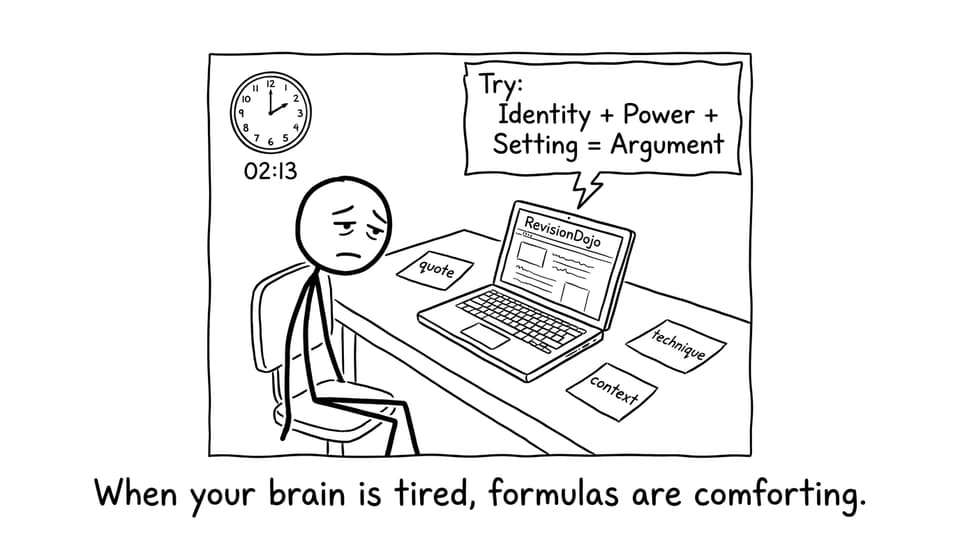
The funny thing about themes is that they were there the whole time, quietly repeating themselves while you focused on characters and chapters. Once you learn to hear that repetition, IB English gets less mysterious. You stop guessing what to write and start building an argument you can defend.
If you want a single place to turn theme knowledge into exam performance, RevisionDojo is built for it: Study Notes to clarify ideas, Flashcards to keep them active, a Questionbank to practice under exam conditions, Mock Exams and Predicted Papers to train timing, plus AI Chat, Tutors, and Grading tools to sharpen your writing.
Your next step is simple: pick one theme you see across your texts, turn it into a one-sentence claim, and test it tonight with a timed plan in IB English.