

A good story can entertain you in one sitting. A good theme can follow you for years.
That difference matters in IB English because the examiners are not grading how well you can retell events. They are grading whether you can explain what a text means and how the writer builds that meaning. Once you can define theme precisely, your Paper 1 paragraphs stop drifting, your Paper 2 comparisons sharpen, and your Individual Oral starts sounding like interpretation instead of commentary.
What does “theme” mean in IB English?
In IB English, a theme is the central idea, insight, or message a text explores about people, society, or the world. Theme is not the plot. Plot is what happens. Theme is why those events matter.
A simple way to hear the difference:
-
Plot: A student cheats and gets caught.
-
Theme: Guilt grows when integrity is treated like a shortcut, not a value.
If you want a wider bank of common ideas and how they show up across texts, pair this with Key Themes in IB English Literature.
Theme checklist (fast, exam-friendly)
Use this quick checklist whenever IB English analysis feels slippery:
-
Can I state the theme as a full claim (not a single word)?
-
Where does the text repeat an idea (conflict, image, phrase, contrast)?
-
Which character choices reveal the theme under pressure?
-
What technique actually carries the theme (imagery, structure, narration, tone)?
-
What does the writer seem to be arguing, questioning, or warning about?
For a deeper process, the steps in How to Identify and Discuss Themes in IB English Texts map neatly onto this list.
Theme vs motif vs symbol (the distinction examiners love)
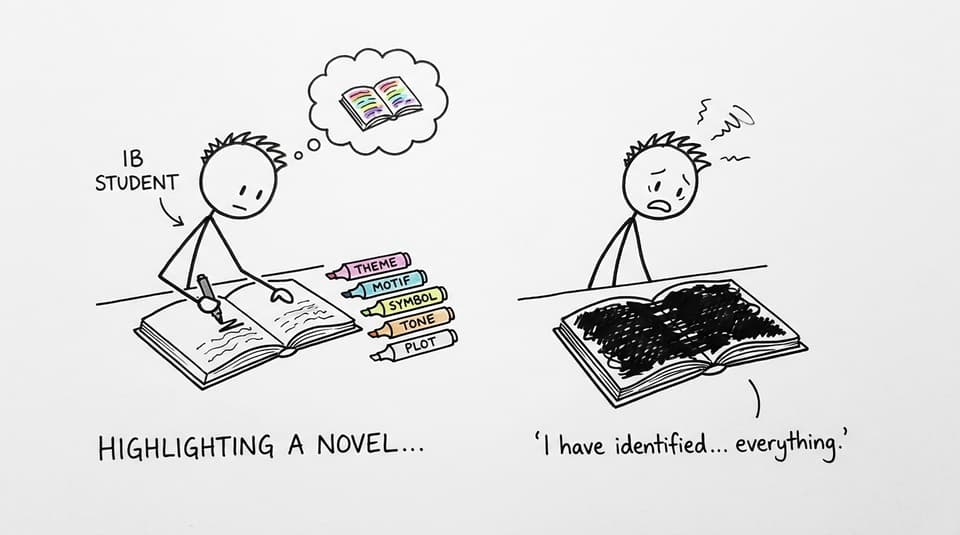
This is where many IB English responses lose marks: students label everything as “theme” and never show how meaning is constructed.
-
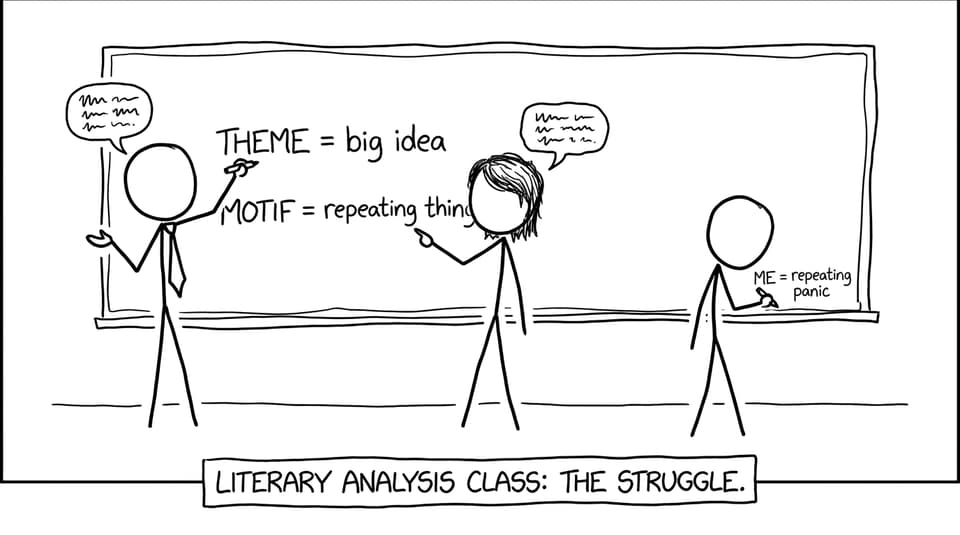
Theme: the big idea or argument (e.g., power corrodes moral judgment).
-
Motif: a recurring element that supports the theme (e.g., repeated references to disease, rot, or decay).
-
Symbol: a specific thing that carries extra meaning (e.g., a crown, a green light, a locked door).
Motifs and symbols are your evidence trail. Theme is the conclusion you earn.
How to identify theme in an IB English text
In IB English, theme is rarely announced. You find it by tracking patterns.
Start with conflict and consequence
Ask: what tension drives decisions, and what does the text reward or punish?
-
In tragedies, the consequence often reveals the warning.
-
In satire, the consequence often reveals the critique.
Track repetition (motifs, contrasts, turning points)
Repetition is the writer tapping you on the shoulder.
-
A repeated image can signal an obsession.
-
A repeated choice can show a value system collapsing.
-
A repeated contrast (light/dark, public/private) can frame a theme.
Listen to tone and perspective
Tone answers the question: how does the writer want us to feel about this?
A theme about ambition sounds different in admiration than it does in irony.
If Paper 1 is where you freeze, build the habit with Step-by-Step Guide to Revising IB English Paper 1 and the strategy breakdown in IB English Paper 1 Success Guide.
How to write theme into an IB English essay (without summarising)
A strong IB English theme paragraph usually follows a simple logic: claim -> method -> effect -> meaning.
Try this sentence frame:
The text develops the theme of [precise idea] through [technique/motif/structural choice], which [shapes reader response] and ultimately suggests [broader implication].
Example (generic but adaptable):
The recurring imagery of confinement develops the theme of identity under social control, narrowing the reader’s sense of possibility and implying that freedom begins as a private mental act.
For Paper 2 and comparisons, theme becomes even more valuable because it gives you a clean point of similarity and difference. Use Thematic Comparisons Across IB Prescribed Texts to turn “both texts show…” into “both texts argue…, but for different reasons…”.
Where theme appears in IB English assessments
Theme is not a separate skill in IB English. It is the thread that ties your analysis together.
-
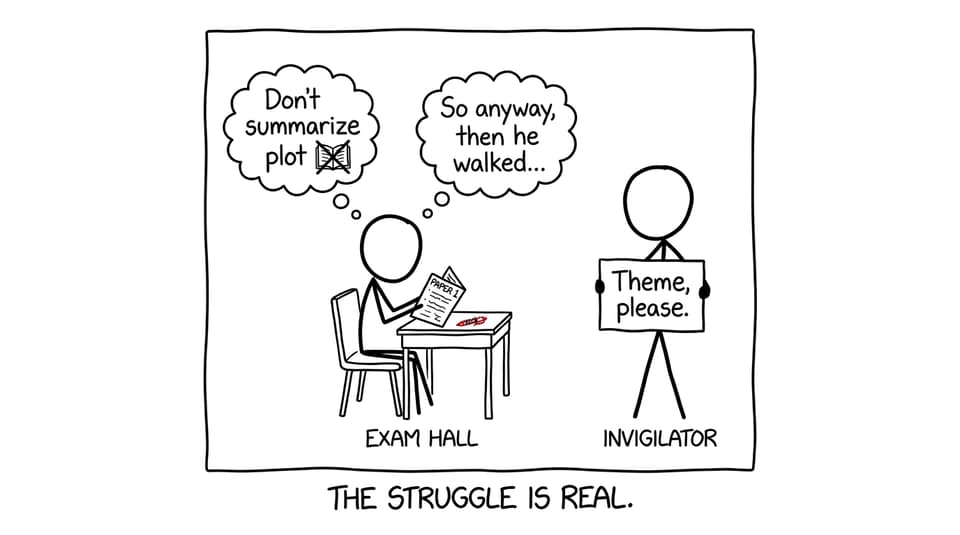
Paper 1: show how choices in language and structure communicate a theme.
-
Paper 2: compare how two works develop a shared theme differently.
-
Individual Oral (IO): connect theme to a focused global issue and authorial choices.
If you are prepping the IO, anchor your global issue in theme using How to Approach the IB English Individual Oral (IO) and the toolkit in Language A Individual Oral: How to Score Higher with AI.
Closing: turn theme into your IB English advantage
The most reliable way to improve in IB English is to stop treating theme as a vocabulary term and start treating it as your anchor. When you can define theme precisely, you naturally choose better evidence, explain technique with purpose, and write conclusions that sound earned.
If you want that feeling consistently, build your routine in IB English A Lang & Lit Resources: practise with the Questionbank and Mock Exams, refine with Grading tools, lock in concepts with Study Notes and Flashcards, and use AI Chat to pressure-test your theme statements before exam day.