
If you have ever searched for the “best” IB schools in the world, you have probably felt it: the strange comfort of a list.
A ranking turns a messy decision into a neat ladder. It suggests there is a single, sortable truth about what makes an IB school “top.” And if you are an IB student preparing for exams, it can even whisper a tempting idea: maybe the school is the secret.
But the IB is funny that way. The same assessments meet students everywhere. The real advantage is rarely a school’s name. It is the system a student runs when nobody is watching.
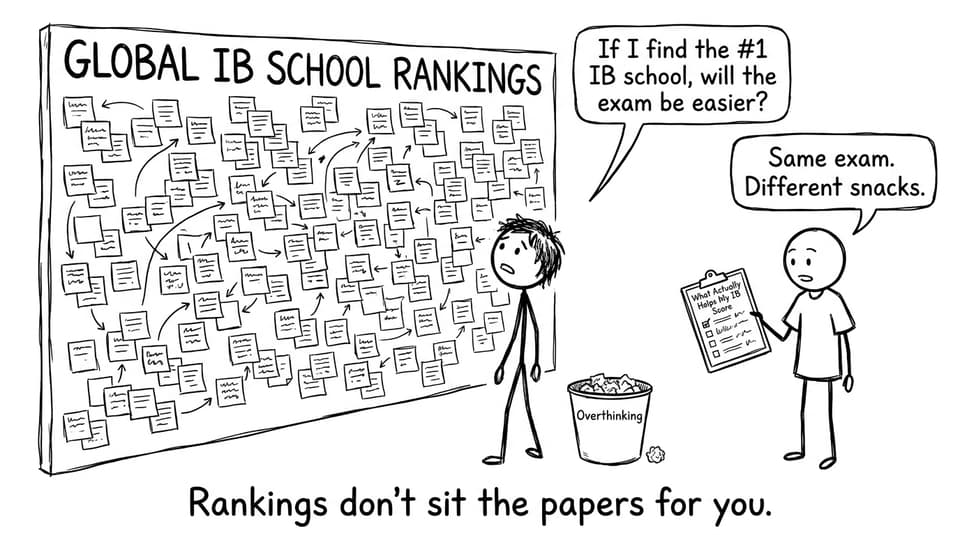
Quick answer: is there an official IB school ranking?
No. The International Baccalaureate Organization (IBO) does not publish an official global ranking of IB schools.
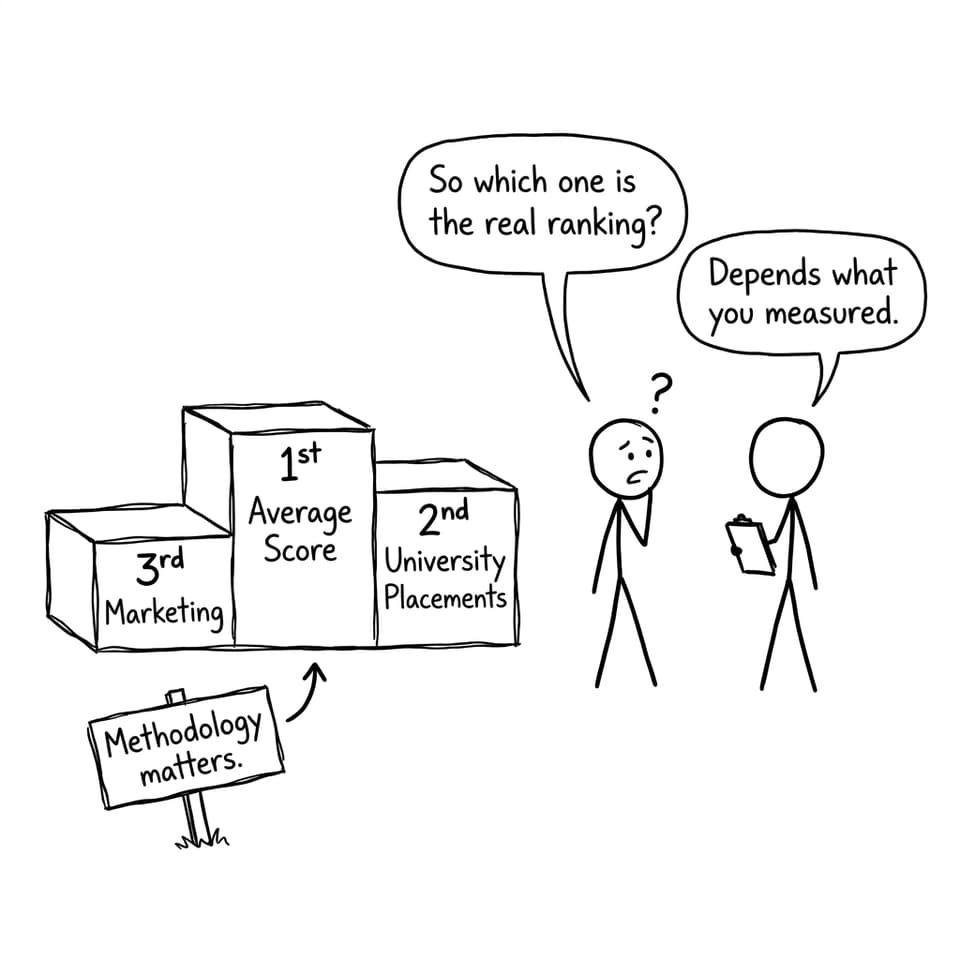
What does exist are third-party “league tables” and curated lists that compare IB schools using different data sources and different definitions of “best.” That difference matters, because the methodology shapes the outcome.
If you are using rankings to decide where to study, treat them as a starting point, not a verdict. If you are using rankings while preparing for IB exams, use them as motivation to build a better routine, not as a reason to panic.
How global IB school rankings are usually calculated
Most IB school ranking lists rely heavily on academic outcomes, especially average IB Diploma scores out of 45. Some add broader measures like university destinations or facilities.
Common factors used in IB school rankings
-
Average IB Diploma score (out of 45)
-
Subject-level performance trends (for example, mathematics or sciences)
-
University placement patterns and counseling reputation
-
Student-teacher ratio and academic support structures
-
School resources, enrichment, and extracurricular opportunities
A key point for IB students: a high average score can reflect strong teaching and selection effects at the same time. Some schools are excellent at support. Some are excellent at admissions. Many are both. Rankings rarely separate those cleanly.
Who publishes IB school rankings and comparison lists?
Several platforms publish global or regional comparisons of IB schools. They are not “official IB rankings,” but they can be useful if you understand what they emphasize.
IB-Schools.com
Often cited for global league tables focused on average IB Diploma results. If you care about raw score performance, this is the style of list you will see referenced.
Carfax Education (The Schools Index)
Curates a list of top international schools (many offering IB) and tends to weigh reputation, holistic experience, and global influence alongside academics.
Other comparison platforms
Sites such as Tychr, Edarabia, and World Schools Ranking (WSR) also publish lists. Their data sources and update cycles vary, so always check how the list was built.
Examples of “top” IB schools (and why the names repeat)
Many “top IB school” lists consistently mention schools reporting average diploma scores above 41-42. Examples that are frequently cited across lists include:
-
Letovo School (Russia)
-
St. Paul’s Co-educational College (Hong Kong)
-
K. International School (Tokyo)
-
King’s College School, Wimbledon (UK)
-
German Swiss International School (Hong Kong)
These schools tend to share patterns: tight academic culture, strong university guidance, and robust support for the Extended Essay and CAS. Still, remember the exam reality: your IB papers will not be easier because a school appears on a list.
Regional notes: rankings look different in the US, UK, Europe, and Asia
Rankings can be more fragmented in certain regions.
United States
IB performance data is often reported through state systems and school profiling platforms. Strong outcomes are frequently associated with well-known public magnet programs and selective private schools.
United Kingdom, Europe, and Asia
International and independent schools often have more standardized reporting and marketing around IB results, which makes them show up repeatedly in global comparison lists.
Limitations of IB school rankings (especially for students)
Rankings can be informative, but they miss the things that shape your daily life.
-
No official IB ranking exists
-
Averages hide the spread (a school can have a high mean with very uneven support)
-
Wellbeing, teaching style, and culture are hard to quantify
-
Some lists prioritize prestige signals over learning support
If you are already in your IB program, the best question is not “Is my school ranked?” It is: “What is my next highest-impact study block?”
A student checklist: how to use IB school rankings without wasting your energy
Use this quick filter when you see a shiny global list.
If you are choosing a school
-
Look for subject availability and timetable flexibility
-
Ask how academic support works in practice (not just promises)
-
Request recent cohort outcomes and how they were calculated
-
Talk to current students about workload and feedback quality
If you are preparing for IB exams
-
Treat rankings as background noise
-
Build a weekly system: recall, practice, timed work, review
-
Track your mistakes like data, not drama
A practical way to run that system is to use RevisionDojo as your home base: start from RevisionDojo for IB, then build your routine around Questionbank practice, Spaced Repetition for IB flashcard habits, and weekly timed rehearsals.
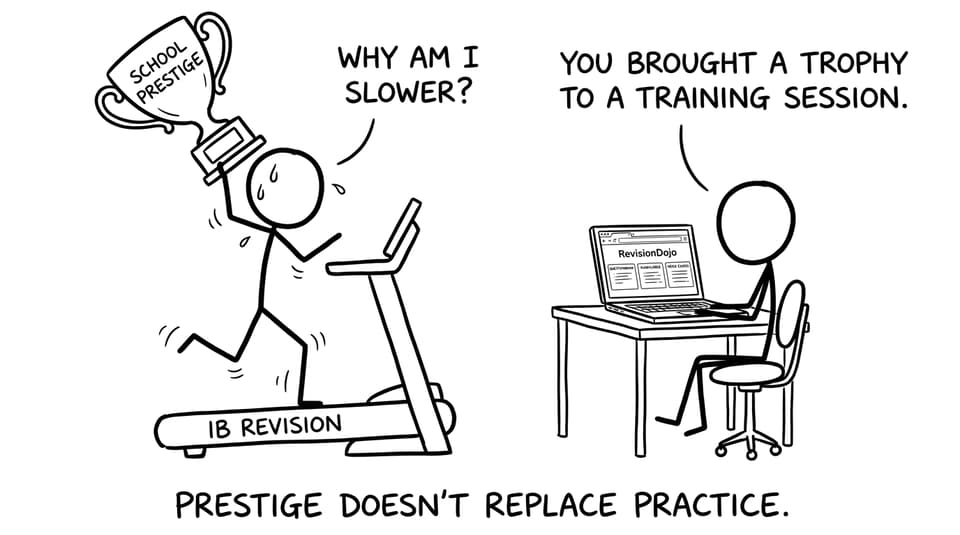
How RevisionDojo helps IB students outperform the “ranking gap”
The quiet truth is that IB exam results are built from repeatable behaviors, not school branding.
RevisionDojo is designed around that loop:
-
Study Notes to patch understanding fast
-
Flashcards to lock daily recall
-
AI Chat to unblock confusion without losing an hour
-
Grading tools to learn how marks are awarded
-
Questionbank to train exam-style thinking
-
Mock Exams to build stamina under time
-
Predicted Papers to rehearse full-paper decision-making
-
Coursework Library for exemplars and less second-guessing
-
Tutors when you need human diagnosis and accountability
If you are building toward finals, pair a realistic plan like Is 1 Month Enough to Study for IB Exams? with targeted practice from the IB Predicted Papers hub. Then sanity-check your trajectory using the IB Grade Calculator.
Conclusion: the only IB ranking that changes your grade
Global lists can be interesting. They can even be useful for families making school decisions.
But if you are an IB student preparing for exams, here is the grounding truth: your papers do not know your school’s reputation. They only reflect what you can do, under time, on the day.
So read rankings once, then close the tab. Open your plan instead. Start at RevisionDojo for IB, run a daily loop with the Questionbank and Flashcards, add weekly Mock Exams and Predicted Papers, and use AI Chat plus Grading tools to shorten the time between “I tried” and “I improved.”
That is the ranking that matters: your next attempt, done better than the last.


