


A number can feel like a verdict.
One student stares at IB results and sees 36. Another sees a 3.8 GPA. Both wonder the same quiet question: Did I do enough? The tricky part is that admissions is rarely a simple scoreboard. It’s closer to reading two stories written in different formats.
In this guide, we’ll compare what a 36 in IB usually means next to a 3.8 GPA, how universities typically interpret the two systems, and what you can do right now to turn your score into a stronger application and stronger exam performance.
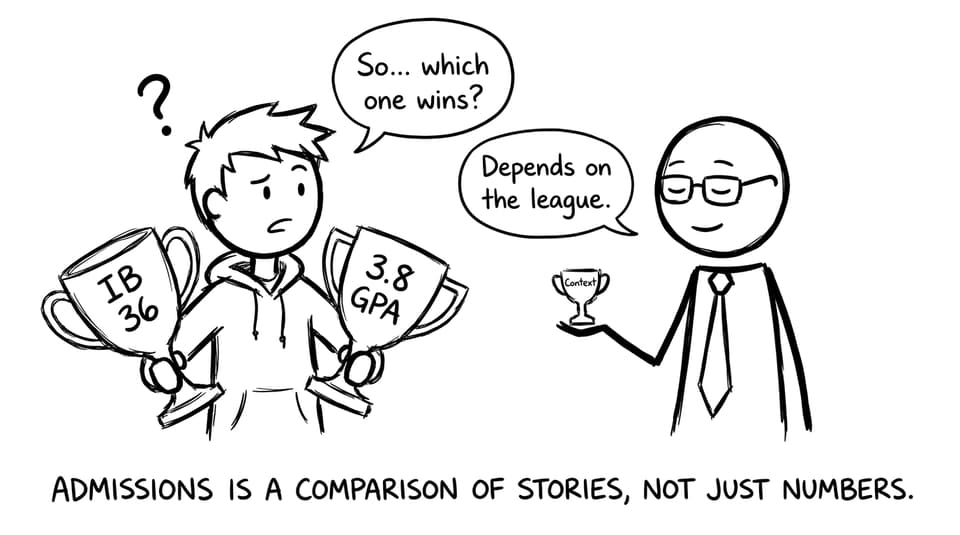
Quick answer: is IB 36 better or worse than a 3.8 GPA?
A 36 in IB is often treated as roughly equivalent to about a 3.8 to 4.0 GPA, depending on the university and whether they weight course rigor (especially Higher Level subjects). There is no single official conversion, but across common counselor benchmarks, IB 36 sits in a high academic tier.
If you want a deeper conversion breakdown, RevisionDojo’s guide on IB grade to GPA and letter grade conversion explains typical mappings and why the ranges move between institutions.
A practical comparison checklist (what universities actually look at)
When admissions teams compare IB to GPA, they usually check:
-
Rigor: Was your program standardized and demanding, or highly variable by school?
-
Consistency: Did you perform across multiple subjects, not just a few strengths?
-
External assessment: Are results moderated and examined outside your school?
-
Profile details: HL choices, subject fit for the degree, and score distribution.
-
Context: Your school’s grading culture, available courses, and trend over time.
That last one matters more than students expect. Two identical GPAs can mean wildly different things depending on the school. IB, by design, reduces some of that ambiguity.
IB 36 vs 3.8 GPA: common conversion benchmarks
No conversion is universal, but many counselors use ranges like these to communicate “rough equivalence”:
-
IB 45 → 4.0+ GPA (top-of-cohort level)
-
IB 40-42 → 3.95-4.0 GPA
-
IB 36 → 3.8-3.9 GPA
-
IB 30 → 3.5-3.6 GPA
-
IB 28 → 3.3-3.4 GPA
For a more granular approach, you can also think subject-by-subject (IB 7, 6, 5 etc.) and then average into a GPA style estimate. RevisionDojo walks through that step-by-step in how to translate IB grades into an unweighted/weighted GPA.
Why an IB score can “read stronger” than a GPA with the same headline number
A GPA is a long exposure photo: four years blended together, influenced by a school’s policies, teacher differences, and even the difficulty of the course menu available to you.
An IB score is more like a standardized snapshot: two intense years, externally assessed, designed to make students show thinking under pressure.
Universities often prefer that clarity for three reasons:
Standardization reduces grade inflation doubts
Because IB exams are externally marked and moderated, admissions teams can trust that a 36 carries a more consistent meaning across schools and countries.
Rigor is baked in
Even before the final exams, IB pushes sustained writing, timed performance, and long-term deadlines.
The core components add “signal”
TOK, the Extended Essay, and CAS don’t just fill time. They show research habits, argument-building, reflection, and follow-through. In selective admissions, those are qualities, not decorations.
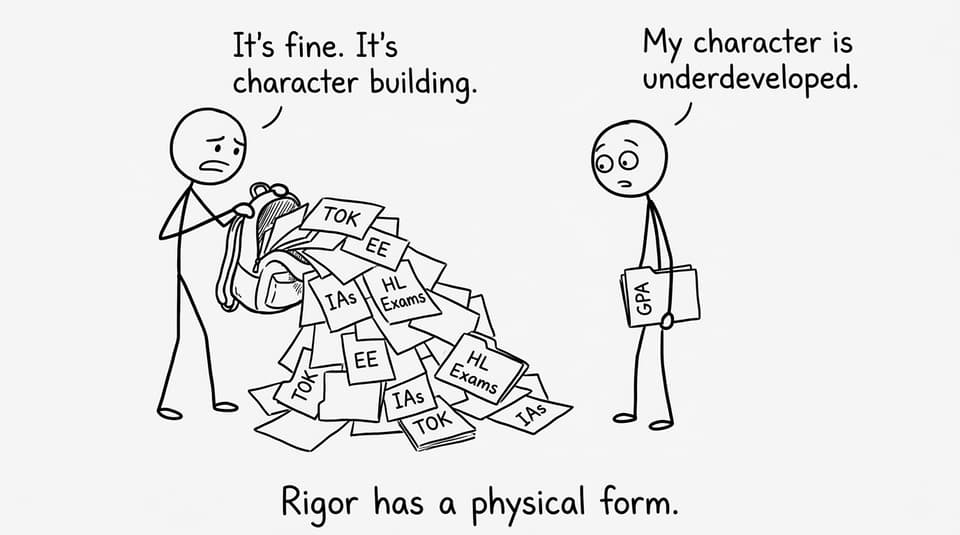
What a 36 in IB signals (when an admissions reader is skimming fast)
A 36 in IB commonly signals:
-
You’re above the global average (often cited around the low 30s).
-
You can perform across six subjects, not only your favorites.
-
You’ve sustained effort through major coursework and final exams.
-
You’re likely ready for the workload style of university assessment.
In other words, IB 36 isn’t “perfect,” but it usually reads as reliably strong.
How to make your IB 36 look even better (and maybe raise it)
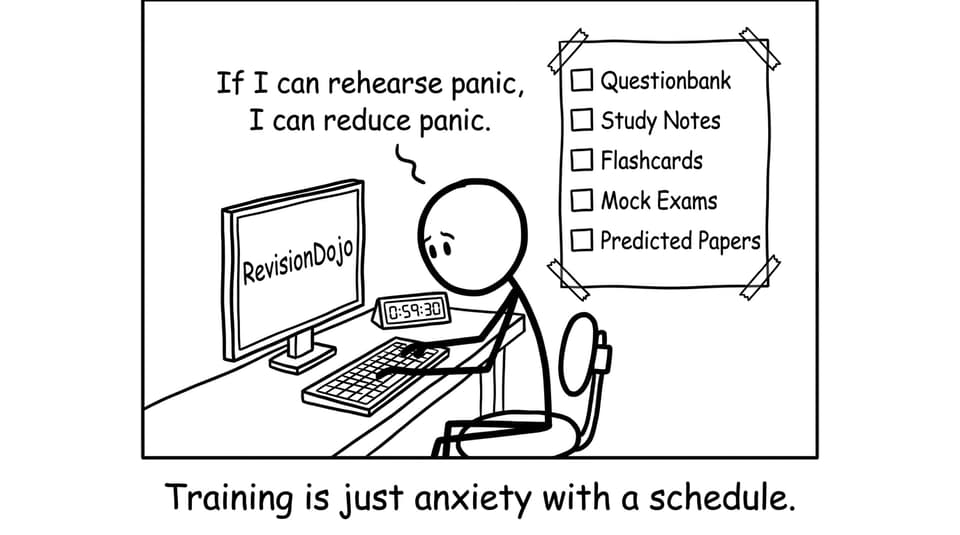
If you’re still preparing for finals, your biggest opportunity is simple: stop treating revision as “hours,” and start treating it as “feedback loops.”
A practical loop inside RevisionDojo looks like:
-
Use the Questionbank to drill weak topics with exam-style prompts.
-
Patch gaps quickly with targeted RevisionDojo for IB resources and study workflows.
-
Keep daily recall alive with spaced repetition (Flashcards), instead of rereading.
-
Rehearse timing with IB Predicted Papers and structured practice sets.
-
Build stamina using mock-style practice (RevisionDojo’s mock tools and exam flows), then check your trajectory with the IB Grade Calculator and IB Grade Boundaries.
If you’ve ever thought, “I studied all day and remember nothing,” RevisionDojo’s piece on IB study that actually sticks captures that feeling and the fix: retrieval, marking logic, and repetition that compounds.
Conclusion: IB 36 vs 3.8 GPA
If you’re deciding whether IB 36 is better or worse than a 3.8 GPA, the honest answer is: IB 36 is usually comparable to the high 3.8 range, and it often reads stronger because the rigor and standardization are clearer.
But the more useful takeaway is this: admissions doesn’t only reward a number. It rewards what the number suggests about how you work.
If you want to protect your 36, push it higher, or simply feel calmer walking into exams, build your next weeks around RevisionDojo’s system: Questionbank, Study Notes, Flashcards, AI Chat, Grading tools, Predicted Papers, Mock Exams, Coursework Library, and Tutors. Your IB score then becomes less of a label and more of a lever you can actually pull.