
A friend once told me their best ever IB Language B paragraph was the one they almost deleted.
It was short. It had two grammar mistakes. And it sounded exactly like them.
That’s the quiet truth of Language Acquisition: the goal isn’t to sound like a flawless native speaker. It’s to communicate like a real person who has earned their words. In IB Language B, integrity isn’t just “don’t plagiarise.” It’s a daily practice of authentic communication and cultural respect, especially when exam pressure makes shortcuts feel tempting.
This guide gives you a calm, exam-focused way to protect your voice, treat culture with care, and use tools responsibly, so your IB Language B performance is credible, confident, and unmistakably yours.
Quick checklist: integrity habits that raise your IB Language B score
Use this as a fast pre-write, pre-oral, or pre-submission scan:
-
Write and speak from your own ideas first, then improve language second.
-
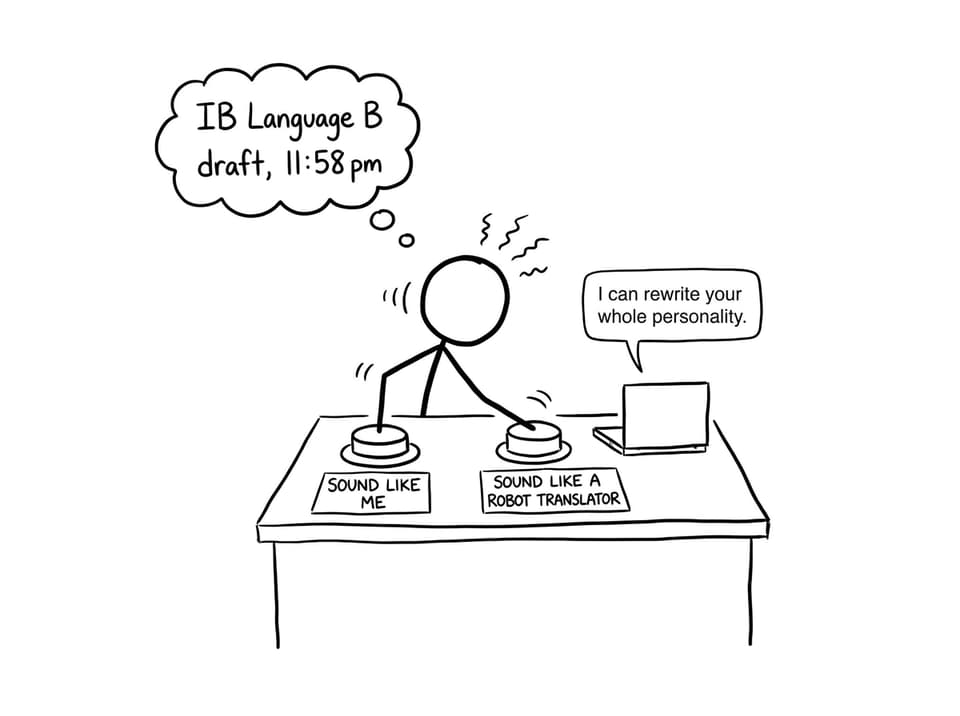
Use dictionaries for single words and phrases, not to generate whole sentences.
-
Keep a simple source log for every article, video, image, lyric, or statistic you reference.
-
Represent cultures with nuance (multiple perspectives, not one story).
-
Collaborate to practise and get feedback, not to produce identical final work.
-
Use AI as a tutor for explanations and feedback, not as an author.
If you want a broader integrity framework beyond IB Language B, keep this bookmarked: How to Uphold Academic Integrity in IB Assessments.
What integrity means in IB Language B (beyond “no cheating”)
In IB Language B, integrity has three layers that often overlap:
Authentic communication
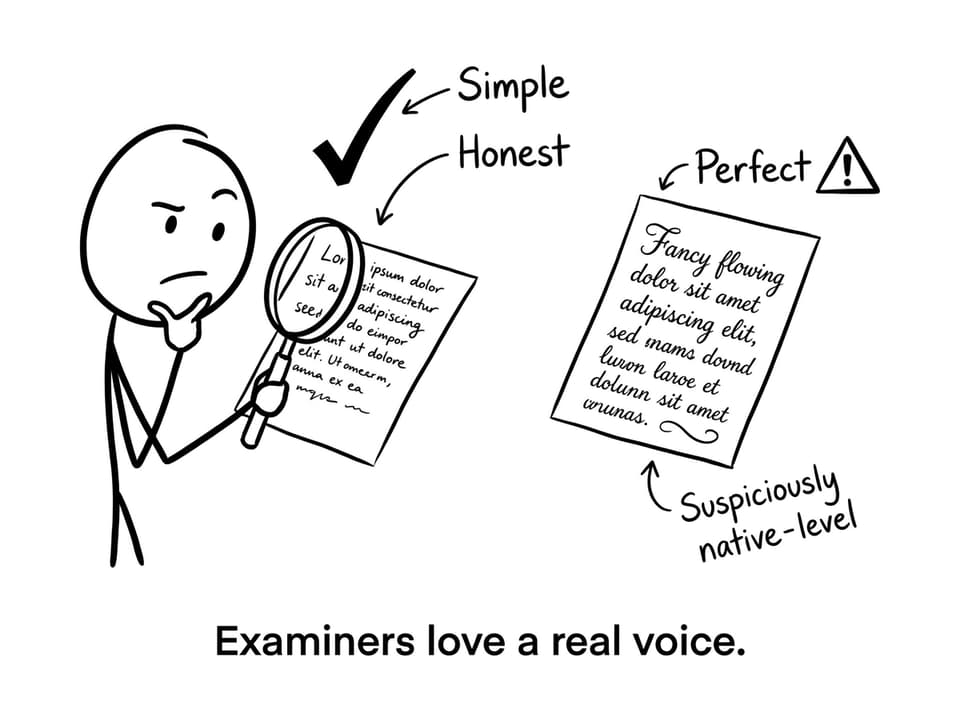
Your examiner is assessing your language ability, not your ability to outsource language. If your work suddenly sounds “too perfect,” it can raise questions. More importantly, it blocks learning.
Honest academic practice
When you use sources (news, interviews, ads, posts, graphs), you’re allowed to learn from them. Integrity means you show where ideas came from and you don’t copy phrasing.
Cultural respect
Language learning is also worldview learning. Integrity means you treat cultural topics with curiosity, context, and humility, not stereotypes, simplifications, or borrowed outrage.
A practical way to think about it: your work should be explainable. If someone asked, “How did you write this sentence? Why did you choose this example?” you should be able to answer without anxiety.
The biggest integrity traps for IB Language B students (and what to do instead)
Pressure creates predictable mistakes. Here are the common ones, and the ethical swaps that still help you score.
Over-translation (the silent score killer)
When you write in your first language and translate, you usually get:
-
unnatural phrasing
-
incorrect register (too formal, too casual, or strangely robotic)
-
vocabulary you can’t control in the oral follow-up
Better approach for IB Language B: draft directly in the target language using “safe” structures you own. Keep sentences shorter. Use connectors you can repeat reliably. Then upgrade one or two phrases per paragraph.
For exam-ready routines that build this skill, use How to Effectively Revise for Language B Exams.
Copying model responses
Model texts are great for learning structure. They’re dangerous when they become templates you paste your life into.
Better approach for IB Language B: copy the shape, not the sentences.
-
Borrow paragraph order.
-
Borrow text-type conventions (headline, greeting, call to action).
-
Replace all content with your own examples and opinions.
If you need a clear overview of what the course expects, start with IB Language B Syllabus: Breakdown & Study Strategy.
“Perfect” AI writing
AI can make writing look polished, but polish without ownership is fragile. You can’t defend it in an oral, you can’t reliably reproduce it under timed conditions, and it often erases your personal tone.
Better approach: use AI for learning, not authorship:
-
Ask for explanations of grammar patterns.
-
Ask for feedback on your draft.
-
Ask for practice questions, then answer yourself.
RevisionDojo is built for exactly this ethical loop: you practise, you get feedback, you improve. Start at RevisionDojo for IB and keep your IB Language B practice consistent.
Writing authentically in IB Language B: a simple method that feels like you
Most students try to write “impressively.” High scorers write clearly, with control.
Use this three-step method in IB Language B writing tasks:
Start with a true idea
Pick a real opinion you could defend in conversation. Even a basic stance is fine:
-
“Technology helps, but it distracts.”
-
“School rules should be strict in some areas, flexible in others.”
Truth creates coherence. Coherence creates marks.
Build with controlled language
Write using structures you already know. Then add complexity only where you can manage it:
-
one strong connector per paragraph
-
one idiomatic phrase you’ve practised
-
one specific example (a personal story, a local reference, a known case)
Revise without rewriting your personality
Edit for accuracy and register, but keep your voice. If a sentence suddenly feels “not like you,” it probably isn’t.
To practise writing under real conditions, pair your routine with RevisionDojo’s tools: Study Notes for structure, Flashcards for connectors and theme phrases, and Grading tools to see where your writing is losing marks.
If writing is your current weak point, keep this open while you practise: How to Master Language B Writing Through Practice.
Cultural respect in IB Language B: how to sound informed without sounding arrogant
Culture is not a “topic.” It’s people, history, power, humour, conflict, and change. And in IB Language B, cultural respect shows up in small choices: what examples you pick, how you generalise, and whether you acknowledge complexity.
Use the “one story” alarm
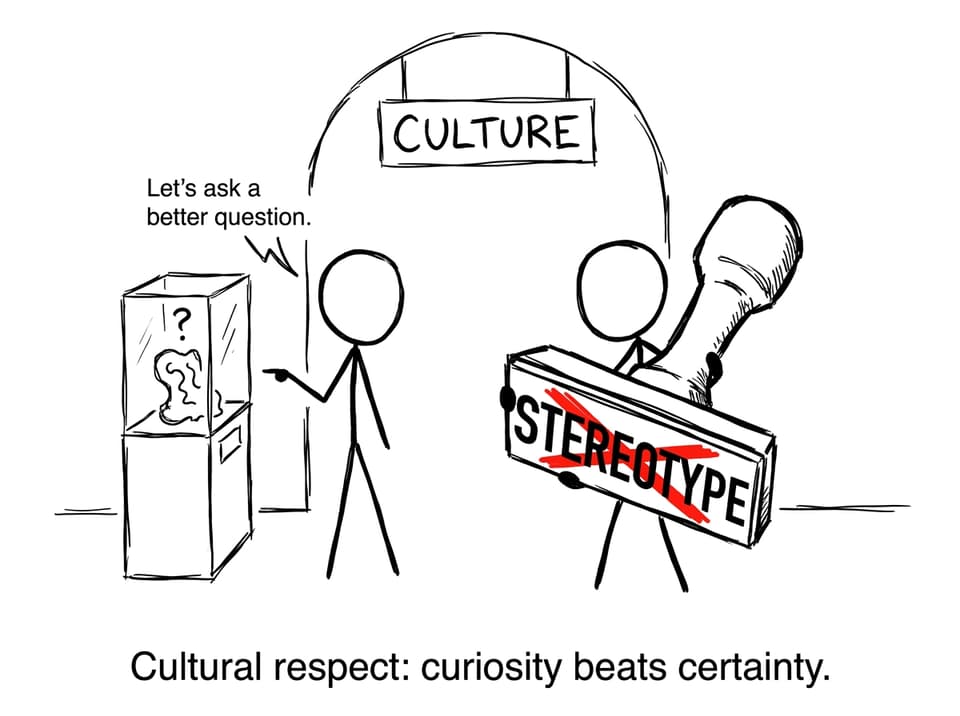
If your sentence sounds like it could fit on a poster, slow down:
-
“In X country, people are…”
-
“This culture believes…”
Try:
-
“Some people in…”
-
“In many contexts, especially…”
-
“Historically…, but today…”
Ask better questions
Respect often looks like curiosity.
Instead of: “Why do they do this?”
Try: “What values does this reflect? Who benefits? Who disagrees? How has it changed over time?”
Bring sources in ethically
If you use an article, documentary, interview, or statistic, signal it clearly. You don’t need to write an essay-length bibliography in an exam response, but you should avoid copying lines or pretending facts are yours.
For integrity skills that transfer across subjects, RevisionDojo’s broader guidance helps: How RevisionDojo Helps You Maintain Academic Integrity While Studying.
Collaboration and integrity: how to study together without crossing the line
Group study can be one of the best ways to improve IB Language B, especially speaking. But the boundary matters: collaboration should improve your skill, not replace your work.
Use these safe collaboration formats:
-
Swap outlines, not paragraphs.
-
Practise oral follow-up questions with a partner, then record your own final version.
-
Share vocabulary banks by theme, then write separate responses.
-
Give feedback using the rubric language (organisation, message, accuracy, register).
If speaking is where you feel pressure, use a structured plan so you don’t lean on memorised scripts. This guide is a strong companion: How to Improve Your Language B Speaking Skills.
How RevisionDojo supports honest, high-scoring IB Language B preparation
Integrity becomes easier when your study system is designed for it.
RevisionDojo supports IB Language B students with:
-
Questionbank practice that trains exam-style decisions, not copyable answers
-
Study Notes that clarify themes, text types, and what “good” looks like
-
Flashcards for connector phrases, theme vocabulary, and high-frequency structures
-
AI Chat for explanations, drills, and feedback on your own drafts
-
Grading tools to check writing and coursework drafts against criteria
-
Predicted Papers and Mock Exams to practise timing and reduce panic-driven shortcuts
-
A Coursework Library for exemplars and standards (used to calibrate, not copy)
-
Tutors when you need a human diagnosis and a plan
If you want subject-specific hubs, explore: IB English B Resources or IB Spanish B Resources.
You can also browse targeted strategy posts here: All IB Language B Posts.
FAQ: integrity in IB Language B
Can I use translation tools at all in IB Language B?
Yes, but keep it limited and purposeful. In IB Language B, using a dictionary to confirm a word, a collocation, or a short phrase is very different from translating an entire paragraph. Full-sentence translation usually produces unnatural register and grammar patterns you can’t reliably replicate under timed conditions. It also makes your work less defensible if a teacher asks how you created it. A good rule is: if the tool is doing the writing rather than helping you learn, you’re too far over the line. Build sentences from structures you know, then use resources to refine small parts.
How do I make my writing sound authentic if my level is still basic?
Authentic does not mean advanced; it means owned. In IB Language B, examiners reward clear communication, relevant ideas, and consistent register more than risky complexity. Choose ideas you genuinely believe so your message stays coherent even with simple grammar. Use a small set of connectors and opinion phrases you can control, and repeat them confidently. Add specificity with examples: a personal anecdote, a school experience, a local issue, a recent event you can describe accurately. Over time, you’ll build range, but your foundation should stay honest and stable.
Do I need to cite sources when discussing culture or current events?
If you’re using a specific fact, statistic, quote, or a recognisable idea from a source, yes, you should acknowledge it in a clear way. In IB Language B, that can be as simple as referencing the publication, speaker, or platform in your target language, without turning your response into a formal academic paper. Citing protects you from accidental plagiarism and also improves credibility, because it signals you’re engaging with authentic materials. It also helps you avoid exaggeration, which is a common cultural respect problem when students speak in sweeping claims. Make a habit of keeping a small sources log while revising so you can trace where examples came from. That habit is calm insurance in stressful weeks.
Is it okay to practise with classmates for the oral?
Practising with classmates is not only okay, it’s often the fastest way to improve interactive communication. The integrity issue appears when practice turns into shared scripts or memorised paragraphs that multiple students repeat. In IB Language B, your oral should sound flexible: you respond, adapt, clarify, and extend. Use classmates for timed role-plays, follow-up question drills, and feedback on clarity and register. Then record your own version and revise it with your own wording. If you can answer unexpected questions without collapsing, you’re practising in the right direction.
Closing: the point of IB Language B was never perfection
At some point in the IB Language B journey, most students discover a strange relief: you don’t have to be flawless to be impressive. You have to be real.
Integrity is what makes your message believable, your cultural references respectful, and your exam performance reproducible under pressure. It turns language from a mask into a tool.
If you want a preparation system that makes integrity the default, build your routine inside RevisionDojo: practise with the Questionbank, lock in phrases with Flashcards, refine with AI Chat feedback, and prove yourself with Mock Exams and Predicted Papers. Your best work won’t be the most polished. It’ll be the one that sounds like you, in another language.