


One week before an IB exam, it’s rarely the content that breaks you.
It’s the moment your brain goes blank on a question you swear you studied. The tight chest when you check the clock. The quiet panic when a classmate says, “I did three full papers yesterday,” and you suddenly feel behind.
That’s where SEL (Social Emotional Learning) stops being a school buzzword and becomes a real IB advantage. Because in the IB, your grade isn’t just knowledge. It’s performance under pressure. And performance depends on how well you can notice emotions, regulate them, and keep thinking.
SEL isn’t separate from IB pedagogy. Done well, it’s the invisible system underneath inquiry, reflection, collaboration, and ethical decision-making. For IB students preparing for exams, SEL is what turns revision into something you can sustain.
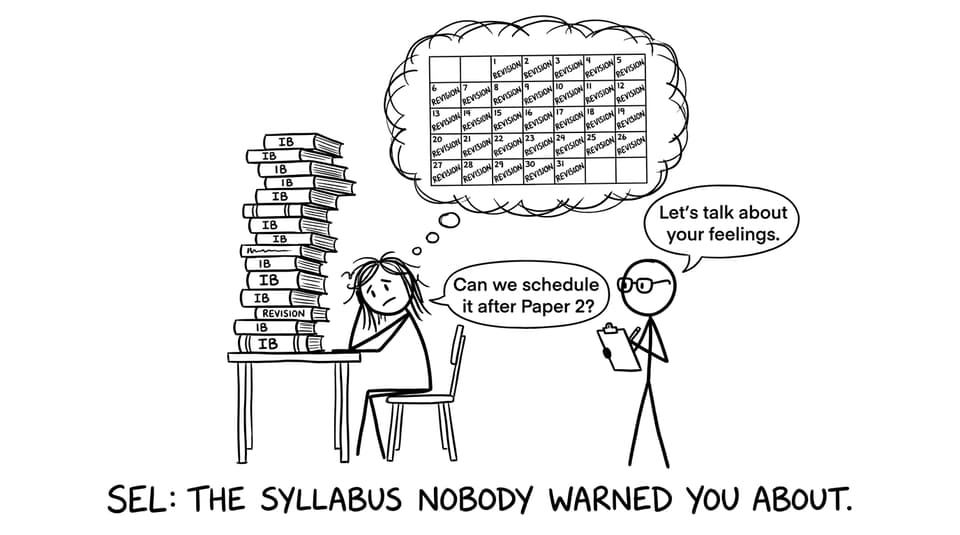
Quick checklist: SEL habits that boost IB exam prep
If you want a simple way to integrate SEL into your IB routine this week, use this checklist:
-
Do a 30-second emotional check-in before you start (name the feeling, don’t negotiate with it).
-
Choose one IB skill focus per session (content, command terms, timing, or structure).
-
End every session with a 4-sentence reflection: what I did, what broke, why it broke, what I’ll change.
-
Build one small recovery ritual after timed practice (water, walk, breathe, reset).
-
Convert stress into action: one targeted set in a Questionbank, not another hour of rereading.
If you need a home base for that loop, start at RevisionDojo for IB.
Why SEL belongs in IB pedagogy (especially during exams)
Most students think IB success is about being “smart.” The longer you stay in the programme, the more you realise it’s about being consistent.
SEL strengthens the exact mental skills consistency requires:
-
Self-awareness: noticing you’re spiralling before you lose a whole evening.
-
Self-management: calming your body so your brain can actually retrieve information.
-
Social awareness: reading group dynamics (and avoiding the “comparison trap”).
-
Relationship skills: asking for help clearly, giving feedback without drama.
-
Responsible decision-making: choosing the next best study action, not the most comforting one.
This is why SEL fits naturally with IB goals. The programme aims to develop reflective, balanced learners, not just test-takers. But for students preparing for exams, the benefit is practical: SEL keeps your revision engine running.
To build that engine with tools that match real marking expectations, use RevisionDojo’s all-in-one IB revision platform.
SEL and the IB Learner Profile: the hidden exam strategy
The IB Learner Profile can feel like poster material until you treat it like an exam toolkit.
-
Reflective becomes: “I can diagnose why I lost marks and change my method.”
-
Balanced becomes: “I can push hard without burning out.”
-
Communicator becomes: “I can write clearly under time.”
-
Principled becomes: “I don’t cut corners when stressed.”
If you want a clean explanation of what these traits actually look like in real student behaviour, read The 10 IB Learner Profile Traits Explained. For a deeper focus on the one trait that most improves exam prep, see What Is a Reflective IB Learner Profile?.
How to integrate SEL into IB study sessions (not as an add-on)
The mistake is thinking SEL means “do mindfulness, then do revision.”
In strong IB pedagogy, SEL is embedded into the academic task. Here are three ways to do that as a student.
Name the feeling, then name the next action
When anxiety hits, your brain demands certainty. You try to get it by rereading notes, organising folders, or watching one more video.
SEL move: label the emotion and convert it into a tiny action.
Example script:
-
“I feel overwhelmed.”
-
“Overwhelm means I need a smaller target.”
-
“Next action: 15 questions on one subtopic.”
This is why RevisionDojo’s Study Notes + Flashcards + Questionbank combination matters: it makes the “next action” obvious and fast. When you’re stuck mid-problem, AI Chat can unblock you in minutes so the emotion doesn’t hijack the session.
For a routine that fits tired days, use IB: I Study All Day but Remember Nothing.
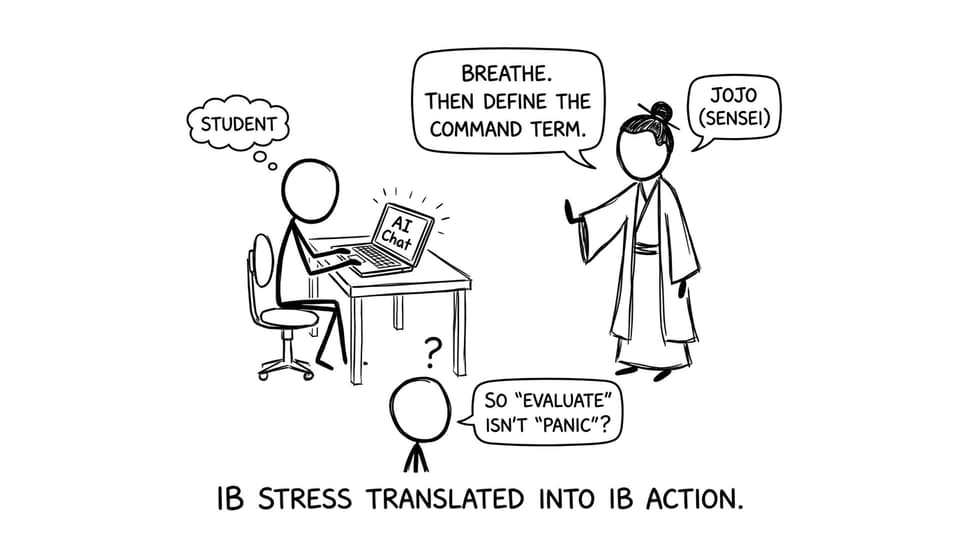
Build SEL into inquiry: curiosity is an emotion you can train
Inquiry-based learning is core to IB, but exams can flatten curiosity into fear.
A practical SEL-informed inquiry habit is to start sessions with one curiosity prompt:
-
“What would a great answer look like here?”
-
“What is the examiner really rewarding?”
-
“Which command term am I misreading?”
Then prove the answer with practice.
RevisionDojo supports this “curiosity to proof” approach: learn quickly via Study Notes, then test with the Questionbank, then use Grading tools (and feedback) to see what the markscheme actually rewards.
Use reflection as the bridge between emotion and marks
Reflection is where SEL and IB exam prep fully meet.
Try this 4-sentence template after any study block:
-
What I did.
-
What went wrong.
-
Why it went wrong (content, timing, command term, structure, careless error).
-
One change for next time.
That’s not journaling for vibes. That’s building a feedback system.
If you want to make reflection more concrete, read Harnessing Reflection Data to Support IB Learner Profile Development. And if reflection writing itself feels vague, use Coaching Students to Write Purposeful Reflections in the DP.
SEL in group work: how to stop “study sessions” becoming stress sessions
Group revision can be powerful in IB. It can also become a theatre of comparison.
SEL approach: make the purpose explicit.
Try this structure:
-
10 minutes: each person shares one weak area.
-
25 minutes: silent individual work on that weakness.
-
15 minutes: teach-back (each person explains one thing clearly).
-
5 minutes: each person sets their next solo task.
If your group includes CAS projects, SEL also improves how you document challenges without turning them into self-criticism. See Using RevisionDojo to Strengthen IB CAS Reflection and Documentation.
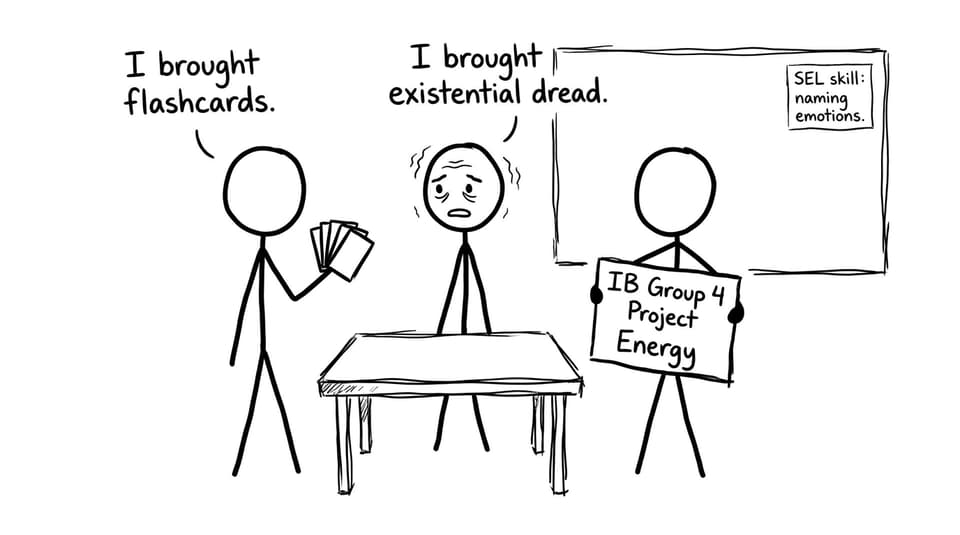
The exam-season SEL routine: calm, then reps
SEL doesn’t remove pressure. It makes pressure usable.
Here’s a simple IB exam-season loop you can run weekly:
-
1 timed session using Mock Exams or IB Predicted Papers
-
1 deep review using markscheme logic (this is where progress happens)
-
3 targeted drills in the Questionbank (topic + command term + difficulty)
-
Daily 10 minutes of Flashcards for retention
-
One help channel: Tutors when you need a human plan, or AI Chat when you need instant clarity
The key SEL piece is the recovery step: after any timed session, do a short reset, then review errors as patterns, not as personal flaws.
If you want a realistic view of how timed practice builds confidence, read Best IB Mock Exam Platform: Why Students Pick RevisionDojo.
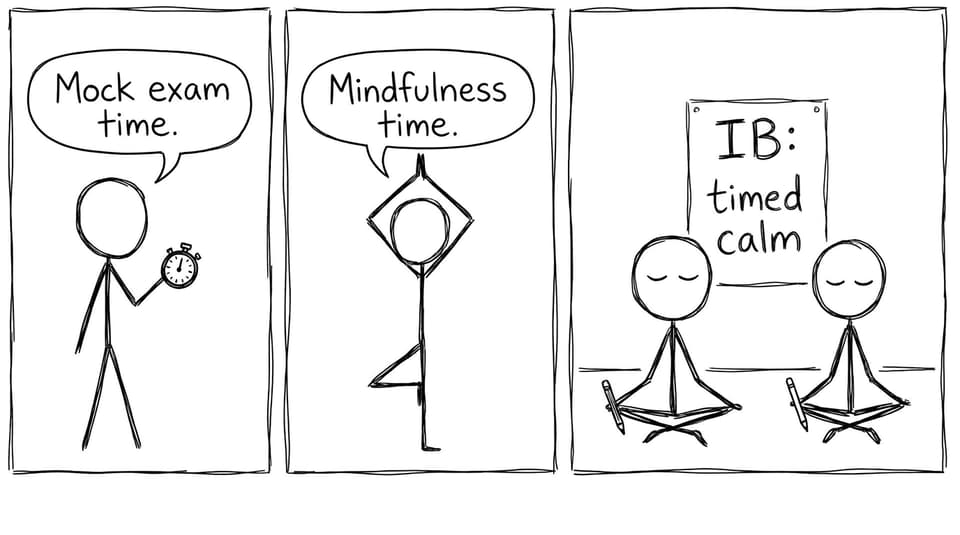
FAQ: integrating SEL into IB pedagogy as a student
How does SEL actually help IB exam performance?
SEL helps because IB exams reward clear thinking under time, and emotions directly affect cognition. Anxiety narrows attention, making you miss command terms and skip steps. Frustration encourages quitting early or switching tasks too often, which looks like “studying” but produces little recall. Self-awareness lets you catch those states early and label them, which reduces their intensity. Self-management then helps you choose the next best action: a small set of targeted questions, a short reset, or a timed section. Over weeks, this makes your revision more consistent, and consistency is what raises outcomes in the IB.
Can I integrate SEL into IB study without losing time?
Yes, because SEL doesn’t have to be an extra activity. In IB prep, SEL is often a 30-second check-in before work and a 2-minute reflection after work. Those minutes are not “lost”; they prevent 45-minute spirals of avoidance, doom-scrolling, or rewriting notes that won’t be tested directly. The most time-efficient SEL strategy is converting emotions into a next action you can measure, like a 20-question drill or a timed response. Tools matter here: using RevisionDojo’s Study Notes for quick clarity, then immediately switching to the Questionbank creates momentum. And when you’re stuck, AI Chat keeps you moving so stress doesn’t become procrastination.
What does SEL look like in IB-style reflection?
In the IB, reflection is strongest when it connects evidence to change. SEL makes reflection honest without becoming dramatic, because it teaches you to name emotions as data. Instead of “I’m bad at this,” you write, “I felt rushed, so I skipped planning, and my argument collapsed.” Then you choose one adjustment, like a 3-minute outline rule or a timing checkpoint halfway through. This style of reflection fits the IB Learner Profile, especially being reflective and balanced, but it also improves exam technique directly. If you keep reflections small and consistent, you build a personal map of your patterns: what triggers stress, what fixes it, and which errors repeat. That’s the kind of self-knowledge that turns revision into results.
Conclusion: make SEL the quiet advantage in your IB routine
The most effective IB students aren’t emotionless. They’re skilled at steering their emotions back into action.
Integrating SEL into IB pedagogy isn’t about being calm all the time. It’s about building a repeatable system: notice what you feel, choose what to do next, reflect, and improve.
If you want that system in one place, RevisionDojo is built for the full IB loop: Questionbank, Study Notes, Flashcards, AI Chat, Grading tools, Predicted Papers, Mock Exams, Coursework Library, and Tutors. Start here: RevisionDojo for IB or explore support for your school at RevisionDojo for Schools.