
The quiet moment when IB exams change the rules
You can know a topic cold, then lose marks anyway.
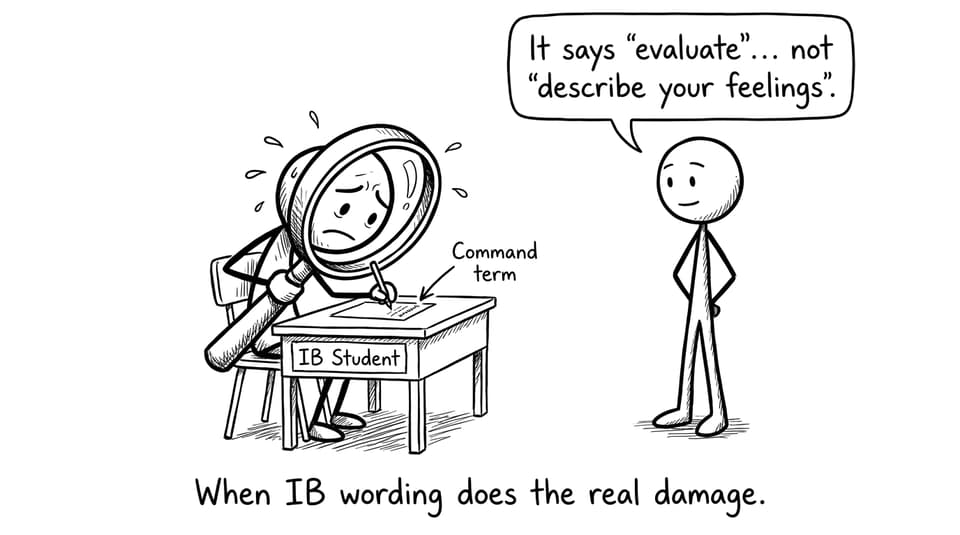
It usually happens in a small, frustrating way: the question looks familiar, but the wording feels slightly off. The command term asks for something precise. The mark allocation hints at structure you did not use. And suddenly your solid knowledge does not translate into points.
That is why IB exam-style questions matter. They do not just test content. They train you to think in the same shapes the IB uses: the way prompts are phrased, how answers are rewarded, and what “enough detail” actually means.
If you want practice that feels authentic (without guesswork), RevisionDojo is built for it: the Questionbank, Mock Exams, Predicted Papers, AI Chat, and Grading tools all push you toward the same goal: turning knowledge into marks.
Quick checklist: what “authentic format” practice includes
When you practice IB exam-style questions, look for these signals:
-
The question types match what you will see on the day (short response, data response, extended response, etc.)
-
Command terms are used correctly (analyze vs evaluate vs compare)
-
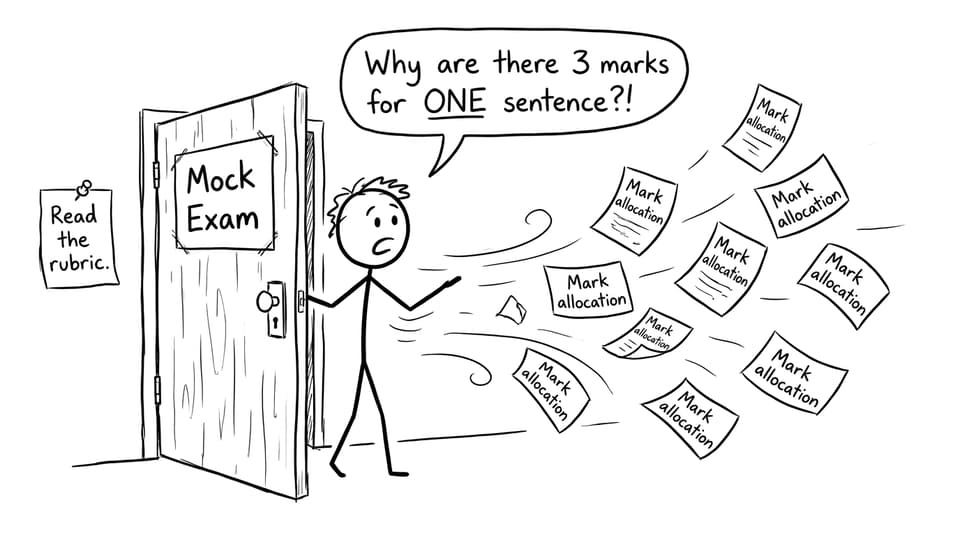
Mark allocations nudge you toward the right structure
-
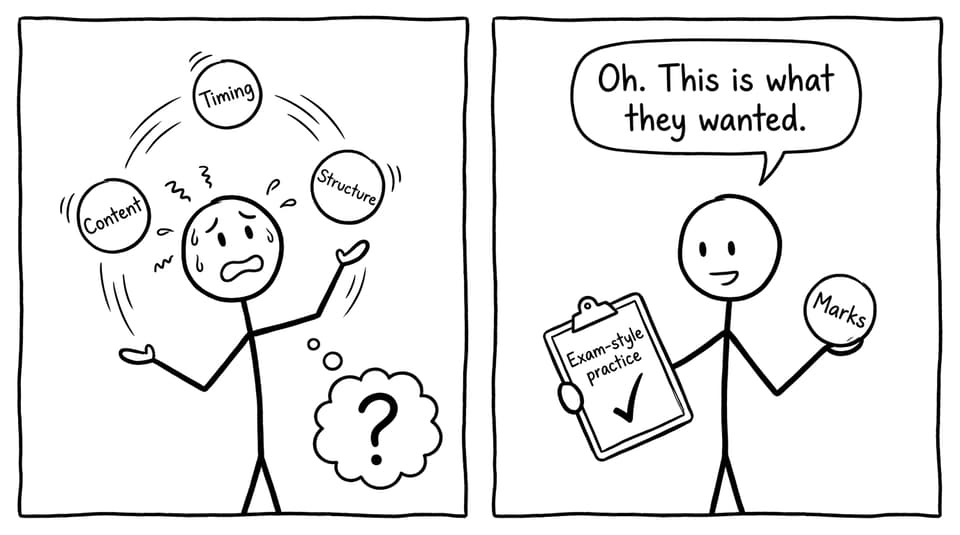
Timing is part of the session, not an afterthought
-
Feedback explains how marks are awarded, not just what the answer is
A strong starting point is RevisionDojo’s guide to a modern IB question workflow: IB Question Bank | How to Use It Effectively.
Why IB exam-style questions create marks (not just confidence)
Most revision resources teach you what a concept means. IB exam-style questions teach you what a concept earns.
That difference matters because the IB rewards execution: selecting relevant points, linking them clearly, and matching the depth to the marks available. Students who only reread notes often feel prepared. Students who practice authentic formats can prove it under pressure.
RevisionDojo’s IB ecosystem is designed to close that gap. You can learn quickly with RevisionDojo App: The Smarter Way to Prep for IB Exams, then move straight into application using the Questionbank and timed practice.
What “IB exam-style” looks like on RevisionDojo
RevisionDojo does not ask you to practice randomly. It asks you to practice like the IB assesses.
Here is what that means in real study terms:
Practice in a topic-filtered Questionbank
The RevisionDojo Questionbank lets you practice exam-style prompts by topic so you can target weak areas instead of doing a full sweep every time. For a deeper overview, see: IB Question Bank: Thousands of Practice Questions.
If you want an example hub, try a subject page like IB Chemistry Questionbank or IB Business Management Questionbank.
Use timed practice to build exam behavior
Authentic IB prep includes timing. Not because speed is everything, but because timing changes your decisions: what to write first, when to move on, and how to structure for marks.
A practical way to add realism is weekly timed sessions using predicted sets and mocks. Start here: IB Predicted vs Specimen Papers: What They Mean.
You can also explore RevisionDojo’s predicted sets here: IB Predicted Papers (for example: Biology Predicted Papers).
Get feedback that speaks “mark scheme”
The hardest part of IB practice is not doing questions. It is understanding why you lost marks.
That is where RevisionDojo’s AI Chat and Grading tools help. When you finish a set, you can ask Jojo AI to explain your gap in examiner language, then fix it with a tighter second attempt. For students who want a bigger system, this article shows how the platform ties everything together: IB Revision Made Easy With RevisionDojo All-in-One.
A simple strategy: the 3-pass loop for IB exam-style questions
Use this repeatable loop for any IB subject:
First pass: accuracy without pressure
Do a short set in the Questionbank (10-20 questions). Use Study Notes only to patch confusion, then return to the questions.
Second pass: structure for marks
Redo the hardest questions, but write with the mark allocation in mind. If it is 4 marks, aim for 4 clear, credited points (not one beautiful paragraph).
Third pass: timed rehearsal
Once a week, run a timed section using Mock Exams or Predicted Papers. Then use analytics to choose your next topic set. If your mocks feel discouraging, this perspective helps many IB students reset: Failed Mock Exams? You Can Still Pass IB.
FAQ
Are RevisionDojo questions “official” IB questions?
RevisionDojo is independent and not endorsed by the IBO, which matters for how you interpret the materials. The value is not in being “official” but in being authentically formatted and curriculum-aligned. For IB students, the practical goal is to practice the same skills the exam rewards: command terms, structure, timing, and mark-efficient writing. That is why RevisionDojo focuses on examiner-style items, clear rubrics, and feedback loops. You still get the exam feel, without relying on teacher-only platforms. To understand the broader IB context, you can also see: International Baccalaureate (IB).
How many IB exam-style questions should I do per week?
The honest answer is: enough that patterns start repeating. For most IB students, that means 3-5 short Questionbank sessions plus one timed session weekly. Short sessions win because they are easier to sustain and easier to review properly. The bigger mistake is doing a huge set and never analyzing why marks were lost. If you are busy, even 30-45 minutes of exam-style questions per day compounds fast. A helpful framework is in: How to Study for IB Exams Without Burning Out.
How do I stop making the same command-term mistakes in IB answers?
First, treat command terms like instructions, not decoration. In the IB, “define” and “evaluate” are different tasks with different mark expectations. Second, after each set, write one sentence in your error log: “I lost marks because I did X instead of Y.” Third, turn that sentence into a Flashcard so you see it again before the next practice set. Fourth, ask AI Chat to show you a top-mark outline for the same prompt, then rewrite your answer with the mark allocation as a guide. Finally, retest within 48 hours, because that is when the correction actually sticks.
Closing: practice the way the IB measures
The IB is not trying to trick you. But it is specific. And specificity is exactly what authentic IB exam-style questions train.
If you want one calm place to run the full system, RevisionDojo is built as an all-in-one home base: Study Notes for clarity, Flashcards for daily recall, Questionbank for exam-style practice, AI Chat and Grading tools for feedback, plus Predicted Papers, Mock Exams, a Coursework Library, and Tutors when you need the next level of support.
Your next step is simple: open a topic, do a short set of IB exam-style questions, review the mark logic, then repeat until the format feels familiar.