IB last-minute tutoring: the quiet advantage
The scary part of IB exams isn’t the workload. It’s the feeling that you should have started earlier.
But here’s what many students discover late in the season: a small amount of focused, high-quality help can change outcomes quickly. Not by “covering everything,” but by narrowing your attention to the handful of skills and topics that actually convert into marks. That’s exactly why IB exam prep tutoring works so well at the last minute.
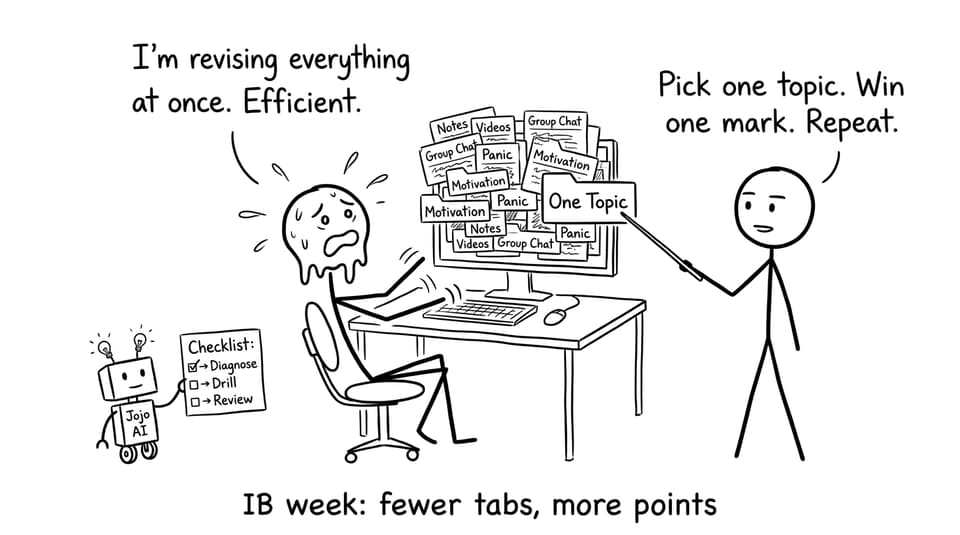
If you pair a calm tutor with a tight practice loop (diagnose -> drill -> review), your studying stops being a mood and starts being a system.
A quick last-minute IB score boost checklist
Use this as your “don’t panic” plan for IB finals:
-
Pick one paper you’re sitting next (not the whole syllabus)
-
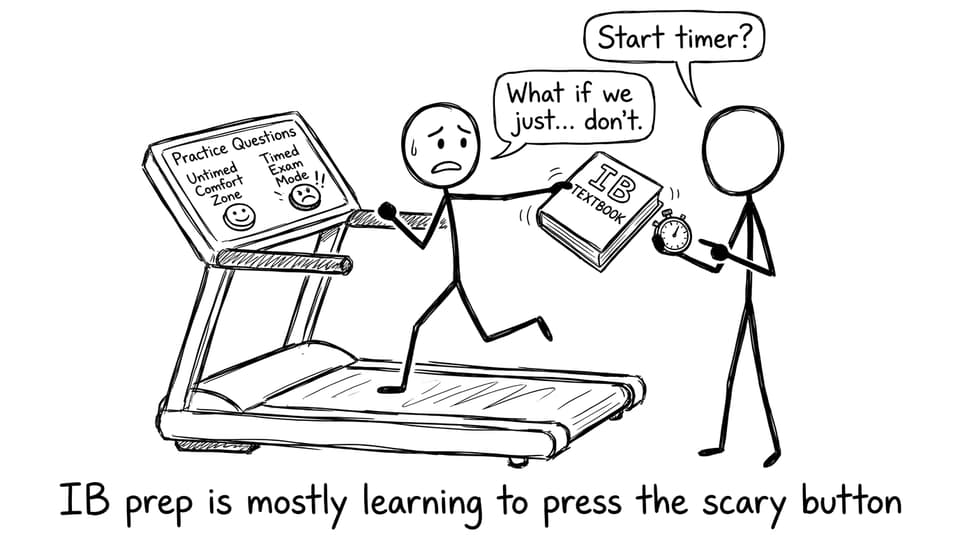
Diagnose weak spots with timed questions (even 20 minutes counts)
-
Book 3-5 short tutoring sessions focused on patterns, not content dumps
-
Lock recall with daily flashcards
-
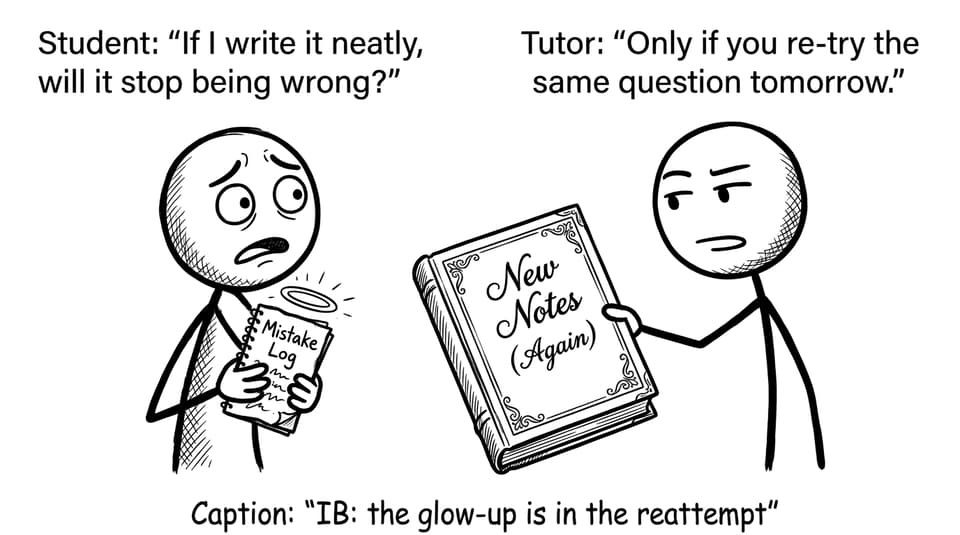
Use targeted question sets to reattempt your errors within 48 hours
RevisionDojo makes this workflow easy because your tools live in one place: Study Notes, Flashcards, AI Chat, Questionbank, Grading tools, Predicted Papers, Mock Exams, plus Tutors when you need a human plan.
Why last-minute tutoring works for IB (when it’s done right)
It finds the “high-weight” marks fast
A strong IB tutor doesn’t start with a lecture. They start with evidence: what you missed, why you missed it, and which mistakes repeat.
That’s also why it helps to walk into sessions with data from the RevisionDojo Questionbank and a couple of recent timed sets. You and your tutor can immediately target the 20% of content that’s costing you 80% of your marks.
For deeper practice strategy, this guide is a solid companion: IB Question Bank | How to Use It Effectively.
It forces active recall instead of “hopeful rereading”
At the last minute, passive revision feels comforting and performs terribly. Tutoring sessions work best when they revolve around retrieval: you answer, explain, get corrected, then try again.
Make this easier with spaced repetition from IB Flashcards with Spaced Repetition (SRS), especially for definitions, processes, essay evidence, and formulas. If you want a method guide, use IB Flashcard System: Active Recall for Better Memory.
It fixes exam technique, not just knowledge
A lot of IB points are lost to timing, command terms, and structure. A tutor can watch you do questions and catch the invisible errors: misreading “evaluate,” writing too much on low-mark parts, or skipping the simplest mark first.
If you’re building realism quickly, add timed practice using IB Predicted Papers and learn how to use them wisely with IB Predicted vs Specimen Papers: What They Mean.
How to choose an IB tutor for last-minute results
Late-stage IB tutoring is a specialist job. Look for someone who:
-
Speaks in markscheme logic (not vague motivation)
-
Can run timed drills and correct structure in real time
-
Builds a between-sessions plan using tools you’ll actually follow
Start with Tutoring | RevisionDojo, then use this screening guide: How to Choose the Best IB Tutor: Selection Guide. If you want reassurance that the approach works, read IB Tutoring Success Stories: Real Student Results.
FAQ
Will IB tutoring help if my exams are next week?
Yes, IB tutoring can still help next week, but only if you use it to reduce scope and increase repetition. A good tutor will focus on your highest-yield mistakes: timing errors, command terms, and the topics you consistently drop marks on. The goal is not to learn “new chapters,” but to stop leaking marks on familiar content. Bring a short set of attempted questions into each session so feedback is immediate and specific. Between sessions, drill the same weakness using the Questionbank and lock key facts with Flashcards. Done this way, tutoring becomes a rapid correction loop, not a last-minute lecture.
How many tutoring sessions do I need for a last-minute IB score boost?
Most IB students benefit from 3-5 focused sessions per subject area, spaced across the final days or two weeks. One session is usually best for diagnosis and building a plan. The next sessions should be mostly practice: timed questions, marking logic, and restructuring answers. The final session should simulate pressure and sharpen pacing decisions, so the exam feels familiar. If your budget is tight, fewer sessions can still work if you’re disciplined about the “between sessions” practice loop. What matters is not hours booked, but how many times you reattempt the same weakness under exam conditions.
Can AI tools replace an IB tutor at this stage?
AI can do a lot for IB revision right now, especially for fast explanations, generating practice prompts, and giving immediate feedback. RevisionDojo’s AI Chat and Grading tools are most powerful when you need instant clarity and a next step without waiting. But a human tutor adds something AI still struggles to replicate: real-time judgment about what to prioritize, plus accountability when you’re tired and tempted to drift. Tutors also catch process issues like pacing, messy method, or unclear essay structure by watching you work. The best approach for most students is hybrid: use AI for daily practice and feedback, then use tutoring sessions to correct patterns and build exam strategy. That mix is often the fastest route to a genuine last-minute score boost.
Final takeaway: tutor smart, not desperate
Last-minute IB tutoring works when it turns panic into a repeatable loop: diagnose, drill, review, reattempt. Keep your plan narrow. Chase mark patterns, not perfection.
If you want an all-in-one setup for the final stretch, use RevisionDojo as your home base: Study Notes to patch gaps, Flashcards to retain, Questionbank to drill, AI Chat to unblock, Mock Exams and Predicted Papers to rehearse, and RevisionDojo Tutors to keep your final week focused and calm.