

A quiet truth IB students learn the hard way
It usually happens on an ordinary evening.
You sit down to do some IB revision. Your desk looks serious. Your intentions are good. And then you wait for motivation like it owes you rent.
But motivation is unreliable. It shows up when the weather is nice, when you slept well, when the topic is easy, when the day went your way. The IB does not care about any of that.
Discipline is different. Discipline is not a personality trait. It is a design choice. It is what happens when you make the next action so small, so obvious, and so repeatable that you do it even when you do not feel like the kind of person who studies.
This is the real debate for IB students preparing for exams: discipline vs motivation. Not as a slogan, but as a daily strategy.
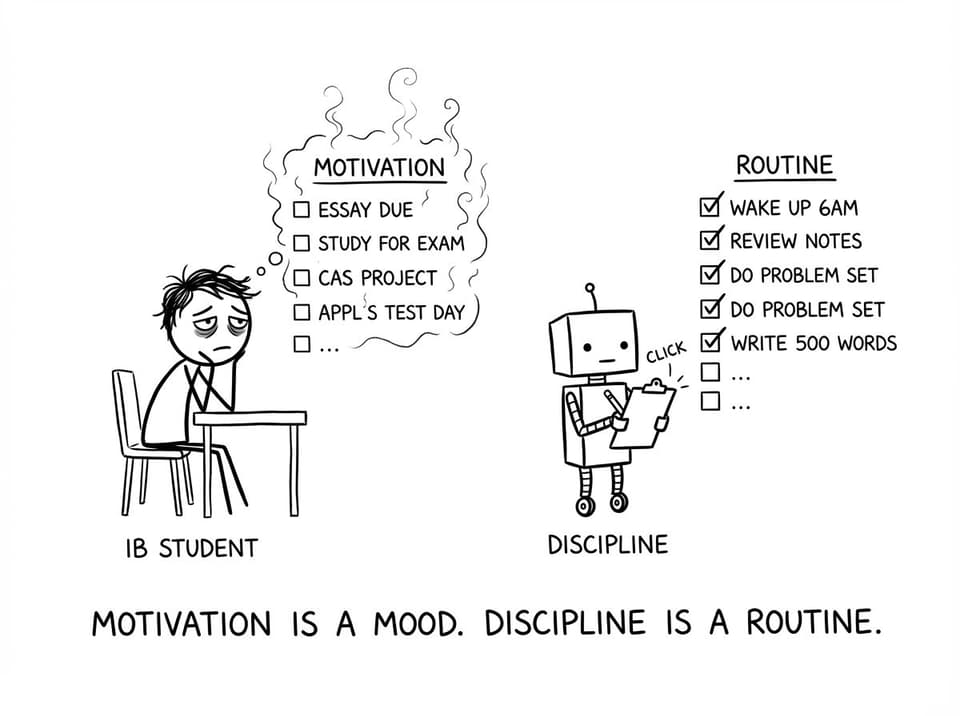
Discipline vs motivation (IB edition): a simple checklist
If you want the short version before we go deeper, use this IB checklist.
- Choose a minimum daily action (10 flashcards or 10 questions).
- Start with active recall (questions or flashcards), not rereading.
- Keep sessions short enough to repeat (20-45 minutes beats 2 hours once).
- End each session by writing tomorrow's first task.
- Use feedback loops: attempt, correct, retest.
If you want a full exam workflow to plug this into, keep this open: How to Study for IB Exams: Step-by-Step Guide.
Why motivation feels powerful (and why it fails in IB)
Motivation is a feeling that makes work feel light.
That is why it is seductive. On a motivated day, you can do three hours and tell yourself, "This is who I am now." It feels like a turning point.
But the IB is not a single turning point. It is a long stretch of ordinary days.
Motivation fails IB students for three reasons:
Motivation is conditional
If your motivation depends on the right mood, you are building your plan on a moving floor.
IB weeks are full of mood killers: deadlines, group projects, a rough test, sports practice, family events, and the uniquely exhausting experience of thinking about six subjects at once.
Motivation prefers comfort
When motivation drops, most students default to low-feedback work because it feels safer: rereading notes, highlighting, reorganizing folders.
It looks like revision. It is often avoidance.
If you want to break that pattern, RevisionDojo's structure helps because it nudges you toward practice-first work: Questionbank plus immediate correction.
Motivation does not create a system
Motivation is an emotion. The IB is a process.
And processes win when emotions are tired.
For a deeper look at why motivation fades during exam season, this is worth reading alongside this post: IB Motivation: How to Stay Driven in Exam Season.
What discipline actually means for IB students
Discipline is not "be tougher."
For IB students, discipline means:
- You have a default start.
- You have a small minimum.
- You have a way to measure progress.
- You reduce decision fatigue.
Discipline is less about willpower and more about removing friction.
That is why the best disciplined IB students look calm. They are not fighting themselves every day. They are following a script they wrote earlier.
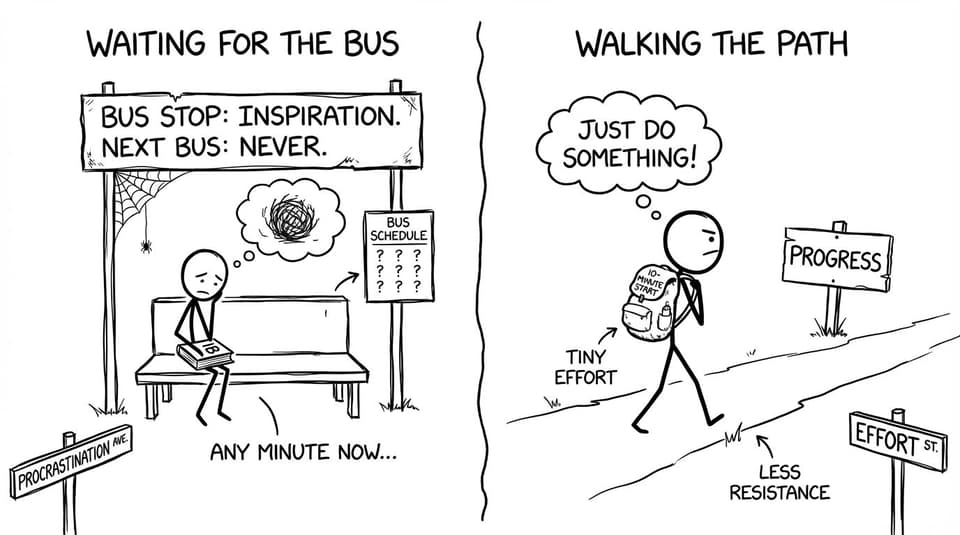
The IB leverage point: discipline starts with a 10-minute beginning
If you are trying to build discipline vs motivation in your IB routine, the fastest win is this:
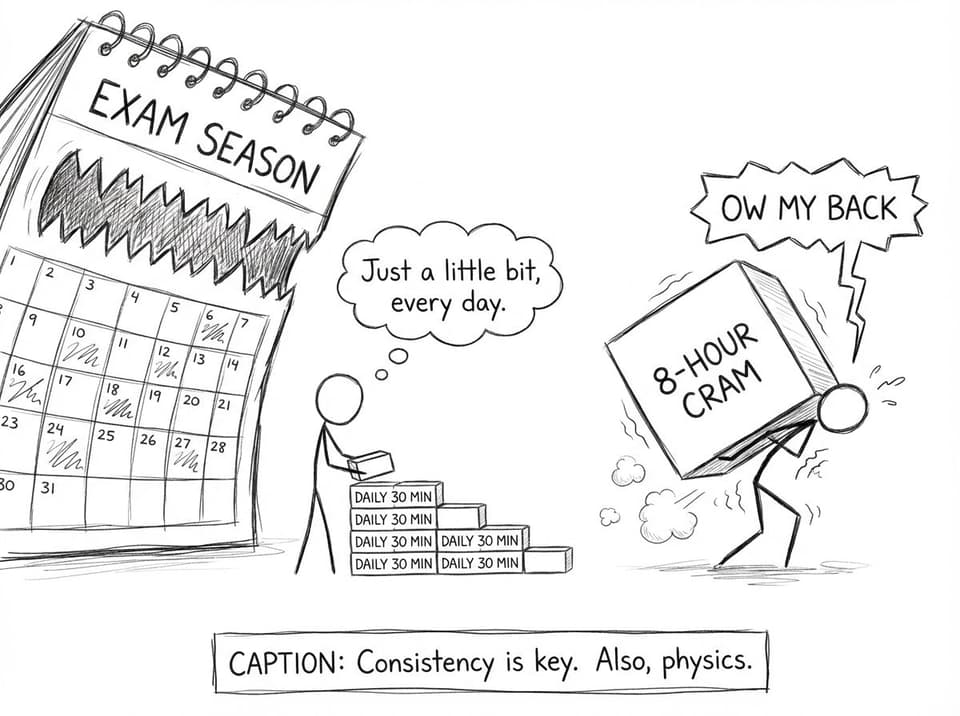
Commit to a 10-minute start, not a 2-hour finish.
Because the hardest part is not the studying. It is the beginning.
A 10-minute start can be:
- 10 flashcards (definitions, processes, command terms)
- 10 Questionbank questions on one micro-topic
- 1 timed short response + quick review
Once you begin, motivation often follows. Not because you summoned it, but because progress is persuasive.
RevisionDojo makes this easier because the tools are built for short loops:
- Flashcards for a small daily recall streak: Flashcards
- Questionbank for targeted practice and fast correction: Questionbank
- AI Chat (Jojo AI) for the "I'm stuck" moment so you don't lose an hour: RevisionDojo App: The Smarter Way to Prep for IB Exams
Discipline vs motivation: build evidence, not vibes
There is a simple psychological trick that works brutally well in IB season:
Your brain does not need inspiration. It needs proof.
Proof looks like:
- "I improved from 55% to 70% on this topic."
- "I stopped losing marks on command terms."
- "I can finish Section A on time now."
That proof is why disciplined practice feels calming. It replaces imagination with data.
If stress is part of what is draining your IB motivation, read this next: IB Stress: Stay Motivated Without Burning Out.
A practical IB system: the 3-layer week
This is a discipline-first alternative to "study when you feel like it."
Daily layer (10-15 minutes): keep memory warm
- Do Flashcards every day.
- No heroics.
- Miss a day? Restart tomorrow with zero drama.
If you need a more structured notes workflow, pair this with: IB Revision Notes: Quick Review Before Exams.
Core layer (4-6 sessions/week): one topic block that actually moves the needle
Each block (45-90 minutes):
- Use Study Notes to clarify one subtopic.
- Immediately practice on that subtopic in the Questionbank.
- Review mistakes and write 2-3 "error rules."
This is where discipline beats motivation. You are building a repeatable loop.
Pressure layer (1-2 sessions/week): timed training
Timed practice is not a final-week event.
Do one timed section or paper simulation weekly. Then review longer than you attempted.
If you want a step-by-step process: How to Run Timed IB Mock Exams in RevisionDojo (Exam Mode + Test Builder).
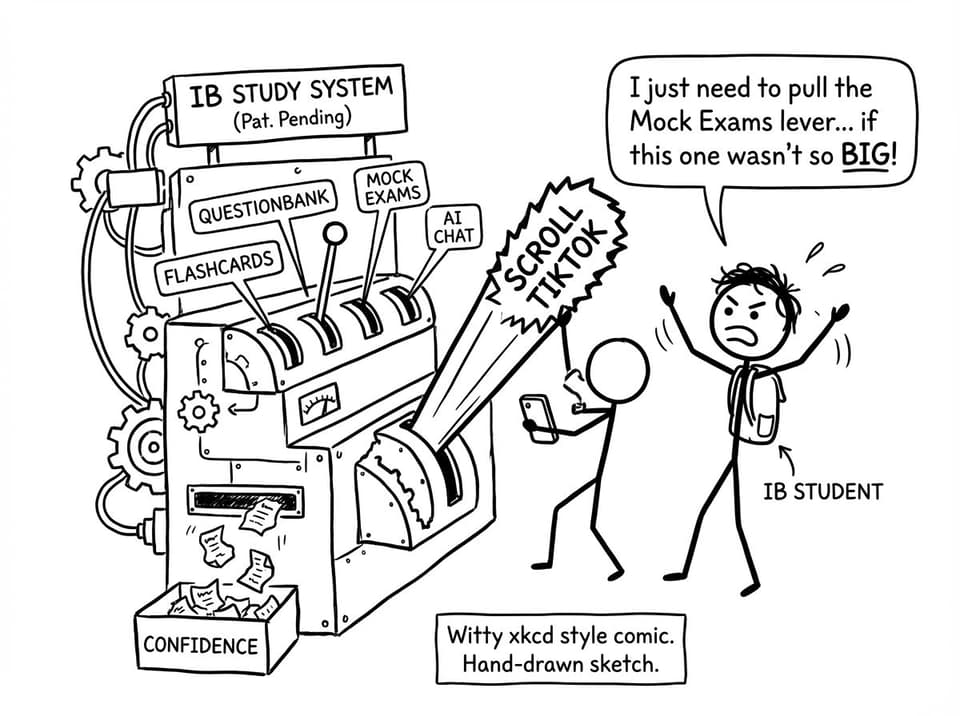
How RevisionDojo turns discipline into something you can repeat
IB discipline is easiest when your environment is designed for repetition and feedback.
RevisionDojo works well as an "all-in-one control panel" because each feature has a clear job:
- Questionbank: daily practice that produces measurable evidence
- Study Notes: quick clarity when you are patching a gap
- Flashcards: spaced repetition that keeps recall alive
- AI Chat: the unstuck button when one confusion threatens the whole session
- Grading tools: faster rubric-aligned feedback on coursework drafts
- Predicted Papers: realism and exam readiness without guessing
- Mock Exams: timed stamina and pacing practice
- Coursework Library: examples of strong work so you stop guessing what "good" looks like
- Tutors: a human layer when you need strategy, not more content
If you want a quick overview of the free core setup, start here: Notes + Flashcards + Question Bank (Free).
A small story: the IB student who stopped negotiating
One of the most common patterns in IB revision is the daily negotiation.
You wake up and ask: "What should I do today?"
Then you browse. Then you plan. Then you feel guilty. Then you do something easy so you can say you did something.
Discipline is when you remove the negotiation.
A disciplined IB student does not wake up to decide whether to revise. They wake up to execute the first small step.
Tonight, try this:
- Write tomorrow's first task on a sticky note.
- Make it specific: "15 questions on Topic X" or "10 flashcards + 1 short response."
- Put it where you will see it.
That note is not motivation. It is a rail.
For more discipline-building tactics, see: How to Build Discipline Through Daily Problem Solving.
Closing: for IB students, discipline beats motivation (and feels kinder)
Discipline vs motivation is not a debate about who is stronger.
It is a debate about what survives real life.
IB students preparing for exams do not need endless motivation. They need a system that still works on a boring Tuesday, after a bad quiz, when the calendar feels heavy.
Start small. Make the next action obvious. Collect evidence. Repeat.
If you want one place to run that whole discipline loop -- Questionbank, Study Notes, Flashcards, AI Chat, Grading tools, Predicted Papers, Mock Exams, Coursework Library, and Tutors -- build your routine inside RevisionDojo and let your IB progress become something you can measure, not something you have to hope for.