


The Math HL exam doesn’t beat you with hard math
It beats you with small decisions made too quickly.
Most Math HL students walk into the exam feeling prepared: they know the syllabus, they’ve practiced, they’ve seen enough calculus and functions to last a lifetime. Then they lose marks in the quiet places: a misread command term, a missing unit, a jump in logic that looked “obvious” in their head. That’s why improving in Math HL often isn’t about learning more content. It’s about removing predictable mistakes.

Quick checklist to stop losing easy Math HL marks
-
Read the question twice, then circle what it’s actually asking.
-
Use your calculator as a verifier, not a crutch.
-
Show enough steps for method marks (clean and trackable).
-
Keep units, domains, and restrictions visible.
-
Manage time by leaving breadcrumbs and moving on.
If you want a structured place to train this loop, start with the IB Mathematics Analysis and Approaches Resources hub and build targeted practice from there.
Misreading the question (the silent Math HL mark drain)
In Math HL, the difference between “find” and “show” is not wording; it’s scoring. A correct-looking answer that doesn’t address the prompt can earn far less than you expect.
A practical fix: force yourself to rewrite the task in your own words before solving. If it says “hence” or “using your answer from (a),” treat that as a method requirement, not a suggestion.
To train this habit, do short, focused sets and review why you lost marks. RevisionDojo makes this easier when you pair targeted practice in the RevisionDojo App: The Smarter Way to Prep for IB Exams workflow with quick clarification from AI Chat (Jojo) when a command term trips you up.
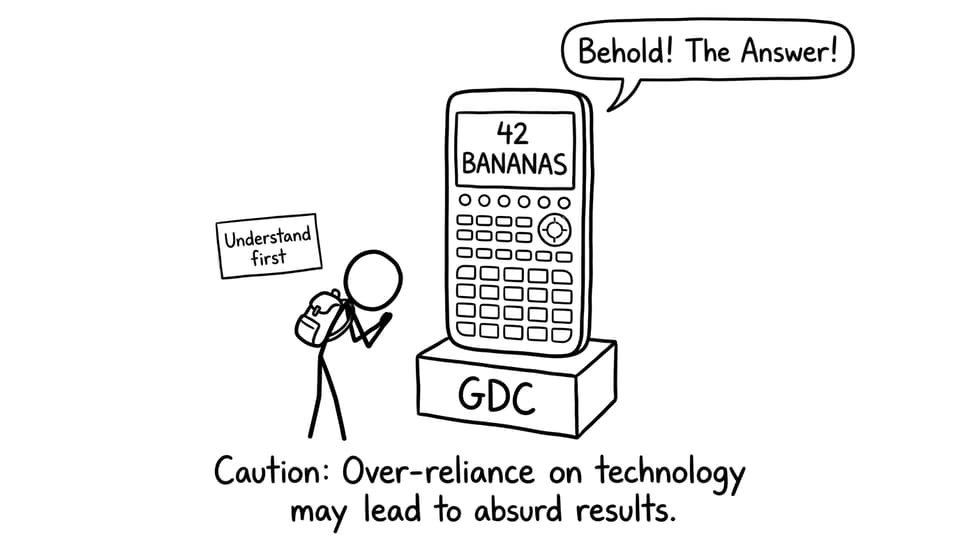
Calculator dependence (when Math HL tech becomes a trap)
Your graphing calculator is powerful, but Math HL punishes blind trust. Wrong window settings, rounding errors, or a single mis-typed bracket can snowball into a clean-looking, completely wrong result.
Use the calculator to confirm your thinking: check intersections, verify derivatives, sanity-check values. But always keep one “manual anchor” in your solution (a key algebra step, a sign check, or a limiting case).
For consistent accuracy, keep your formulas close. RevisionDojo’s IB Mathematics Analysis and Approaches Data Booklet is a good exam-ready reference to review before timed practice.
Skipping steps (you can’t earn method marks you don’t show)
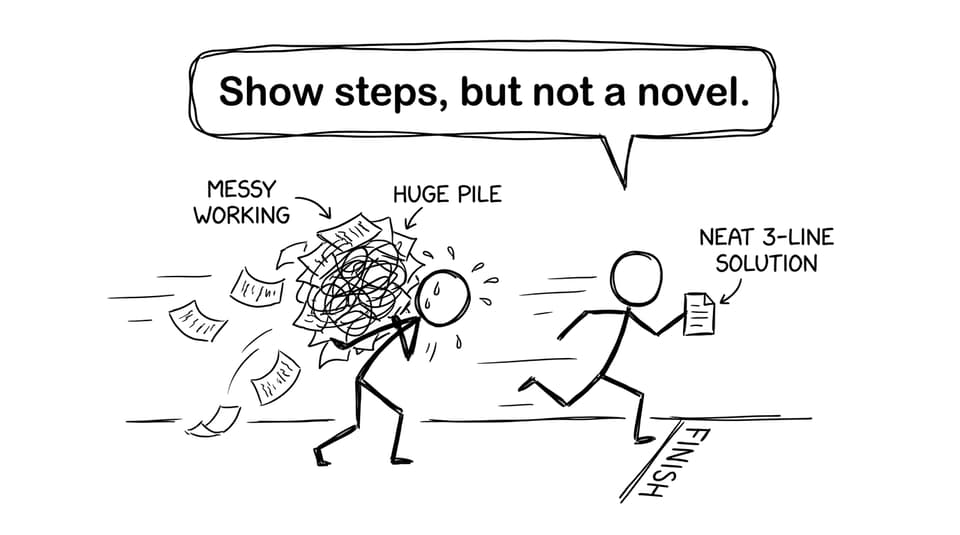
A common Math HL panic response is to jump from line 1 to line 10 because you “see it.” Examiners can’t mark what isn’t there, and even a tiny slip becomes impossible to recover from.
Aim for “minimum complete working”: write the step that proves you knew the method, especially when using identities, substitutions, integration techniques, or proof logic. Neat solutions are faster to check too, which reduces your own errors.
To practice this under pressure, do timed sets and then audit your solutions for missing justification. RevisionDojo’s Grading tools and Mock Exams help you see which steps actually generate marks, not just which answers look elegant.
Ignoring units, domains, and restrictions (small detail, big penalty)
Not every Math HL question uses units, but many do: rates of change, modeling, statistics contexts, and applications. Dropping a unit or forgetting a domain restriction can turn a correct method into a “final accuracy” loss.
Build a habit: write restrictions early (for example, denominators not zero, log arguments positive) and restate them near the end when you give the final solution. If a question is contextual, finish with units and sensible rounding.
When you revise topics, don’t just learn methods; learn the common traps. The guide How to Master IB Math AA HL Topics Efficiently is useful for building that topic-by-topic clarity.
Poor time management (when one question eats your whole paper)
Math HL exams reward breadth. Spending 18 minutes wrestling one part can cost you several reachable marks elsewhere.
A better strategy is “progressive commitment”:
-
Give a question a serious first attempt.
-
If stuck, leave a clear breadcrumb (a diagram, a known formula, a partial rearrangement).
-
Move on and return later.
This is exactly what timed practice is for. RevisionDojo’s Questionbank lets you drill weak topics, then pressure-test them with Mock Exams and IB Predicted Papers by IB Examiners (Free) so pacing becomes instinct.

The real goal: fewer mistakes, more Math HL marks
The best Math HL students aren’t magically faster or smarter. They simply make fewer preventable errors when it counts.
Build a routine where mistakes are data: drill with the Questionbank, tighten recall with Flashcards, clarify gaps using Study Notes and AI Chat, then simulate pressure with Mock Exams and Predicted vs Specimen Papers: What They Mean. That’s how Math HL stops feeling like a surprise and starts feeling like a performance you can repeat.
If you’re ready to turn practice into marks, start at RevisionDojo for IB and build your next timed session today.