Introduction
The first time an ensemble rehearsal goes well, it feels like magic. Not because everyone suddenly became a virtuoso, but because the group started listening like one organism: breathing together, adjusting together, recovering together.
That is exactly what your IB Music ensemble performance is meant to show.
In IB Music, examiners are not only listening for accurate notes. They are listening for musical decision-making in real time: balance, blend, rhythmic unity, and the quiet leadership that shows you can support a collective sound. This guide breaks down how to prepare with intention, so your ensemble recording feels calm, confident, and coherent.
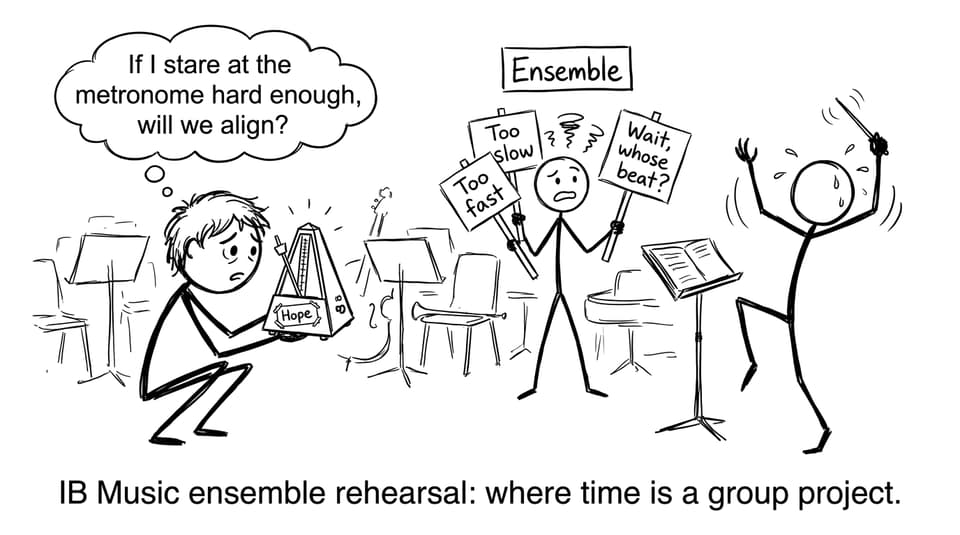
Quick checklist for an IB Music ensemble that sounds “together”
Use this before you run another rehearsal on autopilot:
-
Pick repertoire that fits your players and shows interaction (not parallel solos).
-
Set a single goal for every rehearsal (tempo, balance, articulation, cut-offs).
-
Build a shared listening vocabulary (what “lighter,” “rounder,” “more front” means).
-
Record early, not just at the end.
-
Rehearse transitions and endings twice as much as you think you need.
-
Do one “exam conditions” run-through before recording day.
If you want a broader view of what earns marks, keep What Examiners Look for in IB Music Performances open while you plan.
Choose repertoire that rewards collaboration
A common trap in IB Music is choosing a piece that’s impressive individually but doesn’t force ensemble skills to appear. Examiners can only reward what they can hear.
When you’re selecting repertoire, ask:
-
Is there real interdependence? Call-and-response, counter-melodies, layered rhythms, shared accompaniment patterns.
-
Do dynamics matter? Pieces with clear foreground/background roles help you demonstrate balance and blend.
-
Can everyone contribute meaningfully? Not everyone needs the melody, but everyone needs purposeful musical work.
-
Is the style manageable? Stylistic authenticity matters, but only if you can perform it convincingly.
If your group is unsure what “good evidence” sounds like in IB Music, browse a few related strategies in the IB Music blog hub and compare what top guidance emphasizes: clarity, intention, and reflection.
Rehearse with purpose (and fewer words)
Ensemble rehearsal time disappears fast. Someone is late. Someone forgot reeds. Someone wants to “just run it once.” Suddenly, you’ve spent 45 minutes warming up anxiety.
Try this simple structure that works well for IB Music performance prep:
Start together (5 minutes)
Tune, clap a tricky rhythm, and agree on a tempo reference. A shared start creates shared accountability.
Fix one priority (20 minutes)
Pick one: entries, balance, articulation, phrasing, or transitions. Work in short loops: 4 bars, then 8, then connect.
Run and review (10 minutes)
Do one full run-through. Then each person says one sentence:
-
“Best moment was…”
-
“Next rehearsal, we fix…”
If you need a sustainable overall study rhythm alongside rehearsals, How to Study for IB Exams Without Burning Out pairs well with performance-heavy weeks.
Build ensemble skills examiners actually hear
Ensemble skills are not vibes. They’re audible.
Balance and blend
Decide who leads in each section, and make it explicit. In IB Music, “expressive” is not an excuse for covering someone else.
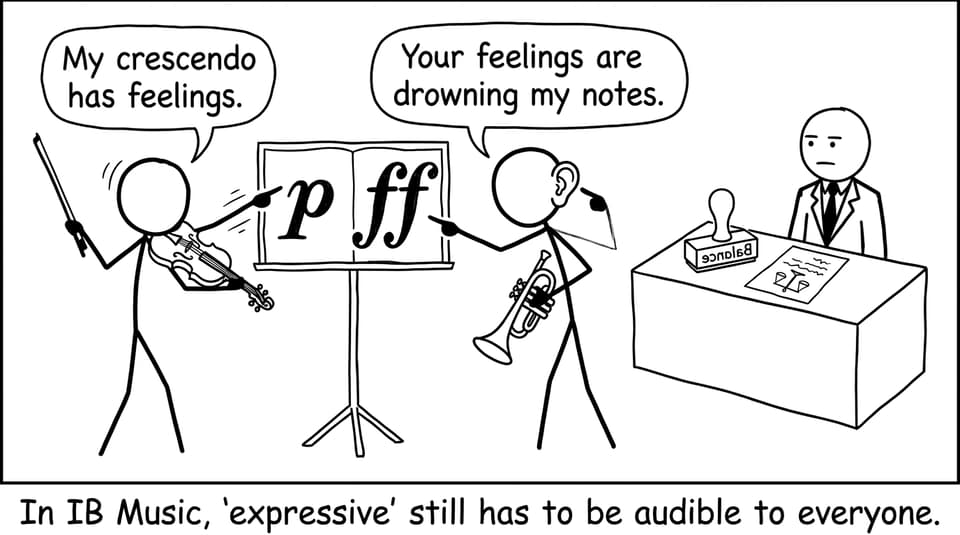
Practical fix: rehearse a passage twice with the leader at 70% volume and the support at 50%. Then swap roles. You learn both the musical shape and the humility.
Rhythmic unity
Don’t just “follow the beat.” Agree on where the beat lives: bass line, percussion, left hand, or breathing cue.
Non-verbal cues
Eye contact at entries. Visible breaths. A small nod for cut-offs. These are the hidden glue of strong IB Music ensemble performances.
Record early, then record like it matters
The fastest way to improve is to hear what the audience hears. Record a rough take in week one, not week six. You’ll notice the real issues: rushing, balance, tone mismatch, uneven articulation.
On recording day:
-
Test your setup beforehand.
-
Place players to reflect musical roles (melody slightly forward, accompaniment supporting).
-
Do multiple takes, but don’t chase perfection into exhaustion.
-
Between takes, change only one thing (tempo, dynamics, articulation), then re-record.
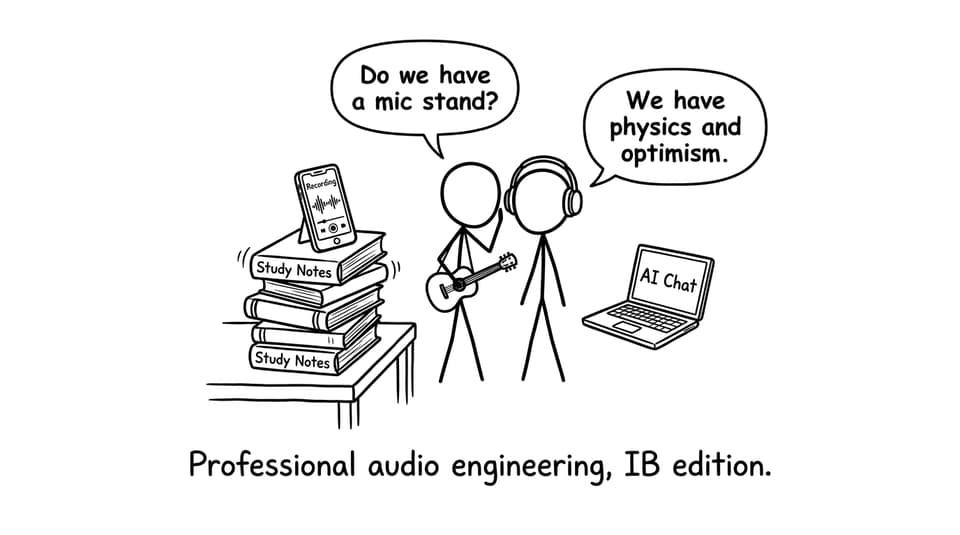
If you want a system that makes reflection easier, RevisionDojo’s AI Chat can help you turn a messy rehearsal note into a clean action plan, while the Study Notes keep you aligned with course expectations.
Use RevisionDojo to turn practice into progress
Performance improvement is rarely about doing more. It’s about doing the right reps.
Here’s a practical workflow many IB Music students use:
-
Use RevisionDojo’s Questionbank to sharpen listening and terminology so your reflections become specific.
-
Use Flashcards for quick daily recall of key performance vocabulary (balance, blend, articulation, texture).
-
If you’re preparing portfolio components alongside performance, What Examiners Look for in IB Music Portfolios helps you keep everything cohesive.
-
For markband clarity, compare your plan to Common Pitfalls That Lower Marks in IB Music Coursework.
-
If you’re also studying for listening, How to Analyze Music for the IB Listening Exam reinforces the same musical awareness that makes ensembles tighter.
RevisionDojo also supports higher-pressure preparation with Grading tools, Predicted Papers, Mock Exams, a Coursework Library, and Tutors when you need expert feedback beyond your classroom.
Conclusion
A strong IB Music ensemble performance is built the same way trust is built: small promises kept, week after week. You tune together. You listen past your own part. You fix the transition again. You record, cringe, adjust, and suddenly the piece starts to breathe.
If you want that process to feel simpler, RevisionDojo helps you turn rehearsal effort into measurable progress with Study Notes, Flashcards, AI Chat, and targeted practice support. Build the ensemble you want to be part of, and let your IB Music performance sound like a group that truly listens.

