


In IB Music, world traditions can feel like walking into a room mid-conversation. You hear rhythm, colour, language, community, butbut you’re not sure what’s important enough to write down.
The strongest coursework doesn’t try to sound “global.” It sounds accurate. It shows that you listened closely, researched respectfully, and then built a clear argument: this musical detail matters because this cultural purpose shaped it. That’s the difference between a pleasant description and examiner-level analysis in IB Music.
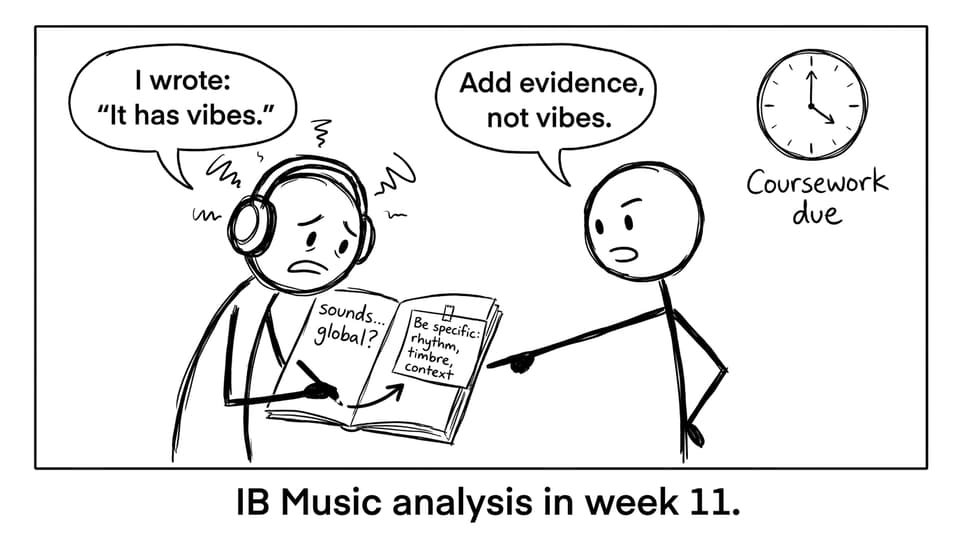
A quick checklist for IB Music world tradition analysis
-
Choose one specific tradition and 1-2 focused works/recordings.
-
Take timestamped listening notes on rhythm, melody, texture, timbre, structure.
-
Research context: function, setting, transmission, identity, history.
-
Write links between sound and meaning (not two separate paragraphs).
-
Add a short comparison to show global awareness.
-
End with reflection: how it influences your performing/creating choices.
If you need a strong baseline for describing musical elements, keep How to Analyze Music for the IB Listening Exam open while you work.
Start with the sound: what you can prove
World music analysis in IB Music begins with a simple rule: describe what a listener could verify. This keeps you away from stereotypes and makes your writing feel precise.
Focus on:
-
Rhythm and metre: cycles, cross-rhythms, layered ostinati, swing, additive patterns.
-
Melody and pitch organisation: pentatonic collections, raga-like scalar frameworks, maqam-style ornamentation, call-and-response contours.
-
Texture: drone + melody, heterophony, dense interlocking parts, antiphonal layers.
-
Timbre/instrumentation: voice quality, idiomatic playing techniques, instrument roles (lead vs. timekeeper).
-
Structure: repeated cycles, cue-based forms, sectional contrasts, text-driven pacing.
Then turn your notes into sentences that “show receipts.” Instead of “complex rhythms,” write: “a repeating cycle with accents grouped 3+3+2, reinforced by a low drum pattern at 0:42.”
To train that skill quickly, practise with targeted prompts in the RevisionDojo Questionbank and reinforce terminology using Study Notes.
Add cultural context (without letting it float away)
Context is where many IB Music students either overdo it (mini history essay) or underdo it (one vague sentence). The sweet spot is context that explains the sound.
Ask:
-
What is the music’s function (ritual, dance, storytelling, worship, protest, social bonding)?
-
Who performs it, for whom, and in what setting?
-
How is it learned (oral tradition, apprenticeship, notation, community participation)?
-
What values does it reinforce (community, virtuosity, trance, hierarchy, identity)?
Then connect back: “Because the tradition is learned through imitation, ornamentation varies between performers, producing a flexible melodic surface rather than fixed repetition.”
For a deeper method on linking features to meaning, use How to Connect Musical Analysis to Cultural Context as your framework.
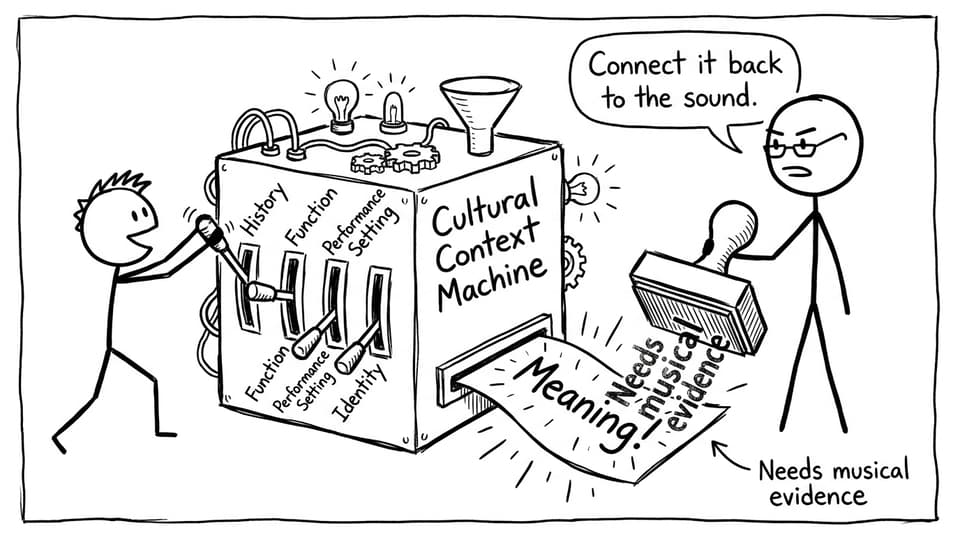
Turn description into analysis: the “because” sentence
Examiners reward you when you stop listing features and start explaining relationships.
A reliable IB Music sentence pattern:
- Feature (what) + evidence (where) + effect (how it sounds) + contextual reason (why it’s there).
Example structure:
- “Interlocking parts create a shimmering composite rhythm (0:58), which supports communal participation because no single line carries the full pattern; thethe groove only exists when the group locks in.”
If comparative writing is part of your task, follow the structure in Best Strategies for IB Music Comparative Analysis and choose repertoire using How to Choose Pieces for IB Music Comparative Analysis.
Compare traditions carefully (global, not generic)
A comparison should reveal a musical idea, not a travel brochure.
Try comparisons like:
-
Improvisation as freedom vs. improvisation as rule-bound vocabulary.
-
Repetition as trance/ritual stability vs. repetition as dance energy.
-
Texture built from interlocking parts vs. texture built from harmony changes.
Keep the comparison short, then return to your main tradition. Your coursework should feel like a clear argument, not a collection.
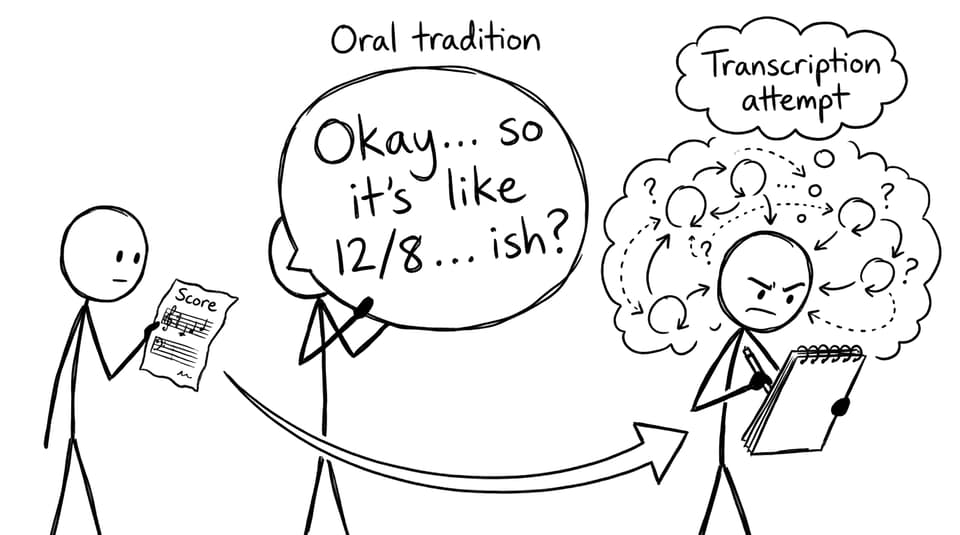
Reflect on how it shapes your own music-making
In IB Music, reflection isn’t a diary entry. It’s the bridge between listening and output.
Write 4-6 sentences answering:
-
What technique or concept will you borrow (rhythmic cycle, texture, timbre, form)?
-
How will you adapt it ethically and musically (crediting influence, avoiding caricature)?
-
What changed in your composing/performing decisions as a result?
If you’re building a portfolio and want clarity on what examiners value, read What Examiners Look for in IB Music Portfolios and avoid common traps in Common Pitfalls That Lower Marks in IB Music Coursework.
Closing: make your IB Music analysis feel inevitable
Great IB Music coursework has a quiet confidence. It doesn’t decorate the page with big cultural claims. It makes small, defensible observations, then connects them so clearly that your conclusion feels inevitable.
If you want that same clarity while juggling deadlines, RevisionDojo pulls the whole loop together: Study Notes for terminology, Questionbank for practice, Flashcards for retention, AI Chat for quick confusion-clearing, Grading tools for rubric alignment, plus Predicted Papers, Mock Exams, the Coursework Library, and Tutors when you need extra structure. Build your next world tradition analysis with evidence first, andand let your insight follow.