

The moment clarity starts to matter (more than your math)
You can feel it when it happens.
You’ve done the hard part: you found a topic you genuinely care about, collected data, built a model, and your calculations finally behave. Then you reread your draft and realize something unsettling: the mathematics is fine, but the story is scattered. The examiner will need to work to understand what you meant.
In IB Math, that’s the quiet way strong work loses marks.
A well-organized exploration doesn’t just look professional. It makes your reasoning unavoidable. It guides the reader so smoothly that your conclusions feel earned, not announced.
If you want a rubric-aligned foundation before you rearrange anything, start with the official, examiner-focused resources in IB Internal Assessment Guides and the specific course guide for IB Mathematics Analysis and Approaches (AA) IA Guide or IB Mathematics Applications & Interpretation (AI) IA Guide.
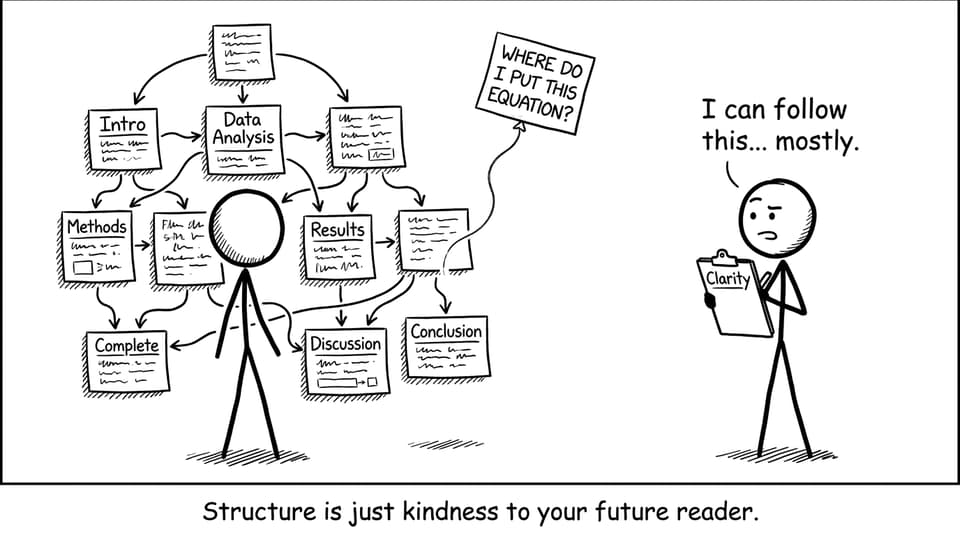
A quick clarity checklist (save this before you edit)
Before you move paragraphs around, run this fast IB Math IA clarity check:
-
Does your introduction clearly state the aim and what math you will use?
-
Can a reader summarize each section in one sentence?
-
Are equations placed immediately next to the explanation that interprets them?
-
Do figures appear right after they are discussed (with captions and labels)?
-
Do headings reflect your reasoning, not just “things you did”?
-
Do you evaluate limitations throughout, not only at the end?
-
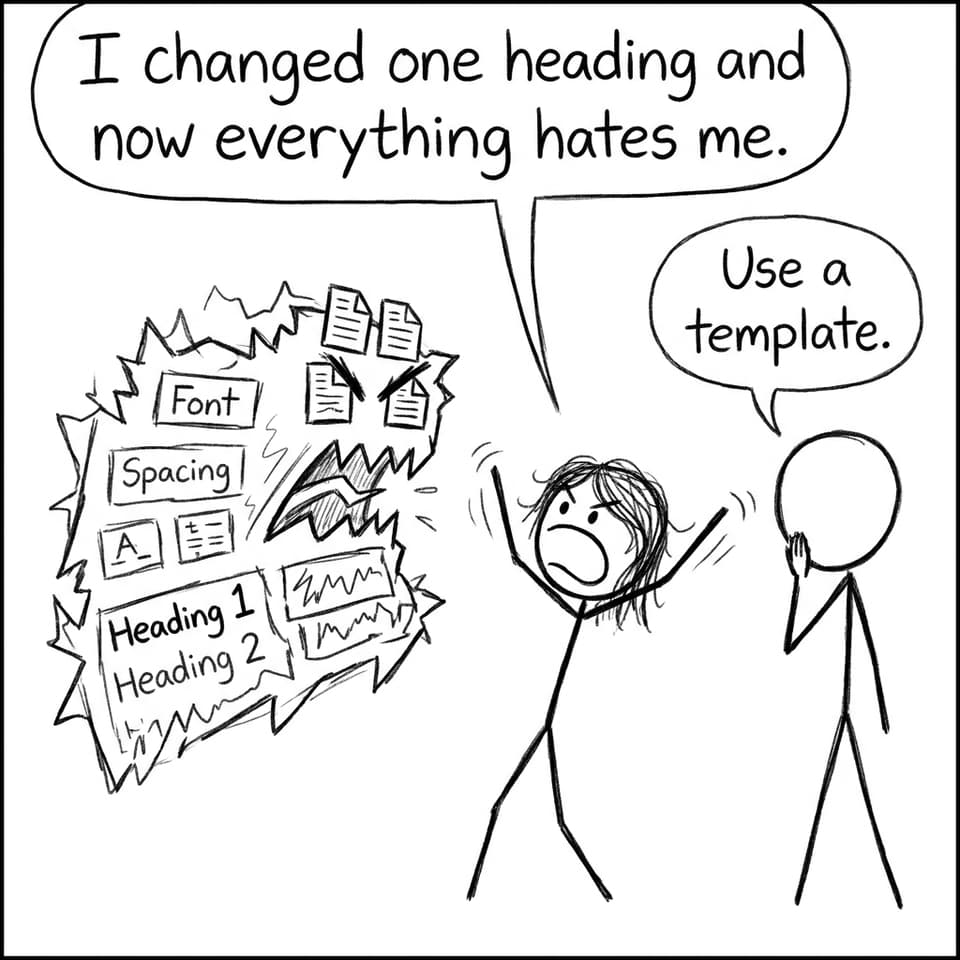
Is formatting consistent (fonts, spacing, figure numbering, notation)?
To calibrate what “good” looks like, browse real examples in IB Maths AA IA Examples and IB Maths AI IA Examples.
The clean structure most IB Math IAs secretly follow
The IB doesn’t demand one rigid template, but high-scoring Math IAs tend to share a familiar backbone. Think of it like a documentary: set the scene, show the method, present evidence, then reflect honestly.
Introduction: aim, context, and a map
Your job is to make the examiner relax. In a few lines, they should know:
-
What you’re exploring (your aim)
-
Why it matters (context or personal motivation)
-
What mathematical tools will appear
-
What the journey will look like (mini-roadmap)
If you want a reliable model for this, compare your draft to the structure guidance in How To Structure An IB Math IA Effectively.
Mathematical development: method with reasons
This section is where many students go wrong by dumping calculations without narrative.
A clearer pattern is:
-
Introduce the idea (what you need to find)
-
Justify the method (why this model/technique)
-
Define variables and assumptions
-
Show the working in digestible steps
When you need a quick refresher on a technique, RevisionDojo’s topic notes can keep your writing accurate and clean. For example, see Notes for Functions - IB for model language and definitions.
Results and interpretation: what the math is saying
Results are not just numbers. They are claims.
For every table, graph, regression output, or parameter estimate, add one sentence that answers: “So what?” Tie it back to your aim, not to your effort.
Reflection and evaluation: be intelligently skeptical
Reflection is not apologizing. It’s demonstrating control.
A strong IB Math IA evaluates:
-
Strengths and weaknesses of your method
-
Sensitivity to assumptions
-
Data reliability and constraints
-
What you would improve, and why
If you’re unsure what “good reflection” sounds like, use How to Reflect on Challenges in Your IB IA or EE as a tone guide.
Conclusion: compress the story into truth
A good conclusion is short, specific, and aligned with the aim. It restates the key findings and what you learned about the mathematics.
For a model to follow, see How to Write a Strong IB Math IA Conclusion.
Headings that guide the examiner (instead of labeling your panic)
Headings are navigation. Navigation creates trust.
Instead of vague headings like “Process” or “Working,” aim for headings that mirror reasoning:
-
“Choosing a model and defining assumptions”
-
“Fitting the model to data”
-
“Testing validity and refining parameters”
-
“Interpreting results in context”
This matters in IB because presentation and mathematical communication reward the reader’s ability to follow your thinking.
If you want a dedicated formatting walkthrough, use How to Format and Present Your IB Math IA Professionally.
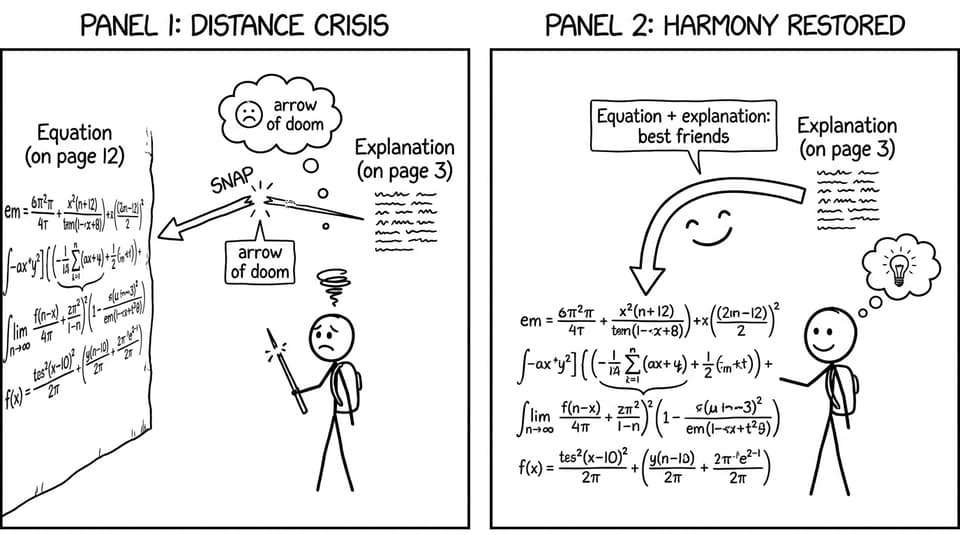
Keep math and meaning together (the “two-line rule”)
Here’s a practical rule that improves clarity fast:
If you present an equation, follow it within the next two lines with a sentence that interprets it.
That sentence can do one of three jobs:
-
Define variables (“where k is the growth constant…”)
-
Explain purpose (“this allows me to estimate…”)
-
Interpret result (“this suggests the relationship is approximately linear for…”)
This is where many IB students accidentally lose the reader. The examiner shouldn’t have to hunt for what an expression means.
Figures and tables: place them where the reader needs them
A graph that appears two pages after it’s referenced creates doubt. Even if the math is correct, the communication feels careless.
For every figure:
-
Put it immediately after you introduce it
-
Label axes and units
-
Add a caption that explains what the figure shows
-
Reference it in text (“Figure 2 shows…”) and tell the reader what to notice
To avoid common presentation traps, it helps to skim Top Mistakes Students Make in IB Math IA (and How to Avoid Them).
Consistency: the invisible signal that you’re in control
Consistency is quiet, but examiners feel it.
Pick standards and keep them:
-
One font and size
-
One heading hierarchy
-
One notation system (define symbols once, then reuse)
-
One figure numbering style
-
One citation style
If you want the official expectations gathered in one place, review Essentials of the Internal Assessment (IB Math AA IA).
How RevisionDojo helps you organize without second-guessing
Most students don’t struggle because they lack ability. They struggle because they’re making hundreds of small structural decisions alone.
RevisionDojo is built to remove that uncertainty:
-
Use the Coursework Library to compare your flow against exemplar-level structure in IB Coursework Examples: IA, EE and TOK Exemplars.
-
Use Study Notes to keep definitions and method explanations accurate and concise.
-
Use AI Chat when you’re stuck rewriting a transition or clarifying a variable definition.
-
Use Grading tools to check whether your presentation and reflection read like top-band work.
-
Use Flashcards to keep key command terms and model assumptions at your fingertips while drafting.
-
Use the Questionbank and Mock Exams to sharpen the syllabus math that supports your IA topic, so your writing stays confident under exam pressure.
If you’re also balancing deadlines, the planning approach in The Ideal IB IA and EE Timeline for Busy Students can prevent the last-minute “formatting spiral.”
Closing: write like you’re leading someone through a thought
A clear IB Math IA is not louder math. It’s kinder math.
It’s the difference between “here are my calculations” and “here is my reasoning, step by step, until the conclusion can’t be anything else.” When you organize your IA for maximum clarity, you give the examiner one job: to agree that you communicated mathematics well.
If you want the fastest path to that level of structure, use RevisionDojo’s IA Guides, Coursework Library, Study Notes, AI Chat, and Grading tools to turn a messy draft into a readable, high-scoring exploration. Your future reader (and future you) will feel the difference.