
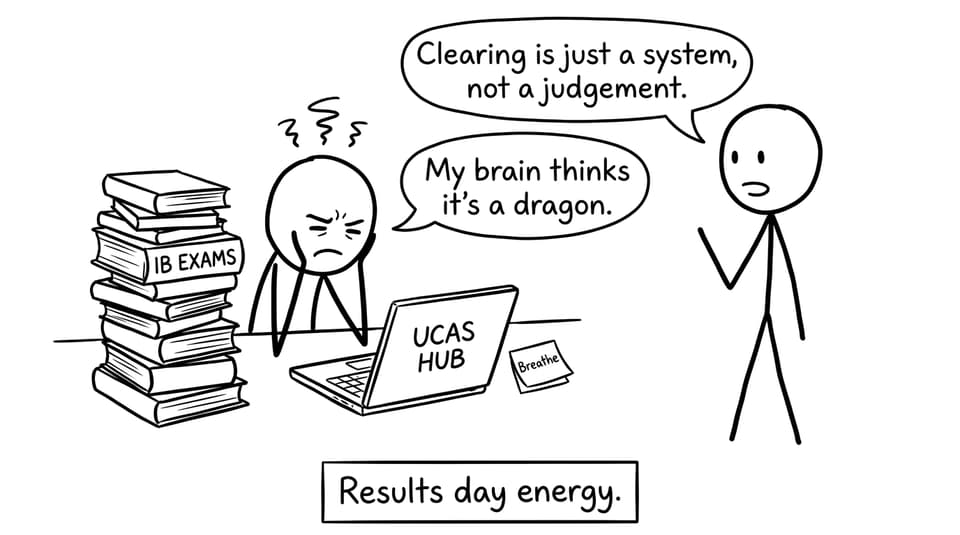
Last-minute offers can feel like a trapdoor opening under your summer plans. One moment you’re revising for IB exams, counting marks and minutes, and the next you’re refreshing tabs, wondering if a university place is slipping away.
Here’s the quieter truth: UCAS was built for exactly this situation. If your results shift, your choices change, or you’re applying late, there are still routes to a great course. The students who do well are rarely the loudest or fastest typers. They’re the ones who show up prepared, keep options open, and treat Clearing like a process, not a verdict.
A quick UCAS checklist for last-minute offers
Keep this on one page so you can move quickly:
-
Log into UCAS Hub and confirm your status (including whether you’re “in Clearing”).
-
Build a shortlist of 5-10 realistic course options.
-
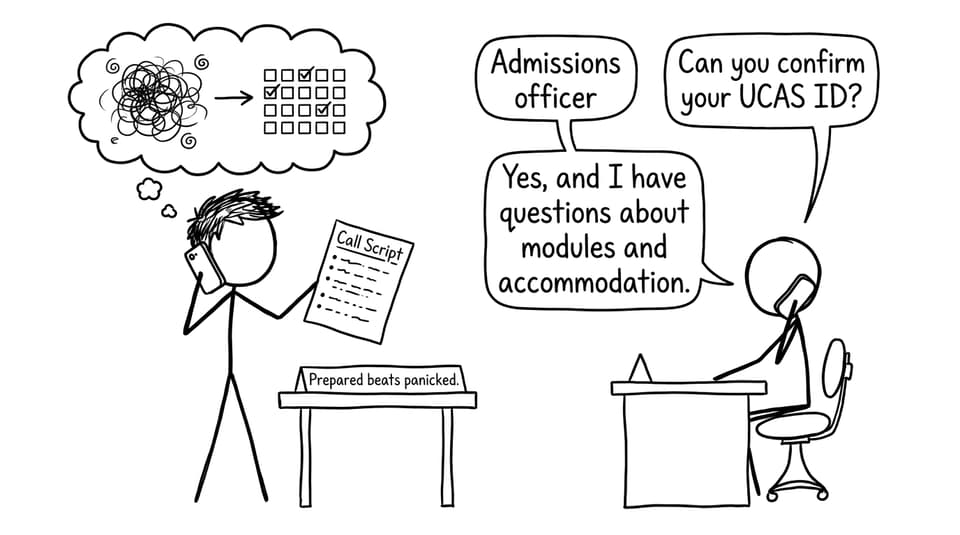
Prepare your “call sheet”: UCAS ID, grades, course codes, and a 30-second reason for interest.
-
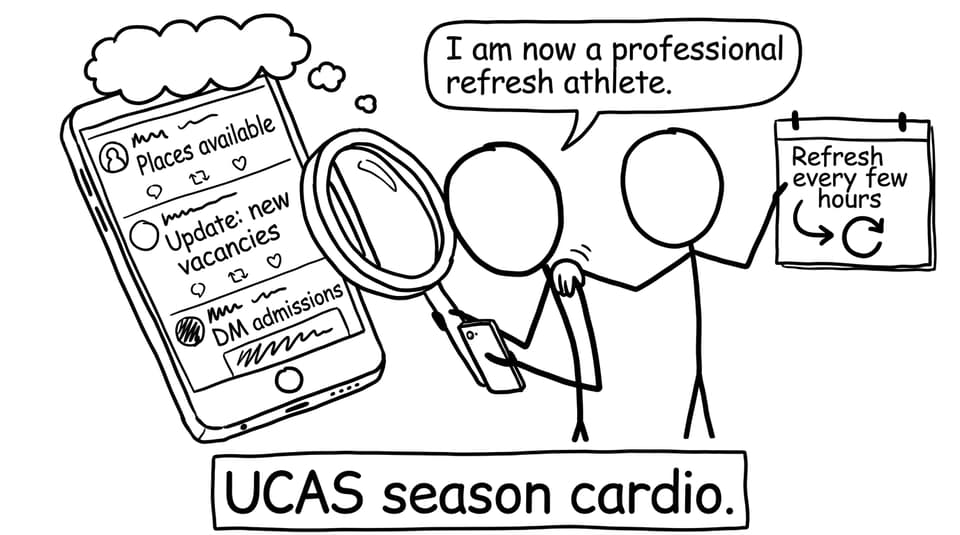
Check vacancies multiple times per day.
-
Call admissions teams early and take notes.
-
Accept only when you’re sure: one decision can replace previous choices in UCAS Hub.
For a fuller workflow, use UCAS Clearing Explained: Step-by-Step.
Where to find last-minute university offers (beyond refreshing once)
Start with UCAS Clearing and Clearing Plus
Your main directory is UCAS Clearing: course vacancies update constantly, especially around results windows. Treat it like live inventory, not a static list.
If you want a shortcut, UCAS Clearing Plus can suggest matches, but it works best when you stay proactive and call as well. This guide helps you use it without waiting passively: UCAS Clearing Plus Full Guide.
Check university websites directly
Many universities publish Clearing vacancies on their own sites first. Look for “Clearing” or “Undergraduate admissions” pages, then scan modules, entry requirements, and whether similar courses have space.
If you’re changing direction, read this before you click anything final in UCAS Hub: How to Switch Your UCAS Choice Without Losing Options.
Use social media like a tool, not a spiral
Universities post updates on Instagram, X, and LinkedIn. Follow official accounts, turn on notifications briefly, and save posts with course details.
How to move fast without making a panic choice
Call admissions with a script
Calling is still the fastest way to find out what’s truly available. You’ll often learn about flexibility, alternative pathways, and what they actually mean by “typical offer.”
Use a call script and stay calm. RevisionDojo’s prep list is solid: UCAS Clearing Checklist: What to Prepare Before You Call. If you need phrasing support mid-call, this helps too: How to Negotiate Offers During UCAS Clearing Calls.
Stay flexible, but stay intentional
Flexibility doesn’t mean settling. It means thinking in clusters: if your first choice is full, what’s the adjacent subject that still fits your interests and strengths? Psychology might become cognitive science; economics might become business analytics; engineering might become materials science.
And if your results day emotions are loud, stabilise first. This is worth keeping open in another tab: IB Results Day: How to Prepare Emotionally.
RevisionDojo: the calm base camp while UCAS moves fast
When you’re juggling UCAS decisions alongside IB exam pressure, you need one place that keeps your brain steady. RevisionDojo is built for that.
Use Study Notes and Flashcards for quick recall while you wait on calls. Use the Questionbank to tighten weak topics without guessing. If you’re stuck, AI Chat helps you unblock fast. When you want realism, run Mock Exams and Predicted Papers to keep timing sharp. If coursework is still haunting you, the Grading tools and Coursework Library bring structure back. And if you want a human plan, Tutors can help you make decisions with clarity.
Closing: treat UCAS like a process, not a judgement
If you’re hunting last-minute university offers, you’re not “behind.” You’re simply in a faster lane of the same system. UCAS Clearing rewards calm preparation: frequent checks, smart shortlists, direct calls, and the courage to stay flexible without rushing.
And while UCAS moves quickly, your IB exams still matter. Make RevisionDojo your steady base camp for the next few weeks: practice with the Questionbank, reinforce with Study Notes and Flashcards, build confidence with Predicted Papers and Mock Exams, and use AI Chat, Grading tools, the Coursework Library, and Tutors when you need clarity fast.