In IB Theatre, there’s a quiet moment most students recognize: you finish a rehearsal run, your heartbeat settles, and you think, That worked. Then you remember the uncomfortable truth: if you don’t document it, it barely exists for an examiner.
Your Solo Theatre Piece is judged partly on what the audience sees, but strongly on what the assessor can trace: research, experimentation, decision-making, and reflection. Documentation is the bridge between your creative instincts and academic evidence. In IB Theatre, that bridge is often the difference between “interesting performance” and “intentional theatre-maker.”
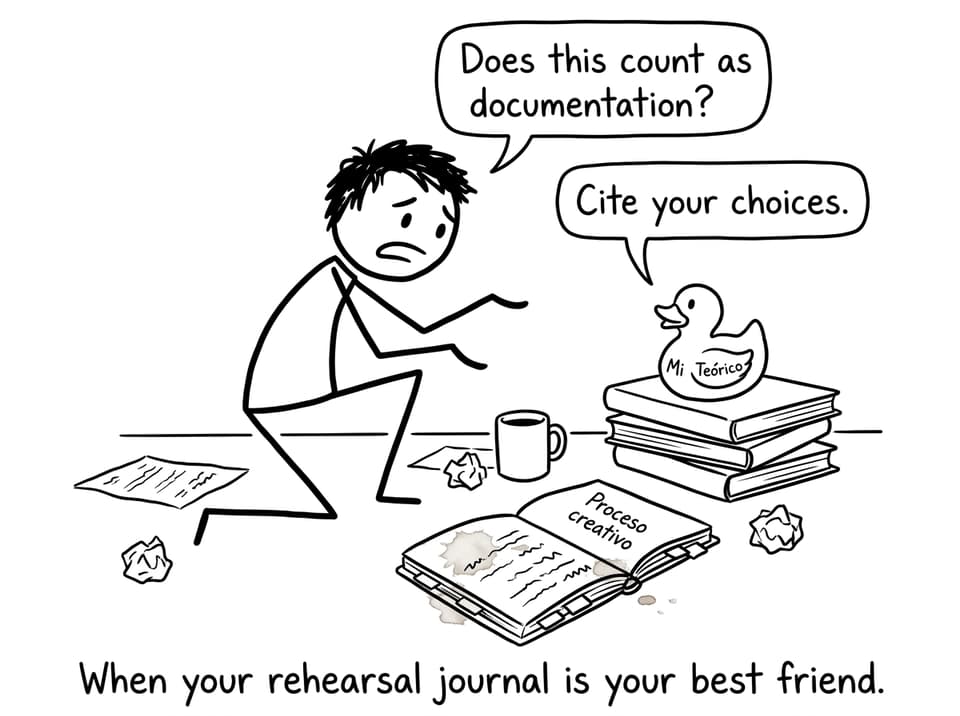
A quick documentation checklist (the 10-minute routine)
Use this mini-routine after every session so your IB Theatre process stays consistent:
-
Date + goal: What were you trying to test today?
-
Theorist link: Which principle/convention guided the session?
-
Experiment log: What did you try (specific actions, not vibes)?
-
Evidence: photo/sketch/blocking map/short transcript snippet.
-
Reflection: What changed in your understanding? What will you do next?
If you want a wider view of how this fits into your overall subject strategy, keep Best Study Strategies for IB Theatre Students (SL & HL) bookmarked.
Why documentation matters in IB Theatre (even more than you think)
The Solo Theatre Piece (HL) asks you to research a theatre theorist and create a 6-8 minute solo performance inspired by their ideas. But examiners can’t grade what they can’t see. Documentation shows the thinking behind your acting choices: why you changed a transition, why you cut a section, why a physical score became more abstract.
It also protects you from last-minute amnesia. In the final weeks, many IB Theatre students try to rebuild their process from memory. That tends to produce vague reflections (“it was effective”) instead of precise analysis (“direct address increased critical distance, but reduced emotional continuity, so I adjusted pacing and placement”).
For a bigger picture on scoring high across components, see How to Score a Level 7 in IB Theatre: Complete Guide.
How to document your creative process for the Solo Theatre Piece
Start with research notes you can actually use
In IB Theatre, research is only powerful when it becomes playable. Don’t just summarize your theorist. Extract working tools:
-
Key principles (2-3 is usually enough)
-
A short quote or paraphrase you can reference
-
What the principle looks like in practice (voice, movement, audience relationship, space)
If you struggle to keep research organized, borrow the structure from Best Ways to Organize Your Research for the IB Theatre Research Presentation and adapt it to your solo.
Keep a rehearsal journal that captures choices, not summaries
A useful journal entry is specific enough that someone else could recreate the experiment. After each rehearsal, write in three layers:
-
What I did: blocking, gesture sequence, vocal rhythm, use of props.
-
What happened: audience impact (even if it’s just a friend), clarity, tension, pacing.
-
What it means: how it confirms or challenges your theorist’s ideas.
To tighten your rehearsal habits, pair your journaling with Best Rehearsal Strategies for the IB Theatre Solo Piece. Your journal becomes sharper when rehearsals are structured.
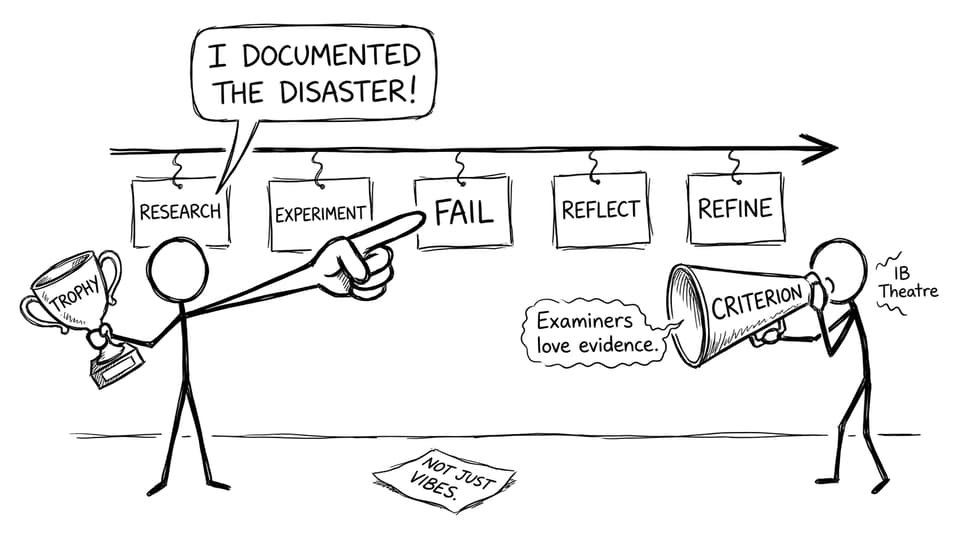
Use visuals as “proof of thinking”
In IB Theatre, visuals aren’t decoration. They’re evidence. A quick sketch of stage space can explain three paragraphs of text.
Strong options include:
-
blocking diagrams (with arrows and levels)
-
prop/costume sketches with annotations
-
a timeline of scenes or beats
-
screenshots of a rehearsal timer with notes on pacing
If you’re exploring physical work, you’ll also find ideas in How to Apply Physical Exploration in World Theatre Studies.
Reflect critically: the sentence frame that fixes vague writing
A high-scoring IB Theatre reflection usually answers three questions in order:
-
So what? What did you discover or change?
-
Because why? Why did it happen (theorist principle, audience effect, skill limitation)?
-
Now what? What will you do next session?
Example frame:
“When I used direct address in the opening, the meaning became clearer but emotional tension flattened. This aligns with my theorist’s focus on audience awareness, so I kept the technique and added a sharper physical contrast to rebuild intensity.”
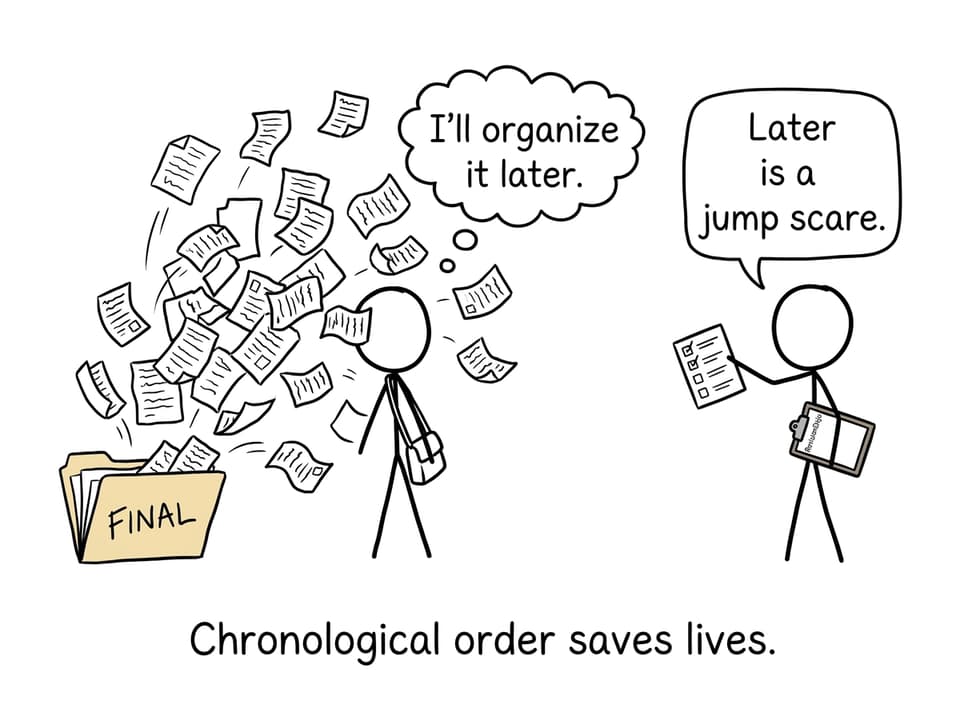
Organize chronologically so the examiner can follow the story
Chronology creates trust. It tells the examiner: this wasn’t assembled at the last second.
Keep your materials in stages: Research, Experiments, Draft structure, Refinement, Final decisions. If you want to see how RevisionDojo structures exam prep materials and feedback loops, start at RevisionDojo for IB.
How RevisionDojo helps IB Theatre students document better
In IB Theatre, the fastest improvement often comes from tightening the loop between practice and feedback. RevisionDojo is built around that loop:
-
Use Study Notes to clarify practitioner ideas quickly: Study Notes
-
Turn key concepts into Flashcards for recall under pressure
-
Use AI Chat to test whether your reflections actually connect to theory
-
Use Grading tools like the IB Solo theatre piece Grader to self-check against criteria language
-
Build momentum with Mock Exams and Predicted Papers in your broader exam season (so Theatre doesn’t get crowded out)
-
Pull exemplars and structure ideas from the Coursework Library
-
If you’re stuck, Tutors can help you turn messy rehearsal notes into clear, criterion-focused commentary
Closing: make your process visible
The strongest IB Theatre Solo Theatre Pieces don’t just look polished; they read like a clear journey from research to risk to refinement. Your documentation is where that journey becomes legible: the experiments that failed, the principles you wrestled with, the choices you defended with evidence.
If you want your process to feel calmer (and your writing to feel more examiner-friendly), use RevisionDojo to keep everything in one place: Study Notes, Flashcards, AI Chat, Grading tools, Questionbank practice habits, Mock Exams, Predicted Papers, Coursework Library, and Tutors. In IB Theatre, your performance is the tip of the iceberg. Let your documentation show the rest.

