![IB Chemistry: Calculate pH from [H+] Fast](https://pub-images.revisiondojo.com/blog-covers/v13/be39f4a322e00132/19edc3cbfe456a23787e722c87e7b063-1200.png)

The first time you see 1.0 × 10⁻⁷ on a page, it can feel like chemistry is whispering in a language meant for calculators, not humans. Then you learn pH is basically a translator: it takes tiny hydrogen ion concentrations and turns them into numbers your brain can compare quickly. In IB Chemistry, that translation shows up everywhere: MCQs, data-based questions, titration curves, and the kind of “one-line calculation” that’s worth a deceptively easy mark.
This guide will help you calculate pH from hydrogen ion concentration [H⁺] cleanly, quickly, and with fewer “how did I lose that mark?” moments.
The one formula you must own in IB Chemistry
In IB Chemistry, pH is defined using base-10 logarithms:
pH = -log₁₀([H⁺])
A few ideas are packed into that one line:
-
[H⁺] is the hydrogen ion concentration in mol dm⁻³.
-
The log is base 10 (the “log” button on most calculators).
-
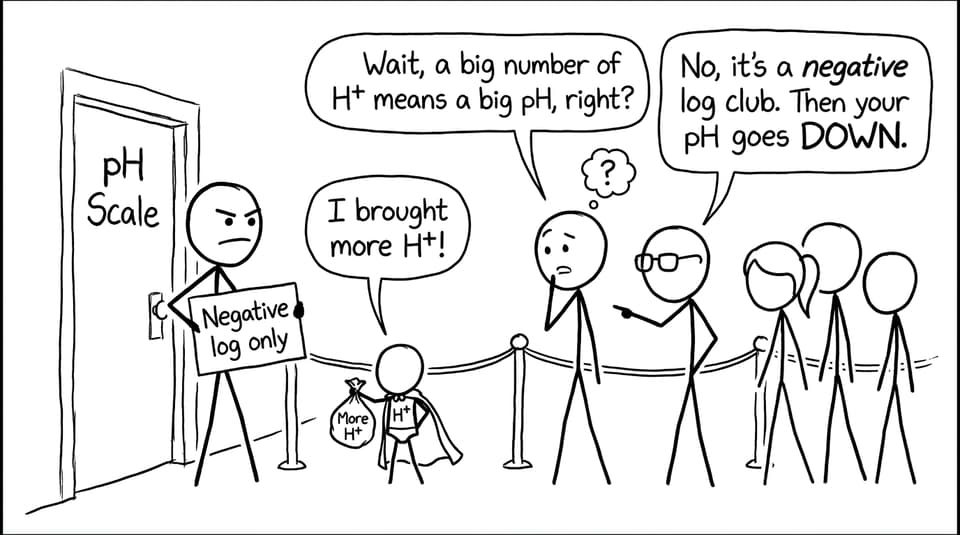
The negative sign flips the scale so higher acidity (more H⁺) means lower pH.
If you want the official syllabus-style framing and examples, keep the notes page open while you practise: pH and the hydrogen ion concentration.
Quick checklist: calculating pH from [H⁺] in 20 seconds
When the question gives you [H⁺], run this checklist:
-
Confirm units are mol dm⁻³.
-
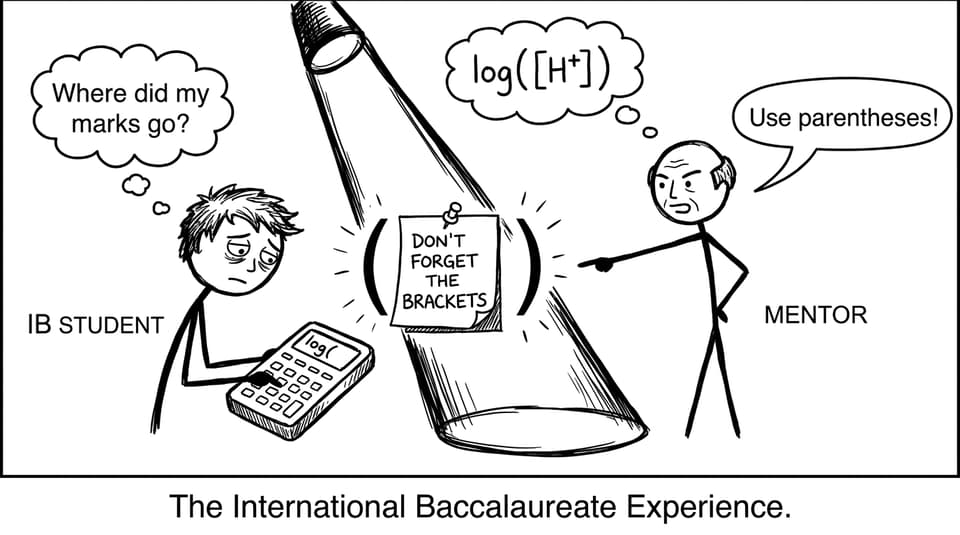
Type -log( value ) with brackets/parentheses.
-
Use log base 10, not ln.
-
Round pH to the correct decimal places (usually 2 dp or matching sig figs logic).
-
Sanity-check: more H⁺ should mean lower pH.
If you’re drilling under exam timing, pairing this checklist with targeted practice from RevisionDojo’s 8.3 The pH scale Questionbank makes the habit automatic.
Worked examples (the kind that win easy marks)
Example 1: standard scientific notation
Given: [H⁺] = 1.0 × 10⁻³ mol dm⁻³
pH = -log₁₀(1.0 × 10⁻³)
You can reason it out without a calculator: log₁₀(10⁻³) = -3, so pH = -(-3) = 3.00.
In IB Chemistry, this “spot the exponent” skill matters because Paper 1-style questions often reward quick estimation. For pacing strategies, see How to Approach Multiple Choice Questions in IB Chemistry Paper 1.
Example 2: non-power-of-10 concentration
Given: [H⁺] = 3.2 × 10⁻⁵ mol dm⁻³
pH = -log₁₀(3.2 × 10⁻⁵)
Break it mentally:
-
log₁₀(3.2 × 10⁻⁵) = log₁₀(3.2) + log₁₀(10⁻⁵)
-
≈ 0.505 + (-5) = -4.495
So pH ≈ 4.50
Even when you estimate, the direction should always make sense: 10⁻⁵ is less H⁺ than 10⁻³, so the pH should be higher (less acidic).
Why this keeps returning across IB Chemistry topics
pH-from-[H⁺] looks small, but it’s a doorway skill. In IB Chemistry, you’ll reuse it in:
-
Strong vs weak acids (ionization and equilibrium reasoning)
-
Indicators and the “what color will it be?” logic
-
Titrations and pH curves
-
Buffers (where pH is tied to ratios)
-
Lab work and IAs where pH is the measured variable
If you’re currently in the acid-base unit, it helps to connect this calculation to the bigger picture:
And if you’re building an IA idea around pH (rate, corrosion, buffers, food chemistry), start here: IB Chemistry IA Ideas in 2025 (Sorted by Major + Topic).
The mistakes that quietly cost marks
Most pH errors in IB Chemistry aren’t “hard chemistry” mistakes. They’re tiny slips:
Parentheses errors
Typing -log 1.0 × 10^-3 without wrapping the full concentration can give nonsense depending on calculator order.
Wrong log button
Use log, not ln. Natural logs appear in other topics; pH is base-10 by definition.
Rounding too early
Keep full calculator output, round at the end. A small rounding change can shift answers, especially in multi-step buffer or titration problems.
Confusing neutrality rules
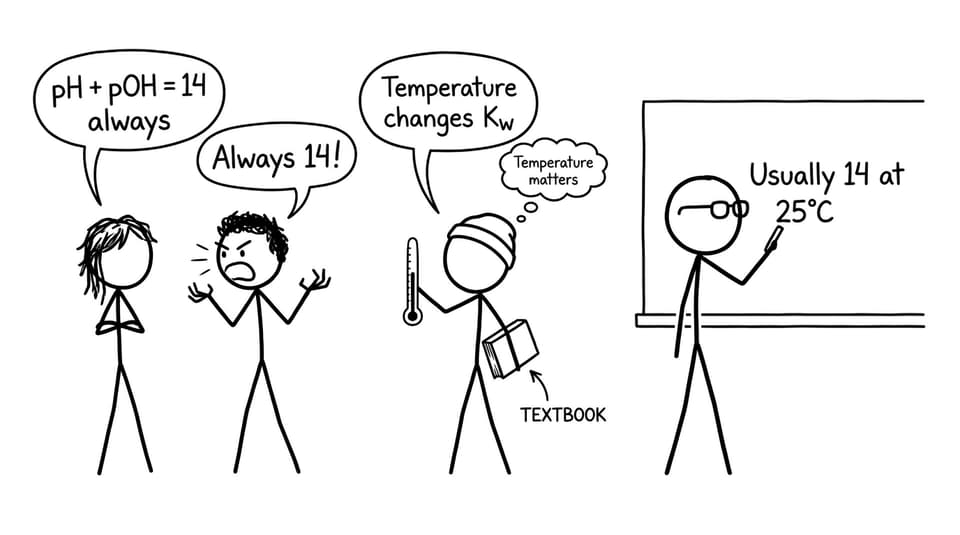
Many students memorize “neutral is 7” and stop thinking. Neutral means [H⁺] = [OH⁻], and the pH of neutral water changes with temperature. This article clarifies what IB expects: What Is the pH of a Neutral Solution at 25°C?.
How RevisionDojo helps you make this automatic
The weird thing about IB Chemistry is that the “easy” skills are the ones you need under pressure. That’s why RevisionDojo is built for repetition without boredom:
-
Questionbank: drill pH calculations by subtopic until you stop hesitating.
-
Study Notes: keep definitions and patterns tight (start with pH and the hydrogen ion concentration).
-
Flashcards: lock in the formula, log rules, and common concentration benchmarks.
-
AI Chat: ask “why did I get this pH wrong?” and get a step-by-step diagnostic.
-
Mock Exams and Predicted Papers: practise pH as it appears in mixed, timed conditions.
-
Grading tools: turn mistakes into patterns you can actually fix.
-
Coursework Library and Tutors: for students using pH in practical investigations or needing targeted help.
If you want a broader study routine that makes these small skills stick, use: How Should I Study for My IB Chemistry Test?.
Closing: make pH a free mark in IB Chemistry
Most students don’t lose pH marks because they don’t understand acids. They lose them because of rushed calculator input, forgotten parentheses, or a log button pressed on autopilot. Make pH-from-[H⁺] a reflex now, and it becomes a free mark later, in titrations, buffers, equilibrium, and Paper 1 speed rounds.
If you want that reflex built the right way, use RevisionDojo’s IB Chemistry ecosystem: learn the idea in Study Notes, automate it with Flashcards, pressure-test it in the Questionbank, then lock it in with Mock Exams, Predicted Papers, and support from AI Chat or Tutors when you hit a wall.