


A quick hook for IB Chemistry students
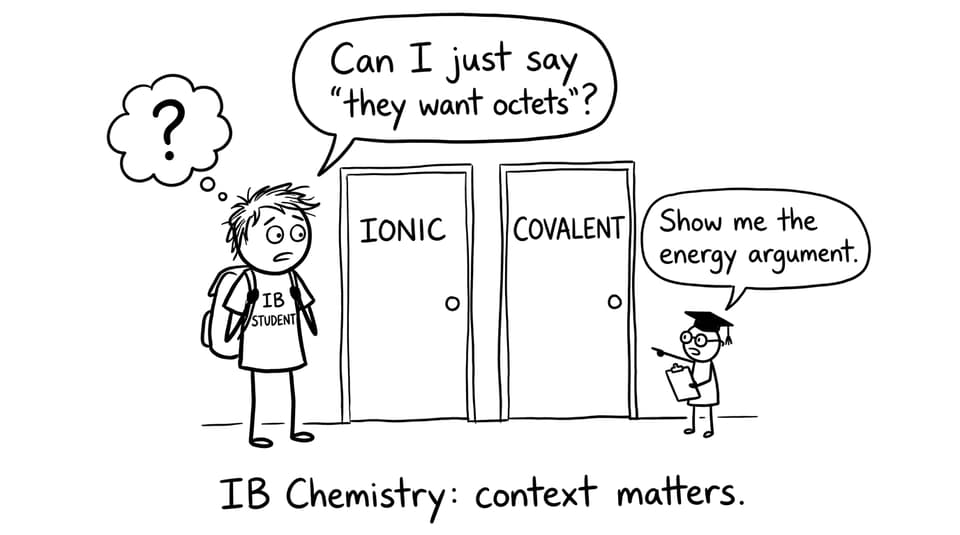
In IB Chemistry, bonding questions often feel unfair because the answer changes depending on the situation. Two atoms can meet with the same goal, lower energy and more stability, and still choose different “relationship styles”: electron transfer (ionic) or electron sharing (covalent). The trick is to stop thinking in labels and start thinking in conditions: Which option is energetically worth it for these atoms, in this setting?
The exam checklist: what decides ionic vs covalent?
Use this fast decision framework in IB Chemistry:
-
Type of elements: metal + nonmetal suggests ionic; nonmetal + nonmetal suggests covalent.
-
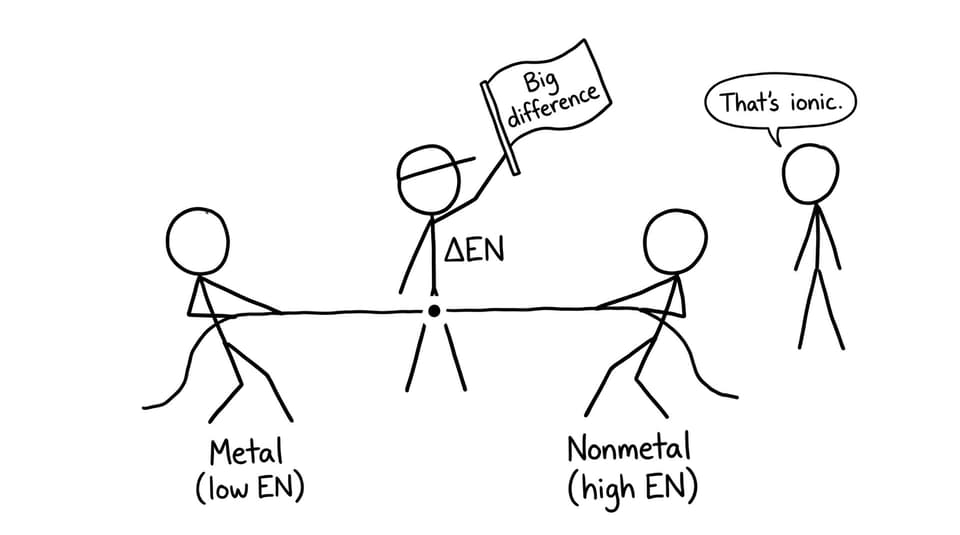
Electronegativity difference (ΔEN): large ΔEN pushes toward ionic character; small ΔEN pushes toward covalent character.
-
Energy balance: ionization energy, electron affinity, and lattice energy decide whether electron transfer “pays off.”
-
Structure and environment: ionic lattices are stabilized as solids; covalent molecules often suit gases/liquids and flexible molecular shapes.
For syllabus-aligned practice, pair this with RevisionDojo’s core bonding hubs: 4.1 Ionic bonding and structure and Chemical bonding and structure notes.
Why ionic bonds form under different conditions
Ionic bonding is most likely when one atom can lose electrons easily and the other can gain electrons strongly. That’s why it commonly happens between metals (low ionization energy) and nonmetals (high electronegativity).
In IB Chemistry language, the key idea is that full electron transfer becomes energetically favorable when:
-
the metal doesn’t “pay” too much to remove an electron (low ionization energy),
-
the nonmetal releases energy when gaining that electron (electron affinity), and
-
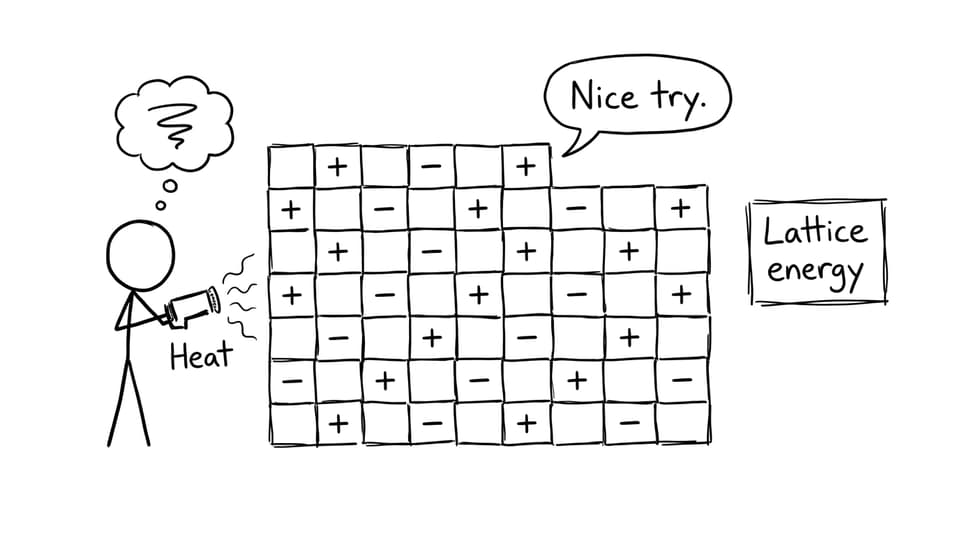
the resulting ions lock into a solid lattice that releases lattice energy.
That last point is huge: ionic compounds get a major stability boost when they form an extended lattice. If you want question practice that targets exactly this reasoning, try the 4.1 Ionic bonding and structure Questionbank.
Why covalent bonds form under different conditions
Covalent bonding shows up when neither atom can comfortably become an ion. If both atoms have relatively high electronegativity (common with nonmetals) and the ΔEN is smaller, sharing electrons is the lower-energy solution.
A clean definition you can reuse in IB Chemistry: a covalent bond is the electrostatic attraction between the shared electron pair and both nuclei. If you want that phrasing and examples drilled clearly, use Covalent Bonds Explained Clearly for IB Chemistry and then reinforce it with the S2.2 the Covalent Model Questionbank.
Covalent substances also “fit” environments where discrete molecules and flexible geometry matter (think gases, liquids, and biological systems). In contrast, building a rigid ionic lattice only pays off when that lattice can actually form and stay stable.
The bridge idea: it’s not a strict boundary
In IB Chemistry, it’s safer to treat bonding as a spectrum. Many real compounds have mixed character because electron sharing can be unequal. For the “continuum” framing (great for higher-mark explanations), see Bonding as a continuum (S2.4.1).
When you’re unsure, anchor your explanation in electronegativity and trends: Electronegativity Explained Simply for IB Chemistry and Using Atomic Trends to Predict Bond Types cover the cause-and-effect chain examiners reward.
Bringing it home (and how RevisionDojo helps)
The reason ionic and covalent bonds form under different conditions is simple but powerful: atoms follow the path to lowest energy, and the best path depends on electronegativity, energy costs, and the stability of the structure that forms. In IB Chemistry, your edge comes from explaining that logic clearly, not memorizing labels.
If you want to turn this into exam marks, use RevisionDojo to revise bonding with Study Notes, drill it with the Questionbank, lock in definitions with Flashcards, and test yourself with Mock Exams, Predicted Papers, and Grading tools. When something still feels fuzzy, AI Chat and Tutors can walk you from “I kind of get it” to “I can write it under pressure.”