

If you ask ten IB students which subject is harder, you rarely get ten answers. You get ten biographies.
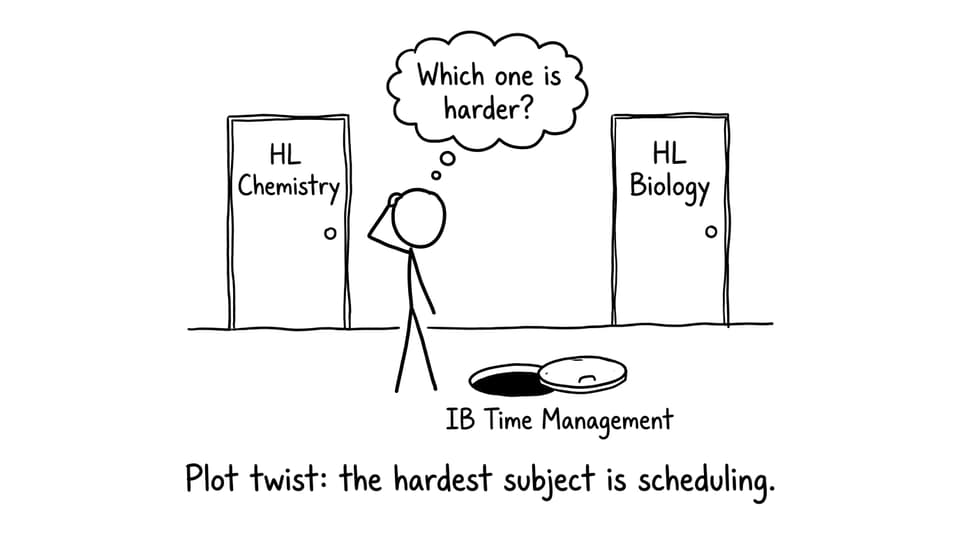
One person says HL Chemistry is brutal because the numbers never stop. Another swears HL Biology is worse because the content multiplies like bacteria in a warm incubator. And a third quietly admits the hardest part wasn’t either science -- it was keeping up when the calendar got loud.
This student breakdown will help you decide what “hard” actually means in IB terms: time, skills, exam pressure, and the kind of mistakes you tend to repeat.
Quick checklist: what “harder” means in IB science
Use this mini-checklist before you compare HL Chemistry vs HL Biology in the IB.
-
If you dislike multi-step calculations and abstract models, HL Chemistry may feel harder.
-
If you struggle with heavy reading, vocabulary, and long explanations, HL Biology may feel harder.
-
If your biggest weakness is exam technique, both can be equally hard without targeted practice.
-
If your biggest weakness is consistency, your schedule will decide the winner.
A practical place to start is exploring the official-style resources and topic maps in the IB Chemistry hub and the IB Biology hub. Keep them open as your “home base” while you revise.
IB HL Chemistry: why it feels hard (even to strong students)
HL Chemistry difficulty is rarely about one chapter. It’s about how often the subject asks you to do three things at once: recall, calculate, and explain.
The math and the logic never travel alone
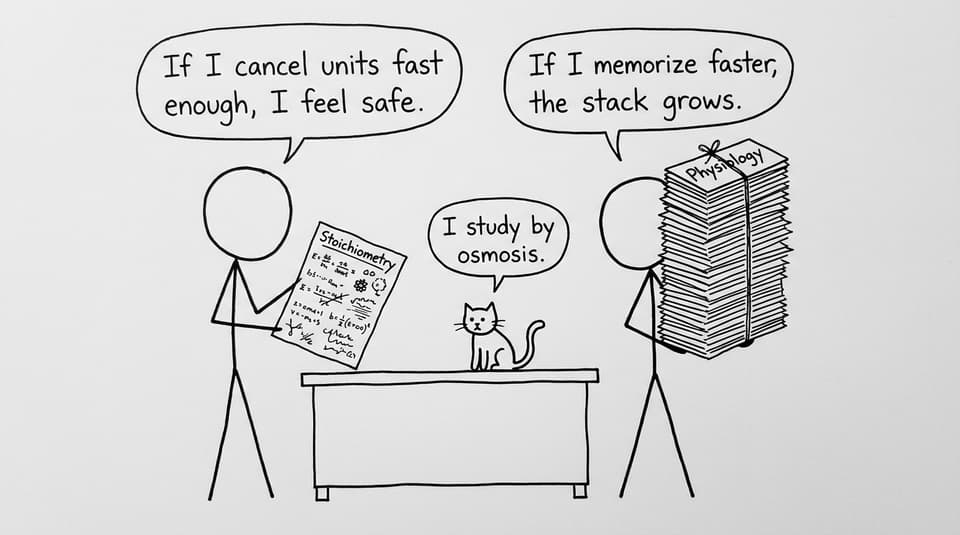
Stoichiometry, energetics, equilibrium, kinetics, and acid-base problems aren’t just “plug in formula” tasks. In IB HL Chemistry, the marks often sit in the reasoning: units, assumptions, significant figures, and why your result makes chemical sense.
If you want a structured overview of what success looks like, use IB Chemistry HL: Complete Guide for Success as a roadmap, then revise topic-by-topic using IB Chemistry revision notes.
Organic chemistry adds a memory layer to a logic subject
Many students expect Chemistry to be “mostly calculations,” then organic chemistry arrives with mechanisms, reagents, conditions, and patterns. It’s not pure memorization, but you do need quick recall to unlock the reasoning.
A good way to train this in IB style is:
-
learn the concept in notes,
-
drill recall with Flashcards,
-
then apply under pressure in question sets.
Labs and the Chemistry IA reward precision
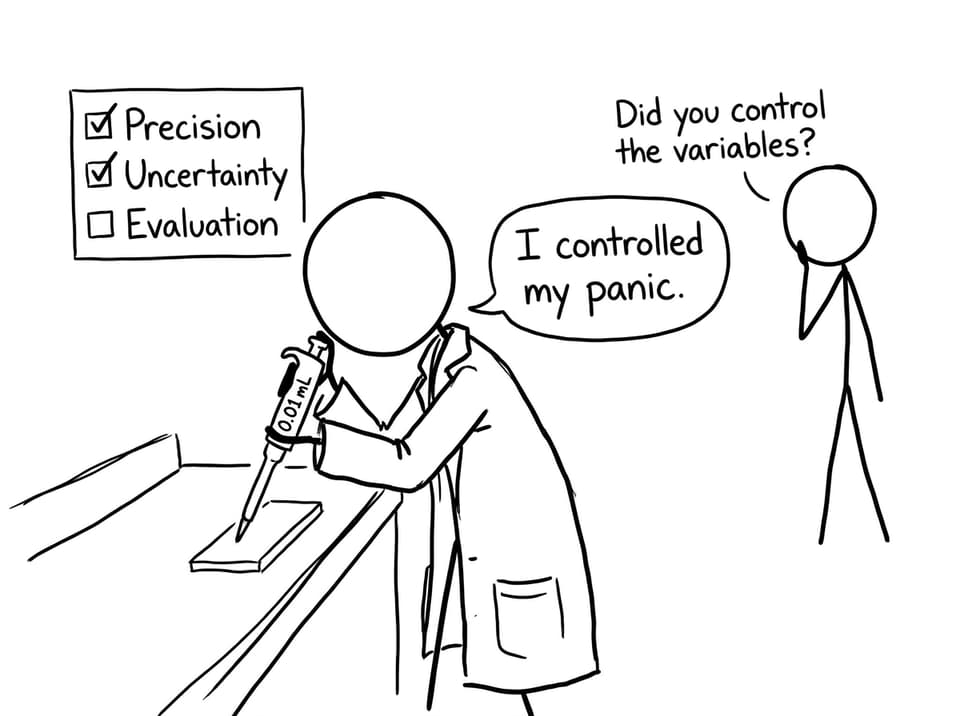
Chemistry practical work can feel unforgiving because small measurement choices change your uncertainty and evaluation. That precision mindset is also what makes the Chemistry IA feel technical.
RevisionDojo helps here through a tight loop: learn the method with Study Notes, practice questions in the Questionbank, and use Grading tools to see what “evaluation” really looks like when marks are on the line.
IB HL Biology: why it feels hard (even when it’s “less math”)
HL Biology difficulty is often the opposite problem: it’s not that one question is impossible, it’s that there are so many ways to be slightly wrong.
The syllabus is wide, and it tests connections
HL Biology asks you to move across levels of organization: molecules to cells to systems to ecosystems. The challenge in IB isn’t only knowing facts; it’s explaining relationships clearly under time.
If you want the big-picture structure, read IB Biology: Complete Guide for IB Exam Prep, then anchor your revision in the IB Biology hub.
Memorization is real, but “explain” is the trap
Biology has vocabulary, pathways, and diagrams, yes. But the grade jump often comes from writing: clear definitions, correct sequencing, and using data.
A fast way to compress content is to pair your notes with visual summaries like Biology Cheatsheets -- Visual Study Guides, then test yourself immediately.
Data analysis is where confident students drop marks
Graphs, experiments, uncertainties, and drawing conclusions show up everywhere. If you only “revise content,” Biology can punish you on exam day.
That’s why timed practice matters. Use IB-style drills, then ask AI Chat to critique your written reasoning: what you assumed, what you concluded, and what you failed to state.
Head-to-head: which is harder in IB terms?
Here’s a student-style comparison, without pretending there’s one universal answer.
Difficulty driver: cognitive load
-
HL Chemistry: fewer topics feel “endless,” but each problem can be multi-step and abstract.
-
HL Biology: more topics overall, and you must keep many details retrievable.
Difficulty driver: exam pressure
-
HL Chemistry: pressure comes from accuracy and chain-of-reasoning mistakes.
-
HL Biology: pressure comes from time, writing clarity, and coverage.
Difficulty driver: what you naturally enjoy
-
If you like puzzles and structured logic, IB HL Chemistry often becomes manageable.
-
If you like systems, diagrams, and explaining processes, IB HL Biology often becomes predictable.
How to decide (and how to study either one)
Ask yourself which kind of “hard” you can commit to for months.
-
Choose HL Chemistry if you’re willing to practice calculations weekly and fix small technique errors.
-
Choose HL Biology if you’re willing to do consistent recall and write explanations, not just read notes.
No matter which you pick, the most reliable IB routine is:
-
understand with Study Notes,
-
remember with Flashcards,
-
apply with the Questionbank,
-
then rehearse under pressure using IB Predicted Papers by IB Examiners (Free).
If you’re rebuilding your routine, You’re Not Lazy -- Your IB Study Method Is Broken is a useful mindset reset. And if you want the full tool overview, RevisionDojo App: The Smarter Way to Prep for IB Exams shows how the pieces connect: Questionbank, Study Notes, Flashcards, AI Chat, Grading tools, Predicted Papers, Mock Exams, Coursework Library, and Tutors.
Closing: the “harder” subject is the one you practice less
In the IB, difficulty is rarely destiny. It’s mostly exposure.
HL Chemistry gets easier when you’ve solved enough problems that your brain stops treating them as emergencies. HL Biology gets easier when you’ve recalled and explained the same ideas enough times that they become automatic.
If you want one place to run that process without juggling tabs, RevisionDojo gives you the full loop: Questionbank, Study Notes, Flashcards, AI Chat, Grading tools, Predicted Papers, Mock Exams, a Coursework Library, and Tutors when you need a human to raise the ceiling. Start with the IB Chemistry hub or the IB Biology hub and build your plan from there.