The moment Paper 1 starts, your brain tries to sprint
There’s a specific kind of panic that shows up in IB Chemistry Paper 1: the clock is loud, the options look plausible, and you realize you’re not allowed a calculator. The best students don’t “know everything”; they stay calm, move efficiently, and use a repeatable method that turns multiple choice into a scoring machine.
This guide gives you that method for IB Chemistry Paper 1 MCQs, plus a practice loop you can run daily using RevisionDojo.
Know the Paper 1 rules before you train
For IB Chemistry Paper 1A (MCQ):
-
SL: 30 questions in 30 minutes
-
HL: 40 questions in 60 minutes
-
1 mark each
-
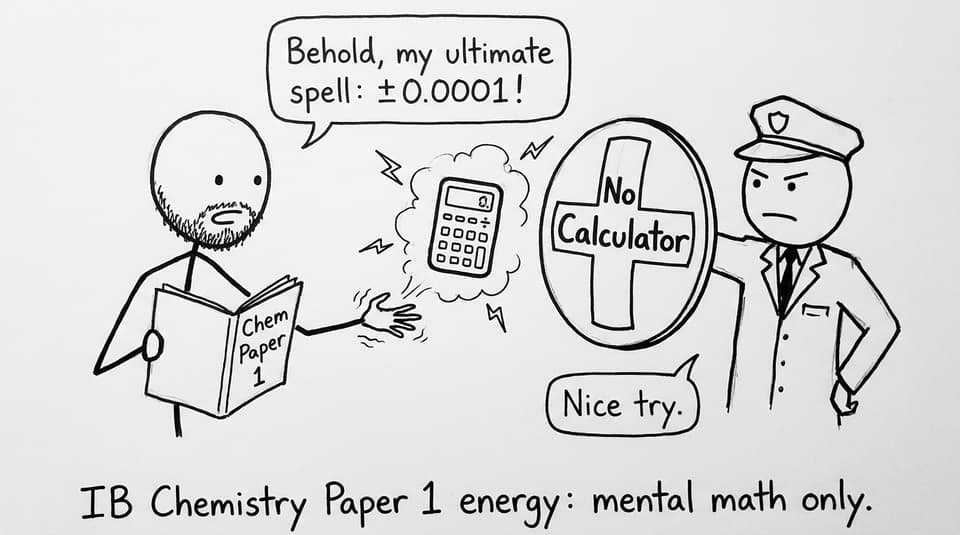
No calculator
So your real skill is not “solving”; it’s making high-quality decisions quickly.
To get oriented, start with RevisionDojo’s dedicated guide: How to Approach Multiple Choice Questions in IB Chemistry Paper 1.
The 5-step method for IB Chemistry MCQs
Read the stem like it’s hiding your marks
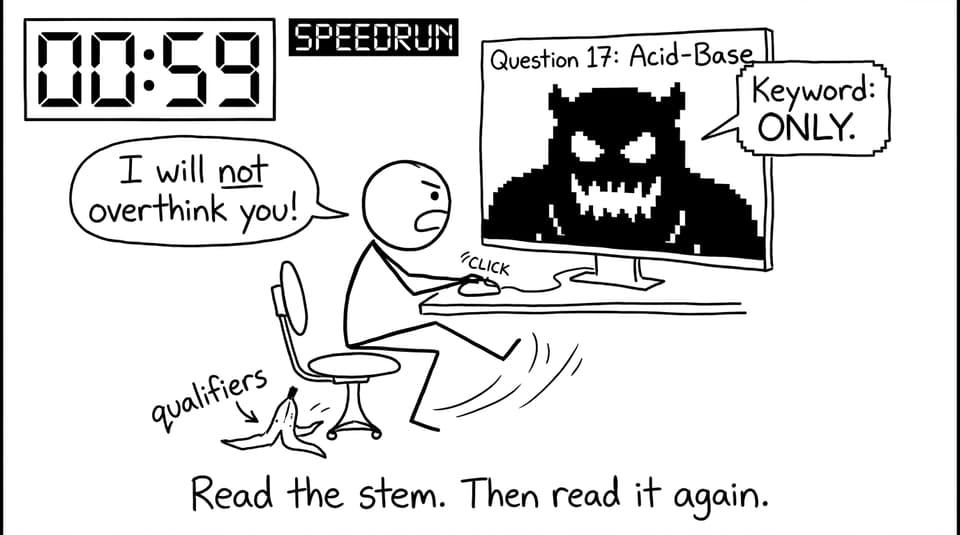
Cover the options with your hand (or mentally). Ask: What exactly is being tested? In IB Chemistry, many wrong answers are correct facts, but for a different question.
Eliminate first, calculate second
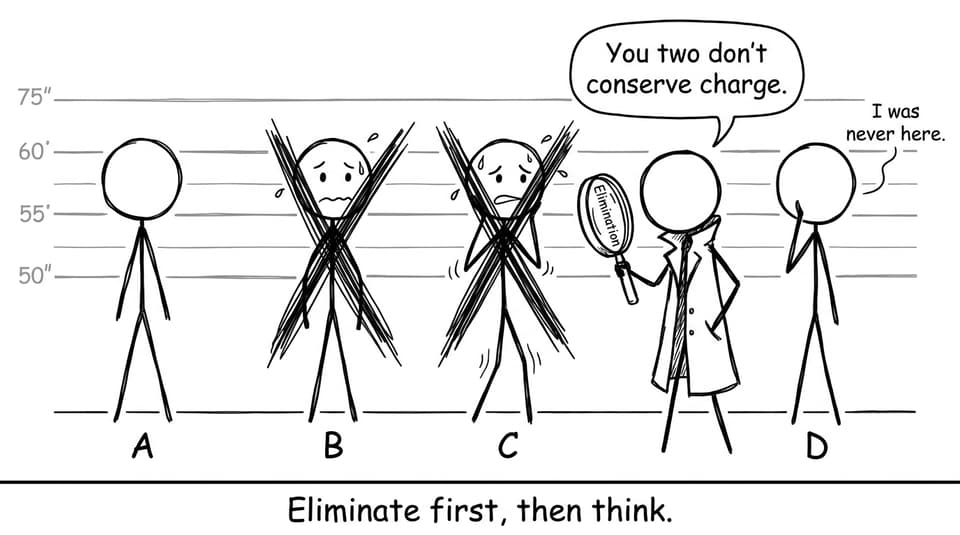
Cross out the two most obviously wrong options before doing any working. This immediately boosts accuracy and reduces time pressure.
Watch for trap words: “always”, “never”, “only”
In IB Chemistry, absolute qualifiers often signal distractors. They’re not always wrong, but they demand proof. If you can’t justify it fast, flag it and move.
Skip fast, return smarter
If you’re stuck after ~60 seconds (SL) or ~90 seconds (HL), guess, flag, and move on. There’s no penalty for wrong answers, and finishing the paper matters.
Don’t overthink your first good answer
If you have a clear justification, commit. Overthinking in IB Chemistry Paper 1 usually means you’re inventing complexity that isn’t there.
What to revise (so MCQs stop feeling random)
Paper 1A pulls from core IB Chemistry content. If your score swings wildly, it’s often one of these:
-
Moles and stoichiometry (units, ratios, limiting reagents)
-
Atomic structure and periodicity
-
Bonding and structure
-
Energetics, kinetics, equilibrium
-
Acids/bases and redox
-
Organic functional groups and simple mechanisms
A good way to target weak areas is to drill by syllabus slice using RevisionDojo’s Questionbank: Questionbank feature and the main hub IB Chemistry Resources.
A practice loop that actually improves Paper 1 scores
Here’s a simple weekly loop for IB Chemistry MCQs:
-
Mon-Thu: 15-25 MCQs by topic in the IB Chemistry Questionbank (example topic)
-
Fri: one timed mixed set using IB Paper 1 Mock Exams: Master Multiple Choice Questions
-
Weekend: review mistakes, then patch gaps with Notes + Flashcards: Flashcards feature and Flashcards hub
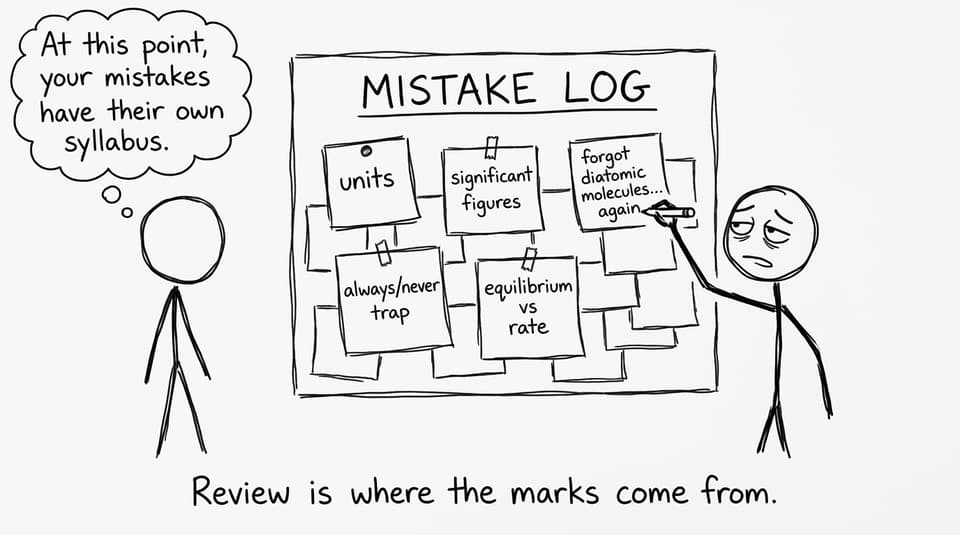
Your review matters more than your volume. If you keep missing equilibrium logic, for example, anchor your revision with a focused page like 7.1 Equilibrium.
Closing: turn IB Chemistry Paper 1 into your reliable points
IB Chemistry MCQs reward calm systems. Read the stem, eliminate aggressively, respect trap words, and protect your timing. Then practice like a scientist: short sets, timed pressure, honest review.
If you want one place where that whole loop is built for you, start in IB Chemistry Resources and drill with the Questionbank. Your next Paper 1 won’t feel easier because the questions change; it will feel easier because you do.



