


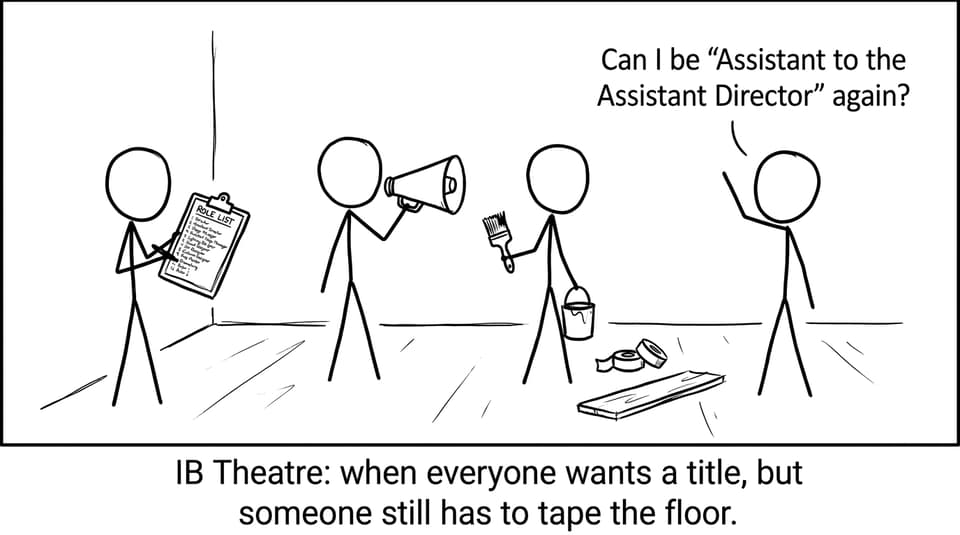
In IB Theatre, the Collaborative Project can feel like a small company trying to open on time. Everyone is talented. Everyone is busy. And somehow, the same three people end up taping the floor at 7:42am.
That’s the hidden pressure of IB Theatre: the work is collaborative, but the marks are individual. So balancing roles and responsibilities is not just “being fair”; it’s protecting your evidence, your reflection, and your final grade.
IB Theatre Collaborative Project: the balancing checklist
Use this quick system to keep your IB Theatre group moving without losing your personal contribution:
-
Agree on a shared goal (what are you trying to make the audience feel/think?)
-
Assign primary roles early (creative and practical)
-
Add rotating roles (warm-ups, rehearsal leader, reflection lead)
-
Set a weekly “evidence rule”: everyone uploads proof of contribution
-
Do a 5-minute debrief after each session (one success, one problem, one next step)
If you need the bigger overview of the task, keep this open while you plan: Understanding the Collaborative Project in IB Theatre.
Why balancing roles matters in IB Theatre (more than your group thinks)
In most group projects, fairness is the goal. In IB Theatre, clarity is the goal.
Because assessment is individual, examiners are looking for a clear line between:
-
what the ensemble created, and
-
what you contributed, changed, improved, researched, tested, and refined.
Balanced roles create that line. When responsibilities are muddy, your reflection becomes vague. When your reflection is vague, your process looks accidental. And in IB Theatre, accidental choices rarely score well.
For a high-level view of what top achievement looks like across the course, anchor your standards here: How to Score a Level 7 in IB Theatre: Complete Guide.
The three role types you need (even in a small ensemble)
Creative roles (visible choices)
These are the roles students usually fight for: director, performer, designer, dramaturg, choreographer. They shape meaning directly: rhythm, composition, proxemics, tension, symbolism.
In IB Theatre, creative roles score best when you can explain why choices were made and how research or experimentation shaped them.
Practical roles (invisible stability)
Stage manager, documentation lead, scheduling coordinator, props/costume coordinator, tech lead. These roles keep the project alive when motivation drops.
A practical role can score highly in IB Theatre if you document decisions and connect organization to artistic outcomes (for example, how a props plan enabled clearer symbolism).
Rotating roles (shared leadership)
Rotating roles prevent one-person dominance and give everyone leadership evidence:
-
warm-up leader
-
rehearsal captain
-
feedback facilitator
-
reflection lead
To strengthen ensemble habits, steal exercises directly from: Best Ensemble-Building Exercises for IB Theatre Students.
How to balance roles and responsibilities in the IB Theatre Collaborative Project
Start with strengths, then design discomfort
A calm group starts with “what are you good at?” A high-scoring IB Theatre group also asks: “what will you learn?”
Try this split:
-
70% responsibilities aligned with strengths
-
30% responsibilities that stretch you
That way your reflection contains both competence and growth, which is exactly what examiners want to see.
Write a one-page role contract (seriously)
Keep it simple. One shared page with:
-
each person’s primary role
-
two concrete weekly responsibilities
-
one rotating role each week
-
what “done” means (deliverables)
This protects you when deadlines tighten and memories get selective.
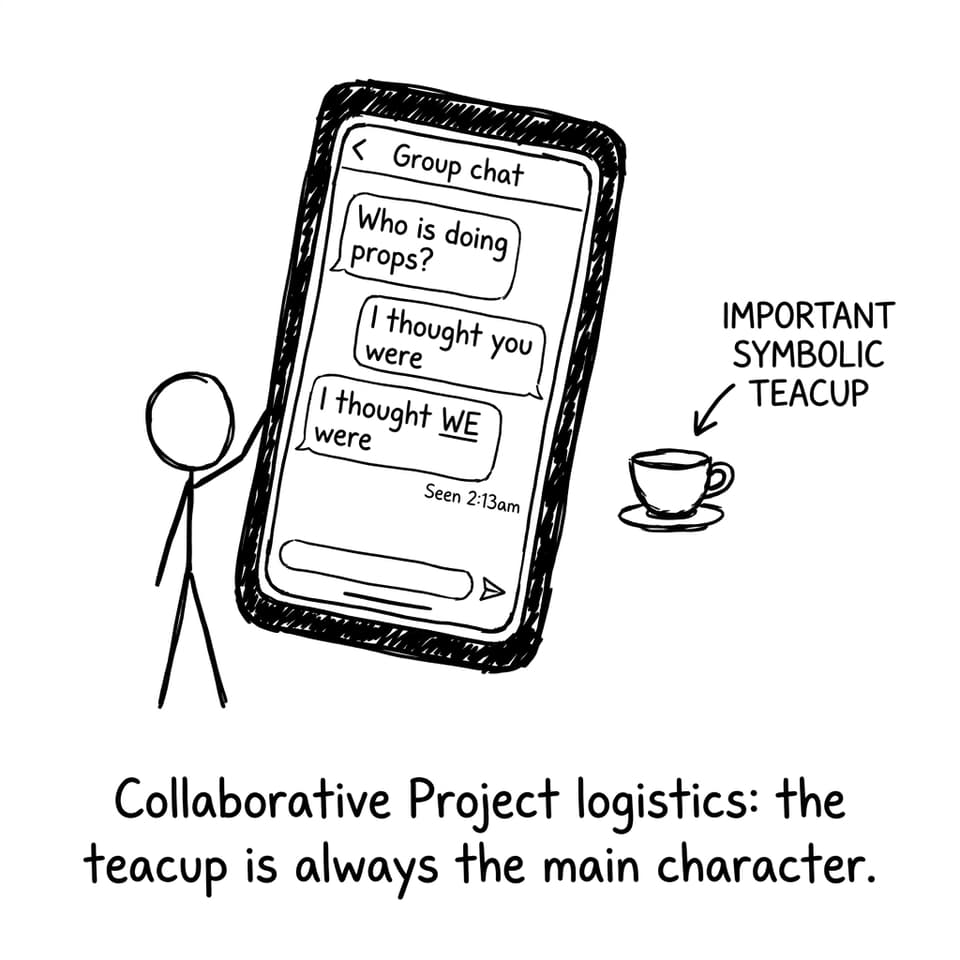
Use the “teacup test” for ownership
If an item can disappear, it will.
Pick any responsibility and ask: “If this goes missing, whose problem is it?” If the answer is “everyone,” it becomes no one.
Make documentation a role, not an afterthought
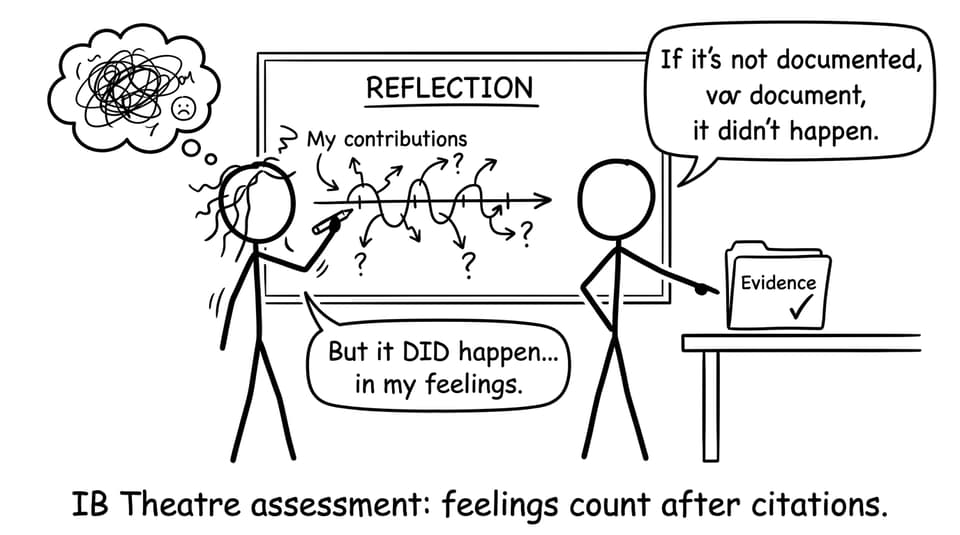
In IB Theatre, documentation is not admin. It’s your proof.
Create a shared folder with subfolders for each student. Every rehearsal, upload at least one artifact:
-
annotated script pages
-
rehearsal photos with captions
-
blocking notes
-
design sketches
-
research snapshots and how you applied them
To level up your written thinking (not just storing files), follow: How to Reflect on the Collaborative Project for Maximum Marks.
Plan for conflict before it shows up
Most ensembles don’t break because people are mean. They break because expectations are unspoken.
A simple rule: if tension lasts more than one rehearsal, you schedule a 10-minute repair conversation.
Use a structure and language that keeps the work safe: How to Manage Conflict in IB Theatre Ensembles.
Make RevisionDojo your “quiet stage manager” for IB Theatre
When your IB Theatre Collaborative Project gets noisy, RevisionDojo helps you keep the work clean.
-
Use Study Notes and Flashcards to keep theory and practitioner language ready for reflection
-
Use AI Chat to pressure-test your intentions (“What is my role actually demonstrating?”)
-
Use Grading tools to interpret rubrics in plain language and self-check reflection quality
-
Use Mock Exams and Predicted Papers to keep exam prep moving while coursework consumes time
-
Use the Questionbank to maintain active recall habits alongside rehearsals
-
Use the Coursework Library and Tutors when your evidence is strong but your writing is stuck
If you’re rebuilding your overall schedule so coursework and exams stop competing, use: Best Study Strategies for IB Theatre Students (SL & HL).
Conclusion: balance roles like you’re protecting your marks
The best IB Theatre Collaborative Projects don’t feel perfectly smooth. They feel held. Someone is tracking decisions. Someone is tracking evidence. Everyone knows what they owe the group, and what they owe their own reflection.
Balance roles early, keep them flexible, rotate leadership, and document like your future self will thank you (because they will). Then use RevisionDojo to turn that messy, real collaboration into clear, high-scoring IB Theatre evidence, in your notes, your reflection, and your final submission.