


When you are deep into IB season, “fair” can feel like a rumor.
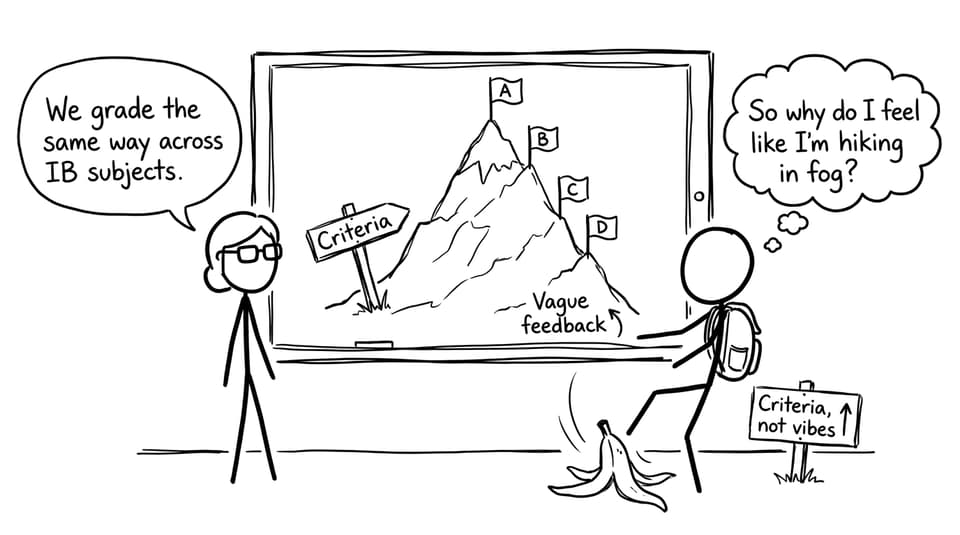
In one class, your teacher’s comments are precise, tied to criteria, and actionable. In another, the feedback is kind but cloudy. You do the same amount of work, but the grade lands differently. You start to wonder if the problem is you, or the system.
The truth is calmer than it feels: the IB is built on shared standards, but humans apply standards with small variations. And in the IB, small variations compound. That is exactly where RevisionDojo matters most, not as a magic shortcut, but as an environment that makes expectations repeatable across subjects.
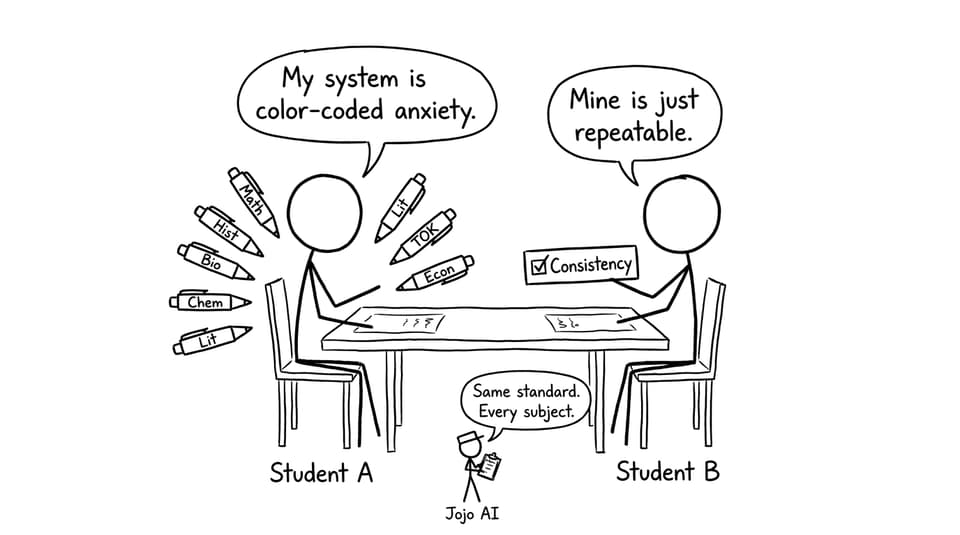
A quick IB checklist for consistency (save this)
Use this mini-checklist to create consistency in your own IB prep, even when different subjects feel like different worlds:
-
Work from one source of truth for skills and criteria (rubrics, markschemes, command terms)
-
Practice little and often with the same structure each week
-
Get feedback that maps to specific criteria (not general praise or vague criticism)
-
Track patterns across subjects (what you keep doing wrong, not what you got wrong once)
-
Reattempt after feedback within 24-72 hours
RevisionDojo supports this loop with a connected toolkit: Questionbank, Study Notes, Flashcards, AI Chat, Grading tools, Predicted Papers, Mock Exams, a Coursework Library, and optional Tutors.
Why consistency matters in IB (even when you just want higher grades)
Consistency in IB assessment is not only about fairness. It is about trust.
When you trust the standard, you study with less noise. You stop guessing what a teacher “likes,” and start aiming at what the IB rewards: clear reasoning, correct method, relevant evidence, and criterion-aligned structure.
When consistency breaks down, students pay for it in three ways:
-
Unclear targets: You revise more, but improve less.
-
Unreliable feedback: You get comments, but not a path.
-
Anxiety across subjects: Every class becomes a new game with new rules.
RevisionDojo’s value is that it turns the IB standard into something you can see, practice, and repeat, across subjects.
How RevisionDojo supports consistent IB assessment across subjects
Consistency is not a single feature. It is a system. Here is how RevisionDojo makes that system easier to live inside.
Shared expectations: one “language” of IB criteria
One reason IB can feel inconsistent is that subjects have different surfaces (lab reports vs essays vs problem sets) but similar deeper rules (criteria, strands, command terms, evidence quality).
RevisionDojo keeps you close to that deeper rulebook. The platform is explicitly built around how IB assessment is structured, so your practice sessions do not drift into “random revision.” A focused starting point is the RevisionDojo for IB landing page, which frames the ecosystem as one connected workflow rather than isolated tools.
If you are in a school using the school setup, RevisionDojo for Schools adds an extra layer: shared rubrics, cohort analytics, and consistent moderation workflows that help teachers apply the same standards across classes.
Practice consistency: the Questionbank as a cross-subject baseline
In the IB, what feels like inconsistency is often just a lack of comparable practice.
If you write one History essay under time pressure but do thirty short Physics questions, your “feedback density” is wildly different. RevisionDojo’s Questionbank helps normalize that by giving you a consistent practice format in every subject: attempt, check markscheme logic, fix the pattern, reattempt.
Two useful reads for building that habit:
And if you want the feature hub itself, start here: Questionbank.
The IB keyword you should care about here is simple: consistency. Same routine, different subject, steady gains.
Feedback consistency: AI Chat and Grading tools that point to criteria
Students usually do not need more feedback. They need clearer feedback.
RevisionDojo’s AI Chat (Jojo) is useful because it can stay patient and specific: explain a command term, show why an answer earns marks, or help you rebuild a paragraph so it aligns with criteria. That matters across IB subjects because clarity travels: once you learn to respond to “evaluate” properly, you start seeing the same demand in Sciences, Humanities, and even TOK-style reasoning.
For coursework and structured writing, RevisionDojo’s Grading tools help turn “this is good” into “this meets Criterion C at this level because…” That criterion language is what creates consistency.
If you are curious about how moderation works in general (and why criterion alignment protects you), read: How IA Moderation Works (and How to Protect Your Grade).
Knowledge consistency: Study Notes that stop you from rewriting your life
A quiet source of inconsistency in IB prep is that your “notes quality” changes by subject. In one subject you have clean summaries; in another you have half-finished pages and screenshots.
RevisionDojo’s Study Notes reduce that variation by giving you structured, syllabus-aligned reference material across subjects. Then you can spend your time on the parts that raise marks: active recall, targeted practice, and fixing mistakes.
Two helpful links to build that system:
Memory consistency: Flashcards that make “daily” realistic
If you want one cross-subject advantage in IB, make your memory more reliable.
RevisionDojo Flashcards (with spaced repetition) give you the same daily rhythm whether you are memorizing Biology definitions, Economics diagrams, French vocabulary, or Math methods. That steady rhythm is what removes last-minute panic.
Start here:
Exam consistency: Predicted Papers and Mock Exams as “weekly pressure tests”
A common IB mistake is to revise in ways that never resemble the exam. Then exam day feels like a betrayal.
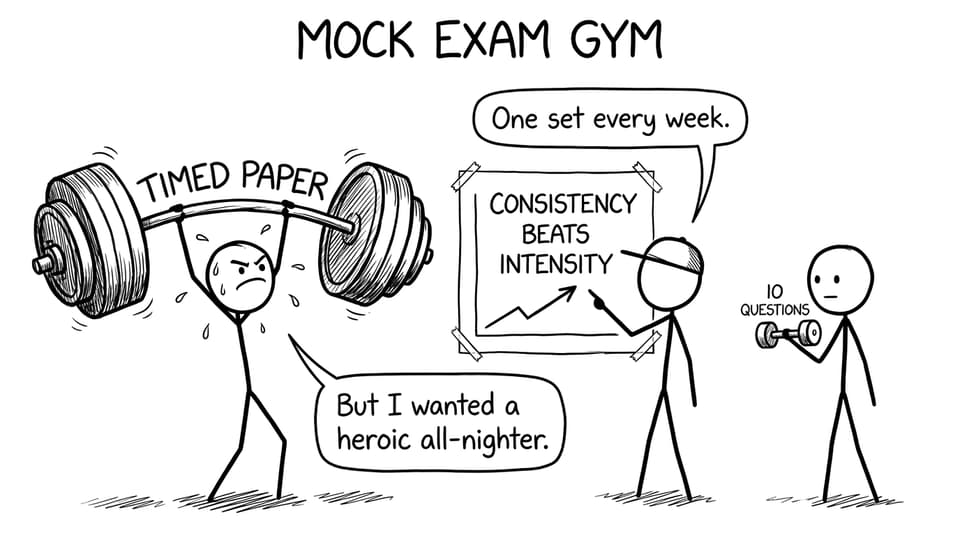
RevisionDojo’s Predicted Papers and Mock Exams make your practice more consistent with real constraints: timing, stamina, and decision-making. Even one timed session per week changes your relationship with pressure.
Explore:
A realistic weekly routine for consistent IB improvement
Here is a repeatable schedule that works across IB subjects (and does not require a new personality):
Three short sessions (30-45 minutes)
-
Read one section of Study Notes
-
Ask AI Chat one targeted question you were avoiding
-
Do 10-15 Questionbank questions on that exact topic
Two micro-sessions (10-15 minutes)
-
Review Flashcards (spaced repetition)
-
Add 3-5 new cards based on mistakes
One pressure session (60-120 minutes)
-
Sit a Mock Exam section or a Predicted Paper under timed conditions
-
Review mistakes by pattern, then drill those patterns in the Questionbank
This is how consistency is built in the IB: same loop, different subject.
FAQ: Consistency, assessment, and IB prep with RevisionDojo
How does RevisionDojo help IB feel more consistent across different subjects?
RevisionDojo makes your practice environment consistent even when your subjects feel wildly different. The Questionbank gives you the same attempt, feedback, and reattempt loop whether you are doing Mathematics, Sciences, or essay subjects. Study Notes reduce the variability in your reference material, so you are not relying on uneven class notes. Flashcards add a daily baseline, which stabilizes memory across the whole IB week. Then Mock Exams and Predicted Papers make sure your practice resembles the real assessment constraints. Over time, the platform trains you to respond to criteria and command terms, which is the real cross-subject common ground in IB.
I get different feedback styles from different teachers. What should I do?
First, treat that difference as normal rather than personal, because feedback tone varies even inside strong IB departments. Then build your own “translation layer” by mapping any teacher comment to a criterion or skill: structure, evidence, analysis, evaluation, method, accuracy, or clarity. RevisionDojo helps because its feedback tools and explanations aim to anchor comments to assessment logic rather than mood. You can paste a confusing comment into AI Chat and ask what action it implies, then practice the exact skill using the Questionbank. If the issue is coursework, use the Grading tools to get criterion-oriented guidance you can compare against teacher notes. This is how you turn mixed feedback into one consistent improvement plan.
Can RevisionDojo support school-wide consistency, not just individual IB students?
Yes, especially through RevisionDojo for Schools, which is designed for consistent workflows at department and coordinator level. Schools can align how they deliver practice, feedback, and tracking across classes, which reduces student confusion and improves fairness. The key idea is shared structure: common rubrics, comparable data, and visible patterns in performance. Even if you are “just a student,” you feel the downstream effect when assessment expectations become clearer across subjects. It also helps new teachers join a department without reinventing standards from scratch. In other words, RevisionDojo can make consistency a culture, not a lucky accident.
Closing: make IB consistency your unfair advantage
The IB is demanding, but it is not random.
When your study system is consistent, the IB starts to feel strangely predictable: criteria repeat, command terms echo across subjects, and your mistakes come in familiar patterns you can actually fix.
RevisionDojo exists to support that kind of consistency. Use the Questionbank to practice with intent, Study Notes to stay aligned, Flashcards to keep memory steady, AI Chat to unblock confusion fast, Grading tools to make criteria visible, and Mock Exams plus Predicted Papers to rehearse pressure without panic.
If you want your IB prep to feel fairer, calmer, and more repeatable, make RevisionDojo the place where all your subjects use the same standard, starting today at the RevisionDojo for IB hub.