
The night before an IB English exam has a particular kind of silence. It is not calm. It is the sound of you flipping through pages that look familiar, but refuse to become useful.
Most students don’t struggle because they “didn’t study.” They struggle because their notes are archives, not tools. In IB English, the goal isn’t to collect quotes and label them “imagery.” The goal is to build a fast path from text to argument under time pressure.
This guide breaks down effective, exam-ready note-taking strategies for IB English Language and Literature, with systems you can keep using right up to Paper 1, Paper 2, and the IO.
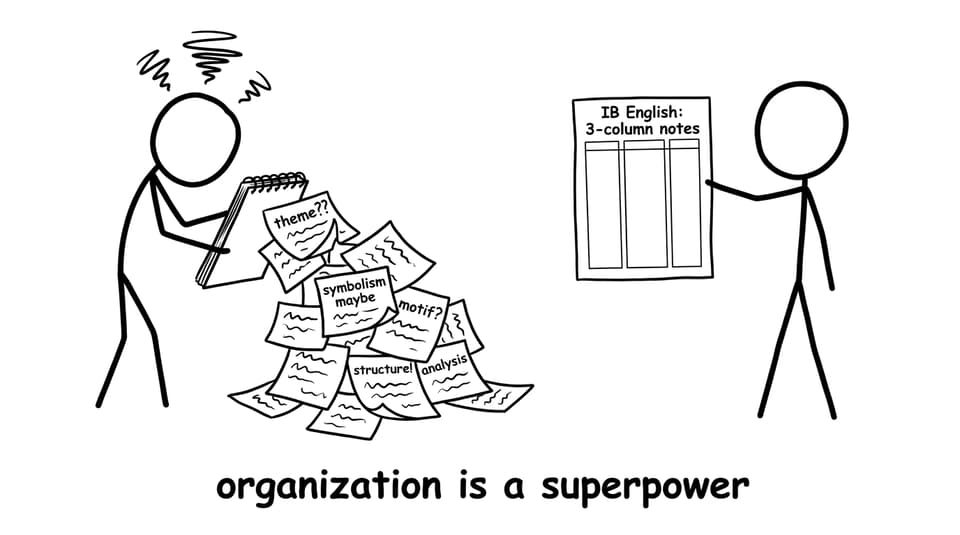
The IB English note-taking checklist (use this every week)
If your IB English notes don’t do these five things, they will betray you later:
-
Capture the main claim a text makes (not just what it’s “about”).
-
Track authorial choices (diction, syntax, structure, imagery, tone, perspective).
-
Store evidence in a retrievable way (quotes, moments, text references).
-
Convert knowledge into questions you can self-test.
-
End with a mini-thesis you could reuse in an exam paragraph.
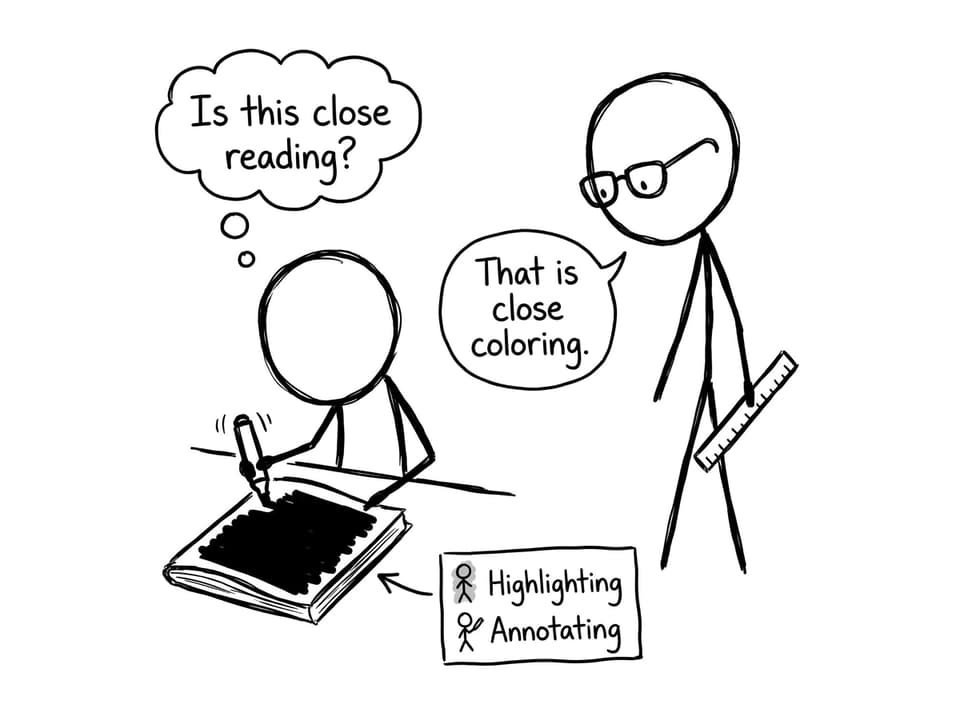
For text-level annotation routines, pair this with Annotating Texts for IB English Language and Literature.
Strategy 1: Cornell notes for IB English (built for fast revision)
Cornell notes work in IB English because they force a second pass: you return to your notes and turn them into prompts.
How to set it up for IB English analysis
-
Right column (Notes): techniques + evidence + effect (write like you’re explaining to an examiner).
-
Left column (Cues): self-testing questions, command terms, and “so what?” prompts.
-
Bottom (Summary): a 2-3 sentence thesis you could adapt to Paper 1 or the IO.
Example cue questions that fit IB English:
-
“How does the tone shift in the final third, and why?”
-
“What is the implied audience, and how is it positioned?”
-
“Which structural choice creates the strongest contrast?”
To connect this directly to exam writing, keep Mastering IB English Paper 1 open while you practise.
Strategy 2: Mind maps for IB English themes (when you need “big picture”)
Mind mapping is underrated in IB English because it mirrors what Paper 2 and the IO demand: connections.
Use mind maps for two specific jobs
-
Theme networks: Put a theme in the center (identity, power, memory). Branch into scenes, recurring images, and counterpoints.
-
Technique clusters: Put a technique in the center (juxtaposition, symbolism, narrative voice). Branch into examples and effects.
If Paper 2 feels like “I know the books but can’t compare them,” build theme maps alongside How to Prepare for the IB English Paper 2 Exam and Thematic Comparisons Across IB Prescribed Texts.
Strategy 3: The outline method (the fastest way to turn notes into essays)
In IB English, structure is a grade multiplier. The outline method trains you to think in paragraph architecture.
A practical outline template
-
Thesis: one sentence that answers the question and names key authorial choices.
-
Body Point 1: technique + effect + evidence.
-
Body Point 2: technique + effect + evidence.
-
Body Point 3: technique + effect + evidence.
-
So what: why these choices matter for meaning, audience, context.
This is especially helpful for non-literary texts. For extra practice, use How to Handle Different Text Types in IB English Language and Literature.
Strategy 4: SQ3R for IB English reading (stop rereading, start extracting)
SQ3R turns reading into a loop you can measure.
-
Survey: skim headings, stanza breaks, shifts, and repeated motifs.
-
Question: write 3-5 questions you expect the text to answer.
-
Read: read once for meaning, once for technique.
-
Recite: write a 5-line “what the text is doing” explanation.
-
Review: turn your best insights into cue questions or flashcards.
When your IB English notes follow SQ3R, they become revision-ready almost immediately.
Strategy 5: Digital note-taking (powerful if you build a retrieval system)
Digital notes help in IB English only if you can retrieve them in seconds.
A simple digital system that works
Create one folder (or database) per assessment:
-
Paper 1: text-type mini frameworks, technique banks, intro templates.
-
Paper 2: theme comparison grids, quote banks grouped by theme, “scene-to-thesis” outlines.
-
IO: global issue angles, extract annotations, 10-bullet speaking plans.
Then use RevisionDojo to make your notes actionable:
-
Build targeted practice with the Questionbank on IB English A: Language and Literature Resources.
-
Convert summaries into Flashcards and test yourself weekly.
-
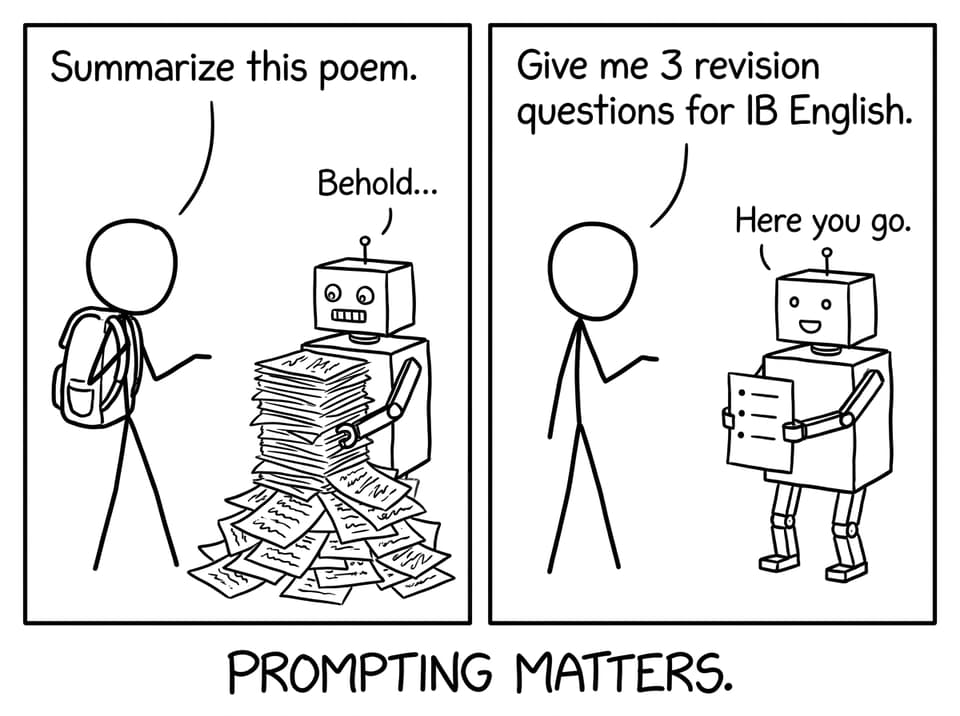
Use AI Chat and Grading tools to stress-test your thesis and paragraph logic.
-
Assemble timed practice with Mock Exams and (when available) Predicted Papers.
-
Pull models and scaffolds from the Study Notes like How To Master Paper 1 - IB (Notes).
-
For oral and coursework planning, lean on the Coursework Library and Tutors when you need feedback that’s specific, not generic.
Closing: Make your IB English notes small enough to carry, strong enough to win
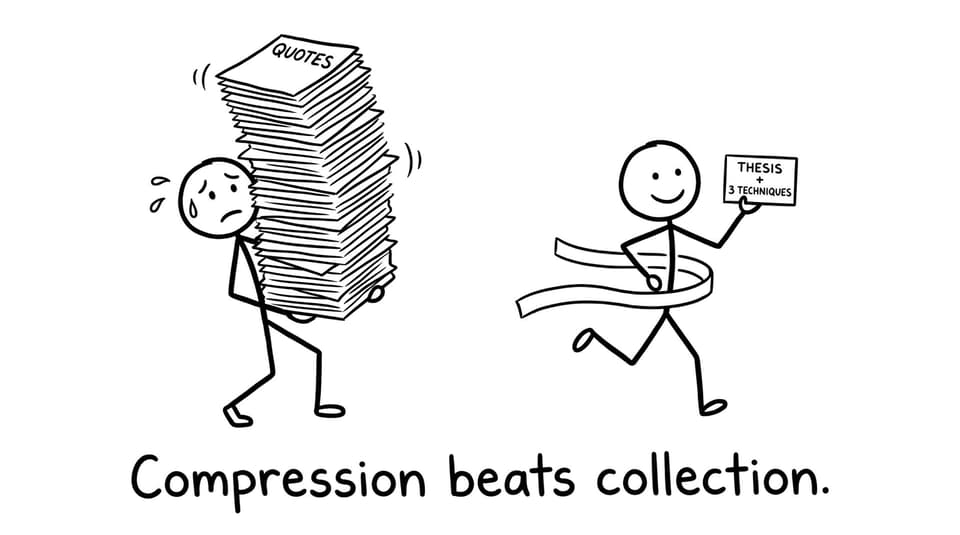
The best IB English notes are not the longest. They are the notes that still make sense when you’re tired, timed, and trying to form an argument in ten minutes.
Pick one method (Cornell, mind maps, outlines, SQ3R), run it for a week, and judge it by one standard: does it help you produce a clearer thesis and better analysis faster?
When you’re ready to turn those notes into scores, RevisionDojo gives you the full loop: Study Notes to learn, Flashcards to retain, Questionbank to practise, AI Chat and Grading tools to refine, and Mock Exams to prove you’re ready for IB English.