
The day your IA stopped being "yours"
There's a specific kind of silence that happens after you submit an IA.
Your Google Doc is suddenly still. Your lab photos are frozen in time. Your teacher says something like, "Good work," and you're left with the odd feeling that the most important part is now happening somewhere else.
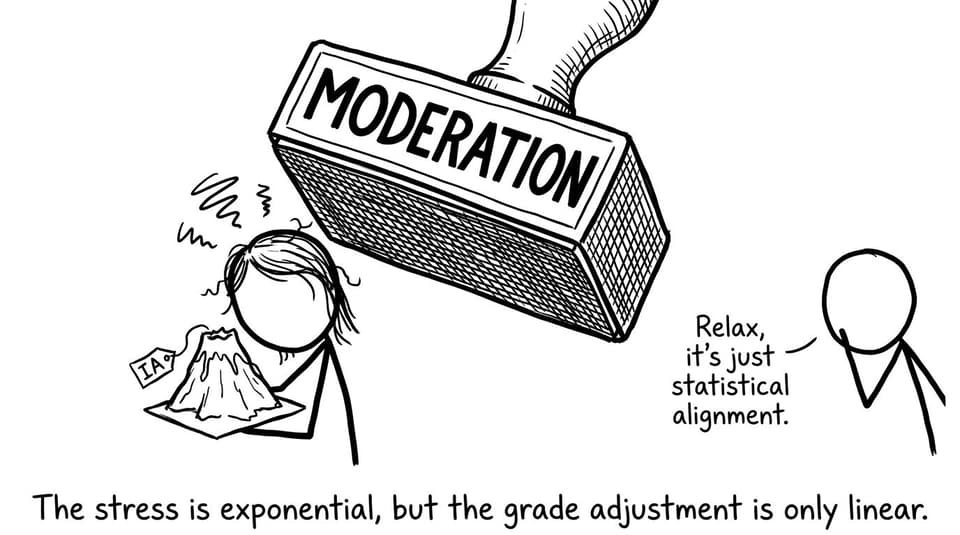
That feeling is real, because IA marks are not final when your teacher writes them in. They become final only after IA moderation: the IB's method of checking whether your school's marking matches a global standard.
If you've heard rumors like "the IB picks the best IA" or "moderation always drags everyone down," this guide is for you. We'll walk through how IA moderation works, why it exists, and what you can actually do about it (which is more than you think).
Along the way, I'll point you to a few RevisionDojo resources that make the whole IA process calmer: exemplar libraries, rubric-aligned grading tools, and practice systems that help you show evidence like an examiner.
IA moderation: a quick overview checklist
Before we go deeper, here's the basic flow of IA moderation in plain language:
- Your teacher marks every IA using IB criteria (provisional marks).
- Your school submits all marks to the IB.
- The IB requests a sample of student work from your cohort.
- An external moderator re-marks the sample using the same criteria.
- If your teacher's marking is consistently higher/lower than the moderator's, the IB applies an adjustment (often to the whole cohort for that component).
- Your final IA mark is what the IB accepts after moderation.
If you want a version written specifically as a moderation walk-through, this RevisionDojo post is a clean companion: How IB Internal Assessment (IA) Moderation Works: A Clear Guide.
Why the IB moderates the IA in the first place
The IB has a problem that looks like fairness and feels like math.
Thousands of schools, thousands of teachers, and one shared grading scale.
Even excellent teachers interpret descriptors slightly differently. One school might be cautious and mark harshly. Another might be generous because their internal culture rewards polish. If those differences went unchecked, your IA score would partly depend on your postcode.
So moderation exists to keep the meaning of a 6 (or a 7) consistent across the world.
That's also why your IA should be written like evidence, not like persuasion. The IB is not trying to "catch" you. It's trying to see whether the marks awarded are justified by the criteria.
If you've ever wondered who actually grades the IA, RevisionDojo breaks it down here: Who grades the IAs?.
Step-by-step: how IA moderation works
Teacher marking: your IA is scored first, but not finished
Your teacher marks your IA using the official assessment criteria for that subject.
A key detail: teachers typically use a best-fit approach across descriptors. That means you're not "losing marks" because one sentence wasn't perfect. You're being placed where the overall evidence most strongly fits.
This is where clarity matters. A strong IA makes it easy for a marker to justify your level.
If you're in Chemistry and want to see what "best fit" looks like in criteria language, this resource is unusually practical: Chemistry IA Marking Toolkit.
Marks submission and sampling: not everyone is re-marked
After internal marking:
- Schools submit all IA marks to the IB.
- The IB requests a sample of actual student work.
The sample is designed to reflect the full range of performance in the cohort. In other words, it's not just top scoring work.
Students do not choose the sample. Teachers do not "send your best." The process is meant to reduce bias.
External moderation: the moderator checks alignment
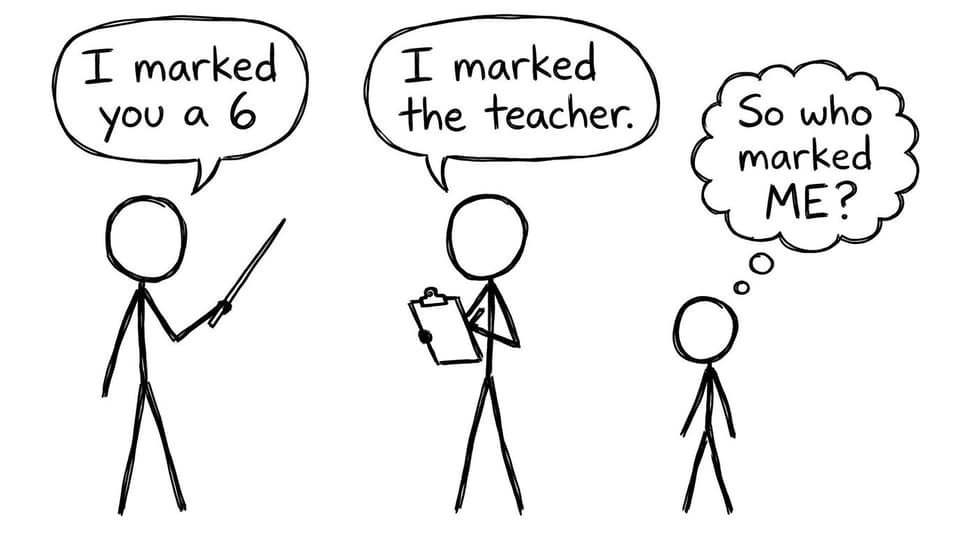
The moderator re-marks the sampled IA submissions against the criteria.
They are not grading your personality. They are not rewarding how hard it felt. They are checking whether the teacher's marking matches the IB standard.
If your teacher's marks are broadly aligned, nothing dramatic happens.
If there's consistent mismatch, adjustments can happen.
Adjustments: what actually gets changed
This is the part students fear, mostly because it feels uncontrollable.
Here's the calmer truth: moderation is typically about patterns.
- If the teacher is consistently too generous, the cohort's IA marks may be adjusted down.
- If the teacher is consistently too harsh, the cohort's IA marks may be adjusted up.
The exact method can vary by subject and cohort circumstances, but your main takeaway is this:
A strong IA is built to survive a second reader.
Not because it's longer.
Not because it's prettier.
Because it makes its evidence unavoidable.
What IA moderation means for your exam strategy
Most students treat the IA like a side quest. Then, near exams, they realize it's a meaningful percentage of the final grade.
RevisionDojo explains the weighting reality here: The Impact of Internal Assessments (IA) on Your Final IB Grade.
The strategic shift is simple:
- Exams reward speed + accuracy under pressure.
- The IA rewards sustained clarity, method, and justification.
Moderation pushes you toward writing that is criteria-first.
That matters because the habits that build a moderation-proof IA also build a higher exam ceiling: precise definitions, explicit reasoning, tidy data handling, and conclusions that actually answer the research question.
A "moderation-proof" IA mindset: build evidence, not pages
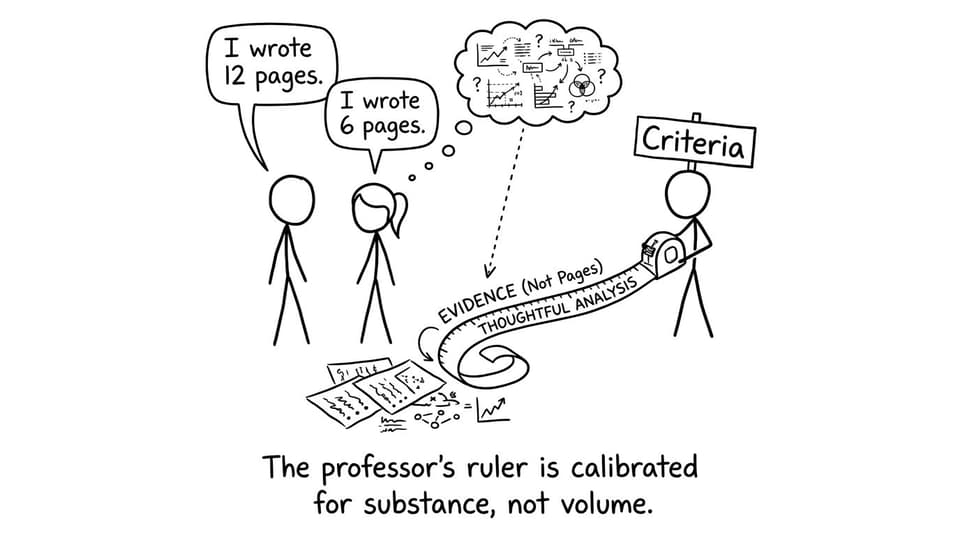
The most common student mistake is thinking the IA is judged by volume.
But moderation doesn't measure effort in pages. It measures performance in criteria.
A strong IA tends to do a few things repeatedly:
- It makes the research question specific enough to investigate.
- It explains decisions (why this method, why these variables, why this model).
- It shows processing clearly and correctly.
- It discusses limitations honestly without self-sabotage.
- It ties the conclusion back to the question with quantified support.
If you want models of what that looks like, use RevisionDojo's exemplar library to compare structure choices across different score bands:
How RevisionDojo helps you reduce moderation risk
Moderation risk is basically "marking mismatch risk." You reduce it by aligning your work to the rubric so clearly that any competent marker lands in the same band.
RevisionDojo is built for that kind of alignment across the IB, and students usually feel the difference in three ways:
Rubric-aligned feedback loops for your IA drafts
If your school allows multiple drafts, your advantage is iteration.
RevisionDojo's Coursework Grader helps you iterate quickly because it focuses on rubric strands rather than vague encouragement.
Use it like a cycle:
- Upload draft.
- Get criterion-level feedback.
- Fix the highest-impact weaknesses.
- Resubmit.
Start here: IB IA/EE/TOK Grader: How RevisionDojo Delivers Rubric-Aligned Feedback.
Exemplars that train your eye
Students often ask, "Is my IA good?"
A better question is: "Does my IA look like other work at this score band?"
That's what exemplar libraries are for. Compare introductions, variable handling, evaluation quality, and data processing choices. You'll start noticing patterns that moderation tends to reward.
Exam preparation that supports IA skills
Your IA is coursework, but the skills leak into your exam marks.
RevisionDojo's ecosystem helps you practice those skills consistently:
- Study Notes for clear models and definitions
- Flashcards to keep methods and command terms stable under pressure
- Questionbank to practice applying knowledge with mark-scheme logic
- AI Chat to ask "why did I lose marks?" and get a usable answer
- Mock Exams and Predicted Papers to rehearse timing and technique
- Tutors when you need a human to map the fastest path forward
If you want the overview of how students combine these pieces, use: RevisionDojo App: The Smarter Way to Prep for IB Exams.
For practice tools directly:
- Questionbank
- Notes + Flashcards + Question Bank (Free)
- How to Run Timed IB Mock Exams in RevisionDojo
The common myths students believe about IA moderation
Myth: "Moderation always lowers IA marks"
Sometimes marks move down. Sometimes they move up. Sometimes nothing changes. The point is alignment, not punishment.
A practical stance is to assume your IA will be read by someone who has no context about your class, your teacher, or your effort. If the evidence holds up, you're fine.
Myth: "Only the sampled IA students are affected"
Students often think: "If my IA isn't in the sample, I'm safe."
But moderation is about evaluating the marking standard for the cohort. That's why adjustments, when applied, can affect more than just the sampled work.
Myth: "My IA is creative, so it will stand out"
Creativity can help, but it's not a substitute for rubric performance.
Your goal isn't to impress a reader with originality. Your goal is to make the criteria easy to award.
Closing: think of moderation as a second reader, not a second enemy
The most useful mindset shift is this: IA moderation is not a trapdoor. It's a second set of eyes checking whether your mark is defensible.
If your IA is built on clear evidence, explicit reasoning, and rubric language that matches what you actually did, moderation becomes boring. And boring is the goal.
If you want to make that boring outcome more likely, use RevisionDojo the way high scorers do: learn with Study Notes, train recall with Flashcards, practice technique in the Questionbank, stress-test with Mock Exams and Predicted Papers, and polish coursework with the IA Grader and exemplar library. Your IA doesn't need to be perfect. It needs to be provable.
For more IA guidance, browse: All #IA Posts - RevisionDojo.