

It usually starts innocently.
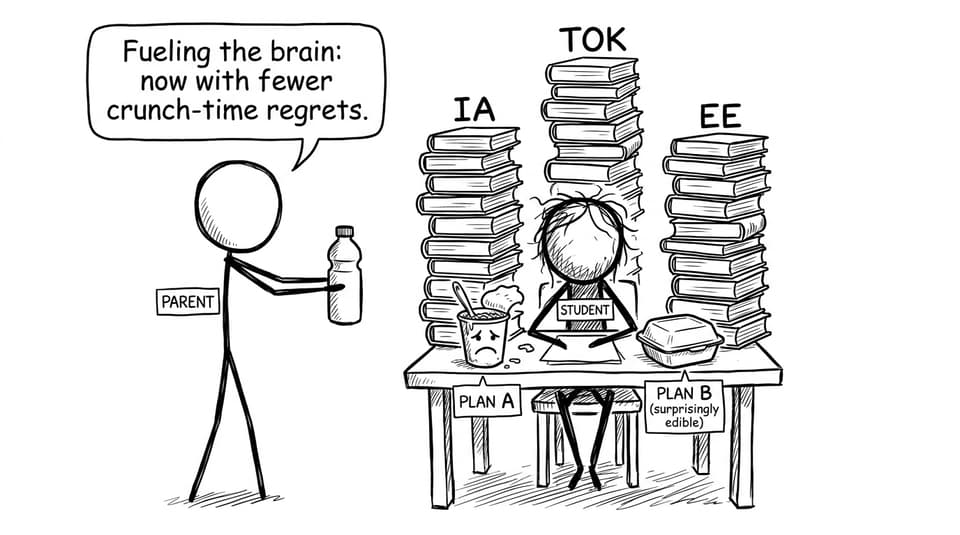
A teenager sits down to “do an hour” of IB work. You glance up later and the hour has quietly turned into three. Dinner is “later.” Water is “after this question.” Movement becomes a memory. And then, one day, you notice something deeper than tiredness: they’re studying, but their energy is leaking from every edge.
The IB is demanding, but the hidden challenge is endurance. Exams reward the students who can think clearly for months, not just those who can panic-productively for a week. As a parent, your role isn’t to police health. It’s to make the healthy option the easy option while the IB keeps asking for more.
Quick-start checklist for a healthier IB season
If you want the simple version first, use this:
-
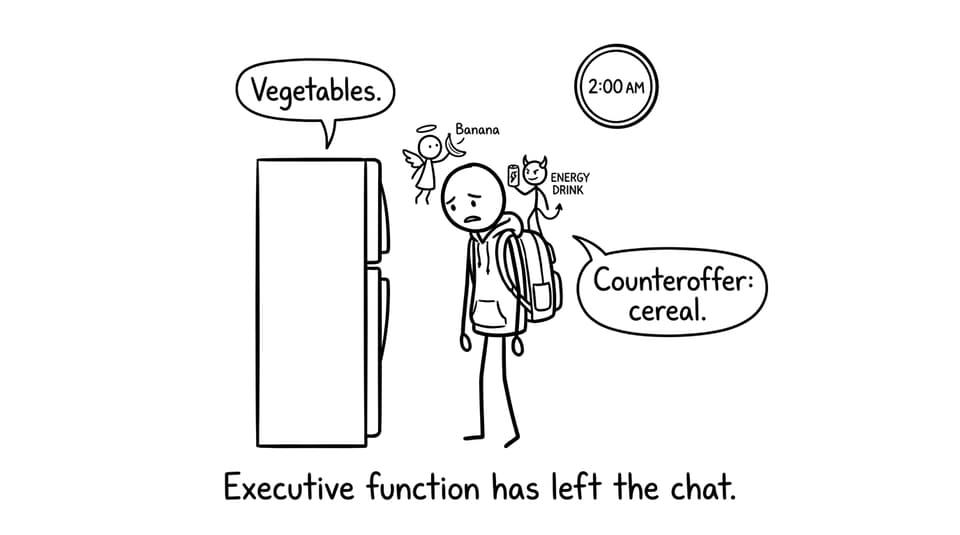
Keep regular meals visible and low-effort (think “grab-and-go,” not gourmet).
-
Make hydration automatic (a bottle in the study zone).
-
Treat movement as a reset button (10--20 minutes counts).
-
Stock study-friendly snacks that don’t spike and crash.
-
Protect sleep with a realistic stop time.
-
Reduce friction in revision with one platform like RevisionDojo (so energy goes into learning, not searching).
For study structure that supports wellbeing, these guides pair well with a health-focused routine: What Are Healthy Study Habits for Balancing IB and Life? and The Best Daily Routine for a Balanced IB Student.
Why lifestyle matters for IB exam performance
In the IB, “more hours” can look like commitment, but it often hides diminishing returns. A student who’s under-fueled, dehydrated, and sedentary may still study, yet struggle to concentrate, retain details, and stay calm under time pressure.
Healthy eating and lifestyle habits support the skills the IB actually tests:
-
Sustained attention during long papers and revision blocks
-
Memory consolidation (sleep is a silent study partner)
-
Emotional regulation when deadlines pile up
-
Illness resistance during the most important weeks
If you want a reality-based approach to workload without burnout, this is worth reading: IB Exams Without Pausing Your Life.
Healthy eating during IB: make fuel effortless
Build an “automatic plate” (not a perfect diet)
Perfection backfires in the IB. What works is a repeatable pattern: a meal with carbs for energy, protein for steadiness, and colour (fruit/veg) for micronutrients.
As a parent, your advantage is logistics. You can make the default meal something that doesn’t require decision-making. Think rice + eggs + veggies. Pasta + tuna + salad. Wraps + chicken + yoghurt. Your teen doesn’t need novelty. They need reliability.
Put the best snacks where the stress lives
Students don’t snack where the fruit bowl is. They snack where the panic is: the desk.
Place a small “study fuel” box near their revision space: nuts, yoghurt pouches, bananas, hummus cups, granola, or leftover sandwiches. Not as a lecture. As an act of quiet support.
Hydration is the simplest performance upgrade
A dehydrated brain is a distracted brain. Keep a bottle within reach and treat refilling it like charging a phone: boring, necessary, non-negotiable.
If their revision system is already streamlined (so they’re not burning energy switching resources), hydration becomes easier to maintain. RevisionDojo helps here because the Study Notes, Flashcards, and Questionbank live in one place: RevisionDojo | IB & MYP Resources.
Healthy lifestyle during IB: movement and sleep without drama
Movement that fits real IB days
The best exercise plan for an IB student is the one they’ll still do when they’re tired.
Suggest “minimum effective dose” movement:
-
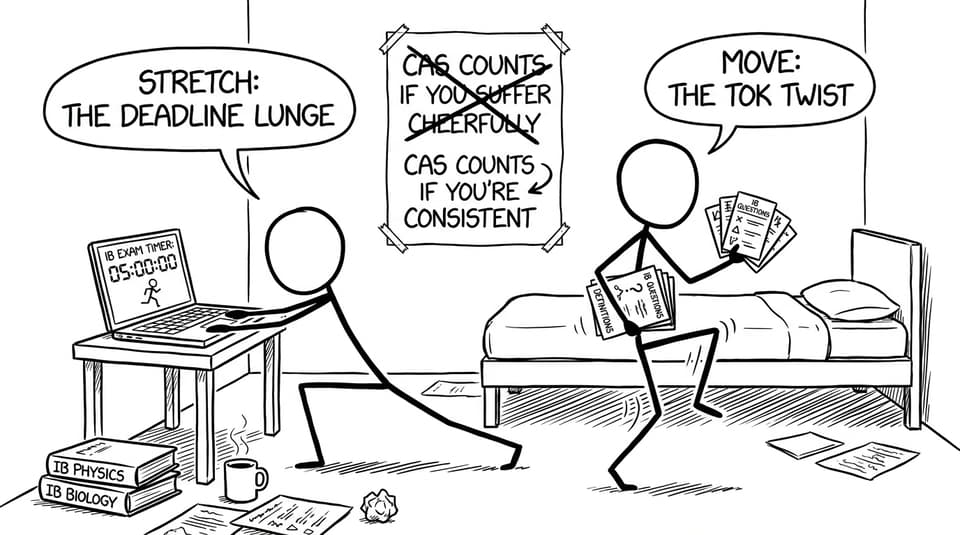
10 minutes walk after school
-
Stretching between timed blocks
-
A short cycle ride to reset mood
If CAS is part of their schedule, help them see movement as dual-purpose: it can support CAS goals and lower stress at the same time.
Sleep: treat it like an IB subject
Many IB students don’t need another motivational speech. They need a boundary.
A parent-friendly approach is to set one household norm: a hard stop time most nights. Not as punishment, but as protection. Sleep is where learning sticks. It’s also what keeps motivation from turning into irritability.
If your teen is in the final stretch, this pairs well with a plan that reduces last-minute chaos: IB: The Last 2 Weeks Before Exams (What Matters).
Use tools that reduce stress, not just add work
One underrated parenting move is helping your teen avoid resource overload. The IB already has enough tabs open mentally.
RevisionDojo is built to lower friction:
-
Questionbank practice for targeted, measurable progress: Questionbank
-
Study Notes for quick clarity: Study Notes
-
Flashcards for spaced repetition (short daily review that compounds)
-
AI Chat to get unstuck fast
-
Grading tools for rubric-aligned feedback
-
Predicted Papers and Mock Exams for realistic timing practice (so exam days feel familiar)
-
Coursework Library and Tutors when they need examples or a human strategy shift
When study becomes clearer and more efficient, lifestyle habits become easier to protect. This guide complements that system-first approach: How to Stay Sane During IB Exam Season.
What parents should avoid during IB
Good intentions can accidentally add pressure. Try to avoid:
-
Turning food into a threat (“eat this or you’ll do badly”)
-
Criticising their body, appetite, or stress eating
-
Comparing them to siblings or “that student who runs every morning”
-
Using health advice as another homework assignment
Aim for calm consistency. The IB is loud enough.
Closing: help them build a sustainable IB life
The healthiest IB students aren’t the ones who never eat chips or never miss a workout. They’re the ones who return to balance quickly. They treat food as fuel, movement as a reset, and sleep as part of the grade.
If you want to support that kind of consistency, make the healthy option easy at home and make revision simpler on the screen. RevisionDojo helps IB students prepare with less friction using the Questionbank, Study Notes, Flashcards, AI Chat, Grading tools, Predicted Papers, Mock Exams, Coursework Library, and Tutors.
The IB is a marathon disguised as a syllabus. Help your teen train like it.