

The night before an IB exam has a special kind of silence. It is not peaceful. It is the hush of a house where someone is still awake, convincing themselves that one more hour will finally make everything feel safe.
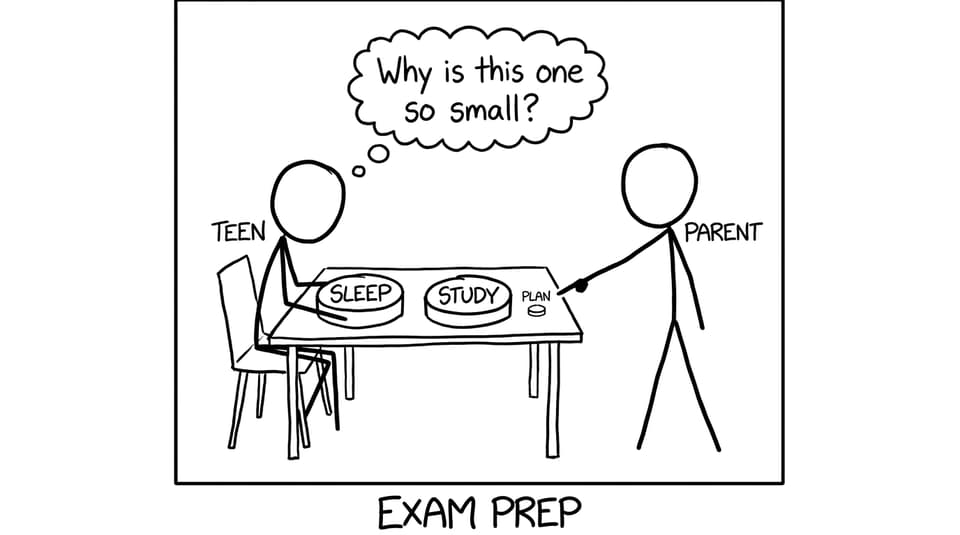
But here’s the uncomfortable truth: in IB exam prep, sleep is not the thing you earn after studying. Sleep is part of studying. If your teen is trading rest for revision, they are often paying with focus, memory, and mood tomorrow.
As a parent, you cannot take the exams for them. But you can help them build the conditions where their effort actually sticks.
A quick IB sleep-and-study checklist
Use this when exam season turns chaotic:
-
Protect a consistent wake-up time (the anchor).
-
Aim for 7--9 hours of sleep most nights.
-
Set a “heavy study cutoff” 60--90 minutes before bed.
-
Keep late evenings for light recall (flashcards), not new content.
-
Make the next day’s plan visible (so anxiety does not run the schedule).
If you want a deeper guide your teen can follow, share Best Sleep Routine for IB Students (That Actually Works).
Why IB students lose sleep during exam prep
Sleep usually collapses for predictable reasons:
-
They underestimate how long tasks take, then chase the clock at night.
-
They feel safer “doing more” than “doing the right thing.”
-
They absorb an all-nighter culture that confuses exhaustion with commitment.
-
Anxiety keeps the brain scanning for unfinished work.
This is why it helps to talk about sleep like a performance tool. Revision without sleep is like saving a file and never clicking upload.
For the science-backed case, see How Sleep Impacts IB Performance (and Your Final Grades).
Parent moves that actually help (without micromanaging)
Reframe sleep as an IB strategy, not a reward
Instead of “Go to sleep, you need rest,” try: “Sleep is the part where your brain locks in today’s revision.” That single reframe reduces guilt and makes bedtime feel productive.
A useful companion read is Is It Worth Sacrificing Sleep to Study for IB Exams?.
Help them build an earlier, tighter study loop
Late-night study often happens because study time earlier in the day is fuzzy. Give them a structure that ends.
A simple IB loop that fits into a weekday:
-
10--15 min: clarify with Study Notes
-
25--40 min: targeted practice in the Questionbank
-
10 min: review mistakes (one lesson, one fix)
-
10 min: quick recall using Flashcards inside RevisionDojo
This is also the thinking behind IB: The Last 2 Weeks Before Exams (What Matters) and How 45-Point IB Students Prepare for Exams.
Protect the evening with a “shutdown routine”
A shutdown routine is not motivational. It is logistical.
Try: pack materials, write tomorrow’s first task, set alarms, close the laptop. If they want a step-by-step night plan, share IB Exam Night Routine: What Actually Works.
Use RevisionDojo to reduce panic studying
A lot of insomnia is uncertainty: “What if I’m revising the wrong thing?” RevisionDojo lowers that uncertainty by making practice concrete.
-
Questionbank for focused drills instead of endless rereading
-
AI Chat for quick clarification without a 45-minute spiral
-
Grading tools to learn how marks are awarded in written responses
-
Predicted Papers and Mock Exams for timed realism without guesswork
-
Coursework Library and Tutors to reduce background stress that leaks into bedtime
If your family wants a parent-facing overview, start with RevisionDojo for Parents.
Conclusion: Make sleep part of the IB plan
The families who handle IB exam season best rarely do anything dramatic. They do small, boring things consistently: a clear plan, a firm cutoff, a calmer evening, and enough sleep to remember what was studied.
If your teen needs a system that makes revision more efficient so bedtime stays protected, build their routine around RevisionDojo’s Study Notes, Flashcards, Questionbank, AI Chat, Grading tools, Predicted Papers, Mock Exams, Coursework Library, and Tutors. Start with one week of consistency and let the results do the convincing.