



Choosing IB subjects can feel strangely permanent. A student is being asked to make decisions about university before they have attended an IB lesson, completed an Internal Assessment, or discovered how busy an ordinary Wednesday can become.
If you are wondering, “HL vs SL: how to choose?”, the clearest answer is this: your child should take Higher Level in subjects that are required for likely university pathways, supported by genuine ability and sustained interest. Standard Level should create breadth and protect the time needed to perform well across the whole Diploma.
The goal is not to assemble the most difficult-looking combination. It is to build the strongest workable one.
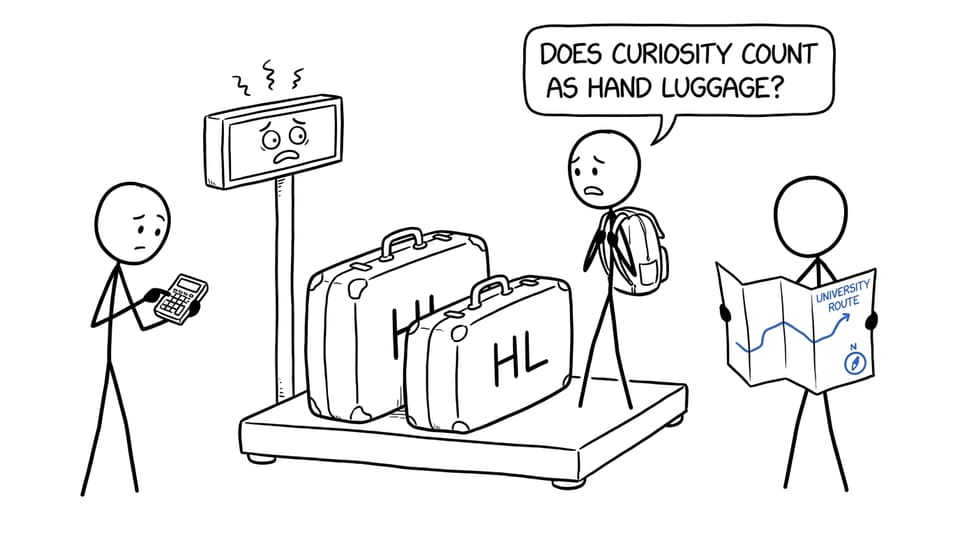
The IB requires at least three and no more than four Higher Level subjects. HL courses involve greater scope and are designed around 240 recommended teaching hours, compared with 150 hours at SL. That difference is substantial, especially when multiplied across several subjects and combined with Theory of Knowledge, the Extended Essay, Creativity, Activity, Service, and coursework.
For a broader explanation of the programme, begin with how the IB Diploma works.
The short checklist for choosing HL and SL
Before confirming an IB combination, ask these questions in order:
- Does a likely university course require a particular subject at HL?
- Is your child currently strong in that subject?
- Do they enjoy the type of work the subject demands, not merely its title?
- Can they manage its deeper content alongside their other HL choices?
- Does the overall combination leave enough time for the DP core and recovery?
- Has the choice been checked with the school’s DP coordinator or university counsellor?
- Have you reviewed current requirements on official university websites?
A subject should ideally satisfy several of these conditions before becoming an HL. Prestige alone is a poor reason. So is choosing a subject because friends are taking it.
What HL and SL actually mean
Higher Level is not simply Standard Level with a few extra chapters. The precise differences vary by subject, but HL generally expects a greater body of knowledge, deeper understanding, and more advanced application. Assessment structures may also differ, so families should inspect the current subject guide rather than relying on comparisons from previous cohorts.
Standard Level remains a serious two-year IB course. Both levels contribute subject grades on the IB’s 1-to-7 scale, and the IB applies the same overall grade descriptors while expecting students to demonstrate more knowledge, understanding, and skill at HL.
| Consideration | Higher Level | Standard Level |
|---|---|---|
| Recommended teaching time | 240 hours | 150 hours |
| Academic role | Greater depth and specialization | Breadth and a strong disciplinary foundation |
| Best chosen when | Relevant, required, and sustainable | Useful but not central to the intended pathway |
| Main risk | Underestimating cumulative workload | Closing a university route that requires HL |
| Strategic value | Meets prerequisites and develops subject depth | Protects balance while still contributing to the Diploma |
Students and parents can explore the central differences between IB HL and SL and review the IB syllabus and assessment hub for subject-specific context.
Begin with university requirements, not reputation
The first step is practical rather than philosophical. If your child has one or more possible degree areas in mind, examine the official admissions pages of several universities in each relevant country.
Record:
- required IB subjects;
- whether each subject must be at HL;
- minimum or typical subject grades;
- total Diploma expectations;
- mathematics pathway requirements;
- language or country-specific recognition rules.
The wording matters. A university may describe a subject as required, preferred, or recommended. Those terms are not interchangeable. Requirements also vary between institutions and countries, so a combination suitable for one destination may not preserve access elsewhere.
This does not mean a 15-year-old needs a fixed career plan. A shortlist of two or three plausible directions is enough. The purpose is to identify doors that might close accidentally. The IB itself advises families to consult school counsellors and check individual university requirements, while RevisionDojo’s guide to whether universities care about HL and SL helps frame the conversation.
Separate genuine strength from a good recent grade
A report grade is useful evidence, but it is not the whole decision.
Ask why your child is doing well. Do they understand concepts quickly? Can they explain their reasoning? Do they complete demanding work without constant prompting? Are they willing to correct mistakes? These qualities generally tell you more about HL readiness than one strong test completed under familiar conditions.
Interest must also be examined carefully. Enjoying the idea of psychology, economics, or computer science is different from enjoying the actual work those courses require. A student may love scientific documentaries but dislike sustained quantitative problem-solving. Another may enjoy reading novels but find close textual analysis exhausting.
The useful question is not simply, “Do you like this subject?” It is, “Do you like what studying this subject asks you to do?”
RevisionDojo’s guide to choosing HL subjects wisely offers students a practical way to connect interest, performance, and future plans.
Treat workload as a portfolio
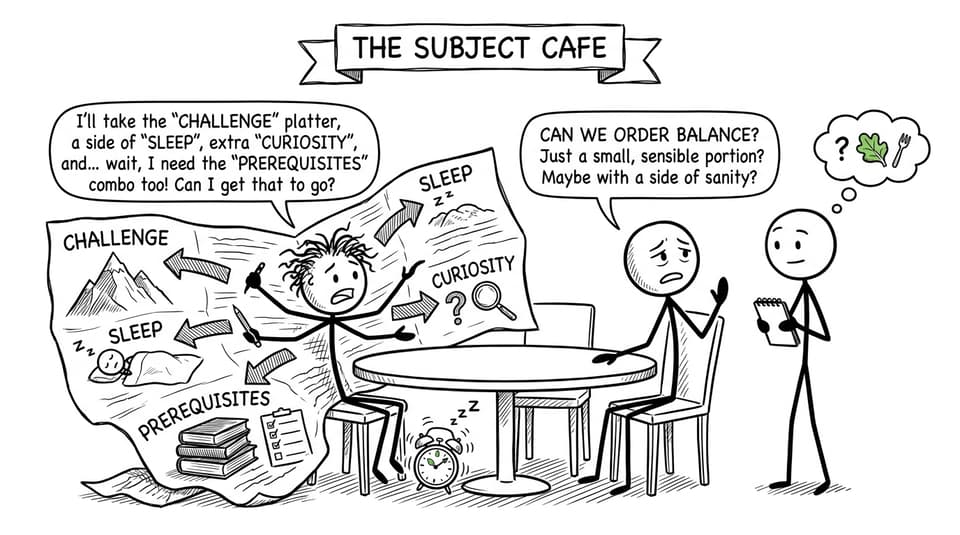
Every HL choice has an opportunity cost. The extra depth does not sit in isolation; it competes with other subjects, Internal Assessments, the Extended Essay, TOK, CAS, university applications, sleep, and ordinary life.
This is why three individually reasonable HL choices can still form an unreasonable combination. The difficult weeks tend to arrive together. Coursework deadlines overlap, revision expands, and a schedule that looked spacious in August becomes fragile by March.
A parent can help by looking at the combination as a portfolio:
- Are all three HLs heavy in the same kind of work?
- Does your child have enough time for regular revision rather than emergency studying?
- Is one HL being chosen only because it appears impressive?
- Would moving that subject to SL improve likely performance elsewhere?
- Does the student have a realistic plan for rest and extracurricular commitments?
Choosing SL is not an admission of weakness. It is often an act of prioritization. The Diploma rewards performance across a broad programme, not the appearance of maximum difficulty at any cost.
How parents can guide without taking over
Subject selection belongs to the student, but parents can improve the quality of the decision. The most valuable role is to slow down impulsive reasoning and make hidden assumptions visible.
Try asking:
- “Which university options would this preserve?”
- “What evidence suggests you can sustain this at HL?”
- “Which part of the course are you most interested in?”
- “What would your busiest week look like?”
- “What does your current teacher recommend, and why?”
Avoid turning the conversation into a referendum on intelligence. HL is not a label for clever students, and SL is not a lesser category. They serve different purposes within a deliberately broad programme.
It also helps to speak with the current subject teacher, DP coordinator, and university counsellor. They can comment on readiness, timetable constraints, school-specific subject availability, and the process for changing levels if the school permits it. Families should understand those deadlines before assuming a switch will always remain possible.
If difficulty emerges later, this parent guide to supporting IB subject struggles explains how to respond constructively without adding pressure.
Warning signs that an HL choice needs reconsideration
One difficult assignment is not evidence that a student chose incorrectly. HL courses are supposed to stretch them. Look instead for patterns that continue despite reasonable support and consistent effort.
Possible warning signs include:
- repeated difficulty with foundational concepts;
- an unsustainable amount of time spent on one subject;
- declining performance across several other courses;
- persistent avoidance rather than temporary frustration;
- a university plan that no longer requires the subject at HL;
- serious disruption to sleep or wellbeing.
Before changing a level, identify the real cause. The problem may be a missing foundation, weak study methods, unclear feedback, or poor scheduling rather than the level itself. A short diagnostic period with the teacher can distinguish a correctable problem from a structural mismatch.
Test the decision with real IB work
Where the school’s selection timeline allows it, students should examine current syllabus content and sample exam-style tasks at both levels. This makes the choice concrete. They can compare the reasoning, writing, calculation, or interpretation required rather than judging a course by its reputation.
A useful trial is to complete several focused sessions using HL material, then reflect on three questions:
- Could I understand this with appropriate teaching?
- Am I willing to practise this kind of task repeatedly?
- Can I fit that practice beside my other commitments?
The answer need not be effortless. HL readiness means that challenge produces learning, not that every task feels easy. Students entering the programme can also use the pre-IB preparation guide to strengthen foundational skills before classes begin.
The best combination is one your child can sustain
A sensible HL and SL decision protects two things at once: future eligibility and present performance. First meet any genuine university prerequisites. Then choose the remaining levels around evidence of ability, interest in the actual work, and the capacity to study consistently for two years.
Once the subjects are chosen, the question changes from “Was this perfect?” to “How do we make this work?” RevisionDojo is the ultimate IB resource for that next stage. Its content is tiered by HL/SL, so students get the right depth of practice either way rather than revising material that is too shallow or unnecessarily advanced.
Students can move from Study Notes and Flashcards into the Questionbank, ask focused questions through AI Chat, and use Grading tools to understand where marks are being lost. Predicted Papers and Mock Exams build timing, while the Coursework Library and Tutors provide support when independent study is no longer enough. The RevisionDojo IB resource hub brings these tools together, and the guide to studying for IB exams without burning out helps turn them into a sustainable routine.
The natural next step is simple: shortlist possible university directions, verify their requirements, and discuss the resulting options with your child’s school. Then let your child choose a combination they can own, not merely endure.