

A few weeks into the IB, almost everyone has the same quiet moment of panic: you look at your timetable, your subject choices, and the calendar, and you wonder if you accidentally signed up for two different lives.
In one life, you take a subject at HL and it keeps asking for extra depth, extra papers, extra stamina. In the other, you take it at SL and it still matters (a lot), but the pace is different. The strange part is that both versions are scored the same way. That’s why the HL vs SL decision in IB feels confusing at first: equal points, unequal experience.
This guide explains what HL and SL really change in IB, how universities read your choices, and how to plan your revision so your level becomes a strategy, not a stress multiplier.
IB HL vs SL: a quick checklist
If you want the difference in one screen, here it is:
-
Same scoring: both HL and SL are graded 1--7 in IB.
-
Same diploma total: they all feed into the 45-point outcome.
-
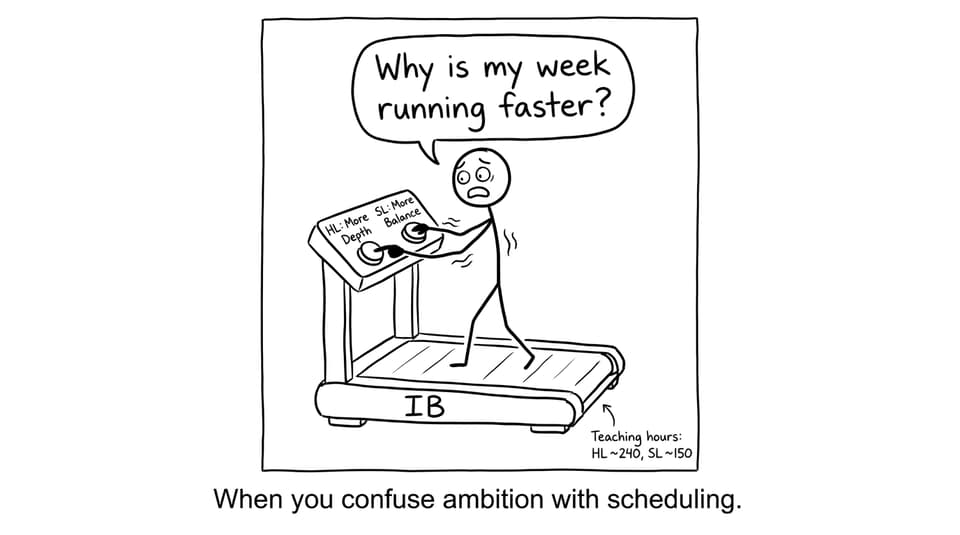
Different teaching time: HL is usually ~240 hours, SL is usually ~150 hours.
-
Different assessment load: HL often adds papers, longer responses, and harder applications.
-
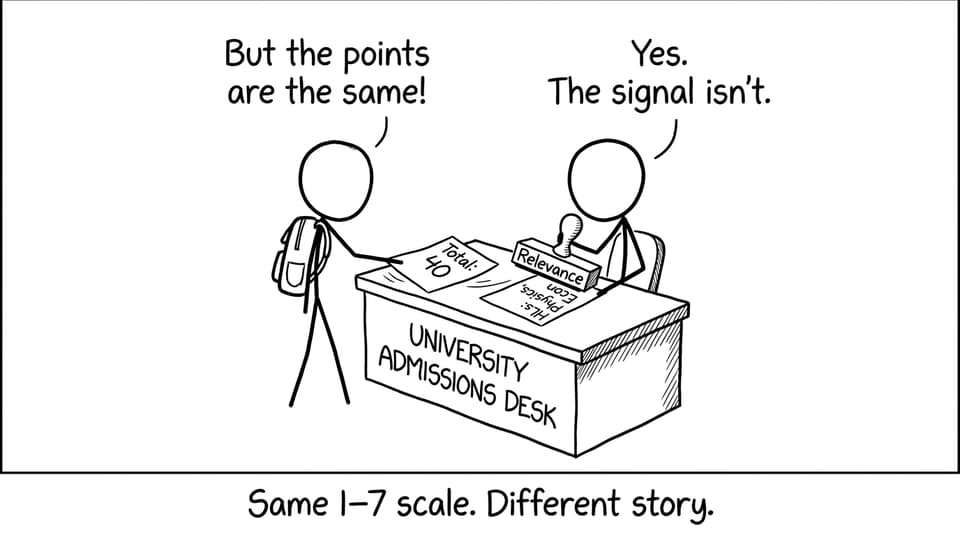
Different “signal” to universities: not “more points,” but often more relevance.
When you need a system to revise either level, the most reliable loop is learn --> test --> fix --> repeat. RevisionDojo is built around that loop with Study Notes, Flashcards, AI Chat, and a topic-filtered Questionbank that lets you practise at SL or HL depth.
What HL and SL mean in IB (beyond the label)
In the IB Diploma Programme, you study six subjects. Most students take:
-
Three Higher Level (HL) subjects
-
Three Standard Level (SL) subjects
HL is not “the smart version” of a course. SL is not “the easy version.” In IB, the difference is mainly scope and expectation: HL typically asks you to cover more content and then do more with it under exam conditions.
If you want a clean definition with examples, read HL Meaning in IB: A Complete 2025 Guide.
The biggest practical difference: time and depth in IB
The most concrete HL vs SL difference in IB is teaching time:
-
HL: about 240 teaching hours
-
SL: about 150 teaching hours
That extra time usually becomes some combination of:
-
HL-only topics (you won’t see them at SL)
-
More complex skills (evaluation, synthesis, extended reasoning)
-
More practice on unfamiliar data or harder prompts
This is why HL can feel “fine” in September and heavy in March: it’s not only more pages in a book, it’s more repetitions required until your thinking becomes automatic.
How assessments and exams change from SL to HL in IB
Even when HL and SL students sit assessments in the same subject area, HL is often designed to stretch your exam performance in ways you notice immediately:
-
Extra exam papers or components at HL (in many subjects)
-
Longer responses with higher expectations for structure and precision
-
More demanding application (multi-step reasoning, evaluation, synthesis)
-
Harder interpretation of data, sources, or case material
Internal Assessments (IAs) exist at both levels in IB, but HL work is often assessed with a stronger expectation of analytical depth, even if the task looks similar.
To see how this plays out in a real subject, compare the level differences in IB Biology HL vs SL Difficulty: 7 Key Differences.
Do HL and SL count the same for IB points?
Yes. In IB, an HL 7 and an SL 7 are both worth 7 points. Your diploma score doesn’t secretly weight HL higher.
But here’s the subtle truth: universities often read HL choices as a signal.
For competitive degrees, admissions teams typically care about:
-
Whether you chose the right HL prerequisites (the “door subjects”)
-
Whether your HLs match the academic direction you claim you want
-
Whether you performed strongly in the subjects that matter most
If you want the university angle explained calmly and clearly, see Do Universities Care About HL vs SL in IB Subjects?.
Should you take 4 HLs in IB?
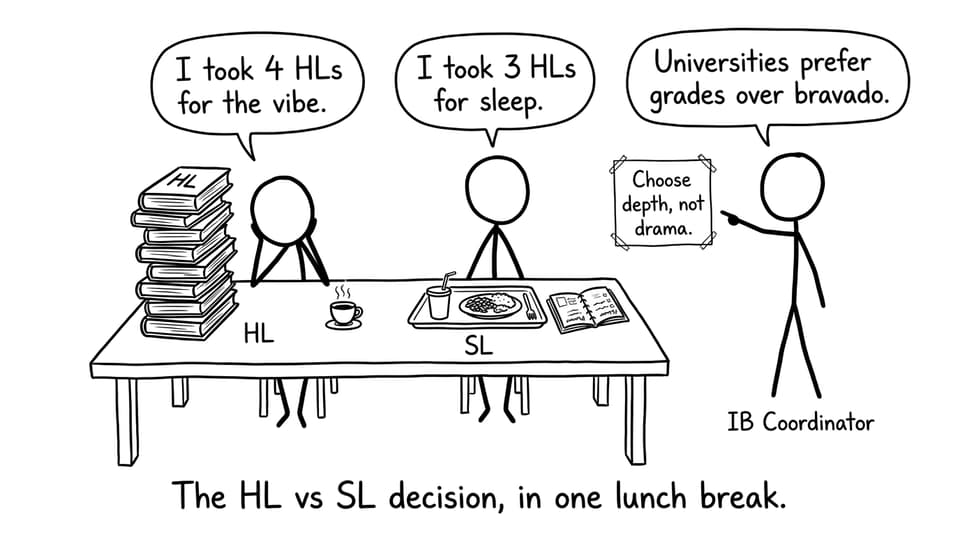
In IB, some students choose four HLs because it sounds impressive. Sometimes it’s the right move. Often, it’s just a workload trap with good marketing.
Consider four HLs only if:
-
You consistently score well across all four subjects now, not “when you revise later”
-
Your school supports the combination
-
You have a concrete reason (prerequisites, scheduling constraints, or a genuine strength)
In most cases, universities would rather see three strong HLs with high grades than four HLs that pull everything down. In IB, your total profile is built on consistency.
How to choose HL vs SL strategically (for exams)
Choosing levels is one decision. Revising for them is the part that actually changes your outcome.
Use this simple approach:
Choose HL for relevance, not reputation
If a degree path expects HL in a subject, treat that HL as non-negotiable. Then build your revision loop early. RevisionDojo helps here because you can move from Study Notes straight into level-matched Questionbank practice.
Choose SL to protect your weekly bandwidth
SL is not “free time.” It’s where you keep points safe while managing TOK, EE, CAS, and your other subjects. Strong SL outcomes can be the difference between a good diploma score and a great one.
Revise HL and SL differently inside the same IB system
A practical pattern:
-
SL revision: prioritise coverage + accuracy + timing on common question types.
-
HL revision: do the same, then add a second layer: unfamiliar applications and longer responses.
If you want a structured platform workflow, start with the RevisionDojo App for IB Exam Prep, then reinforce with the Questionbank feature and Digital IB Study Notes.
Closing thought: make your IB level choice a calm advantage
The HL vs SL decision in IB is not a referendum on talent. It’s a choice about depth, time, and what you want your academic story to signal.
If you choose HL because it unlocks your future plans (and you build the revision habits to match), it becomes a strength. If you choose SL to protect balance and keep points stable, it becomes a strength too. Either way, RevisionDojo can be your home base: Study Notes for clarity, Flashcards for recall, AI Chat when you’re stuck, a level-filtered Questionbank for daily practice, plus Grading tools, Predicted Papers, Mock Exams, a Coursework Library, and Tutors when you need another set of eyes.
When your plan is realistic, the IB feels less like two different lives and more like one you can actually run.