
The IB is famous for the obvious things: deadlines, content load, and the quiet dread of hearing the words "timed conditions." But the strange truth is that most IB students finish a revision session thinking they only gained a bit of Biology or a few quote banks for English.
What you actually gained is harder to see. It's a set of skills you didn't sign up for, built in the background like muscle memory. You develop them because the IB forces repetition: you plan, you revise, you write, you get feedback, you try again. And over time, that cycle turns into abilities that matter on exam day and far beyond it.
This article is for IB students preparing for exams who want something calmer than "work harder." It's about noticing what you're already building, then using it deliberately with tools that make the loop easier to run.
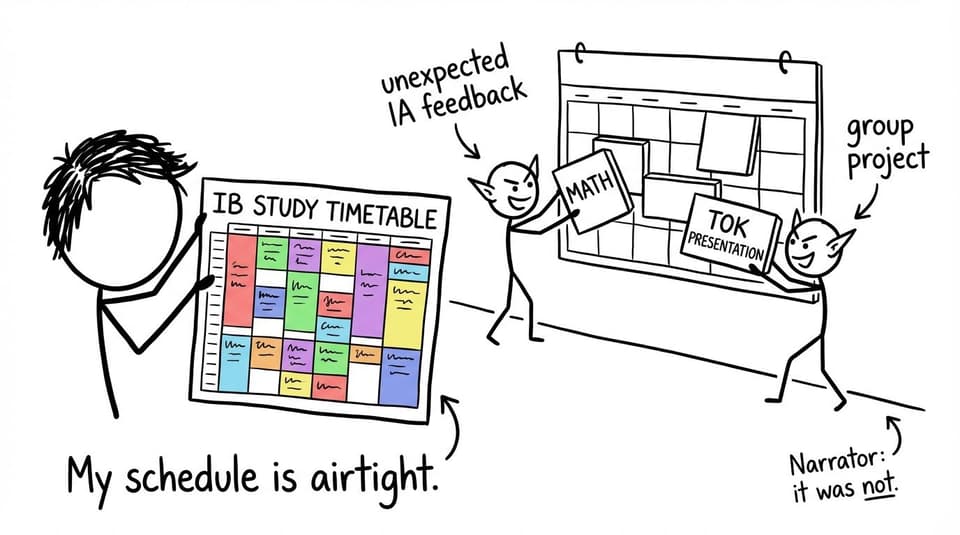
A quick checklist: the hidden skills you're building in IB
If you want the short version first, here are the hidden skills most IB students develop without realizing:
- Turning vague work into specific tasks (real planning)
- Learning how to learn (active recall, spacing, feedback loops)
- Writing and thinking to a mark scheme (clarity under constraints)
- Managing stress without "feeling ready" (calm is a procedure)
- Self-diagnosing weaknesses (honest reflection)
- Switching contexts fast (cognitive flexibility)
- Communicating with structure (TOK/EE/IA muscle)
You can train all of these faster if your revision environment is designed for repetition and feedback. That's why many students build their system around RevisionDojo's Study Notes, Flashcards, Questionbank, AI Chat, Grading tools, Predicted Papers, Mock Exams, Coursework Library, and Tutors.
The IB skill nobody names: turning fog into a plan
Most students don't fail the IB because they're lazy. They fail because they study inside fog.
Fog sounds like:
- "Revise Physics."
- "Do Math."
- "Work on History."
Those phrases are emotionally soothing because they let you begin without committing to what "done" means. The IB, however, rewards the opposite: specificity. You gain marks by answering this command term in this format with this evidence.
Over time, the diploma quietly teaches you a transferable skill: shrinking work into units you can finish.
A practical upgrade is to plan by paper and question type rather than by subject identity. If you want a clean structure, steal the workflow in How to Study for IB Exams: Step-by-Step Guide and keep it close to your desk.
RevisionDojo supports that specificity because you can move from Study Notes to targeted drills in the Questionbank without rebuilding your plan every session.
The "learning how to learn" skill that IB trains by force
Here's a quiet moment most IB students recognize.
You reread notes for an hour. You feel productive. Then you attempt a question and realize you can't produce the answer.
That gap is painful, but it's also education. The IB is a machine that repeatedly teaches you one principle: recognition is not recall.
You develop learning skill in three layers:
Active recall becomes your default
Active recall is not a "technique" once you do it enough. It becomes how you measure truth. When you can retrieve something without looking, you know it's yours.
A simple way to make recall automatic is daily cards plus immediate practice. On RevisionDojo, that loop looks like Flashcards for quick retrieval, then a short set in the Questionbank to shape recall into exam answers.
If you need a science-backed refresher, 5 Proven IB Revision Hacks Backed by Science pairs well with exam season routines.
Spaced repetition teaches patience
The IB makes you revisit topics across months, not days. That repetition feels annoying, but it's literally how long-term memory is built.
The hidden skill is patience with forgetting. You stop treating a forgotten concept as a personal failure and start treating it as a scheduling problem.
Feedback loops teach humility (the useful kind)
High scorers don't revise more. They revise more honestly.
They do questions, get corrected, and change something. If you want to see what that loop looks like in practice, How 45-Point IB Students Prepare for Exams explains the rhythm without the drama.
IB teaches you to think in "mark-scheme shapes"
The IB is not just content. It's a language.
You're rewarded for doing specific things:
- Defining before explaining
- Structuring evaluation rather than listing opinions
- Using evidence, not vibes
- Answering the command term, not the topic you wish you were asked
This becomes a hidden skill: you learn to compress complexity into assessable clarity.
One of the fastest ways to train it is timed practice plus immediate review. That's why RevisionDojo emphasizes realistic exam simulation through guides like How to Run Timed IB Mock Exams in RevisionDojo (Exam Mode + Test Builder). You stop guessing what "good" is because you see it in feedback.
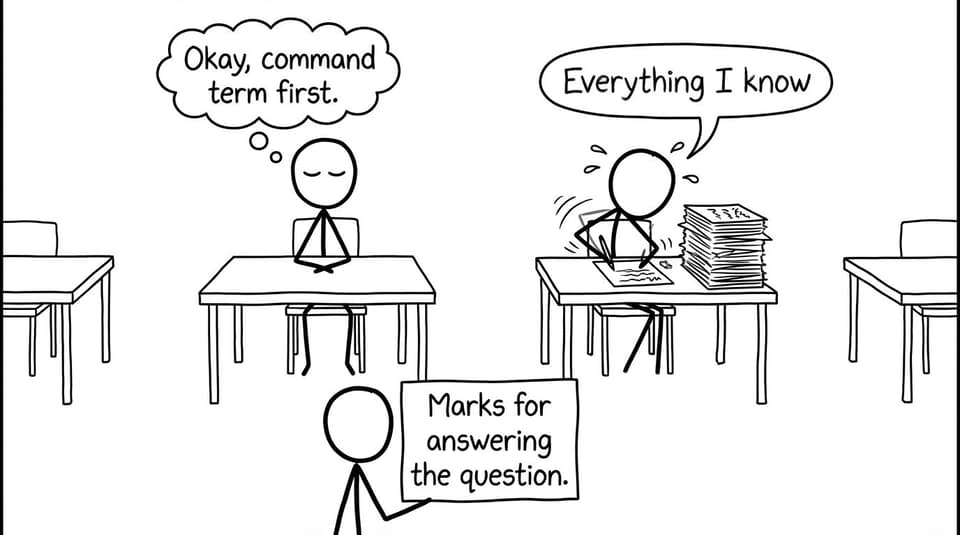
Command terms become a real-world communication skill
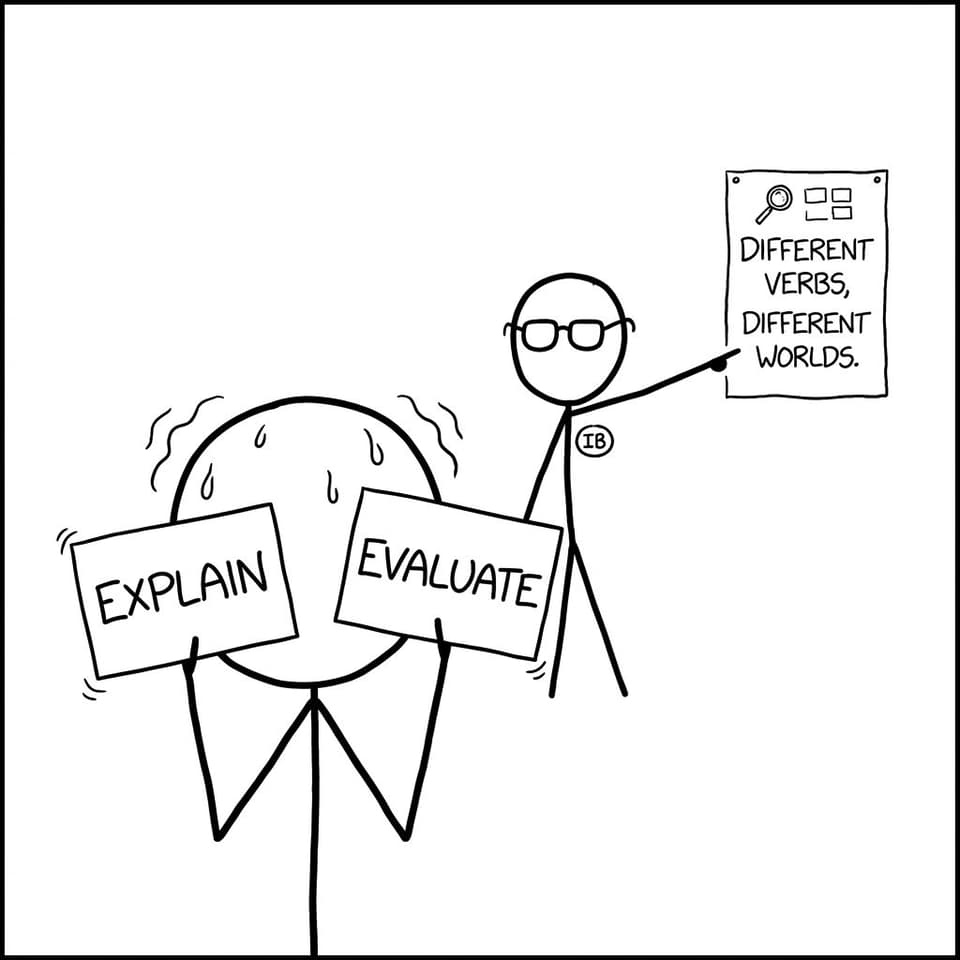
Outside the IB, people rarely say "evaluate" out loud. But they constantly expect evaluation: in interviews, in essays, in meetings, in decisions.
The diploma trains you to hear the verb and match your response format. That's not just exam technique. It's communication under constraints.
The hidden IB skill of stress management: calm as a procedure
Most IB students assume calm is a personality trait.
It's not.
Calm is what happens when your brain recognizes a situation because you've rehearsed it. That's why exam anxiety rises when your plan is vague and falls when your practice is specific.
If you're feeling the pressure right now, How to Beat IB Exam Anxiety (Without Burning Out) is worth saving. It frames calm as a repeatable routine, not a motivational mood.
And if you want something practical for the morning itself, the IB Exam Day Checklist: The Ultimate Guide is the closest thing to an "if-then" script for staying steady.
Why RevisionDojo makes calm easier
When students panic, it's often because they don't know what to do next.
RevisionDojo reduces that uncertainty with an ecosystem:
- Questionbank results tell you what to fix
- Study Notes give fast clarity on the fix
- Flashcards stop the forgetting spiral
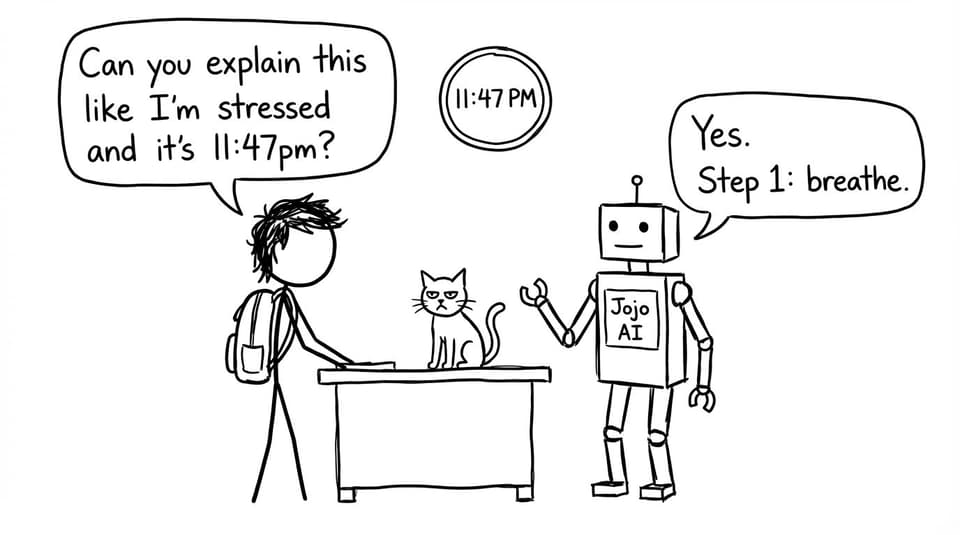
- AI Chat (Jojo AI) keeps you moving when you're stuck
- Mock Exams and Predicted Papers make pressure familiar
- Grading tools turn "Is this good?" into specific feedback
In other words: fewer decisions, more repetition.
IB quietly trains self-diagnosis (and that's rare)
In many school systems, you can float on effort. In the IB, effort is not always correlated with marks, and that forces a difficult question:
"What exactly is going wrong?"
That question is the doorway to self-diagnosis, one of the most valuable skills you'll carry.
A simple method:
- After every practice set, write the mistake type (content gap, command term, structure, timing)
- Write the fix as a rule ("Underline command term; answer in two claims plus judgement")
- Re-attempt one similar question within 48 hours
RevisionDojo supports this because your practice and your feedback can live in one place. Start with Notes + Flashcards + Question Bank (Free) if you want a low-friction setup.
The IB skill of switching contexts fast (aka exam-season brain)
Exam season is not just "hard." It's cognitively weird.
One day you're balancing redox reactions, the next you're writing a comparative essay, the next you're interpreting a graph.
This trains cognitive flexibility: the ability to switch frameworks without wasting an hour warming up. Most adults struggle with this. IB students practice it for two years.
You can train it intentionally by using mixed-topic sets and timed blocks. The point isn't to suffer. The point is to make switching feel normal.
If you want a broad stream of exam-focused ideas to support that, browse All #IB Posts and pick one routine to repeat rather than ten tips to admire.
The "writing like a thinker" skill from TOK, EE, and coursework
TOK and extended writing can feel like distractions when you're in full exam mode. But they build a hidden advantage: structured thinking.
You learn to:
- Make a claim that actually says something
- Support it with a reason, not just an example
- Anticipate a counterclaim
- Conclude without undoing yourself
That structure helps everywhere in the IB, including short answers. A well-structured response often earns more than a longer, foggier one.
This is also where RevisionDojo's Coursework Library and Grading tools matter. When you can see what "strong" looks like and get criterion-aligned feedback quickly, you stop guessing and start iterating.
Closing: the IB is building you while you revise
The IB can feel like a tunnel: you do the work, you hand things in, you sit exams, and you hope it adds up.
But under that workload, something else is happening. You're becoming the kind of student who can plan precisely, learn efficiently, communicate clearly, and stay steady when time is loud.
If you want those skills to translate into higher marks now, don't just admire them. Train them.
Use a system that makes repetition easy: Study Notes for clarity, Flashcards for daily recall, a Questionbank for exam-shaped practice, AI Chat for fast explanations, Grading tools for feedback, and Mock Exams plus Predicted Papers for pressure training. That full loop is exactly what RevisionDojo is designed to give IB students, especially when motivation is unreliable and deadlines are real.
Your next step can be small: pick one topic, do one targeted set, review one mistake pattern, and repeat tomorrow. That's how IB skills compound.