
In the middle of IB exam season, a weird thought can land like a stone in your stomach:
If I stop performing, who am I?
It usually arrives quietly. You're revising, you're tired, and someone mentions a predicted grade like it's a personality trait. A 7 sounds like "capable." A 5 sounds like "disappointing." And suddenly the IB isn't just schoolwork. It's a mirror you keep checking, hoping it reflects something you can be proud of.
That's the identity crisis many IB students go through: when your value starts to feel inseparable from your performance.
It's not dramatic. It's not a breakdown on the hallway floor. It's the slow narrowing of your identity until there's only "student" left, and even that feels conditional.
A quick checklist for the IB identity spiral
If you're in the thick of IB exams, use this as a fast self-check. You may be slipping into an identity crisis if:
- You interpret every mark as a verdict on you, not your work.
- You avoid practice questions because they might "confirm" you're not good.
- You feel guilt when resting, even after a solid study block.
- You compare your revision pace to everyone else's, constantly.
- You can't describe yourself without referencing IB subjects or grades.
None of this means you're weak. It means you're human in a system that measures you a lot.
Why IB can trigger an identity crisis (and why it's not your fault)
The IB is unusually good at turning life into dashboards.
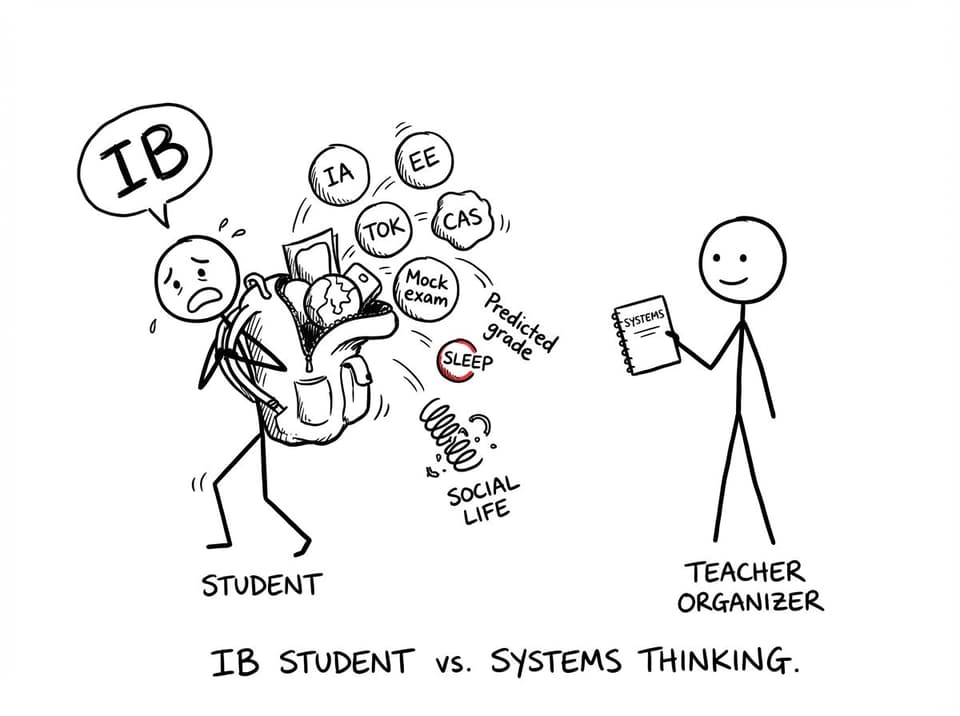
Six subjects. Higher Level pressure. Coursework deadlines. Command terms. Timed papers. You're rarely "done," and feedback often arrives late or feels unclear. Add the social layer (friends talking about how many hours they studied) and you get a perfect recipe for tying self-worth to output.
This is why so many students benefit from building a practice-and-feedback loop that feels concrete and measurable without becoming personal. Tools like RevisionDojo's Questionbank help here because they shift the focus from "What am I?" to "What can I improve next?"
The difference sounds small. It's everything.
The quiet story almost every IB student lives
Most IB students start with a stable identity.
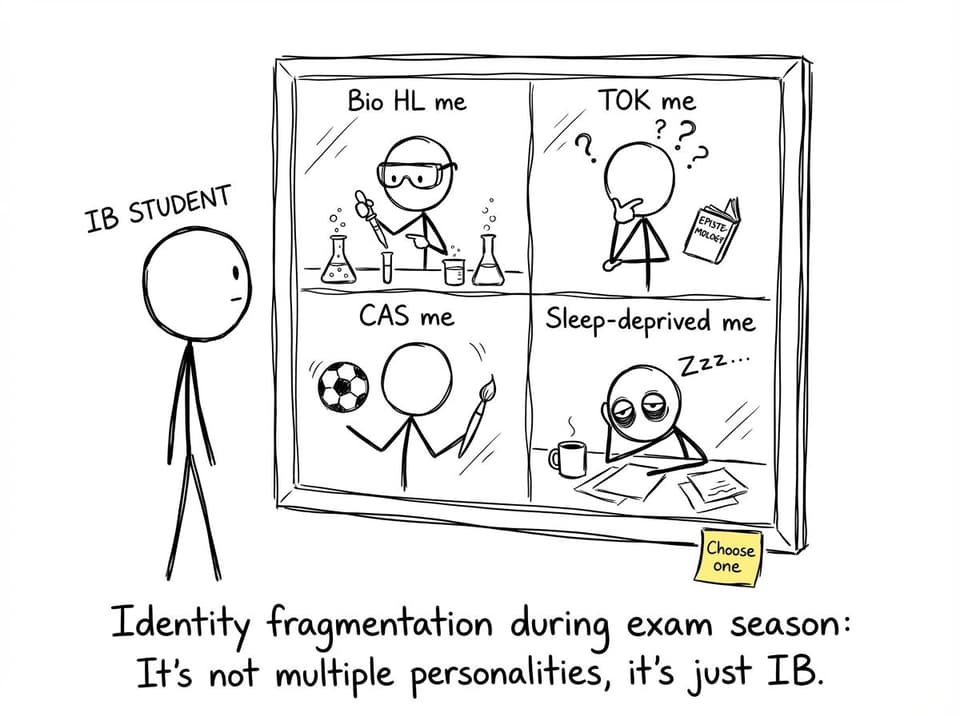
You're "good at English," "a math person," "the organized one," "the creative one." Then the Diploma Programme expands, and you become five versions of yourself trying to share one calendar.
At first, you cope by working harder.
Then you notice something: the parts of you that used to feel solid now depend on results. You don't feel smart; you feel temporarily not disproven. You don't feel confident; you feel one quiz away from being exposed.
That's not laziness. That's not lack of grit. That's a mind trying to find certainty in a noisy environment.
One of the healthiest shifts you can make during IB exams is to stop asking, "How do I feel about myself today?" and start asking, "What evidence can I build today?"
RevisionDojo is designed around evidence: Study Notes for clarity, Flashcards for retention, and exam-style practice with feedback so you can watch progress happen instead of guessing.
How to study for IB without turning your grades into your identity
You don't fix an identity crisis by repeating affirmations in the mirror. You fix it by changing the relationship between effort, feedback, and meaning.
Here are four identity-safe strategies that work especially well in IB exam prep.
Make your identity about process, not outcomes
The most dangerous sentence in IB season is: "I'm a 6 student."
Because your brain will protect that identity by avoiding anything that threatens it. Hard topics become personal. Mistakes become shame.
Instead, build identity around process:
- "I do timed practice three times a week."
- "I review my errors the same day."
- "I ask for clarification fast instead of spiraling."
A platform can help you keep that promise to yourself. The RevisionDojo App guide outlines a workflow many IB students use: learn, remember, apply, fix mistakes, simulate.
Replace vague revision with tight loops
"Revise Biology" is a sentence that creates anxiety because it has no finish line.
In IB, vague tasks turn into identity threats because you can't tell if you're succeeding. Tight loops create calm because they have boundaries.
Try this 60-minute loop:
- 15 minutes: targeted Study Notes (one subtopic)
- 25 minutes: Questionbank practice on that exact subtopic
- 20 minutes: review errors and convert repeat mistakes into Flashcards
This is how effort becomes proof in IB exam season: you learn, test, diagnose, repeat.
Use IB flashcards as an identity reset
Flashcards look simple. That's why they work.
When your identity feels unstable, you need small, repeatable wins. Active recall gives you that. You either retrieve it or you don't, and then you adjust. No drama, no narrative.
If you want a clear routine, start with RevisionDojo's Flashcards feature and pair it with the deeper guide on the IB flashcard system. This is especially helpful when IB content feels like it's leaking out of your brain overnight.
Treat feedback as information, not judgment
Most identity crises worsen because feedback feels like a moral evaluation.
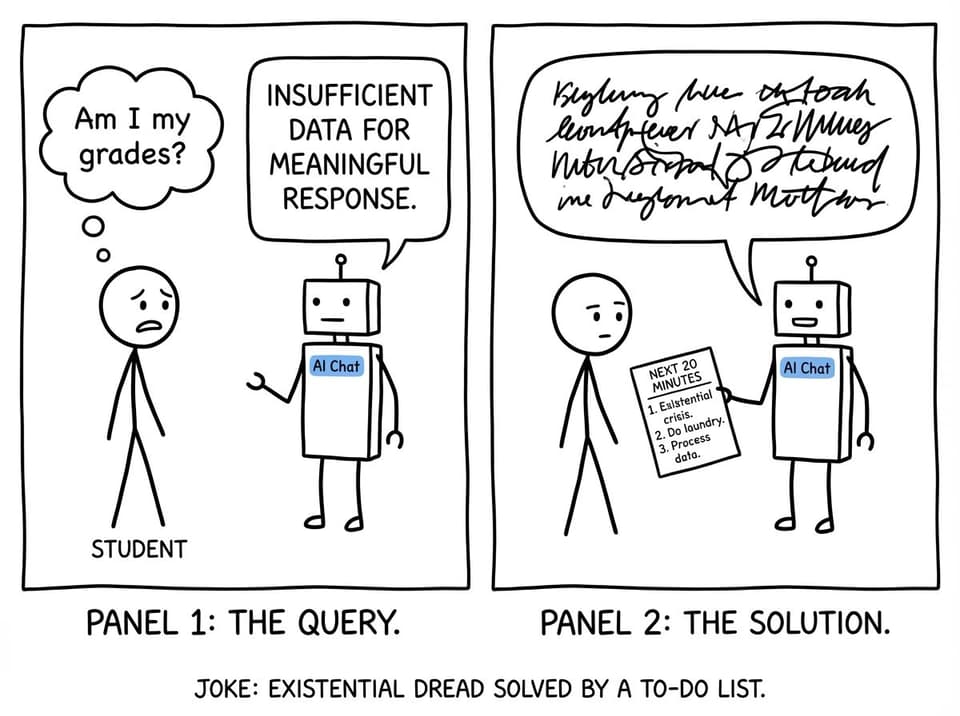
This is where faster feedback changes everything. RevisionDojo's ecosystem is built to shorten the distance between attempt and understanding: AI Chat to clarify, Grading tools to show what earns marks, and Mock Exams to make pressure familiar.
If anxiety is part of your identity spiral, read How to Beat IB Exam Anxiety (Without Burning Out). It explains why uncertainty fuels fear in IB, and how structure dissolves it.
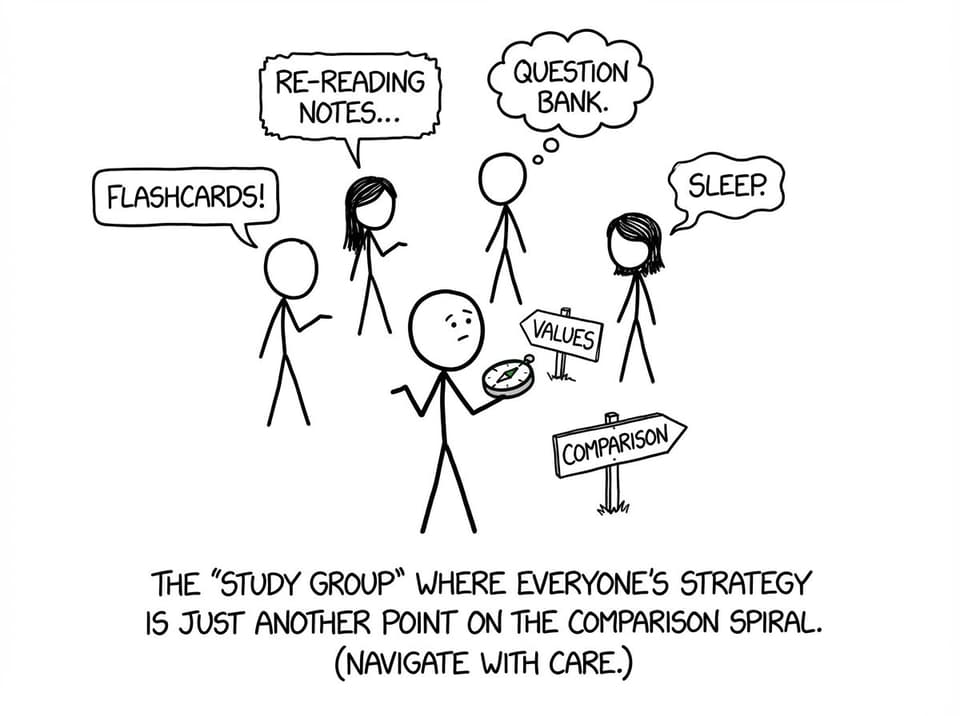
Two comparisons that quietly destroy IB students
The IB doesn't only test knowledge. It tests the stories you tell yourself while studying.
Two stories are particularly corrosive.
Comparing your behind-the-scenes to someone else's highlights
You see someone post "3-hour grind" and you assume they're disciplined and you're not. You don't see their panic, their inefficiency, or the fact that "3 hours" might be 40 minutes of studying plus 140 minutes of stress.
The antidote is to measure yourself against yourself.
RevisionDojo helps here because your progress is visible: you can tag questions, track weak topics, and see improvement over time. That's a healthier mirror than your group chat.
Comparing your worth to your grades
Grades matter in IB. They do.
But grades are outcomes of a system: mark schemes, command terms, timing, interpretation. They are not a personality report.
If you need a broader reframe, Is IB Worth It? The Real Scoop for Exam Season is a grounded reminder that the IB is training for complexity, not a referendum on your future.
Using RevisionDojo to feel like a person again (while still scoring high)
The goal isn't to care less about IB.
The goal is to care in a way that doesn't erase you.
Here's a simple way to use RevisionDojo's core features as identity support during IB exam prep:
- Study Notes: reduce confusion fast so you don't interpret "not understanding" as "not smart."
- Questionbank: turn studying into training with immediate feedback and topic tracking.
- Flashcards: build daily proof you're retaining what matters.
- AI Chat: stay moving when you're stuck, instead of spiraling in silence.
- Grading tools: get clear feedback on writing and structure, not vague worry.
- Predicted Papers and Mock Exams: replace fear with familiarity under time pressure.
- Coursework Library: see what "good" looks like so you're not guessing.
- Tutors: get a human to steady the plan when motivation collapses.
If you want evidence that structure reduces stress, the State of Learning Survey summarizes how many students report a meaningful drop in exam anxiety after building consistent study loops.
Closing: let IB be something you do, not something you are
The IB can be a powerful chapter in your story. But it should stay a chapter.
If you're feeling an identity crisis right now, don't treat it like a personal flaw. Treat it like a signal: your life has become too measured, and your mind is trying to find stability in numbers.
Bring stability back with systems.
Use RevisionDojo to build a calmer IB routine: learn with Study Notes, drill with the Questionbank, retain with Flashcards, get unstuck with AI Chat, and prove progress with Mock Exams and Predicted Papers. The more evidence you build, the less your identity has to beg the next grade for reassurance.
You're not your scores.
You're the person who can improve them.