

The night before a supervisor meeting, your child is suddenly a philosopher.
They stare at a blank document and say, “I know what I want to do… I just don’t know what it is.”
That feeling is basically the MYP Personal Project in miniature. It’s exciting because it’s personal. It’s stressful because it’s real: long timelines, real decisions, real proof, and real reflection. And for many students, it’s the first project where the process matters as much as the product.
If you’re a parent supporting an MYP student who is also juggling assessments, this guide will keep you steady: what to prioritize, how to help without taking over, and how to use RevisionDojo as the structure behind the creativity.
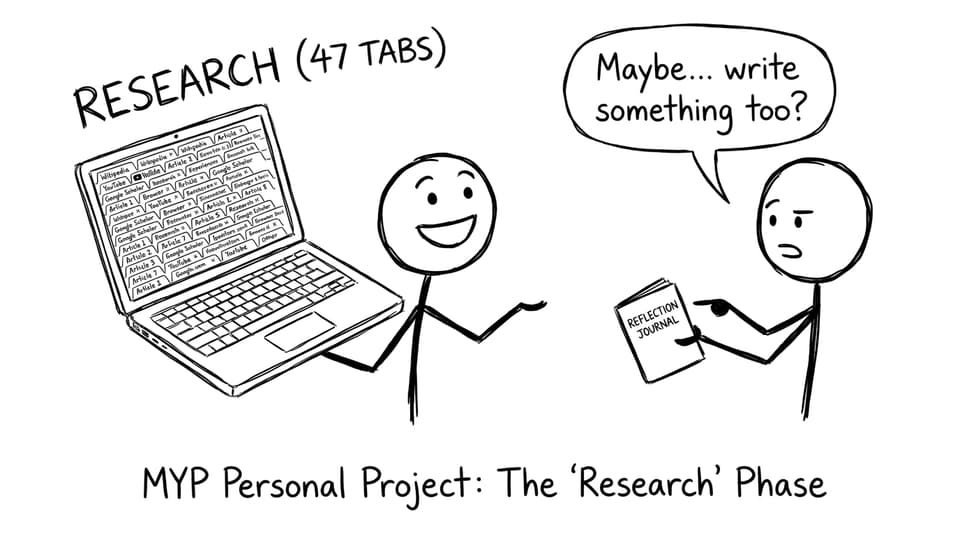
MYP Personal Project quick checklist (print this)
-
Choose a focused MYP goal you can actually evaluate later
-
Pick one Global Context and revisit it often
-
Define success criteria early (before building anything)
-
Keep a process journal with dated evidence (photos, screenshots, drafts)
-
Break the timeline into weekly milestones
-
Build a feedback loop: draft, get comments, improve
-
Map your writing to Criteria A--D before the final report
If you want a deeper student-facing overview, pair this with MYP Personal Project: The Ultimate Student Guide.
What the MYP Personal Project is really assessing
At the surface, the MYP Personal Project is “make something + write a report.” Underneath, it’s a skill demonstration: research quality, planning discipline, evidence of action, and reflection that sounds like learning (not like excuses).
That’s why Approaches to Learning (ATL) skills show up everywhere. Organization, research habits, communication, and self-management are not side quests; they are the point.
A useful parent mindset: you’re not helping your child build a perfect product. You’re helping them build a repeatable system.
For a clear explanation of ATL and how it connects to performance, see Linking ATL Skills to Conceptual Understanding in the MYP.
Help without hijacking: be the coach, not the co-author
Most family stress comes from one blurred line: support vs control.
In the MYP, the best parent role is a coach who makes thinking visible. That means asking questions that push decisions back to the student:
-
“What’s your milestone this week, and what evidence will prove it?”
-
“Which success criterion are you working toward today?”
-
“What did you change after feedback?”
What to avoid (even with good intentions): writing parts of the report, doing the research, or “fixing” the product. It can quietly erase the exact learning the MYP is trying to measure.
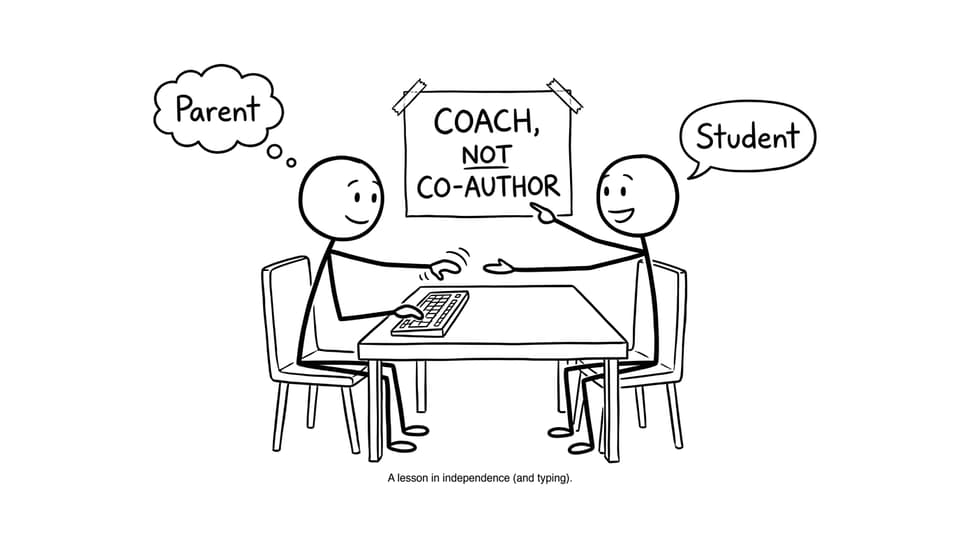
When your child needs models, use examples instead of rewriting their work. RevisionDojo’s IB Personal Project (MYP) Examples are ideal for seeing what strong evidence and structure look like.
Time management that actually works (even in exam season)
The MYP Personal Project doesn’t usually fail because of intelligence. It fails because students treat it like one giant task, then discover time only when panic arrives.
Break it into phases with visible proof:
-
Investigating: goal, Global Context, research questions, early sources
-
Planning: timeline, resources, success criteria, risk plan
-
Taking action: iterations, testing, feedback, changes
-
Reflecting: evaluation against criteria, ATL growth with examples
A parent-friendly routine that protects exam prep:
-
Two short blocks midweek (25--40 minutes) for journaling and evidence uploads
-
One longer block on weekends (60--90 minutes) for milestones and writing
If your child is also preparing for tests, keep their wider rhythm stable using the RevisionDojo Questionbank, Study Notes, and Flashcards from the Middle Years Program (MYP) hub. The Personal Project should be a habit, not a second life.
For a structured approach to broader MYP assessments, this helps: MYP eAssessments: 30-Day Study Plan That Works.
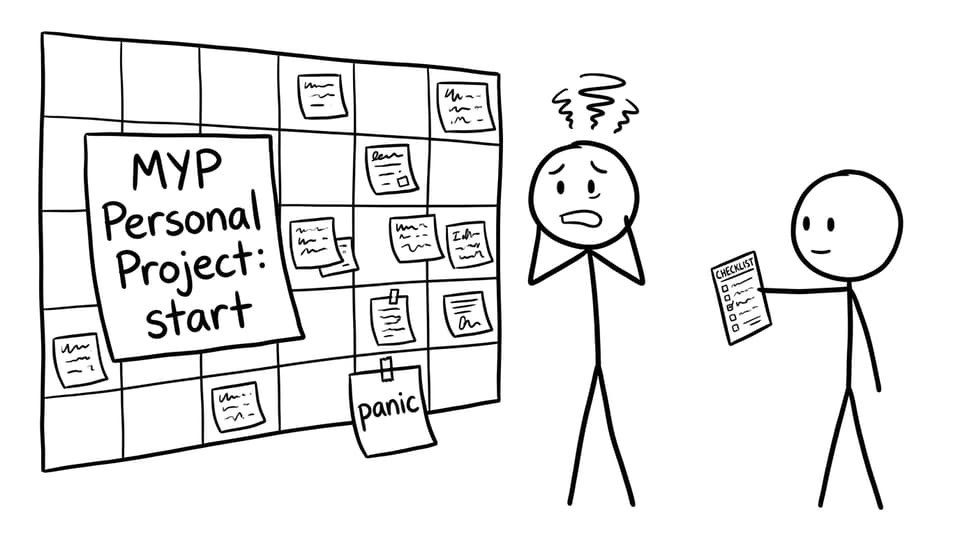
Reflection: the secret ingredient most MYP students underuse
Students often think reflection means “what went well/what didn’t.” In the MYP, high-quality reflection is closer to: claim + evidence + change.
Try this simple daily prompt:
“Because I learned __, I changed __, which improved __.”
Those sentences become the report.
If your child struggles to sound “academic” without becoming robotic, RevisionDojo can help in two ways:
-
Use MYP: How to Get a 7 in the Personal Project to see what top-band reflection actually does.
-
Use AI Chat to turn messy thoughts into clear reasoning, then have the student rewrite it in their own voice.
When it’s time to tighten rubric alignment, the MYP Personal Project Grader is a fast reality check: it highlights gaps in evidence, criteria coverage, and clarity.
A simple way to choose a topic that survives the MYP timeline
Parents can help most at the beginning by preventing an impossible scope.
A strong MYP topic usually has:
-
personal meaning (they’ll care past week two)
-
a clear audience (who it’s for)
-
built-in evidence (drafts, prototypes, feedback)
-
space for iteration (so reflection is real)
If your child is stuck, use this guide to shrink the idea into something doable: MYP Personal Project: How to Choose a Strong Topic.
And when the final writing starts, this is the cleanest structure reference: Writing an Outstanding MYP Personal Project Report.
Closing: make the MYP Personal Project a system, not a storm
The best MYP Personal Projects rarely look perfect the first time. They look documented. They look honest. They look like a student who made decisions, changed course, and can prove it.
If you want your child to feel calmer and perform better, help them build the routine: weekly milestones, daily evidence, and reflection that links learning to change. Then let RevisionDojo handle the heavy structure: use the Coursework Library for models, AI Chat for clarity, Flashcards for ATL language, and the MYP Personal Project Grader to stay rubric-aligned.
In the MYP, confidence is usually just proof collected early. Start collecting it this week.
