


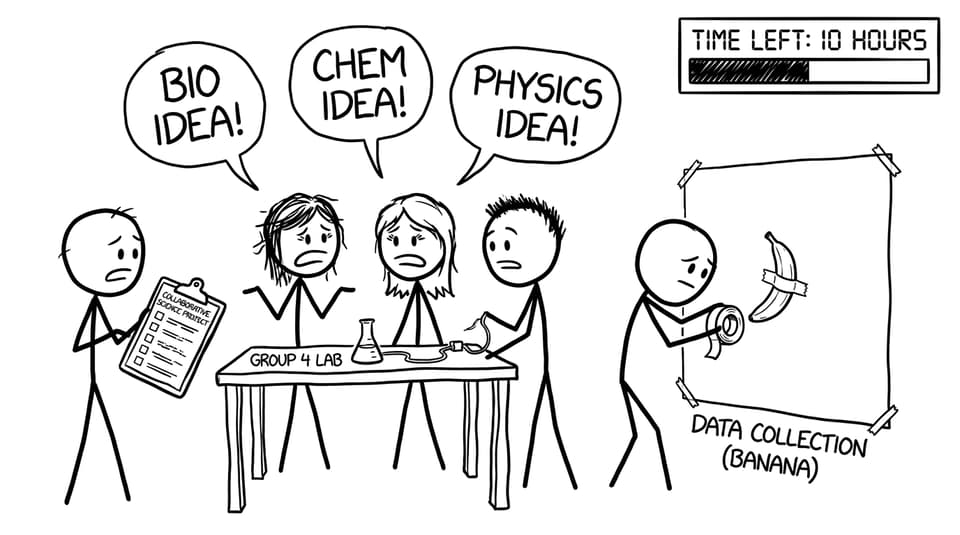
When people talk about Group 4, they often picture lab coats, shared Google Docs, and a countdown clock that seems to sprint faster than you do. One minute you’re brainstorming “sustainability,” and the next you’re standing in front of your class explaining why your data table has three units and none of them match.
That chaos is partly the point.
In IB, the Group 4 requirement isn’t only about science content. It’s about learning how science actually happens: with imperfect information, different perspectives, and the constant need to make decisions together. And importantly, what many students still call the “Group 4 Project” is now commonly referred to as the Collaborative Science Project.
This guide breaks down the Group 4 (Collaborative Science Project) requirements in a way that helps you do well in the moment and also use it as smart preparation for exams, IAs, and scientific writing.
Group 4 requirements at a glance
If you remember nothing else, remember this checklist. The Group 4 Collaborative Science Project requires:
-
Collaboration across sciences: students from at least two different Group 4 subjects working together
-
A shared theme or real-world problem that can be explored from multiple scientific angles
-
A scientific investigation (experiment, fieldwork, simulation, or data analysis)
-
Roughly 10 hours total (commonly split into planning, action, evaluation)
-
Some form of communication/presentation of the process and outcomes
-
Reflection on teamwork and interdisciplinary thinking (what worked, what didn’t, what you learned)
If you want extra context on why this exists at all, read Is the Group 4 Project worth it? Pros and cons.
What “Group 4” means (and who’s involved)
In the IB Diploma Programme, Group 4 refers to the sciences. Depending on your school, that can include Biology, Chemistry, Physics, ESS, Design Technology (and in many schools, Computer Science and SEHS as well). The Collaborative Science Project is designed to mix those lenses on purpose.
A Biology student tends to ask: What does this do to living systems?
A Physics student tends to ask: What’s the model behind the measurement?
A Chemistry student tends to ask: What reactions and materials explain what we’re seeing?
When you do Group 4 well, your final outcome looks less like “one big poster” and more like a small research team trying to solve a shared question.
For a clear overview of which subjects sit in Group 4, see What subjects are in Group 4? A guide to the IB sciences.
The core Group 4 requirement: interdisciplinary collaboration
The non-negotiable Group 4 requirement is collaboration between students from at least two different Group 4 subjects.
That doesn’t mean everyone must do the same calculation or write the same paragraph. It means the thinking must be shared:
-
agreeing on a research focus you can all contribute to
-
dividing tasks without dividing ownership
-
combining interpretations (not just stapling sections together)
If your group is struggling with coordination, this is worth reading early: IB Group 4 project collaboration: how to work effectively with peers.
The investigation requirement: “do science,” not just talk about it
A strong Group 4 Collaborative Science Project involves a genuine investigation. It can be:
-
a hands-on experiment
-
fieldwork and sampling
-
simulations and modelling
-
database or secondary data analysis
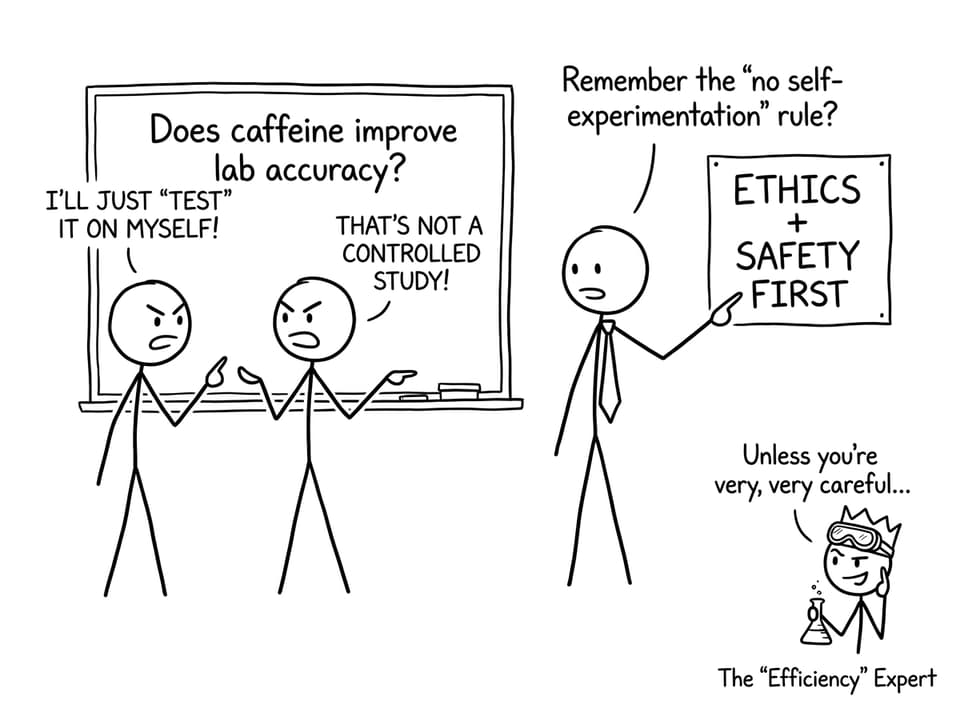
The key is that you’re applying the scientific process: controlling variables (when possible), collecting evidence, processing results, and evaluating limitations.
This is also why the Collaborative Science Project quietly helps your exam performance. In Paper-style questions, IB loves data interpretation, uncertainty, evaluation, and method critique. Group 4 gives you lived experience with those skills.
For help building clean scientific method thinking (which transfers to IAs too), RevisionDojo’s platform tools help: Study Notes for concepts, Flashcards for definitions, and the Questionbank for practice under time pressure.
The time requirement: the “10-hour” structure
Most schools run the Group 4 Collaborative Science Project over about 10 hours total. It is commonly split into:
Planning
You define the theme, scope, roles, and basic method. This is where most groups either save themselves or silently create future stress.
Action
You collect data, test, refine, and troubleshoot. Expect something to go wrong. Plan for it.
Evaluation
You reflect on both outcomes and teamwork: what your data suggests, what limitations matter, and how interdisciplinary collaboration changed your approach.
A practical tip: treat those 10 hours like a mini sprint. Set one “definition of done” per phase (planning done == variables agreed + materials list + timeline). This makes the Group 4 requirement feel manageable instead of mystical.
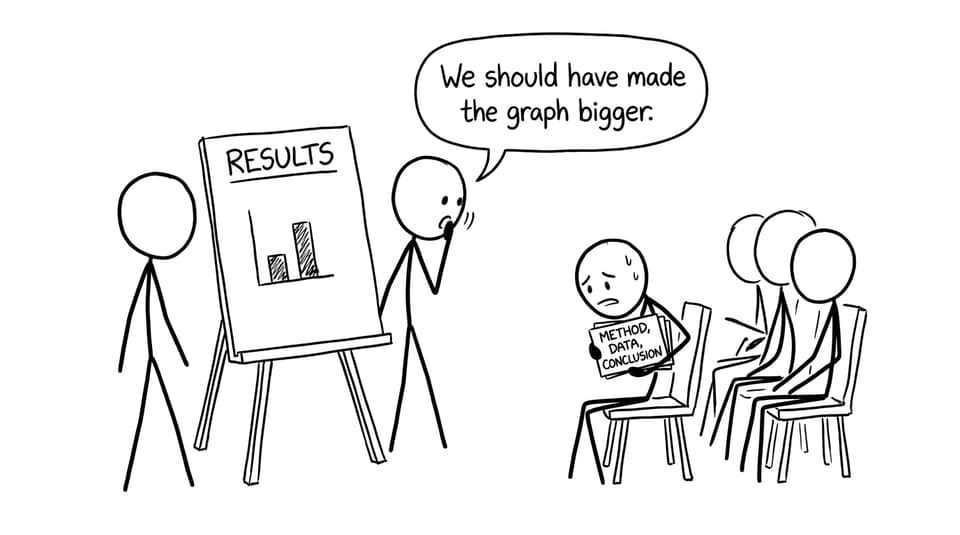
The presentation requirement: communicate the process clearly
Most schools require some form of presentation at the end. It might be a poster session, a short talk, a report, or a combined showcase.
What makes a Group 4 presentation strong is not fancy design. It’s clarity:
-
What question did you explore?
-
Why does it matter?
-
What did you do (method) and why?
-
What did you find (data + trends)?
-
What would you improve?
If you need topic inspiration that naturally leads to strong explanations and graphs, see IB Science Group 4 project ideas that will impress your teachers.
Does Group 4 affect your final grade?
Here’s where many students relax too much or panic unnecessarily.
For most current syllabi, the Group 4 Collaborative Science Project is mandatory as a programme requirement, but it typically does not add marks directly to your final subject grade the way exams and IAs do.
Still, it matters because it builds the exact skills you’re rewarded for in timed science exams: interpreting unfamiliar contexts, handling messy data, explaining limitations, and choosing sensible conclusions.
If you want the clearest explanation of the grade impact, read What is the weighting of the Group 4 project in the final IB score?.
Exam-season angle: how Group 4 helps you score higher later
It’s easy to treat Group 4 as a “one-off school event.” The smarter approach is to treat it as rehearsal.
Use the project to practice:
-
data commentary: describe patterns before you explain them
-
evaluation language: limitation + impact + improvement (three-part structure)
-
time management: set micro-deadlines and protect the last hour for polishing
Then reinforce those skills with RevisionDojo:
-
Drill science wording with the AI Chat (turn weak explanations into mark-scheme style sentences)
-
Use Grading tools to check clarity and structure in short responses
-
Rotate through Flashcards for definitions you needed during the project
-
Use the Questionbank to apply the same skills under exam timing
If timing is your main struggle, this pairs well with the project: How to manage your time during IB Group 4 science exams.
Closing: treat Group 4 like a rehearsal for everything else
The best way to approach Group 4 is with quiet ambition. Not “let’s build a perfect experiment,” but “let’s build a clear process we can explain.” That mindset keeps the Collaborative Science Project realistic, calmer, and more useful.
And when the project ends, don’t let the learning evaporate. Turn your method notes into Flashcards, stress-test your explanations with AI Chat, and sharpen exam technique with the Questionbank. RevisionDojo also supports the rest of your climb with Study Notes, Grading tools, Predicted Papers, Mock Exams, a Coursework Library, and Tutors when you want human feedback.
If you want one more quick resource hub for related reading, browse all Group 4 posts. Your Group 4 experience can be a stressful day, or it can be the moment your science revision starts to feel like real understanding. The difference is how intentionally you use it.