
The moment your EE calendar fights back
A lot of IB work is negotiable.
You can adjust a draft deadline. You can reshuffle a study timetable. You can even (sometimes) convince yourself that writing the introduction at 1 a.m. is a personality trait.
But the EE reflection sessions are different. They are the rare part of the process that doesn’t care about your mood, your schedule, or your “I’ll do it tomorrow” optimism.
If you’re asking Q20: How many reflection sessions are required for the Extended Essay?, here’s the clear answer up front:
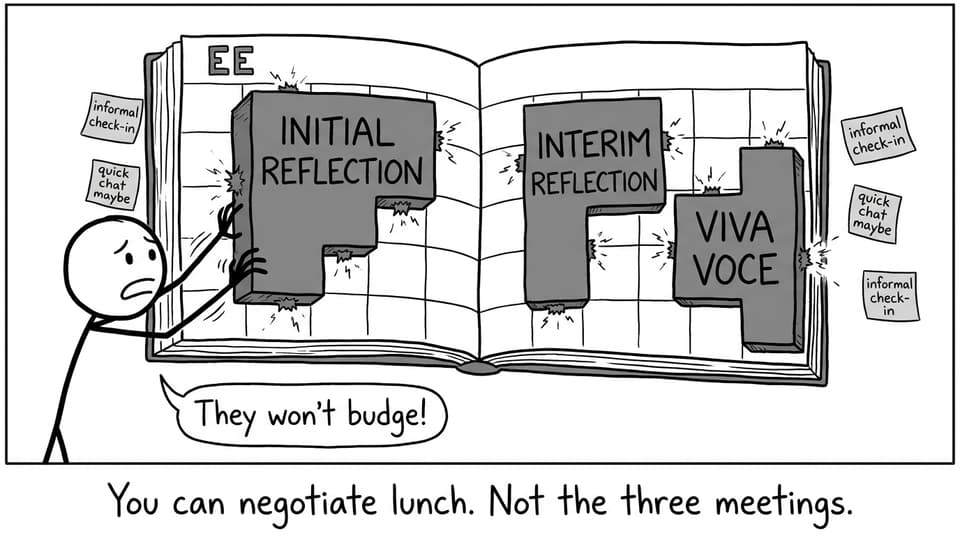
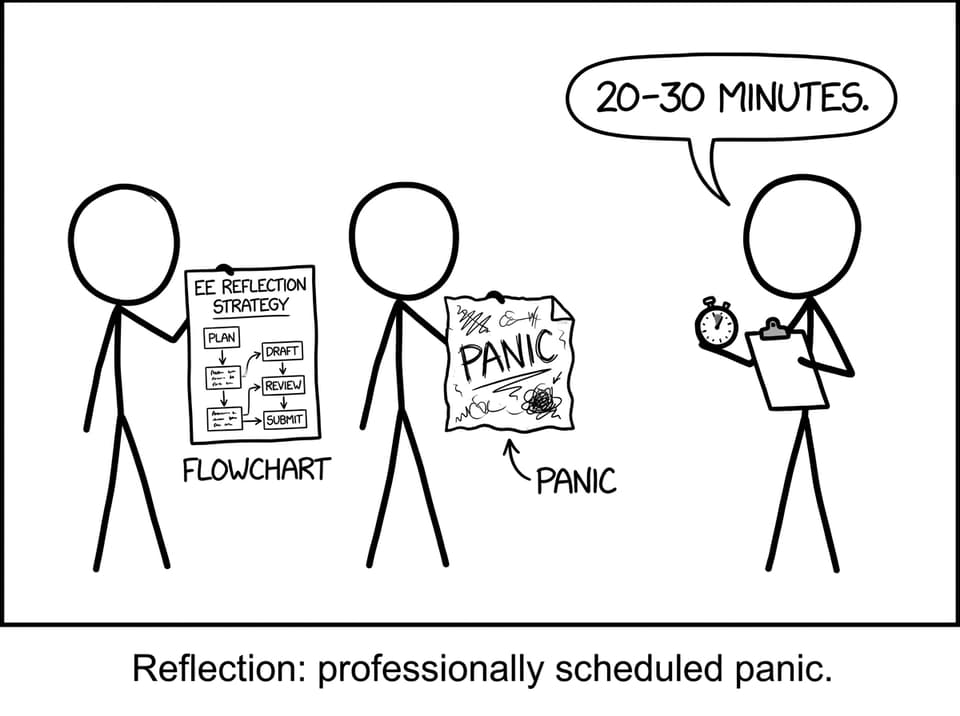
You must complete three mandatory reflection sessions for the EE: an initial session, an interim session, and a final session (the viva voce). These are formal, scheduled discussions with your supervisor, typically lasting 20 to 30 minutes each. You can also have informal check-ins between sessions, but the three formal sessions are the ones that matter for the required reflection process.
EE reflection sessions checklist (save this)
Before you get lost in word counts and citations, keep this practical checklist for your EE reflection sessions:
- You need 3 formal reflection sessions: initial, interim, final (viva voce).
- Each formal session is scheduled and usually 20-30 minutes.
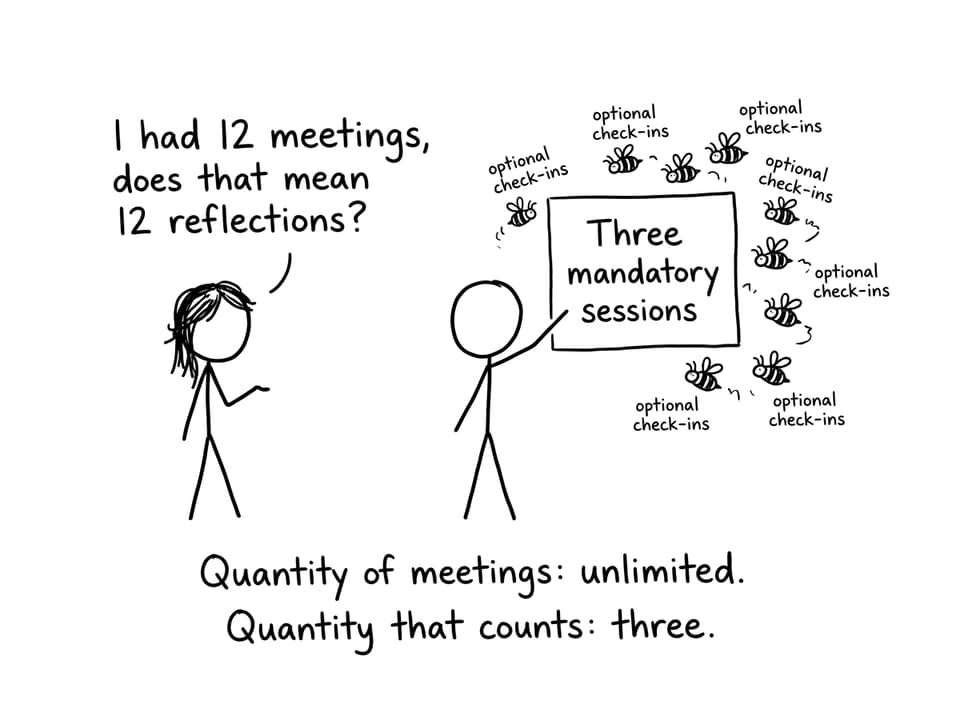
- Informal check-ins are allowed (and smart), but they don’t replace the required three.
- Bring evidence: your Researcher’s Reflection Space (RRS) notes, outlines, and decisions.
- Your reflections support engagement and help show your thinking process.
If you want the official-feeling overview of what the EE expects (including supervision time and how reflection fits), start with RevisionDojo’s EE guide hub: IB Extended Essay Guides.
The short answer: three required sessions for the EE
The IB requires three mandatory reflection sessions for the EE:
Initial reflection session
This is where your EE stops being “an idea” and becomes a plan.
In the initial reflection session, you and your supervisor typically confirm:
- A viable subject area and focus
- A working research question (or the direction toward one)
- Early sources and feasibility
- A rough timeline
- What your RRS will look like in practice
This is also where many students quietly realize that a topic is not a research question. If you’re still shaping your question, RevisionDojo’s post on question refinement is a good companion: The Importance of Research Question Revision During the EE Process.
Interim reflection session
This one is the pivot point.
The interim reflection session happens after you’ve done meaningful research and thinking, but while you still have time to change course. This is where you discuss:
- What your research is actually showing (not what you hoped it would show)
- Whether your research question needs narrowing or reframing
- Whether your method makes sense for your subject
- What structure your argument is taking
- What you’ll do next (specific, realistic actions)
It’s also the most underused moment in the EE process, because students often arrive with “progress” that is really just a longer bibliography. The goal is to show decision-making.
Final reflection session (viva voce)
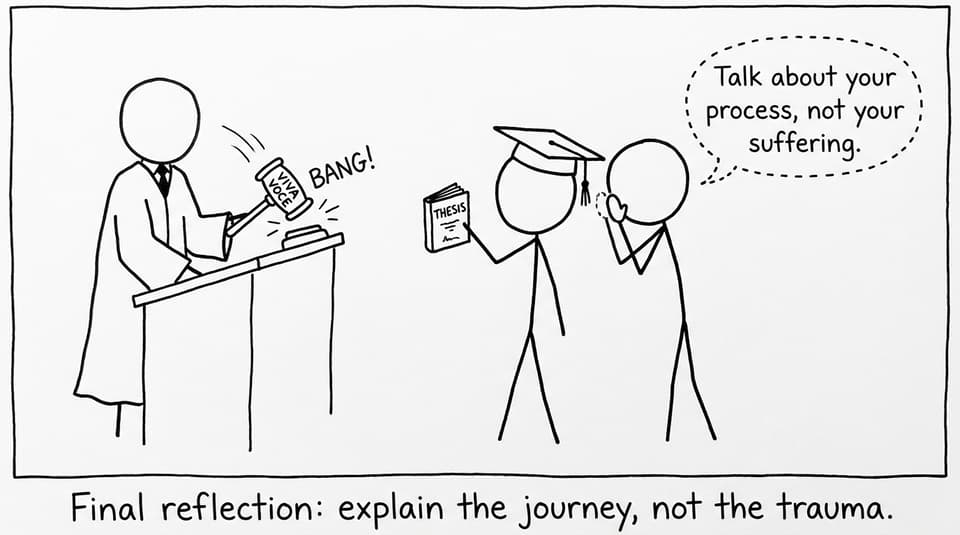
The viva voce is the final required reflection session for your EE.
It’s a short interview after submission where you reflect on your journey and confirm authenticity. To prepare properly, use RevisionDojo’s focused guide: How to Prepare for the IB Extended Essay Viva Voce.
What counts as a “reflection session” (and what doesn’t)
Students sometimes try to reverse-engineer the system:
- “I spoke to my supervisor in the hallway; does that count?”
- “I had six meetings, can I skip one?”
- “We emailed back and forth for weeks; surely that’s a session?”
Here’s the clean distinction:
A required EE reflection session is formal
A required EE reflection session is:
- Scheduled (not accidental)
- Documented as part of the reflection process
- Focused on your planning and progress (not just proofreading)
- Usually 20-30 minutes
Informal check-ins are helpful but optional
Informal check-ins are still valuable. They can include quick chats, short feedback moments, or clarifying questions.
But they exist to make the three required sessions better, not to replace them.
How to use each EE reflection session to score better (without sounding fake)
The best EE reflections don’t read like motivational posters. They read like a student thinking clearly under pressure.
A simple framework that works across all three sessions:
What changed?
Not “I learned time management.”
Instead:
- “I changed my research question because the sources I found didn’t allow analysis, only description.”
- “I shifted from comparing two texts to focusing on one, because my argument was collapsing into summary.”
Why did it change?
Show causation:
- “After collecting data, I noticed the trend disappeared after controlling for temperature, so I revised my method.”
What did you do about it?
Action beats intention:
- “I built a new outline and rewrote my criteria for selecting sources.”
If you want examples of how to reflect on real obstacles in a way that earns credit for engagement, use: How to Reflect on Challenges in Your IB IA or EE.
A realistic timeline: when students usually do the three EE sessions
Schools schedule the EE differently, but the pattern is often:
- Initial session: soon after topic selection, before deep research
- Interim session: after early research and an outline, before the full draft hardens
- Final session (viva voce): after submission
Instead of obsessing over exact dates, focus on arriving at each session with the right kind of evidence:
- Initial: feasibility, direction, early reading
- Interim: decisions, refined scope, argument shape
- Final: evaluation of what worked, what didn’t, and what you learned about research
To keep your research stage from drifting, RevisionDojo’s process guide is a steady reference: How to Survive the IB Extended Essay Research Process.
What to bring to each EE reflection session (a simple pack list)
Your supervisor isn’t looking for perfection. They’re looking for evidence that the EE is yours and that your thinking has developed.
Bring this to the initial session
- A working research question (even if imperfect)
- 3-5 credible sources you’ve actually read
- A one-paragraph rationale: why this topic, why this subject
- A plan for your RRS (digital doc, notebook, etc.)
Need help locking a question that is focused and researchable? Use: How to Craft the Perfect IB Extended Essay Research Question.
Bring this to the interim session
- A refined research question and a sentence explaining what changed
- A working outline (headings are enough)
- Key evidence you plan to analyze (not just list)
- A list of your biggest uncertainties
When your draft starts taking shape, feedback becomes the lever. RevisionDojo breaks down how to use it without expecting your supervisor to rewrite your work: How to Improve Your IB Extended Essay Draft.
Bring this to the viva voce
- Your RRS highlights: 5-8 moments of decision-making
- A calm summary of your main findings/argument
- Honest reflection on limitations and what you’d do differently
How RevisionDojo makes EE reflection sessions easier
The hidden stress of the EE isn’t only writing. It’s remembering what you did, when you did it, and why it mattered.
RevisionDojo is built to reduce that stress without reducing your ownership:
- Study Notes help you rebuild subject context quickly when your research gets technical.
- Flashcards let you retain key theorists, definitions, or case studies you keep referencing.
- AI Chat helps you rehearse viva voce-style explanations and refine how you describe choices (without writing the essay for you).
- Grading tools (including rubric-aligned graders) help you check whether your draft is actually meeting criteria.
- Coursework Library gives models of academic structure and clarity you can learn from.
- Tutors can guide your planning, argument, and reflection quality when you need a human sounding board.
- For exam season, Questionbank, Predicted Papers, and Mock Exams help you keep your subjects moving even while the EE takes time.
If you want a deeper look at supervisor workflow (and why reflection documentation matters), see: Streamlining IB Extended Essay Supervision with RevisionDojo.
Common mistakes students make about EE reflection sessions
Treating reflection like a diary
A strong EE reflection is not “today I felt stressed.”
It’s “today I realized my method created biased data, so I redesigned it and justified the new approach.” Feelings can be included, but only as context for decisions.
Showing activity instead of thinking
Reading 30 sources is activity.
Choosing 6 sources because they represent distinct perspectives and allow evaluation is thinking. Your supervisor wants to hear your reasoning.
Arriving with nothing concrete
Reflection sessions feel awkward when you only bring vague intentions.
Bring something imperfect but real: an outline, a paragraph, annotated sources, a messy diagram. The session works when there’s something to react to.
If you want a reality check on what tends to go wrong across the whole EE, this list is worth scanning: Mistakes to Avoid in IB Extended Essays.
Closing: the EE reflection sessions are fewer than you think, and more important
The EE demands a lot: independent research, academic writing, and the discipline to keep going when the project stops being exciting.
But the reflection sessions are a quiet gift hidden inside the pressure. There are only three required EE reflection sessions: initial, interim, and final (viva voce) if yet they can save you from months of avoidable mistakes if you treat them as decision points, not formalities.
If you want the process to feel clearer, build your support system early: use RevisionDojo’s EE guides, practice with AI Chat, tighten your structure with Grading tools, and keep your subject knowledge sharp with Study Notes, Flashcards, and Questionbank while exams approach. Then walk into each EE reflection session with something real to discuss.
Because the goal isn’t to “survive the EE.”
It’s to finish it knowing exactly how you became the kind of student who could.