Join 650k+ students breezing through the IBReady to breeze through the IB?
Poetry doesn’t usually feel hard because of what it says.
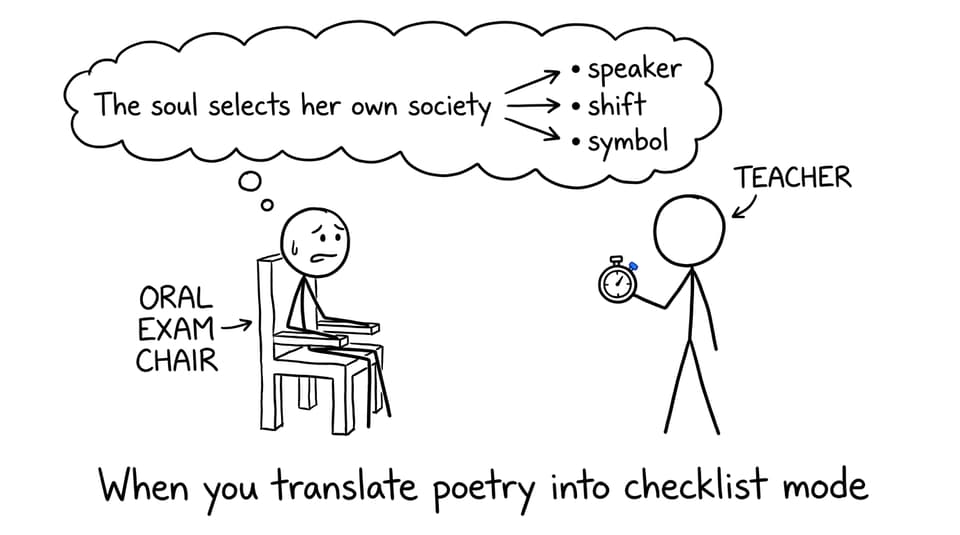
It feels hard because of what it asks you to do: notice, connect, and explain, clearly, under time pressure, while your brain whispers, “What if I’m missing the point?”
If you’re studying IB English, the good news is that you can build real analytical confidence with poems that are accessible on the surface but still rich enough to reward close reading. This post gives you a simplified poetry reading list (with the “why this works” behind each choice), plus a practical approach you can reuse for Paper 1-style analysis, essays, and orals.
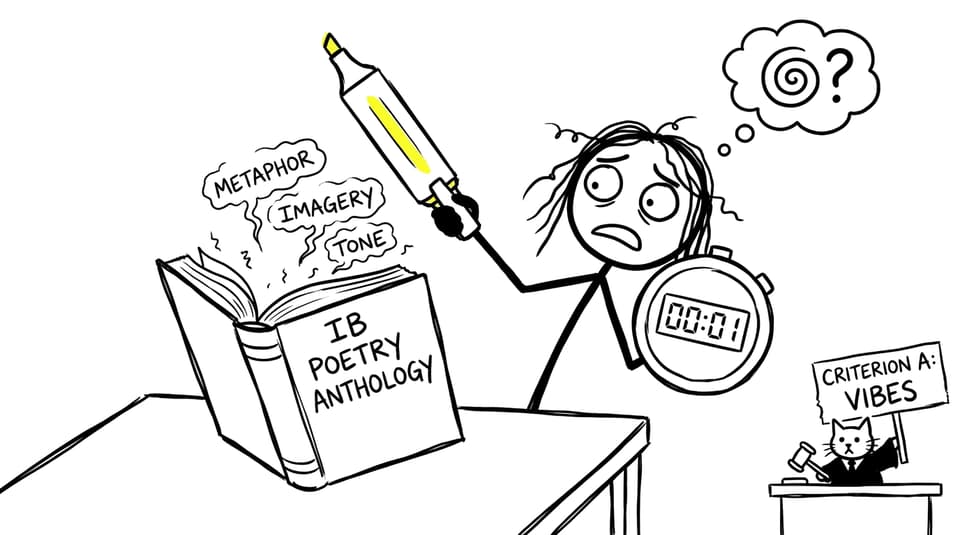
A stressed IB student fights floating poetic terms
The quick checklist: how to pick “easy” poems for IB English
“Easy” doesn’t mean shallow. In IB English, an easy poem is one that lets you see the craft without needing a decoder ring.
Use this checklist when choosing poems for practice:
Clear situation: you can summarise what happens in one sentence.
Strong central image or metaphor: something you can track across lines.
Obvious movement: a shift in tone, perspective, or message.
min read
min read
min read
min read
Teachable techniques: imagery, contrast, symbolism, sound, or structure you can name and explain.
Essay-friendly themes: choice, power, identity, time, hope, nature, inequality.
For a method you can apply to any poem, keep RevisionDojo’s poem-reading approach nearby: Poems Notes (How to Read a Poem + Techniques). It’s built for quick use when your attention span is already stretched thin.
Easy poems for IB English A (that still score well)
Below are poems that tend to feel approachable while still giving you plenty to analyse. They’re also great for building a personal “toolkit” of examples you can reuse across prompts.
The Road Not Taken (Robert Frost)
Why it works for IB English: the language is plain, the narrative is clear, and the theme (choice and consequence) is instantly discussable.
What to focus on:
The speaker’s tone: confident, uncertain, reflective?
The poem’s logic: what does the speaker claim vs what the details suggest?
The quiet power of ambiguity: is the “difference” real, or a story we tell ourselves?
Why it works: one controlling metaphor, compact diction, and emotional clarity.
What to focus on:
The metaphor’s rules: what does the “bird” do, and when?
Dickinson’s dashes and compression: speed, pause, intensity.
The balance of softness and resilience.
This poem is a great reminder that in IB English, you don’t need a long text to produce deep analysis, you need precise claims.
Stopping by Woods on a Snowy Evening (Robert Frost)
Why it works: clear setting, hypnotic rhythm, and a memorable final line.
What to focus on:
The tension between stillness and duty.
Sound and repetition: how it creates a trance-like mood.
The subtle darkness under the beauty.
For exam practice that mirrors what you’ll actually face, use RevisionDojo’s IB English Literature Poems Questionbank to train technique spotting and paragraph building.
Fire and Ice (Robert Frost)
Why it works: short, sharp, and argumentative. You can summarise it fast, then spend your time analysing.
What to focus on:
Symbolism: fire/desire vs ice/hate.
The poem’s mini-debate structure.
Tone: playful, grim, or both?
How to use these easy poems to train for IB English exams
Reading lists don’t raise grades. Habits do.
Here’s a simple training loop that works for IB English:
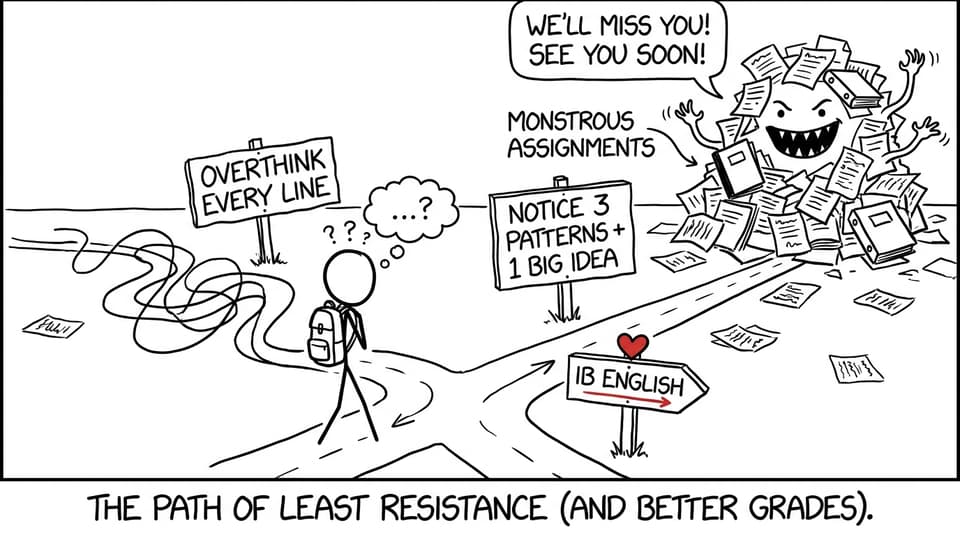
Read like a translator, then like a detective
Translate the poem into plain prose (2-3 sentences). No interpretation yet.
Detect patterns: repetition, contrast, shifts, unusual words, line breaks.
Claim + proof + effect: make one arguable point, cite a short quotation, explain the effect.
Then run them through RevisionDojo’s ecosystem: use Study Notes for definitions, Flashcards for techniques, and AI Chat to quiz you on alternative interpretations. When you draft full responses, use Grading tools to tighten clarity and evidence selection.
Practise under gentle time pressure
Start untimed, then go timed:
10 minutes: annotate + outline
25 minutes: one full analytical paragraph + mini conclusion
Full Paper 1 timing: only when the steps feel familiar
A calmer way to finish your IB English poetry list
The quiet trick of IB English is that confidence often arrives after repetition. Start with poems that feel understandable, then use them to build a method you can trust. Once you can reliably spot a shift, track a metaphor, and explain structure, poetry stops being a guessing game.
If you want to turn this reading list into exam-ready skill, use RevisionDojo to connect the pieces: Study Notes for technique, Flashcards for recall, Questionbank for exam-style practice, Predicted Papers and Mock Exams for timing, plus Grading tools to sharpen your writing. Your future self will thank you for making poetry feel normal.