
In the last 10 minutes of an exam, your mind does a strange thing: it starts bargaining.
Maybe the examiner will understand what I meant.
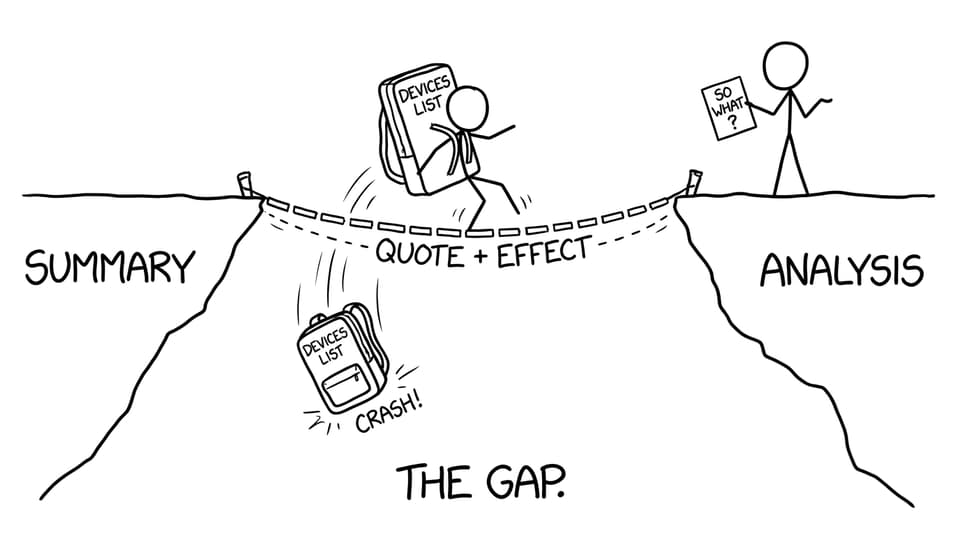
That bargain usually appears right after a familiar mistake in IB English: you understood the text, but you didn’t prove it. Close reading is the skill that turns understanding into evidence. It’s the difference between “this poem is sad” and “the clipped syntax and hard caesura repeatedly interrupt the speaker’s thoughts, staging grief as a kind of breathlessness.”
Close reading isn’t about reading slowly for its own sake. It’s about reading deliberately so you can write with precision under pressure in IB English Paper 1, Paper 2, and even your HL work.
Close reading in IB English: a fast checklist
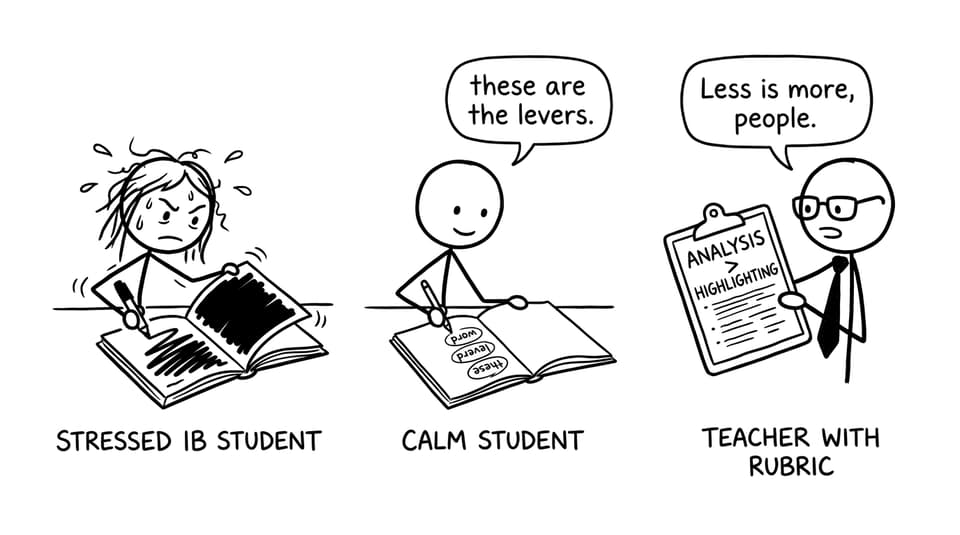
Use this mini-checklist before you write a single paragraph. In IB English, it keeps you anchored in analysis rather than summary.
-
Identify text type, audience, purpose, context (your “why” compass).
-
Mark 3-5 moments that feel deliberate (pattern, shift, contrast).
-
Track tone changes (where does the emotional temperature move?).
-
Note technique clusters (imagery + syntax + sound, not isolated devices).
-
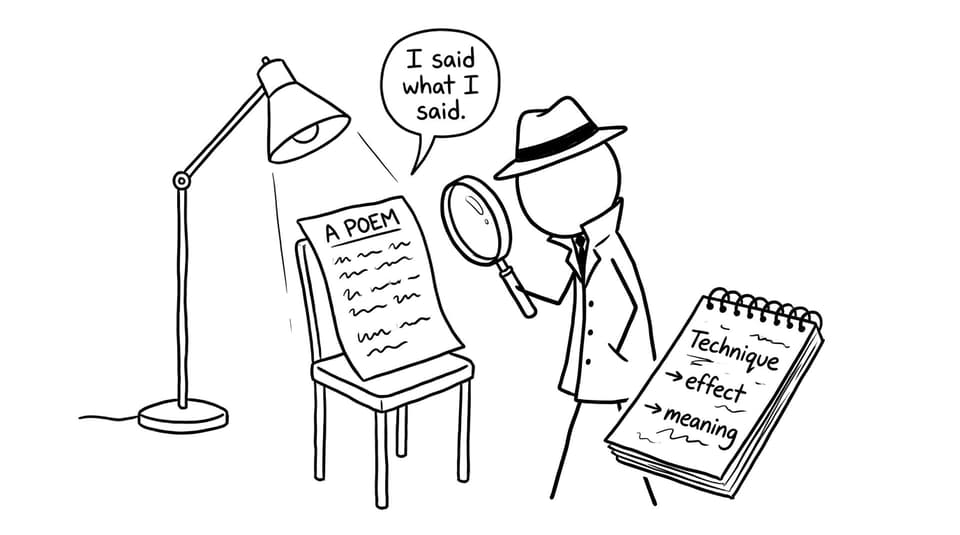
Convert observations into a claim using: Technique -> evidence -> effect -> meaning.
If you want a full Paper 1 structure to pair with this, use Mastering IB English Paper 1: A Complete Guide.
What close reading means in IB English (and what it doesn’t)
In IB English, close reading is the habit of explaining how authorial choices create meaning, shape reader response, and reveal purpose. It includes:
-
What the text communicates (ideas, themes, claims).
-
How it communicates (language, structure, form).
-
Why it communicates that way (intention, impact, context).
What it’s not: a list of techniques (“metaphor, alliteration, juxtaposition…”) or a plot recap. Examiners reward precision: your ability to connect small choices to big implications.
For a deeper breakdown of language and style analysis in unseen texts, see How to Analyze Language and Style in Unseen Texts (Paper 1).
IB English close reading techniques that actually raise your marks
Observe before you interpret
Start like a photographer, not a judge. In IB English, the fastest way to shallow analysis is deciding the theme too early.
Try this instead:
-
Circle repeated words, images, or contrasts.
-
Put a star next to the line where the tone shifts.
-
Label what’s unusual (a sudden dash, a fragment, a shocking metaphor, a single long sentence).
Only after that, write one sentence beginning with: “The text positions the reader to…” That sentence becomes the seed of your thesis.
Build paragraphs around “effects,” not “features”
A strong IB English paragraph is rarely “This paragraph is about imagery.” It’s more like:
-
“The writer turns domestic space into a threat.”
-
“The speaker’s certainty dissolves into self-correction.”
-
“The narrative voice invites intimacy while withholding truth.”
Then you choose techniques that serve that effect: diction, syntax, structure, sound.
If you’re working on a full commentary workflow, follow Writing a Commentary for IB English A: Step-by-Step Guide.
Use “micro-zoom” quotes
In IB English, one powerful word can do more work than a long quotation. Aim for short, precise evidence:
-
A single verb with strong connotation.
-
A surprising adjective.
-
A repeated sound pattern.
-
A line break that changes meaning.
Then explain why that specific choice matters. Your analysis should feel like turning a small screw that moves a whole machine.
Close reading techniques for poetry (IB English)
Poetry rewards attention to pacing and sound because meaning is often carried by form.
Listen for the poem’s “pressure points”
In IB English, sound devices matter most when they reinforce feeling.
-
Alliteration/assonance can soften or sharpen tone.
-
Plosives (b, p, t, k) often add tension or violence.
-
Sibilance (s, sh) can suggest hush, menace, intimacy.
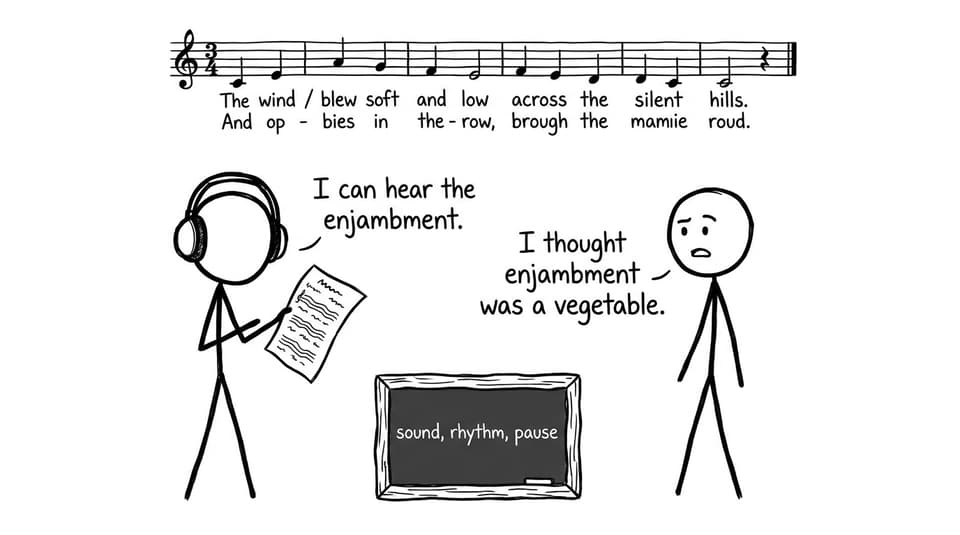
Treat line breaks as meaning-making
Line breaks are not decoration. Ask:
-
What word is isolated?
-
Where does the poem force a pause?
-
Does enjambment create momentum, anxiety, inevitability?
A useful sentence frame for IB English:
“By breaking the line after ___, the poem delays clarity, making the reader experience the speaker’s uncertainty in real time.”
Close reading techniques for prose (IB English)
Prose analysis often lives in narration, structure, and rhythm.
Track perspective like a camera angle
In IB English, ask what the narrative voice allows you to see, and what it hides.
-
First person can build intimacy but also bias.
-
Third person can feel objective, until it suddenly slips into judgment.
-
Shifts in distance (zooming in/out) can signal emotional pressure.
Map the structure in one sentence
Try summarizing the movement of the passage:
-
“It begins reflective, becomes accusatory, then ends resigned.”
-
“It spirals from detail to idea, then snaps back to detail.”
That structural sentence can become your essay roadmap, especially in IB English Paper 1.
To strengthen your overall Paper 1 vs Paper 2 approach, use What’s the Best Way to Study for Paper 1 vs Paper 2.
Applying close reading across IB English assessments
Paper 1 (unseen analysis)
Close reading is the whole game in IB English Paper 1: you’re being assessed on how well you interpret and analyze authorial choices under time.
A reliable practice loop:
-
Use targeted prompts from the Questionbank.
-
Build timed sets with English Paper 1 Questionbank.
-
Get feedback on structure and criteria alignment using the IB English Paper 1 Grader.
Paper 2 (comparative essay)
Close reading still matters in IB English Paper 2, but it shows up as selective precision. You don’t need dozens of quotations; you need flexible moments you can interpret through multiple prompts.
Build your comparison skills with:
-
Practice prompts via English Paper 2 Questionbank
The most common close reading mistakes (and how to fix them)
-
Mistake: Summarizing what happens.
Fix: After every sentence, add: “This suggests…” or “This positions the reader to…” -
Mistake: Listing devices without meaning.
Fix: Use the chain: choice -> effect -> interpretation. -
Mistake: Quoting too much.
Fix: Micro-zoom on single words or tiny phrases. -
Mistake: Ignoring shifts.
Fix: Actively hunt tonal turns, structural pivots, and contradictions.
Closing: make IB English feel manageable
Close reading can feel like magic when you watch someone else do it. In reality, it’s closer to training: you learn to notice, you learn to name, and then you learn to connect. That connection: the quiet step from “what” to “how” to “why” is where high-scoring IB English responses live.
If you want a single place to practice the skill end-to-end, RevisionDojo brings it together: Study Notes for technique clarity, Flashcards for recall, AI Chat for drilling interpretations, Questionbank for consistent practice, Mock Exams and Predicted Papers style sets for timing, Grading tools for feedback, and even a Coursework Library and Tutors when you want expert direction.
Choose one extract today. Circle three moments. Ask “So what?” three times. That’s close reading, and it’s the most dependable advantage you can build in IB English.