
Unseen poetry has a special talent for making even confident students feel suddenly unqualified. You read the first line, the poem refuses to introduce itself politely, and your brain starts negotiating with time. But IB English unseen poetry is not a test of having the “right” interpretation. It’s a test of whether you can build a defensible interpretation from what’s on the page.
The good news: poems are small. They can feel dense, but they’re also contained. With a repeatable method, IB English unseen poetry becomes less like guessing and more like steady detective work.
Why unseen poetry matters in IB English
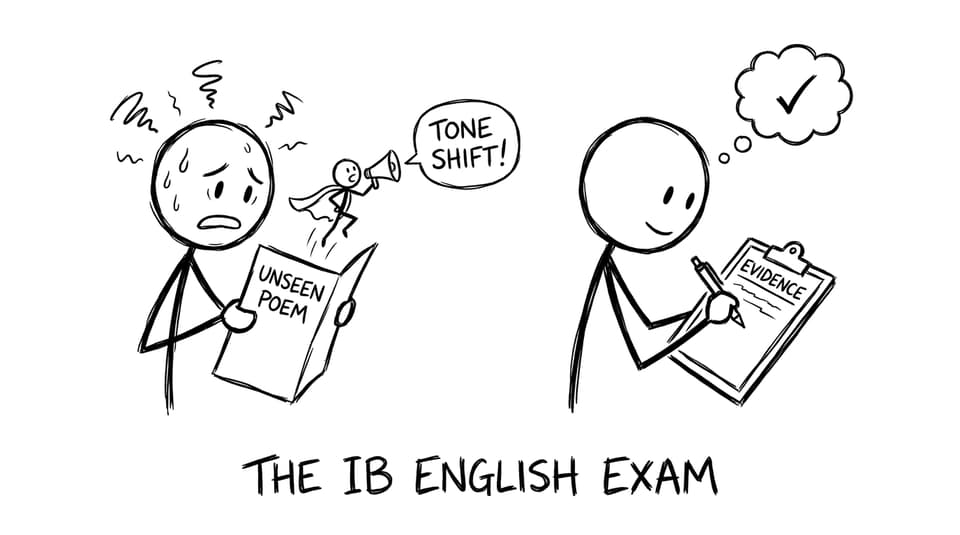
In Paper 1, poetry shows up because it compresses meaning. Every choice carries weight: line breaks, rhythm, silence, image, metaphor, even the blandest-looking adjective. That makes poetry perfect for assessing close reading under pressure.
If you want a broader Paper 1 framework (beyond poems), pair this guide with Best Ways to Prepare for IB English Paper 1 and Step-by-Step Guide to Revising IB English Paper 1. You’re building the same skill: seeing how language creates meaning.
A quick unseen poetry checklist (the calm version)
Use this as your default in IB English when the poem feels “unreadable”:
-
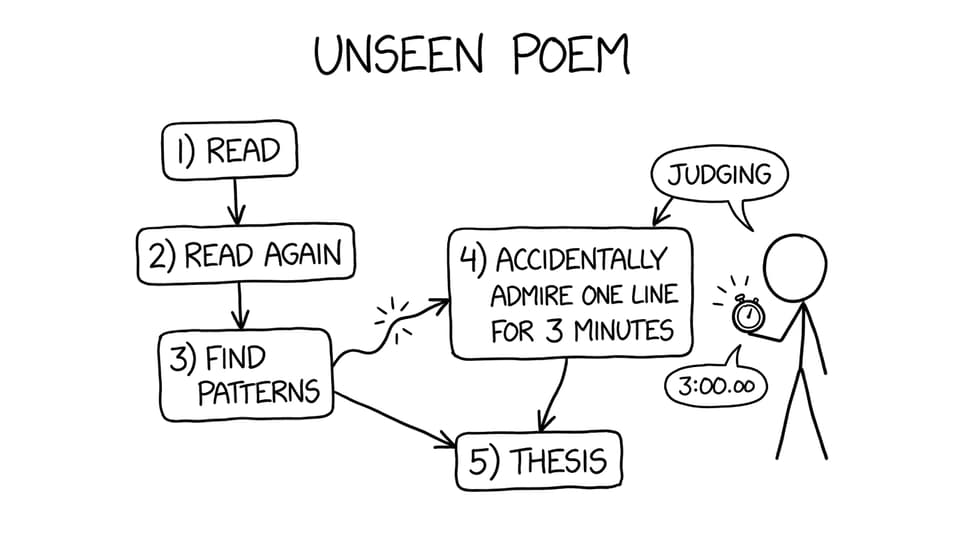
Read once for mood and voice (no annotating).
-
Read again and mark patterns (repetition, imagery, contrasts).
-
Notice structure: stanza movement, line breaks, pace.
-
Identify shifts (tone, perspective, time, intensity).
-
Draft a one-sentence thesis: what + how + why it matters.
-
Write 2-3 body paragraphs that each prove part of the thesis.
For technique refreshers, RevisionDojo’s Poems Notes are a fast way to rebuild your poetry vocabulary before exam season.
Read slowly before you “interpret”
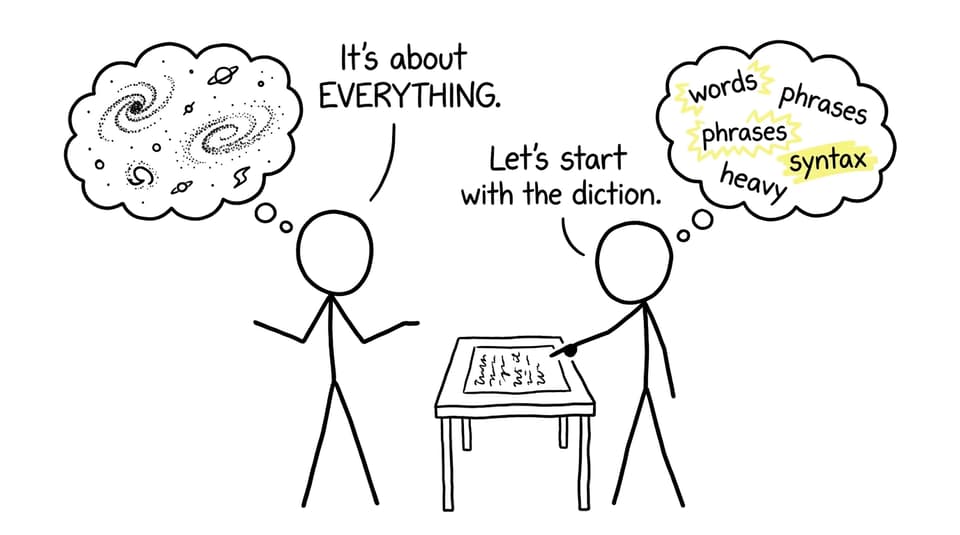
The biggest unseen poetry mistake in IB English is sprinting to meaning. Your first read should be almost stubbornly simple: What is the atmosphere? Who seems to be speaking? Is the voice intimate, distant, reflective, angry, playful?
On the second read, you earn the right to annotate. Aim for observations, not conclusions:
-
Words with heavy connotation (especially verbs and adjectives)
-
Repeated images (light/dark, water/stone, body/machine)
-
Sound moments (alliteration, harsh consonants, soft sibilance)
-
Punctuation and pauses (what is being held back?)
This “observe before interpret” mindset is central to strong IB English analysis. If you want more practice with that lens, see Close Reading Techniques for Prose and Poetry.
Track techniques as patterns, not a shopping list
Examiners don’t reward device-spotting. They reward interpretation supported by evidence. So in IB English unseen poetry, ask: what techniques repeat, and what do those repetitions suggest?
Focus on clusters:
-
Imagery + diction: Are the images nurturing or violent? Natural or industrial? Do the verbs imply control, collapse, escape?
-
Figurative language: Metaphor and symbolism often do the “philosophical work” of the poem.
-
Sound + rhythm: A calm rhythm can mask dread. A jagged rhythm can dramatize anxiety.
-
Syntax: Long sentences can create breathlessness or longing. Short fragments can sound like certainty or shock.
For extra unseen practice in the style of exam prompts, use RevisionDojo’s IB Questionbank - Poems. It’s the fastest way to make unfamiliar poems feel normal.
Let form and structure do some of the thinking for you
In IB English poetry analysis, form is not decoration. Structure is meaning.
Look for:
-
Stanza movement: Does each stanza change focus, time, or emotional intensity?
-
Line breaks and enjambment: Where does the poem force you to pause, and why?
-
Rhyme (or refusal of rhyme): Order can suggest control, tradition, inevitability. Free verse can suggest intimacy, spontaneity, or instability.
Structure often reveals the poem’s “argument.” Sometimes the poem doesn’t say it changes its mind. It moves its mind.
Find the shift, then build your thesis
Most strong unseen poems contain a turn: a tonal pivot, a new image system, a sudden direct address, or a change from description to reflection. In IB English, shifts are gold because they help you organize paragraphs.
Signals include:
-
“But,” “yet,” “however,” “now,” “until”
-
A new stanza that changes pace
-
A surprising metaphor that reframes earlier images
-
A final line that sounds like a verdict
Once you spot the shift, write a thesis that does three jobs:
-
What the poem suggests (theme/emotion)
-
How it suggests it (technique + structure)
-
Why that matters (effect on reader, tension, irony, ambiguity)
If you want a full Paper 1 commentary structure you can reuse across text types, RevisionDojo’s Writing a Commentary for IB English A: Step-by-Step Guide pairs perfectly with this poetry-specific method.
Write paragraphs that prove, not paragraphs that point
A reliable IB English unseen poetry paragraph has a quiet discipline:
-
Claim: One clear idea about meaning (connected to thesis)
-
Evidence: A short quotation (or two precise words)
-
Analysis: Device + effect + purpose (why that choice?)
-
Link: Tie back to the poem’s shift or overall movement
If you feel your writing becoming a list, pause and ask: What is the poet trying to make the reader feel or notice right here? Then write to answer that.
Conclusion: Make IB English unseen poetry predictable
Unseen poetry feels hard because it’s unfamiliar. Your job is to make it predictable: read slowly, notice patterns, track structure, locate the shift, and build a thesis that the poem itself can support.
If you want this to become automatic, practice it the RevisionDojo way: use the Questionbank for regular timed drills, lean on Study Notes and Flashcards to keep techniques sharp, and test thesis ideas with AI Chat when you’re stuck. Then level up with Mock Exams, Predicted Papers, and the Grading tools to see what examiners reward in IB English. When your process is stable, your confidence follows.