

Digital rules are strange because they rarely feel like rules.
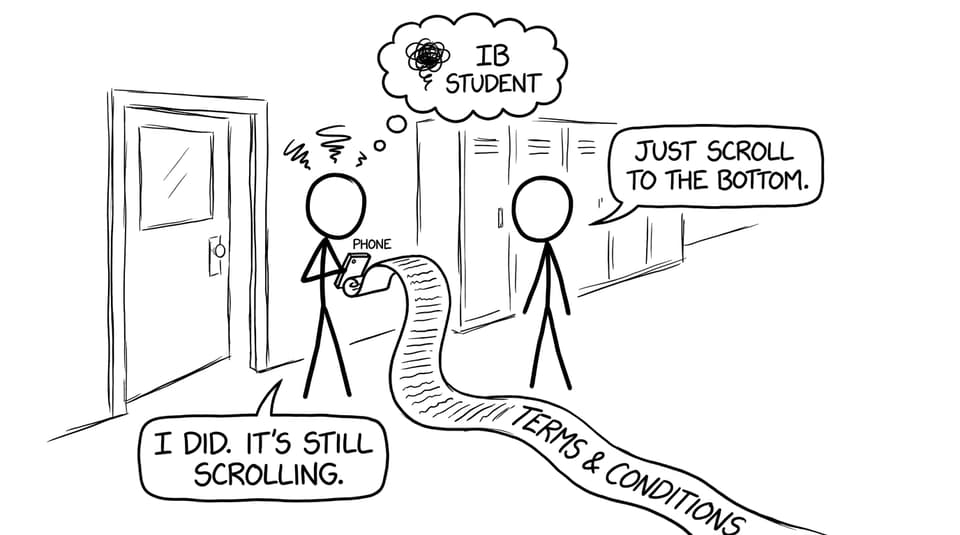
You don’t get handed a booklet before you download an app. You get a bright button, a tiny link, and a promise that everything will be “personalized.” Then, months later, you’re asked in class to explain who holds power, whose rights are protected, and who carries responsibility when harm spreads at scale.
That tension is exactly why IB Digital Society treats digital rights and responsibilities as more than legal vocabulary. In IB Digital Society, they’re living ideas: shaped by context, enforced unevenly, and constantly negotiated between individuals, platforms, and governments.
Quick checklist: what to say when you see a rights question
Use this fast checklist in IB Digital Society exam responses and in your IA planning:
-
Identify the right(s) involved (privacy, access, expression, data protection, fair decision-making)
-
Identify the responsibility holder(s) (user, platform, school, employer, state)
-
Map power (who can change the system, who can only opt out?)
-
Explain impact on individuals and communities (benefits and harms)
-
Evaluate trade-offs (what’s gained, what’s lost, who decides?)
For a course-wide hub you can return to while revising IB Digital Society, use RevisionDojo’s IB Digital Society resources.
Digital rights in IB Digital Society: what counts as a “right” online?
In IB Digital Society, digital rights are the entitlements people and communities should have when digital systems mediate their lives. These often connect to broader human rights, but digital systems change the stakes because they operate at speed, at scale, and through invisible infrastructure.
Common digital rights you can confidently discuss in IB Digital Society include:
-
Privacy (control over personal information and exposure)
-
Access to information and participation (who gets to be included in digital life)
-
Freedom of expression (speech, dissent, identity, creativity)
-
Data protection (collection limits, security, consent, purpose)
-
Fair and transparent decision-making (especially in algorithmic systems)
A key examiner-friendly nuance: digital rights are contested. They’re protected differently across countries, platforms, and communities. And in IB Digital Society, that unevenness is part of the analysis, not a side note.
To build stronger case-study language around governance and human rights, revise with 5.2 Governance and human rights and practice application using the 5.2 Questionbank.
Digital responsibilities: who owes what to whom?
If rights are the protections people should be able to rely on, responsibilities are the duties that keep those protections real.
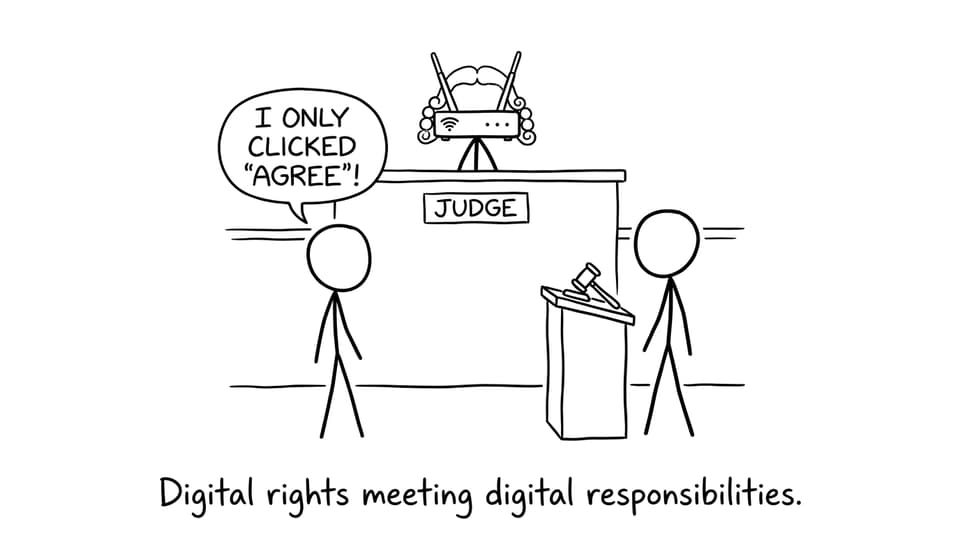
In IB Digital Society, responsibilities are never distributed evenly. A student and a global platform are both “users of digital systems,” but their ability to prevent harm is not comparable. That’s why top responses separate responsibility by role and power.
Typical responsibilities you can analyse in IB Digital Society:
-
Individuals: behave ethically online, protect others’ privacy, verify information, avoid harassment
-
Institutions and platforms: secure data, design safely, moderate responsibly, be transparent, provide accountability and redress
-
Governments and regulators: protect citizens’ rights, prevent abuses, ensure fair access, enforce standards
Revision tip: when you write “users should be responsible,” immediately ask: What can users realistically control? That single sentence often marks the difference between a basic answer and a strong IB Digital Society evaluation.
Power changes everything (and that’s the point)
A quiet theme running through IB Digital Society is that power is rarely dramatic. It’s structural.
Platforms can change defaults, rewrite policies, and run experiments. Governments can surveil, restrict, or mandate access. Individuals often get a narrow choice: accept, leave, or try to go viral enough to be noticed.
When you analyse digital rights and responsibilities in IB Digital Society, look for:
-
Who defines the rules (terms, laws, standards)
-
Who enforces them (moderation, courts, automated systems)
-
Who benefits (profits, security, influence)
-
Who bears the risk (marginalised groups, children, activists, workers)
For students who want a clean ethics lens (great for evaluation paragraphs), revise with The role of ethics in IB Digital Society.
Where rights clash with responsibilities (your best evaluation marks)
Many IB Digital Society prompts are really asking: What happens when two good goals collide?
Common tensions:
-
Freedom of expression vs protection from harm (hate speech, harassment, radicalisation)
-
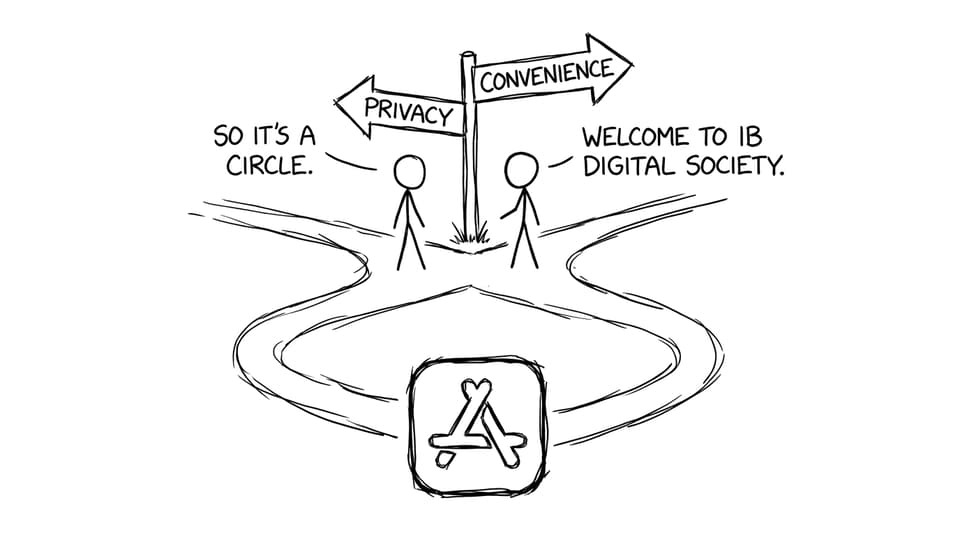
Privacy vs security (surveillance, encryption, policing)
-
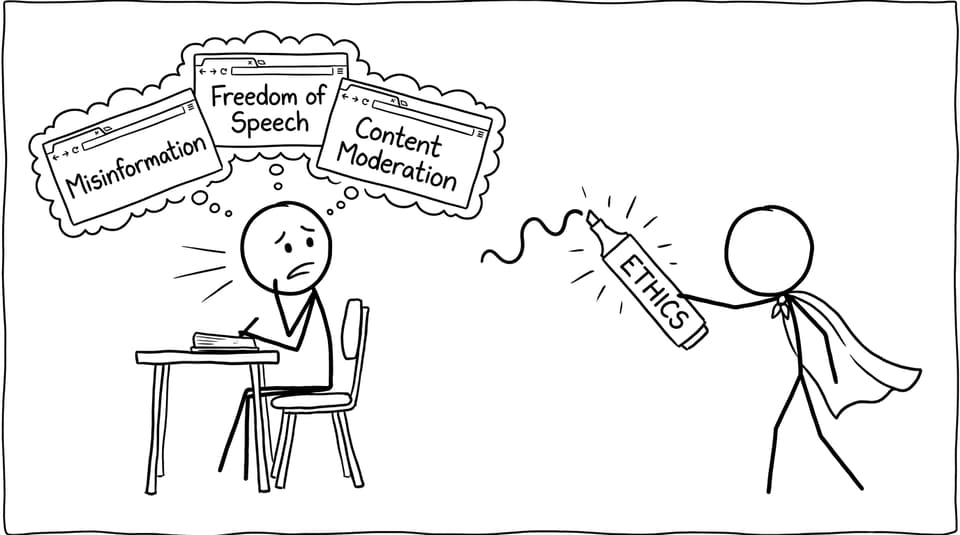
Access to information vs misinformation prevention (content moderation, platform design)
A high-scoring pattern in IB Digital Society is to evaluate the trade-off using stakeholders:
-
Who gains safety?
-
Who loses autonomy?
-
Who decides the boundary?
-
What safeguards exist (appeals, transparency reports, audits)?
To keep your examples organised and retrievable under pressure, use Effective note-taking tips for IB Digital Society alongside Topic 3: Content.
Exam and IA strategy: make your analysis easy to grade
In IB Digital Society exams, markers reward answers that name the right, show the mechanism, and evaluate impact and trade-offs. A reliable paragraph recipe is:
-
Define the digital right/responsibility in context.
-
Explain how the digital system enables or limits it.
-
Identify who has power (and who doesn’t).
-
Evaluate consequences for different stakeholders.
For your IA, digital rights topics work especially well when you choose a specific system (a platform, a school tool, a local policy, a dataset practice) and a specific right (privacy, access, expression, fairness). If you keep it tight, your evaluation becomes sharper and your conclusions become defensible.
If you’re planning your coursework, follow RevisionDojo’s IB Digital Society IA guide. And if you need a broader revision structure, Ultimate survival guide for IB Digital Society students helps you build a weekly system.
How RevisionDojo helps you master IB Digital Society faster
The tricky part of IB Digital Society is that it’s not memorisation-only. You need concepts, examples, and evaluation under time pressure.
RevisionDojo is built for that loop:
-
Use Study Notes to clarify definitions and arguments (start with Topic 1: Introduction)
-
Lock in key terms with Digital Society flashcards
-
Build exam skill with the Questionbank and mark-scheme logic
-
Use AI Chat when you’re stuck mid-paragraph and need a clean explanation
-
Practise timing with Mock Exams and Predicted Papers
-
Improve writing with Grading tools, and level up coursework using the Coursework Library and Tutors
If you want to see how the platform fits together as an exam routine, read RevisionDojo App: the smarter way to prep for IB exams.
Closing: the calm way to revise this unit
Digital rights and responsibilities can feel abstract until you realise they describe your everyday life: the defaults you inherit, the choices you’re nudged into, and the trade-offs someone else decided were acceptable.
In IB Digital Society, your job is to make those trade-offs visible, name the power behind them, and evaluate whether the responsibilities match the scale of the impact. If you want to turn that skill into exam marks, build your routine with RevisionDojo’s Study Notes, Flashcards, Questionbank, AI Chat, Grading tools, Predicted Papers, Mock Exams, Coursework Library, and Tutors--and make IB Digital Society revision feel structured instead of overwhelming.