



You can feel it the moment a task lands on your desk.
Two students read the same page. One starts writing immediately. The other rereads the instructions three times, not because they are lazy, but because the task feels like it was written for someone else.
That gap is exactly why MYP differentiation in assessment matters. In the MYP, you are not meant to be judged on whether you learn in one narrow way. You are meant to show understanding against clear criteria, with the barriers lowered and the expectations kept high.
This guide is written for IB students preparing for exams who want one simple thing: a fair shot at proving what they can do.
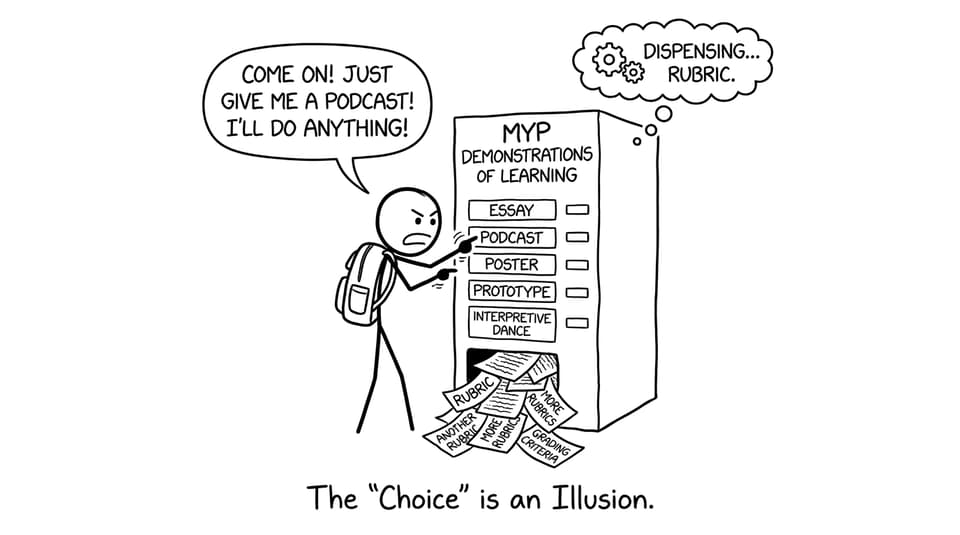
Quick start checklist for MYP differentiation
Use this list before your next MYP assessment or exam-style practice:
-
Identify which MYP criteria (A to D) you are actually being assessed on
-
Keep the standard the same, but vary your pathway (format, supports, steps)
-
Choose evidence types in advance (data, quotes, models, reflections)
-
Ask for one scaffold, not a different task (exemplar, sentence starters, checklist)
-
Use formative feedback quickly: fix one pattern within 72 hours
If you want the bigger picture of how the criteria system works, start with How Are IB MYP Students Graded? Criteria Explained.
What differentiation means in MYP assessment (without the myths)
Differentiation in MYP assessment is often misunderstood as “easier work.” But the IB logic is sharper than that.
In the MYP, the goal is shared standards with flexible access. You and your classmates can be assessed against the same criteria language, while the task design changes how you get there.
That might look like:
-
Same rubric, different product (essay vs podcast script)
-
Same conceptual demand, different supports (graphic organizer, guided questions)
-
Same criteria strand, different complexity of sources (shorter texts, clearer data)
It is the difference between lowering the bar and building a ramp.
For a criteria-first way to practice, Sample MYP Assessment Tasks for Every Subject Group is a useful map.
The core rule: same MYP criteria, different pathways
Here is the student-friendly anchor: in MYP, differentiation should protect the criteria.
Your teacher can adjust:
-
the format you use to communicate
-
the scaffolding you receive
-
the number of steps and checkpoints
-
the amount of choice you have
But they should not quietly change what success means.
This matters for exams because the fastest way to improve MYP outcomes is to make your work look like the rubric descriptors. If you are in MYP Language and Literature, for example, your structure and analysis need to match the criteria strands, not just “sound smart.” See MYP Language and Literature Assessment Criteria Explained.
High-impact MYP differentiation strategies you can ask for
Students often think differentiation is something adults do behind the scenes. But you can request the right kind of support directly, and it will usually make your exam prep cleaner.
Vary the assessment format (while keeping MYP goals fixed)
In MYP, different formats can still show the same thinking.
Examples of differentiated formats:
-
Written report vs structured slide deck with speaker notes
-
Oral explanation recorded as audio (with a plan and citations)
-
Visual product plus a short written rationale
-
Portfolio evidence across time instead of one high-pressure moment
The trick is to map your format to the criteria. If Criterion C is communication, your format needs clarity and audience awareness, not just creativity.
Scaffold the task so you can reach the top bands
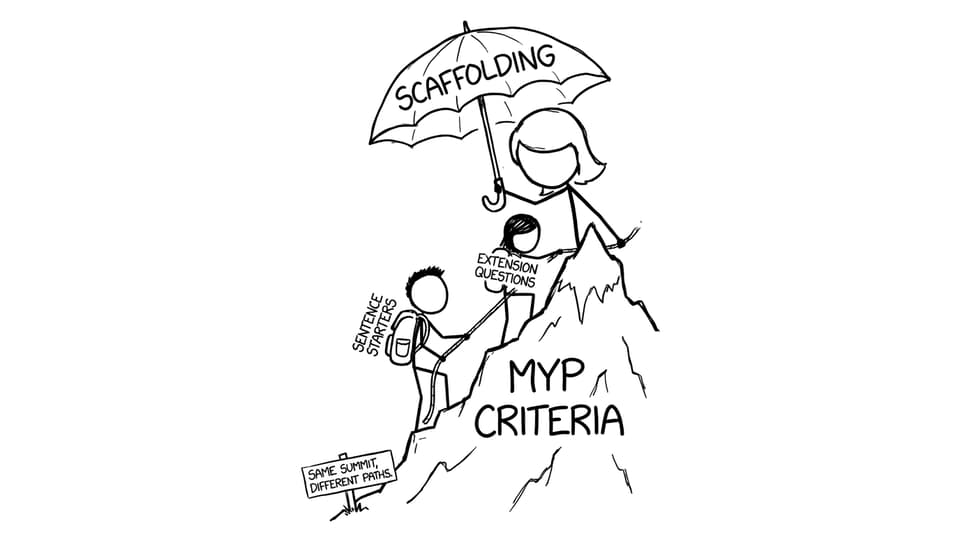
Scaffolding is not “training wheels.” It is what turns confusion into evidence.
Useful scaffolds in MYP assessments:
-
model exemplars (one mid-level, one top-level)
-
sentence starters for analysis and evaluation
-
checklists that mirror rubric language
-
chunked deadlines: plan, first attempt, feedback, improved version
If you want an example of how criteria focus changes outcomes in a technical subject, MYP Math: Criterion A, B, C, D Explained Simply makes the “show your thinking” expectation very clear.
Adjust complexity without changing the MYP standard
Sometimes the barrier is not the concept. It is the cognitive load.
Fair differentiation in MYP can mean:
-
fewer sources but deeper analysis
-
guided research questions before independent ones
-
simpler data sets before messy real-world ones
You still demonstrate the same criterion strands. You just get a clearer runway.
Build choice and voice (so motivation stops collapsing)
Choice is not decoration. In MYP, it is often the fastest route to better evidence because you care enough to think carefully.
A strong choice structure:
-
choose a topic inside a fixed concept (cause and consequence, systems, identity)
-
choose a format inside a fixed criterion (communicate for audience)
-
choose a case study inside a fixed skill (evaluate reliability)
When your interest rises, your explanations usually become more specific. Specificity is what rubrics reward.
Differentiation for language learners and learning needs
The MYP is built around inclusive education: students should be able to demonstrate conceptual understanding even when language, processing speed, or confidence makes the pathway harder.
Support that keeps MYP rigor intact can include:
-
simplified instructions (without simplifying the concept)
-
first-language support for planning and comprehension
-
extra time or alternate communication modes
-
reduced quantity with unchanged quality expectations
If you are the student receiving these supports, your job is to keep the criteria visible. Ask: “What would top-band evidence look like here?” Then build toward that.
For a broader look at why the system is designed to support uneven development, read How the MYP Supports Students Who Struggle Academically.
Using formative feedback as your MYP differentiation engine
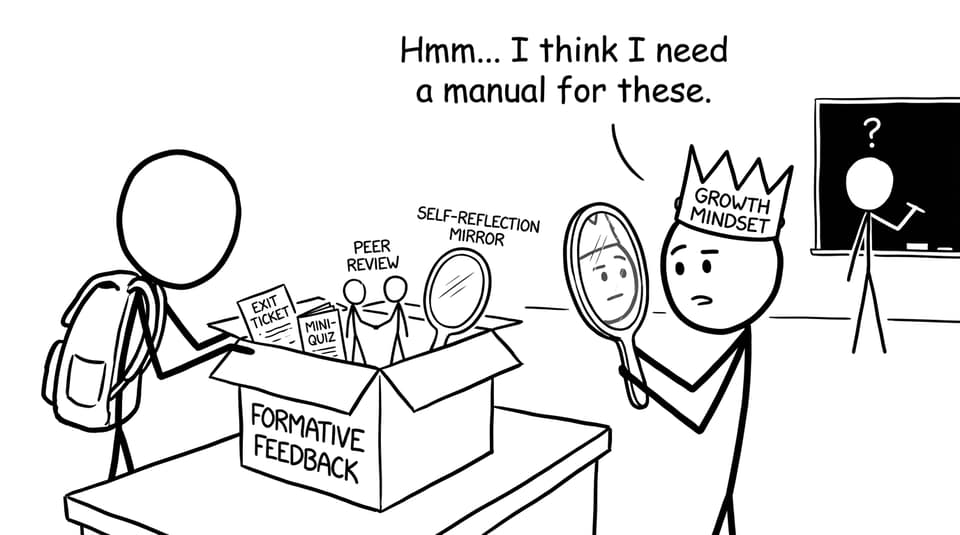
Here is the quiet advantage of the MYP: it is built for improvement loops. Feedback is not a post-mortem. It is a map.
A simple loop you can run during exam prep:
-
Do one criterion-focused practice task under time
-
Translate feedback into one action (add evaluation, tighten structure, justify method)
-
Redo a similar task within 72 hours
-
Track the pattern you fixed
If you want help turning teacher comments into next steps, How RevisionDojo Makes IB Feedback More Actionable for Students is a practical companion.
On RevisionDojo, students typically run that loop faster by combining Study Notes (to remove confusion), Flashcards (to keep definitions usable), and the Questionbank (to repeat the same skill until it sticks). When writing is involved, AI Chat and the Grading tools help you check whether your evidence actually matches the MYP criteria language. And when you need pressure practice, Mock Exams and Predicted Papers help you rehearse timing and stamina. If coursework is part of your year, the Coursework Library shows what “good” looks like, and Tutors are there when you need a human diagnosis, not more motivation posters.
Closing: make MYP differentiation work for you
The most useful way to think about MYP differentiation is not “Who needs help?” but “What removes barriers to showing real understanding?” Because in the end, your grade is built from evidence.
So before your next MYP assessment, do one small thing: write the criterion you are being assessed on at the top of your page, and plan your pathway to match it. Ask for scaffolds that make the criteria clearer, not easier. Practice in the format you will be judged on. Then use feedback quickly.
If you want one place to run that whole cycle, start at the Middle Years Program (MYP) hub and build your routine with RevisionDojo’s Questionbank, Study Notes, Flashcards, AI Chat, Grading tools, Predicted Papers, Mock Exams, Coursework Library, and Tutors. Differentiation in MYP works best when it becomes a habit: same high standards, smarter paths, repeated until confident.


