



The night a number starts narrating your life
There’s a particular kind of silence on IB results day. It’s not peaceful. It’s the quiet you get right before a browser tab becomes a verdict.
In those hours, your brain stops being a student and becomes a novelist. It writes scenes where the portal won’t load. Where one point changes a university offer. Where you have to explain a result to people who don’t know the whole story. You refresh. You rehearse. You refresh again.
That spiral is not proof you’re fragile. It’s proof you’re human in the presence of uncertainty.
This guide is a practical answer to How to Deal With IB Results Day Anxiety: what to do before you check, what to do in the minute you see your results, and what to do afterward, whatever the screen says. The point isn’t to “feel nothing.” The point is to stop improvising on the most emotionally loaded morning of the year.
If you also want the logistics laid out step-by-step, keep this open as a second tab: What Should I Do on the IB Results Day? A Step-by-Step Guide for Students and Parents.
A calm checklist for results day (memorize, don’t overthink)
When anxiety is high, decisions multiply. Defaults reduce decisions. Use these as your defaults.
-
Confirm how you’ll access results (portal link, login details, time zone, device).
-
Choose one person you’ll speak to first (not the group chat).
-
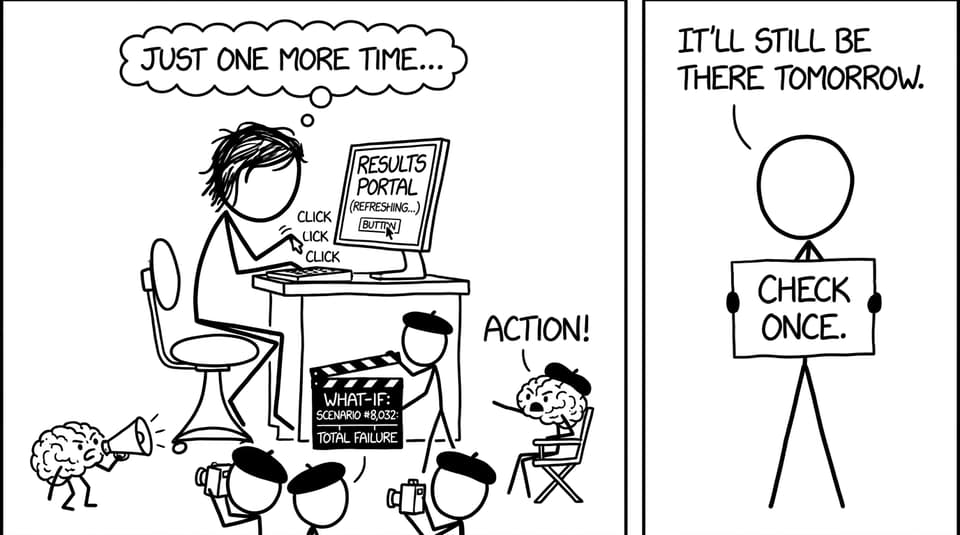
Set a single-check rule: open once, screenshot, close.
-
Plan a 10-minute buffer after you view results (walk, shower, snack, silence).
-
Write two short scripts: one for “I’m relieved,” one for “I’m disappointed.”
-
Save your IB coordinator’s contact and prepare your “facts request.”
-
Make your environment boring: water, charger, tissues, stable Wi‑Fi.
If you want a broader “what if everything goes wrong” safety net, read: IB Results Day: What If Everything Goes Wrong?.
Why results day anxiety hits harder than exam anxiety
Most exam stress is about performance. Results day stress is about meaning.
In the IB, you spend months turning your life into deliverables: coursework, deadlines, rubrics, timed papers. Then one day compresses all of it into digits. Your nervous system doesn’t understand “digits.” It understands threat.
If you’re trying to figure out How to Deal With IB Results Day Anxiety, it helps to name the three engines that usually power it.
Uncertainty (the brain hates open loops)
Waiting is not neutral. Waiting invites your mind to fill the gap with stories.
Social comparison (numbers travel faster than context)
Someone else’s total arrives without their sleep, support, health, or setbacks attached. Your brain compares anyway.
Identity fusion (when school becomes self-worth)
If “being good at school” quietly became part of who you are, results day can feel like an identity audit.
If you want tools that also apply before and during exams, this pairs well with results day prep: How to Stay Calm During IB Exams.
Before you check: reduce how much fear your brain can generate
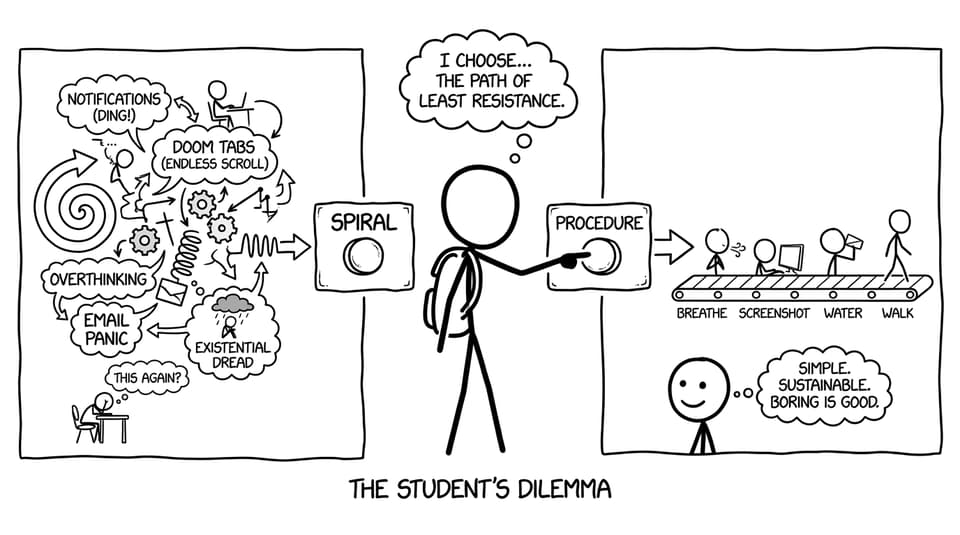
The best way to answer How to Deal With IB Results Day Anxiety is to become procedural. Not emotionally perfect. Procedural.
Build a one-screen plan (4 lines only)
Write this in your notes app:
-
Time I will check:
-
Place I will sit:
-
Person I will speak to first:
-
10 minutes after I will:
This matters because it replaces improvisation with structure. Anxiety thrives on “what should I do now?” Structure removes that question.
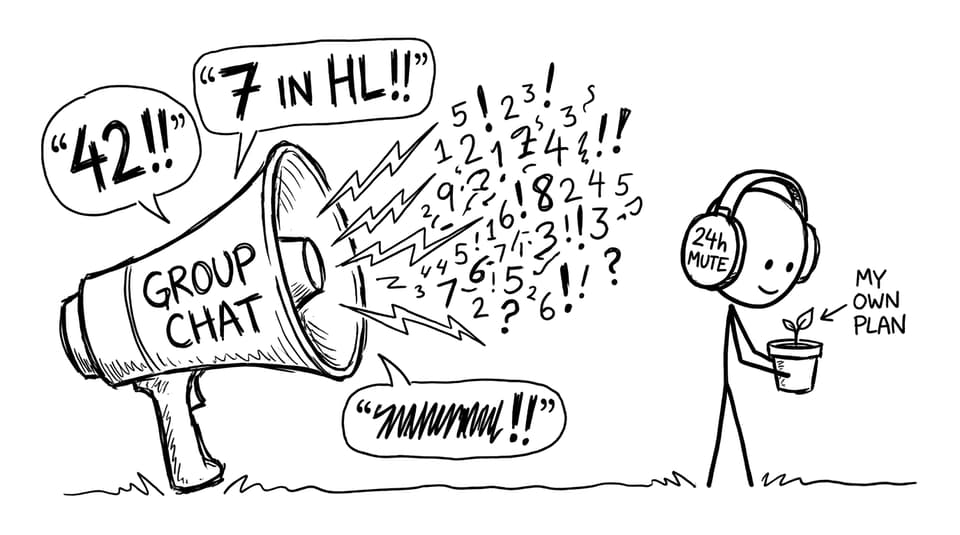
Mute the comparison machine for 24 hours
You are not avoiding reality. You are avoiding noise.
-
Mute cohort group chats
-
Log out of Instagram/TikTok
-
Turn off notification previews
Name the real fear (one sentence)
Finish this:
“I’m not scared of my results. I’m scared that …”
Common endings:
-
“… I’ll lose my university place.”
-
“… people will judge me.”
-
“… I’ll have to redo everything.”
-
“… it means I’m not as smart as I thought.”
When you name the fear, it becomes plan-able.
Prepare your “facts request” for your IB coordinator
If your results are not what you hoped, the next step is usually information, not an emotional post-mortem.
Keep these ready:
-
“Can you share my component marks?”
-
“How close am I to the next boundary?”
-
“What are the deadlines and costs for an EUR?”
-
“If I retake, what does registration look like?”
If you’re worried about access issues becoming the trigger, bookmark this now: What Happens If You Can’t Access Your IB Results? Troubleshooting and Solutions.
Confirm the logistics early (reduce preventable panic)
A surprising amount of results day anxiety comes from avoidable friction.
-
Confirm you have your personal code and PIN
-
Bookmark the official candidate portal
-
Test your device and Wi‑Fi
-
Decide whether you want phone or laptop first
This guide is excellent for the practical side: How to Check Your IB Results Online (Step-by-Step).
While you check: a 60-second protocol that stops the spiral
Your body reacts faster than your thoughts. So the first move should be physical.
Here’s a simple script for How to Deal With IB Results Day Anxiety in the exact moment the page loads:
-
Put both feet on the floor.
-
Exhale longer than you inhale (4 seconds in, 6 seconds out).
-
Say: “This is anxiety, not danger.”
-
Read the results once.
-
Screenshot or write down the numbers.
-
Close the tab for 10 minutes.
The “close the tab” step sounds small. It’s not. It breaks the trance where you keep checking to change what you already saw.
If you want more tools for regulating your nervous system under pressure (useful on results day too), keep this nearby: How to Calm Anxiety the Night Before an IB Exam.
After you see your results: three outcomes, three clean responses
Results day tries to force a simple label: “good” or “bad.” Real life is usually more layered.
If you’re learning How to Deal With IB Results Day Anxiety, treat the hours after results like an analyst would: stabilize first, then collect facts, then choose one next action.
If you’re happy (and still feel oddly numb)
Relief often feels quiet. Sometimes your brain can’t celebrate because it’s been bracing for impact for months.
Do this:
-
Tell one person who supported you.
-
Eat something real.
-
Sleep.
-
Wait a day before making identity statements like “I’m finally worth something.”
Celebrate, but don’t weld your self-worth to the score.
If you’re disappointed (but not shocked)
This is where structure matters most.
Do this in order:
-
Write down total points, subject grades, and core points.
-
Ask your coordinator for component marks and boundary proximity.
-
Decide whether an EUR is rational (close to boundary + meaningful consequence).
-
If a retake is likely, choose the smallest set of changes that creates the biggest options.
For a calm emotional prep guide that reduces the shock factor, read: IB Results Day: How to Prepare Emotionally.
If you’re shocked (and your body feels strange)
Shock is physical. Treat it physically first.
-
Drink water.
-
Walk for five minutes.
-
Don’t give long explanations to anyone.
-
Say: “I need 24 hours before I decide what this means.”
Then return to facts. If access problems are part of the shock, go back to: What Happens If You Can’t Access Your IB Results?.
Two conversations that lower anxiety fast
Most results day pain comes from trying to carry it alone or trying to explain it too early.
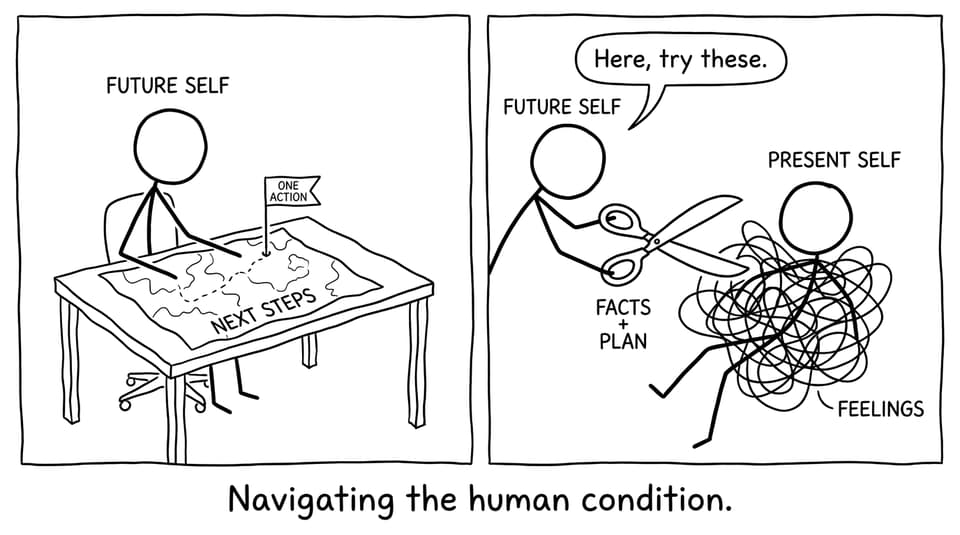
The conversation with your future self
Ask one question:
“What would make this easier in a week?”
Usually the answer is not “feeling better.” It’s one of these:
-
a decision (EUR, retake, accept)
-
a plan (what changes)
-
a system (how you’ll study)
The conversation with one calm person
Choose someone who won’t turn your score into a moral verdict.
Say:
-
“I’m not ready for advice yet.”
-
“Can you sit with me for ten minutes?”
-
“Help me pick the next action.”
It’s boring support. That’s why it works.
Turning results day anxiety into a next-step plan (the RevisionDojo way)
Here’s the strange truth: the students who feel the most anxiety are often the ones who cared the most. Caring isn’t the problem. Unstructured caring is.
RevisionDojo is designed to turn that energy into a calm loop. Not a motivational speech. A system.
If you’re rebuilding confidence after results day, run this “proof loop”:
-
Get fast clarity with Study Notes
-
Lock recall with Flashcards (short daily sessions)
-
Drill weak areas using the Questionbank
-
Use AI Chat to unblock the exact misconception you keep avoiding
-
Use Grading tools to tighten written responses and coursework decisions
-
Build realism with Predicted Papers and Mock Exams (train timing and stamina)
-
Use the Coursework Library when you need to see what “good” looks like
-
Bring in Tutors when you need a human plan, not more pressure
The goal is not to do everything. The goal is to stop guessing.
If you want the full platform workflow, this is a great overview: RevisionDojo App: The Smarter Way to Prep for IB Exams.
And if you’re worried you’ll burn out in the process, this pairs well with the loop above: How to Study for IB Exams Without Burning Out.
A realistic 48-hour timeline (so you don’t freestyle)
If you want a simple plan for How to Deal With IB Results Day Anxiety, use this timeline. It protects your nervous system and still moves you toward options.
The first hour
-
Screenshot/download your results.
-
Drink water.
-
Eat something small.
-
No group chat.
-
Ten minutes away from screens.
The first 24 hours
-
Decide who you’ll speak to.
-
Write one short summary for yourself: totals, subject grades, core points.
-
If needed, message your IB coordinator with your facts request.
The next 24 hours
-
Make one decision: gather more information, explore EUR, consider retake, or communicate with a university.
-
Build a “two-week evidence plan” using targeted practice and feedback loops.
If you want common results day questions answered in one place, use: IB Results Day FAQ: Every Question Answered.
Closing: your result is data, not destiny
The most convincing lie on results day is that one screen decides everything.
It doesn’t. Life is longer than a portal login. It’s messier, more forgiving, and full of second and third moves.
If you remember one thing about How to Deal With IB Results Day Anxiety, make it this: become procedural. Check once. Record. Close the tab. Take ten minutes. Get the facts. Choose one next action.
When you’re ready to turn anxiety into structure, make RevisionDojo your home base: Study Notes for clarity, Flashcards for steady recall, a Questionbank for targeted practice, AI Chat for instant explanations, Grading tools for tighter writing, Predicted Papers and Mock Exams for realism, a Coursework Library for exemplars, and Tutors when you need a human plan. The IB is hard. Your process doesn’t have to be chaotic.