
If you are reading this with one eye on the clock and the other on a mental list of everything that could go wrong tomorrow, you are in familiar territory.
The night before an IB exam has a special kind of pressure. It is quiet, but it is loud in your head. You can feel time moving, and your brain starts treating every forgotten detail like a future headline.
Here is the good news: anxiety tonight is not a sign that you are doomed. It is often a sign that you care, and your nervous system is trying (clumsily) to protect you. The goal is not to erase the feeling. The goal is to lower it enough that you can sleep, recall what you know, and walk in steady.
This guide is a practical, repeatable answer to How to Calm Anxiety the Night Before an IB Exam. You will get a simple checklist, a short review plan that does not sabotage sleep, and fast calming techniques you can do even if your thoughts are sprinting.
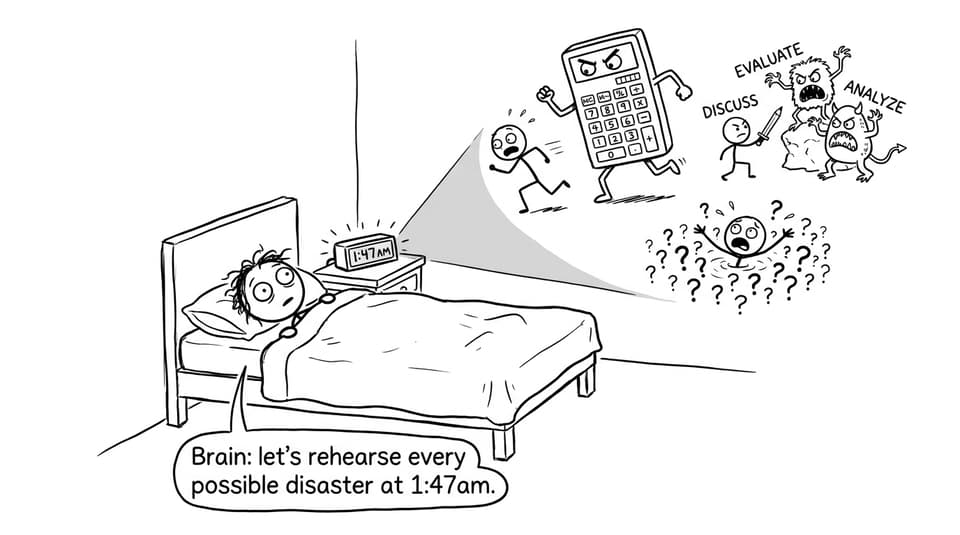
The night-before checklist (minimum viable calm)
When anxiety spikes, your brain tends to demand either perfection or panic-work. The smartest night-before plan does the opposite: it reduces decisions.
Use this as your baseline:
-
Do a short, high-yield review (30-60 minutes)
-
Stop studying at a fixed time
-
Pack your IB exam kit (then do a second check)
-
Set up tomorrow morning (wake time, breakfast, route)
-
Do a 5-minute calming routine
-
Protect sleep like it is part of revision
If you want a broader version of this routine you can use for any subject, keep this open: What to Do the Night Before a Big Exam.
Why the night before an IB exam feels so intense
The IB is not just content recall. It is performance under constraints: command terms, time pressure, mark allocations, and the strange experience of thinking while being watched by a clock.
The night before, your attention narrows. That is what stress does. It tries to simplify the world into one question: “Are we safe tomorrow?” When your brain cannot guarantee safety, it offers dramatic solutions: start a new topic at midnight, rewrite notes from scratch, take a full timed paper “just to be sure.”
Those choices feel responsible, but they usually produce the opposite outcome: worse sleep, worse recall, and more panic.
So if you are searching for How to Calm Anxiety the Night Before an IB Exam, the most counterintuitive truth is that calm is often built by doing less, but doing it on purpose.
Do a confidence review, not a cram session
The night before an IB exam is not for becoming smarter. It is for arriving stable.
A confidence review has one job: prove to your brain that key information is still there.
That means active recall (retrieving from memory) instead of rereading.
The best 30-60 minute review structure
Pick one lane. One. This is important because switching tools when you are anxious turns revision into wandering.
Flashcards lane (fast recall)
-
Definitions, formulas, quotes, case studies, key processes
-
Focus on cards you often miss, not the whole deck
-
RevisionDojo makes this easy with Flashcards and the method in IB Flashcard System: Active Recall for Better Memory.
Question lane (accuracy)
-
10-20 targeted questions on your weakest subtopic
-
Aim for clean method and clear mark-awarding steps
-
Then stop, even if it feels unfinished
Notes lane (clarity)
-
Skim a single weak area summary
-
Write a 6-line “what I must remember” sheet on paper
If you want the deeper framework behind this, read Active Recall for IB: The Only Method You Need.
A warning about late-night hero moves
Ask yourself one calm question before you do anything intense:
Will I have time to learn from this tonight?
If you take a full timed paper at 11:30pm, you might get a score, but you will not get improvement. That is just stress with extra steps.
Use full simulations earlier in the week with RevisionDojo’s Mock Exams and Predicted Papers, plus Grading tools to learn exactly where marks are lost. Tonight, you are building steadiness.
For a night-before routine designed specifically for IB, this is helpful: What to Do the Night Before IB Exams.
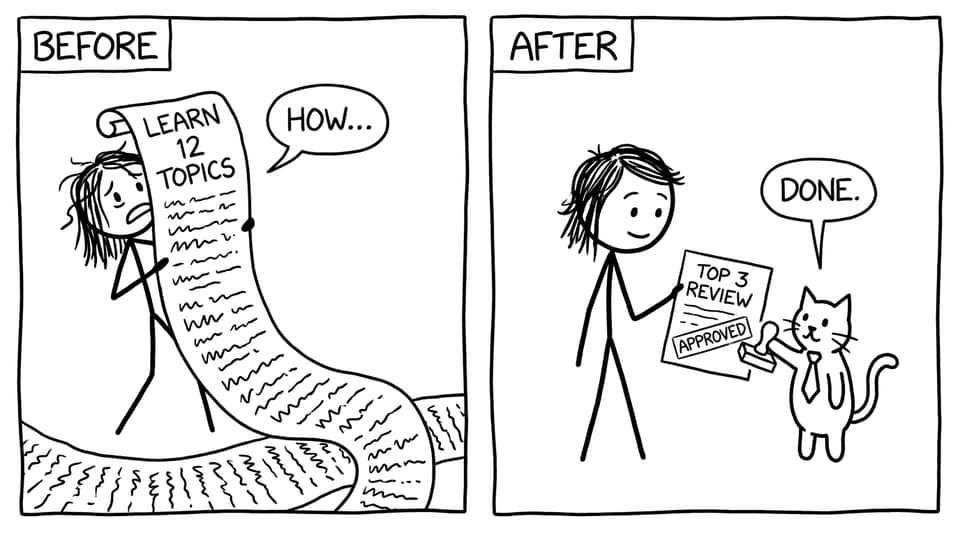
Shrink tomorrow into tiny steps (anxiety hates clarity)
A lot of anxiety is your brain trying to solve the entire future at once. You reduce it by making tomorrow smaller.
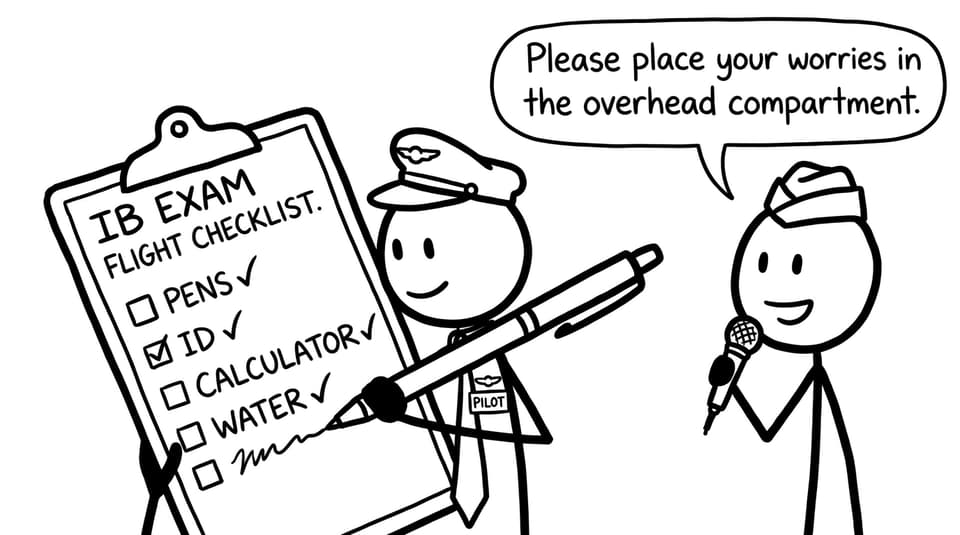
Pack your IB exam kit like a pilot
Pack tonight. Then do a second check. Not because you are careless, but because repetition tells your nervous system: “We handled this.”
Pack:
-
Pens/pencils, eraser, ruler (as needed)
-
Calculator and approved materials (where permitted)
-
ID and any required documents
-
Water bottle
-
A simple snack for after
Make your morning plan boring on purpose
Write a micro-plan on paper:
-
Wake time
-
Breakfast option
-
Leave time
-
Route
-
Arrival buffer
You are not trying to “optimize.” You are trying to remove surprises.
If your stress is also coming from exam technique worries, this is worth reading: Unwritten Rules of IB Exams No One Tells You.
A 5-minute routine to calm anxiety fast
When students search How to Calm Anxiety the Night Before an IB Exam, they often want a mindset fix. But panic is usually a body state first. Start with the body.
Pick one option below and do it for five minutes.
4-6 breathing (simple, reliable)
-
Inhale for 4 seconds
-
Exhale for 6 seconds
-
Repeat for 5 minutes
Longer exhales nudge your nervous system toward “safe.” It is not motivational. It is biology.
Grounding: the “name five” reset
Name:
-
5 things you can see
-
4 things you can feel
-
3 things you can hear
-
2 things you can smell
-
1 thing you can taste
It pulls your attention out of tomorrow and back into the room.
The worry list (then close the notebook)
Write every worry as bullet points for 3 minutes.
Then write one line:
Not solving this tonight. Returning after the exam.
That line is not denial. It is closure.
If you want more techniques like this, read Meditation and Breathing Techniques for Exam Stress and The IB Anxiety Loop (And How to Break It Before Exams).
Protect sleep like it is part of your grade
Sleep is not a reward you earn after revision. It is one of the mechanisms that makes revision stick.
Sleep helps consolidate memory and improves emotional control. When sleep is short, you are more likely to second-guess, misread questions, and spiral.
If you want a dedicated guide, this is essential: How to Sleep Properly During the IB Exam Period.
A night-before sleep plan that works even when you are nervous
-
Set a stop time for studying
-
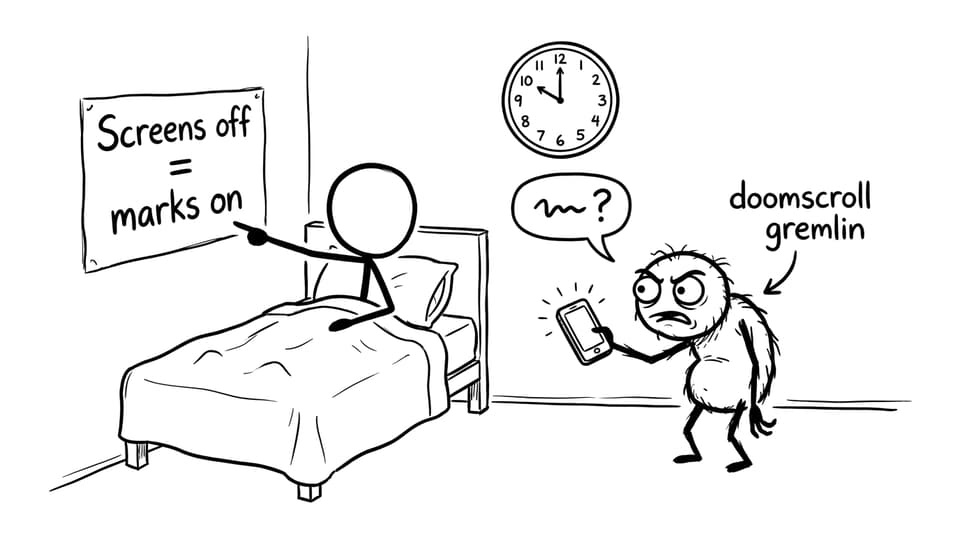
Dim screens 30-60 minutes before bed
-
Do a warm shower or wash your face as a “transition cue”
-
Put your phone across the room
-
If you cannot sleep after about 20 minutes: get up, low light, do something boring, then return
If sleep guilt is driving you to keep studying, read: Is It Worth Sacrificing Sleep to Study for IB Exams?.
Use RevisionDojo tonight, but with boundaries
RevisionDojo is most calming when it reduces uncertainty. It is least calming when it becomes another way to chase reassurance.
A clean night-before setup inside RevisionDojo:
-
Study Notes: skim one weak area for clarity (do not reread everything)
-
Flashcards: 10-20 minutes of active recall for confidence
-
Questionbank: a tiny targeted set to confirm accuracy
-
AI Chat: clarify one sticking point, then stop
This is the difference between “I am preparing” and “I am spiralling.”
Earlier in the week (not tonight), you can add:
-
Mock Exams and Predicted Papers for realism and stamina
-
Grading tools to see what earns marks in written responses
-
Coursework Library if coursework stress is leaking into exam season
-
Tutors when you need a human diagnosis and a fast plan
For general exam-season calm, you may also like: How to Stay Calm During IB Exams.
A quick night-before script you can copy
If you want an exact routine so you do not have to think:
-
30-45 minutes: confidence review (one lane)
-
10 minutes: pack bag + second check
-
5 minutes: write morning plan on paper
-
5 minutes: breathing or grounding
-
Wind down: low light, boring activity, bed
It is simple on purpose. Simple scales when you are tired.
Closing: calm is built, not wished for
The night before an IB exam might never feel completely normal. But it can feel manageable.
If you remember only one thing about How to Calm Anxiety the Night Before an IB Exam, make it this: your job tonight is not to learn everything. Your job is to lower uncertainty, reduce decisions, and protect sleep so your brain can retrieve what you already built.
Do the confidence review. Pack your kit. Write your morning plan. Breathe for five minutes. Then treat sleep like revision.
And if you want the easiest way to make that routine repeatable across every paper, build it around RevisionDojo: Questionbank for targeted practice, Study Notes for fast clarity, Flashcards for recall, AI Chat for quick explanations, Grading tools for feedback, Predicted Papers and Mock Exams for realism, a Coursework Library to reduce background stress, and Tutors when you need a human plan.
You do not need to feel fearless. You only need to show up steady enough to access what you know.