



DP2 has a strange kind of pressure.
One day you are “doing fine.” The next day you hear a number (your prediction) and it suddenly feels like a verdict. Not because it is final, but because it is visible. Universities can see it. Teachers stand behind it. And you start wondering if you have already missed your chance.
Here is the good news: you can improve your predicted grades in DP2. The more precise news is this: IB Grading tends to change when the evidence changes. Not the promise. Not the panic. The evidence.
This guide shows you how to create that evidence, how to talk to teachers in a way that helps, and how to use RevisionDojo to turn “I’ll work harder” into “here is my new data.”
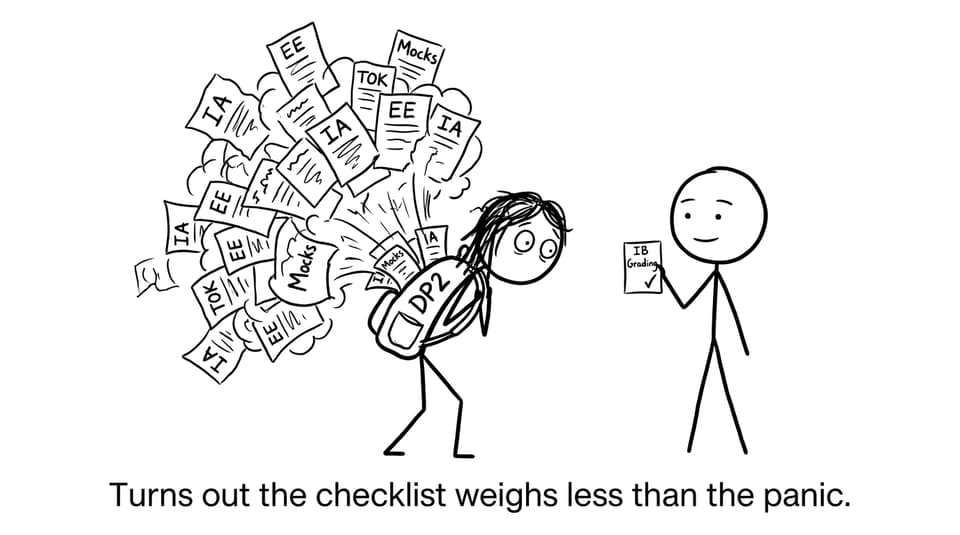
A quick DP2 checklist (print this mentally)
If you want a simple path to better IB Grading outcomes, start here:
-
Get clear on how your teachers set predictions at your school.
-
Identify your highest mark-loss areas (not just “weak topics”).
-
Build a two-week loop: timed work, marking, error log, repeat.
-
Upgrade one major coursework component (IA, oral, portfolio) with rubric-based edits.
-
Book one intentional teacher check-in with a short agenda.
-
Track your progress weekly, not daily.
If that feels almost too calm, that is the point. DP2 rewards calm systems.
How predicted grades actually connect to IB Grading
Predicted grades are teacher-generated estimates of what you are likely to score in the final assessments. In most schools, they are influenced by patterns: mock exam results, timed tests, coursework progress (like IAs), and your consistency across DP2.
That is why IB Grading is not mainly about “having potential.” It is about whether your recent outputs match IB-style criteria.
Two important implications:
-
One heroic week can help, but repeatable improvement helps more.
-
Teachers are much more likely to adjust predictions when they can point to multiple pieces of new evidence.
If you want to understand timing and school processes more clearly, read: When and How Are Predicted Grades Predicted in IB?
The fastest way to improve IB Grading in DP2: change the data teachers see
Imagine a teacher with 25 students and a deadline. They are not building a story about your character. They are building a defensible estimate.
So your job is to give them defensible inputs.
Build a “two-week evidence cycle”
For each subject, run this loop for 14 days:
-
Day 1: timed set (even 30-45 minutes counts)
-
Day 1 (immediately): mark it honestly, then write an error log
-
Day 2: fix 1-2 error types using targeted study
-
Day 3: re-test a smaller section on the same weakness
-
Repeat 2-3 times per subject over the two weeks
This is what moves IB Grading because it shows stable skill growth: timing, structure, and accuracy.
For a deeper version of this mindset, see: Predict Your IB Score Before Exams (Without Guessing)
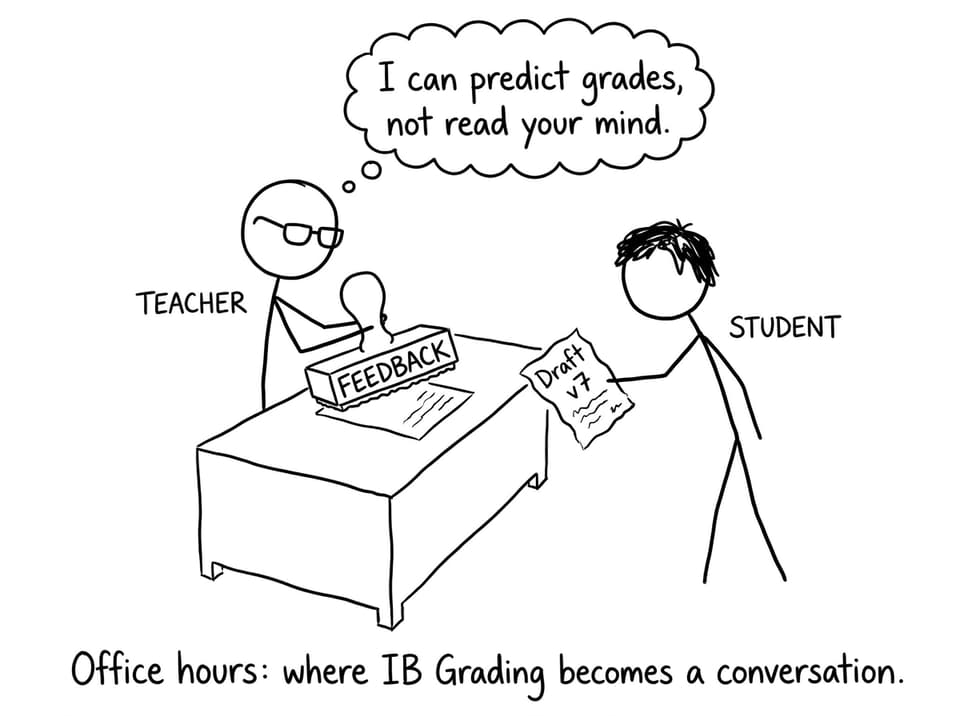
Talk to your teachers like a strategist (not a negotiator)
A lot of students treat predicted grades like a bargaining session. Teachers usually experience that as stress.
A better approach: ask for clarity, then return with evidence.
Here is a simple script:
-
“Could you tell me what evidence you are currently using for my prediction?”
-
“Which two skills would most change my grade boundary performance?”
-
“If I show improvement on X and Y in the next three assessments, would you reconsider?”
That is not pushy. It is practical.
If you want more practical steps, RevisionDojo covers them here: How to Improve Your Predicted Grades in IB
Study methods that actually translate into IB Grading gains
The IB does not reward effort. It rewards demonstrated performance under constraints.
That is why your study method must include two ingredients: retrieval and application.
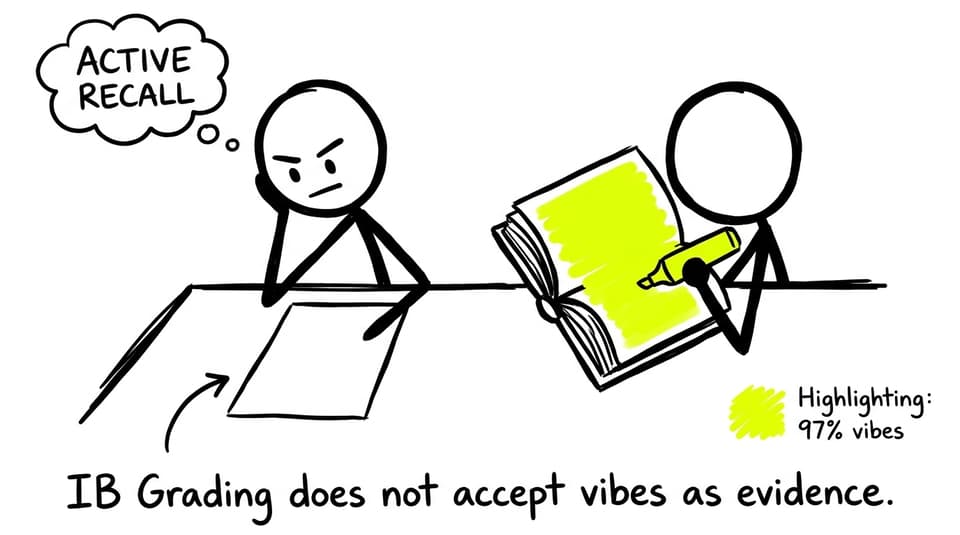
Use active recall, then force exam-style application
A reliable pattern looks like this:
-
Learn one slice of content (small, focused)
-
Close the notes
-
Retrieve it from memory (flashcards, blurting, quick definitions)
-
Immediately apply it to exam-style questions
This is where RevisionDojo becomes more than “another resource.” You can move through:
-
Study Notes to patch one gap
-
Flashcards to lock the definition or method
-
Questionbank to apply it in mixed and topic-based sets
-
AI Chat to clarify one precise confusion (then go right back to questions)
For study technique options, see: 10 Proven Study Techniques for IB Students
Add timed practice early (not just at the end)
Timing problems are silent grade killers. You can know a topic and still lose marks because you run out of time, misread command terms, or structure responses poorly.
So twice a week, do something timed:
-
a paper section
-
a set of short questions
-
one timed essay plan + one paragraph written at full quality
Then use RevisionDojo’s Grading tools to mark more consistently and spot repeat errors. When you are ready for full rehearsal, mix in Mock Exams and Predicted Papers (especially to train routine and stamina):
Don’t ignore coursework: it quietly shifts IB Grading
In many subjects, internal work (like an IA or oral) can make up 20-30% of your final result. More importantly for DP2, it can influence teacher confidence in your readiness.
Three coursework moves that tend to help quickly:
-
Align every paragraph to the criterion language (not your teacher’s general comments)
-
Replace vague analysis with explicit evidence (data, quotations, steps)
-
Improve presentation and structure so the quality is obvious at a glance
RevisionDojo’s Coursework Library is useful here because it shows what “good” looks like across subjects, and Tutors can help when you are stuck between “I tried” and “this meets the rubric.”
Plan your weeks like a calm professional
DP2 gets messy when everything is “important.” A plan gives you decision relief.
Start with one strong planning resource and keep it simple:
Then add a short end-of-week review: what improved, what did not, and which error type is still costing marks.
A closing thought: you are not behind, you are just under-informed
DP2 can feel like you are sprinting on a treadmill. Lots of motion, not always forward.
But once you understand what IB Grading responds toevidence, consistency, rubric alignment, and timed performance; you can start moving the number by moving the process.
If you want one place to run that process, RevisionDojo is built for it: Study Notes to learn efficiently, Flashcards to remember reliably, Questionbank to practice strategically, AI Chat to unblock confusion, Grading tools to mark accurately, Mock Exams and Predicted Papers to train under pressure, and a Coursework Library plus Tutors when you need expert eyes.
Start your next two-week evidence cycle today. Then let the next prediction be something you earned on paper, not something you hoped for in your head.