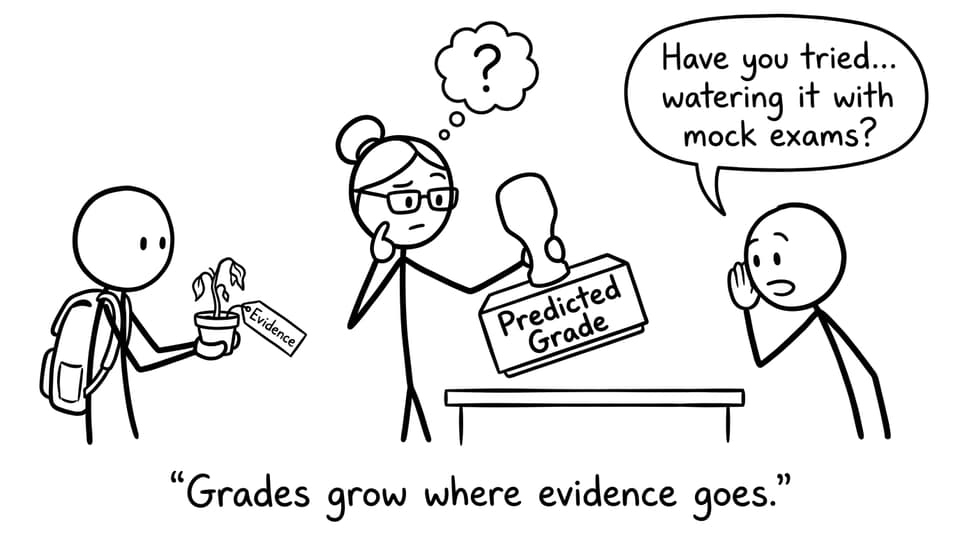
When your IB predicted grades land lower than you hoped, it can feel like a door quietly closing. But predicted grades aren’t a verdict on your potential. They’re a summary of evidence your teachers can point to today. If you want a change, your job is simple (not easy): create better evidence, make it visible, and talk about it at the right time.
How predicted grades work in the IB (and why that matters)
In the IB, predicted grades usually come from patterns, not promises. Teachers tend to weigh the most recent, most exam-like proof: mocks, timed tests, written tasks, and how consistently you hit the mark scheme. Coursework progress matters too, especially when it shows strong criterion alignment and clean academic honesty.
If you want the deeper context and what schools commonly look for, read How to Interpret IB Predicted Grades and Improve Them and IB Predicted vs Final Grades: How Accurate Are They.
The fast checklist: what actually moves an IB prediction
Use this before you do anything dramatic:
-
Identify the next two assessments that could add new evidence
-
Prioritize the highest-weight skills (timed essays, data response, problem sets)
-
Build a 2-week “evidence loop”: practice, feedback, correction, retest
-
Track results so the improvement is undeniable
-
Ask for feedback first, then ask if a review is possible
RevisionDojo helps you run that loop in one place: Study Notes, Flashcards, Questionbank, AI Chat, Grading tools, Predicted Papers, Mock Exams, Coursework Library, and Tutors.
Practical strategies to improve predicted grades in IB
Build better evidence with short, repeatable loops
The biggest IB mistake is studying in a way that produces no proof. Teachers can’t update predictions based on “I revised for six hours.” They can update them based on a clear trend in timed performance.
A simple loop:
-
Patch one weak concept using RevisionDojo for IB
-
Drill it in the free Questionbank
-
Turn recurring mistakes into Flashcards
-
Ask one precise question in Jojo AI Chat (then go straight back to questions)
If you want a clean model for this, RevisionDojo App: The Smarter Way to Prep for IB Exams lays out a workflow you can copy.
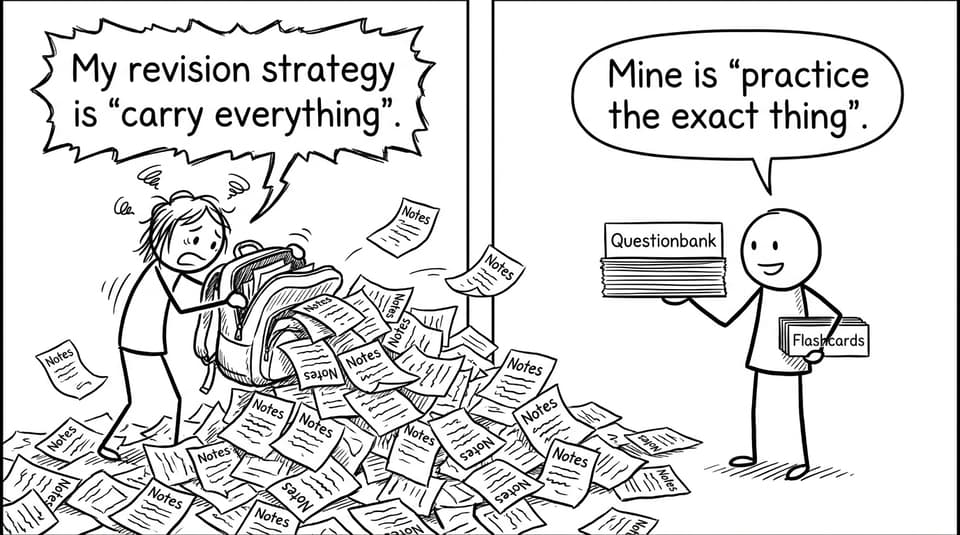
Use timed practice early (because the IB rewards performance)
In the IB, “knowing the topic” and “scoring under time pressure” are different skills. If your predicted grade is low, you need at least one timed session per week for each priority subject.
To simulate real pressure, use IB Predicted Papers and learn how to use them well via IB Predicted vs Specimen Papers: What They Mean. Then use your results to target the exact gaps.
Upgrade coursework in a way teachers can trust
Coursework doesn’t just affect final outcomes; it also signals your trajectory in the IB. If your IA draft is messy or late, it can drag confidence down.
Use the Coursework Library and the wider IB Coursework Examples: IA, EE and TOK Exemplars to calibrate what “good” looks like. Pair that with RevisionDojo’s Grading tools to tighten rubric alignment.
If you’re unsure how marking works, Who Marks the IA? The Truth Behind Your Final Score is worth reading before your next draft.
Ask for a review like a professional, not a negotiator
When you approach a teacher, lead with respect and clarity. In the IB, tone matters because predicted grades are professional judgments.
Bring:
-
Your most recent timed results (with dates)
-
A short summary of what changed (your method, not your motivation)
-
One or two improved responses with brief annotations
Try language like: “Can you tell me what evidence you used for my prediction, and which upcoming assessments could show a higher level?” That question invites a pathway.
Track your trajectory with real numbers
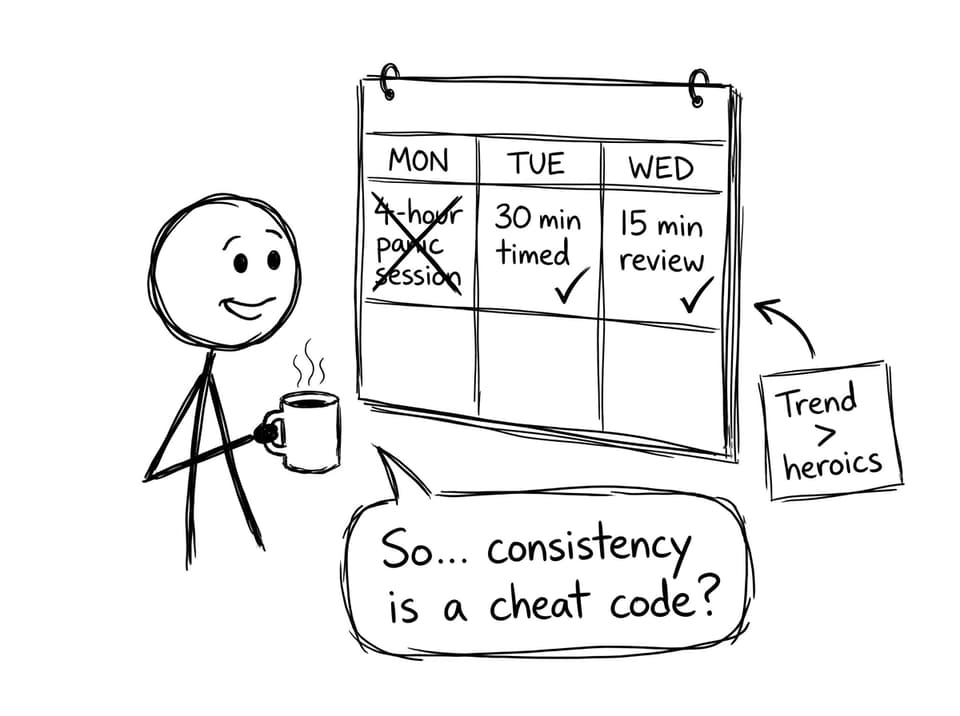
You don’t need a perfect spreadsheet. You need a visible trend.
Use the free IB Grade Calculator to sanity-check where your current performance sits against grade boundaries. Then connect that to your weekly loop: practice set results, timed sections, and what you fixed.
Conclusion: make your IB predicted grades easier to believe
To improve predicted grades in IB, you don’t need a new personality. You need a new trail of evidence. Build it with short loops, timed practice, smarter coursework iteration, and calm communication.
If you want the easiest way to run that system, use RevisionDojo as your home base: Questionbank for targeted practice, Study Notes for fast clarity, Flashcards for retention, AI Chat and Grading tools for feedback, and Predicted Papers and Mock Exams for realism. Your predicted grades can move when your evidence moves. Start building it this week.