




The first time you realise a language is changing you, it’s rarely during a test.
It’s when you catch a meaning without translating. Or when a character you used to fear suddenly looks… familiar. Or when you hear a tone and your brain doesn’t panic, it simply chooses.
That’s the quiet gift of learning Chinese through the IB Programme. For many students, IB Languages can feel like “the subject that never ends” because practice is never finished. But Chinese (often taken as IB Chinese B) does something especially useful for exam students: it trains you to build progress from small, repeatable habits. Which is exactly what the IB rewards.
In this guide, we’ll unpack the academic, cultural, personal, and future-facing benefits of learning Chinese through IB Languages, and we’ll keep it practical for exam season.
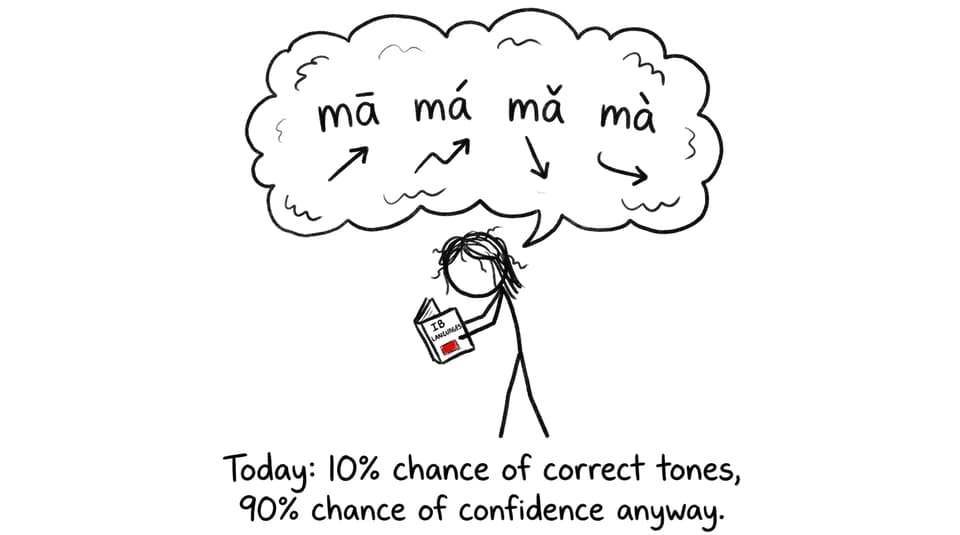
Quick checklist: why Chinese is a smart IB choice
If you want the fast overview before the deeper reasoning, here’s what Chinese adds to your IB toolkit:
-
Stronger performance across the four skills (reading, writing, listening, speaking)
-
Greater cultural literacy and intercultural understanding
-
A standout story for university applications
-
A long-term career asset in global industries
-
Better learning discipline, because Chinese punishes cramming and rewards routines
-
Real confidence from doing something hard consistently
If you’re already taking Chinese, your job now is to convert those benefits into points on exam day.
The academic benefits: Chinese makes IB Languages feel more “complete”
Most students revise what feels easiest. Chinese forces you to revise what matters.
Balanced skill training (the IB actually tests all of it)
In IB Languages, it’s tempting to lean on one comfortable area: maybe you can read decently, but speaking feels risky; maybe you’re confident in writing, but listening exposes every gap.
Chinese B doesn’t let you hide for long. Progress is tied to the full loop: sound, meaning, structure, and context. That balance matters because IB assessments demand versatility. When you practise Chinese consistently, you’re rehearsing the exact flexibility your exams measure.
A practical way to make this easier is to keep your revision resources connected: learn the idea, recall it, apply it, then review it. RevisionDojo is built around that flow with Study Notes, Flashcards, and a topic-filtered Questionbank in one place. Start at the IB Chinese B hub and build your routine from there.
Exam variety builds exam stamina
Chinese B exams typically pull different levers: you write in specific formats, interpret texts and audio, and speak under pressure. That variation is a feature, not a flaw.
It’s like cross-training. The student who can only do one type of workout feels confident until the race demands another muscle. IB Languages reward students who can switch modes calmly.
If you’re tightening your exam technique, the How to Revise Effectively for IB Chinese B Exams guide is a helpful structure for building week-by-week consistency.
Critical thinking in a different gear
Chinese pushes you to infer meaning from context more often than you expect, especially when your vocabulary is incomplete. That trains a useful IB habit: keep moving.
You learn to paraphrase, to find the “nearest correct” way to express an idea, and to defend an opinion with the language you have. That’s not just language skill; it’s exam survival.
And when you get stuck, fast feedback matters. RevisionDojo’s AI Chat can help you diagnose why a phrase doesn’t work, suggest more natural alternatives, and drill you with targeted prompts so the next attempt is sharper.

The cultural benefits: Chinese turns IB Languages into global awareness
The IB likes big ideas: identity, experiences, human ingenuity, social organisation, sharing the planet. In IB Languages, those themes aren’t decoration; they’re where your content comes from.
Language becomes a doorway to culture
Studying Chinese through the IB naturally introduces you to cultural practices and social values, from major festivals to everyday etiquette. You don’t just learn what words mean; you learn what they imply.
For example, discussions about family roles, education pressure, technology, and community expectations become richer when you can name them and describe them with precision. That depth pays off in speaking and writing because your examples sound grounded rather than generic.
Intercultural understanding (and better answers)
Many high-scoring language responses share the same quality: they notice differences without judging them.
Chinese helps you practise that. You get comfortable comparing perspectives, weighing social norms, and explaining why people might act differently in different contexts. That habit is a direct advantage in IB Languages, where thoughtful comparison often separates “good” from “excellent.”
The future benefits: Chinese is a long-term asset, not just an exam subject
A lot of IB subjects feel like temporary mountains: you climb them, you’re relieved, you move on.
Chinese is different. It keeps paying you back.
Real-world relevance at global scale
Mandarin is spoken by over a billion people and is one of the official languages of the United Nations. Even basic competence can open doors: internships, exchange opportunities, research access, and relationships in Chinese-speaking communities.
And because many applicants choose more common pathways in IB Languages, Chinese can quietly signal something universities and employers value: you commit to hard things.
Career advantage without needing perfection
You don’t need to be “fluent” for Chinese to be useful.
Being able to read key information, hold a functional conversation, or understand cultural context can matter in business, technology, diplomacy, education, design, engineering, and tourism. In many careers, the advantage comes from trust and connection, and language is a shortcut to both.
The personal benefits: Chinese teaches the kind of resilience IB rewards
There’s a moment in every student’s Chinese journey when they think: I’m working a lot and it still feels slow.
That’s normal. And it’s also the point.
Confidence from repeated discomfort
Chinese trains you to perform while imperfect. You speak even when you’re uncertain. You write even when you know you’ll miss a measure word. You listen and keep going after missing a phrase.
That’s exactly how strong IB students behave under timed pressure: calm, adaptive, forward-moving. Over time, that confidence spreads to other subjects too.
Better learning habits (because cramming fails fast)
Cramming can sometimes fake competence in content-heavy topics.
In IB Languages, especially Chinese, cramming collapses quickly because recognition and recall need spacing. The win comes from small daily inputs: short listening bursts, character review, mini-writing drills, quick speaking prompts.
If you want a sustainable approach, the study-loop mindset in How to Study for IB Exams Without Burning Out pairs well with language revision: short sessions, frequent recall, and targeted practice.

How to turn these benefits into exam marks (RevisionDojo workflow)
Benefits are nice. Marks are nicer. Here’s a simple way to convert your Chinese work into measurable improvement in IB Languages:
-
Questionbank: Drill question styles and theme-based prompts until formats feel automatic.
-
Study Notes: Use syllabus-aligned explanations to reduce “random revision” and focus on what’s examinable.
-
Flashcards: Keep characters, theme vocabulary, and sentence patterns alive with spaced repetition.
-
AI Chat: Practise oral-style questions, fix awkward phrasing, and get instant clarification.
-
Grading tools: Get feedback on writing drafts so you improve before your teacher sees version one.
-
Mock Exams: Build stamina and timing so your performance matches your knowledge.
-
Predicted Papers: Rehearse realistic exam conditions and reduce surprise.
-
Coursework Library: If you’re building an IA or related work, seeing strong exemplars reduces uncertainty fast.
-
Tutors: When you’ve plateaued, a human diagnosis can save weeks.
To explore broader platform resources, start at RevisionDojo for IB, then narrow down to your subject.
Closing: choose the language that keeps paying you back
Chinese through the IB Programme is not just another subject inside IB Languages. It’s a long-term skill that teaches you how to practise, how to adapt, and how to stay calm when you don’t know every word.
If you’re preparing for exams, the goal isn’t perfection. It’s reliable performance across skills, under time pressure, with clear themes and confident structure.
Build that reliability with RevisionDojo: start with the IB Chinese B subject hub, practise with the Questionbank, lock in memory with Flashcards, refine responses using AI Chat and Grading tools, then rehearse with Mock Exams and Predicted Papers. That’s how the benefits of Chinese show up where it counts, on exam day, and far beyond it.