


If you have ever watched a classmate nail a performance, export a short film on the first try, or pin up a visual piece that somehow looks inevitable, it is tempting to assume they have a gift you do not.
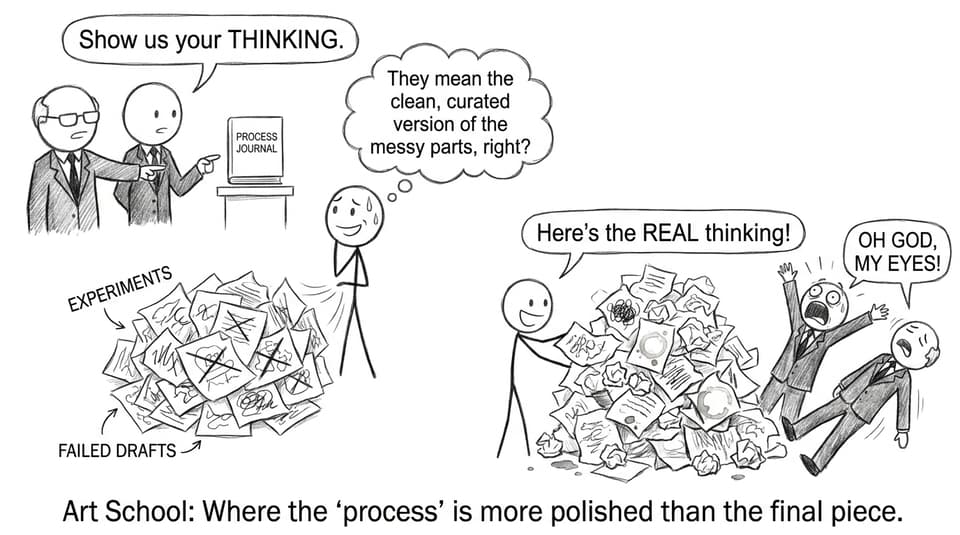
But the best MYP Arts work is rarely magic. It is usually a trail of decisions: research, experiments that failed quietly, notes that got more honest over time, and a final outcome that looks confident because the process was.
That is the core idea behind MYP Arts. You are not only graded on what you make. You are graded on how you think while making it.
This guide focuses on MYP Arts with a practical lens for exam-season students, especially those working in Media Arts, Visual Art, and Theatre. We will keep it simple: how the course is structured, what the criteria reward, and how to revise in a way that actually improves your score.
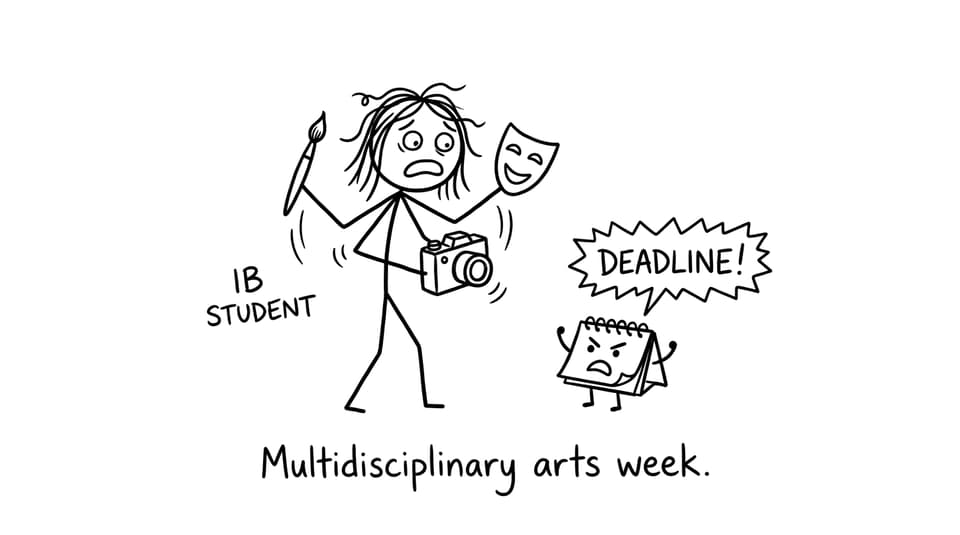
Quick MYP Arts checklist (save this before your next task)
Use this mini checklist whenever a MYP Arts deadline appears:
-
Identify which MYP criteria (A to D) the task is targeting.
-
Pick one concept and one global context you can explain in one clear sentence.
-
Collect 3 references fast: one artist/creator, one technique/process example, one contextual source.
-
Plan your process evidence (photos, drafts, rehearsal notes, storyboards, iterations).
-
Create the work in stages, not in one heroic night.
-
Evaluate with specifics: what changed, why it changed, and what you would do next.
If you want a broader practice routine for all subjects alongside Arts, the MYP Revision Guide: Study Tips for Success pairs well with this article.
What MYP Arts is really trying to teach you
The Arts section of the MYP is not just about learning techniques. It is about learning how to express meaning with intention.
Across Media Arts, Visual Art, and Theatre, you practice the same deeper habits:
-
Turning a vague theme (identity, change, communication) into a concrete artistic goal.
-
Using artistic choices as evidence (color, camera angle, lighting, gesture, pace, composition).
-
Reflecting like a maker, not like a commentator.
This is why MYP Arts often feels different from other subjects. In many classes, your work is the answer. In MYP Arts, your work is the answer plus the reasoning trail.
A useful starting point if you are building your overall study system is the Middle Years Program (MYP) hub.
How MYP Arts is structured (and why it helps in exams)
Most schools offer Arts through separate disciplines such as Visual Arts, Media Arts, and Theatre, or through integrated units that blend them.
Even when the product changes, the MYP approach stays consistent:
-
Concept-based learning (big ideas like identity or communication)
-
Inquiry (questions that push you to explore, not just copy)
-
Global contexts (linking art to the world beyond your classroom)
When exams or end-of-term assessments arrive, this structure becomes an advantage. You can study by reusing the same thinking moves: investigate, plan, make, reflect.
For examples of how tasks are framed across subjects (including Arts), see Sample MYP Assessment Tasks for Every Subject Group.
The MYP creative cycle: the “quiet” marks students forget
In MYP, the creative cycle is not extra paperwork. It is often where your easiest marks live.
Investigating
You gather references and context. In Arts, this is where you prove you did not invent ideas in a vacuum.
Developing
You test techniques and document what happened. This is where you earn credit for smart risk.
Creating
You execute the final outcome with control. This is where skill becomes visible.
Evaluating
You reflect with criteria language. This is where you sound like someone who knows why they chose what they chose.
Many students only protect time for “creating.” Top students protect time for investigating and evaluating, because those phases are easier to write about clearly and score well in.
Visual Art in MYP: how to score higher without “being better at art”
In MYP Visual Art, your grade is not a measure of whether your piece looks like a gallery work. It is a measure of whether your piece communicates meaning through deliberate choices, supported by a documented process.
What high-scoring MYP Visual Art students do differently:
-
They choose a narrow intention (one message, one emotion, one question).
-
They annotate experiments: “I changed X because it improved Y.”
-
They connect technique to meaning (not technique to technique).
Practical revision moves for Visual Art:
-
Build a one-page reference sheet of 6 techniques you can explain (composition, contrast, texture, symbolism, perspective, typography, etc.).
-
Practice writing a short artist statement that links intention, process, and final decisions.
-
Collect 2-3 artist references you can reuse across themes.
If you also study IB Visual Arts later, browsing strong examples early can sharpen your taste and vocabulary. The IB Visual Arts Examples page is helpful for seeing what “specific reflection” looks like.
Media Arts in MYP: storytelling under constraints
Media Arts in the MYP can be film, animation, digital design, photography, audio, journalism-style products, or mixed media. The common thread is that media is communication with power.
What high-scoring MYP Media Arts students do differently:
-
They plan before they edit (storyboards, shot lists, drafts).
-
They justify audience choices (tone, pacing, color grade, sound).
-
They make ethical decisions visible (representation, sourcing, permissions).
Practical revision moves for Media Arts:
-
Take one existing product and write a “director’s commentary” paragraph explaining three choices and their effects.
-
Practice evaluating one technical skill (sound clarity, transitions, framing) with evidence.
-
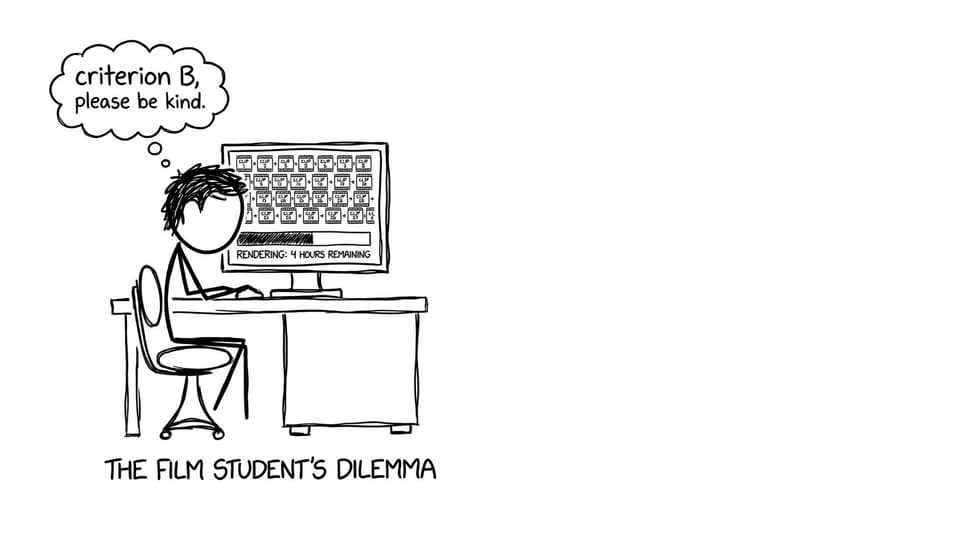
Time-box your workflow: planning, creation, export, reflection.
If your overall MYP workload is rising, a structured month plan helps. The MYP eAssessments: 30-Day Study Plan That Works is designed for that reality.
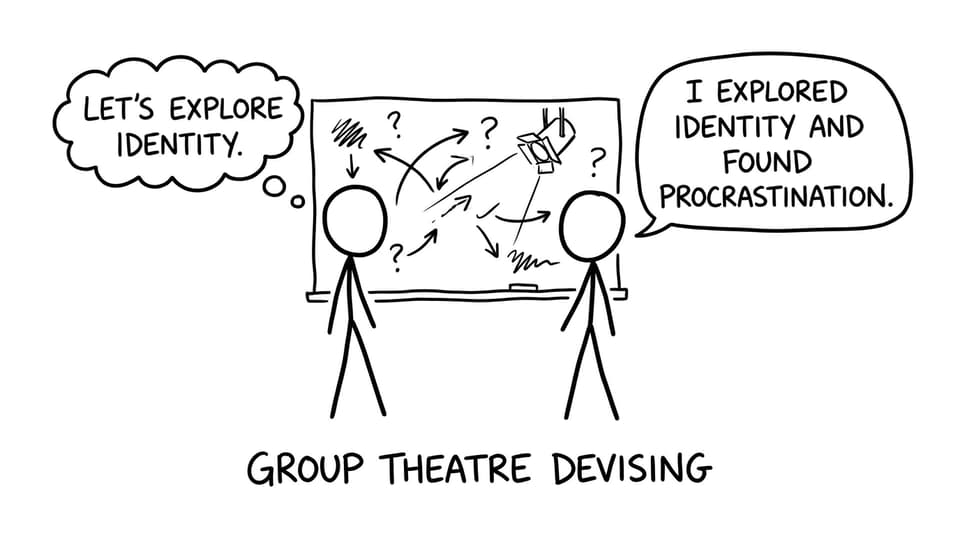
Theatre in MYP: performance that earns marks, not just applause
Theatre in the MYP rewards collaboration, intention, and reflection just as much as performance energy.
What high-scoring MYP Theatre students do differently:
-
They define the purpose of the piece early (what should the audience feel or question?).
-
They rehearse with a problem to solve (clarity, pacing, stage picture, character objective).
-
They reflect on choices using theatre vocabulary (blocking, proxemics, voice, gesture, tension).
Practical revision moves for Theatre:
-
Rewatch any rehearsal footage and write a short “change log”: what you adjusted and why.
-
Practice linking one theatre element to meaning (lighting to mood, tempo to tension).
-
Build a mini glossary of theatre terms you can use correctly.
If you need general strategies for performing well in MYP assessment formats, read Tips for Success in MYP eAssessments.
Understanding MYP Arts assessment (Criteria A to D)
Most MYP Arts courses assess using four criteria, each on a 0-8 scale. Your teacher will adapt tasks, but the logic stays stable.
Criterion A: Knowing and Understanding
This rewards your understanding of art forms, techniques, and context. You score higher when you connect references to your own work instead of describing them.
Criterion B: Developing Skills
This rewards technical growth and control. Evidence matters: drafts, rehearsals, edits, and targeted improvements.
Criterion C: Thinking Creatively
This rewards original ideas, risk, and exploration. The key is showing the journey, not claiming you were creative.
Criterion D: Responding
This rewards reflection and evaluation. Strong responses explain impact on the audience, success against intentions, and specific next steps.
To avoid common mistakes that keep students stuck, the Why Most Students Struggle in MYP (And Fix It) article is a useful reset.
How RevisionDojo helps you study MYP Arts like an examiner
Exam season can make Arts feel invisible because there is less “content to memorize.” But MYP Arts still benefits from a system.
Here is a simple loop using RevisionDojo:
-
Study Notes: clarify concepts and vocabulary quickly via Study Notes.
-
Flashcards: memorize command terms, criteria language, and key definitions using IB Flashcards with Spaced Repetition (SRS).
-
AI Chat: ask for critique prompts like “Give me three stronger evaluation sentences for Criterion D.”
-
Grading tools: tighten your reflection so it maps to criteria strands.
-
Coursework Library: calibrate what “specific evidence” looks like.
-
Questionbank: while Arts may not be question-driven in the same way, you can still use Questionbank for your other subjects so your schedule stays balanced.
-
Mock Exams and Predicted Papers: build timed stamina for your written subjects so Arts deadlines do not collide with panic.
-
Tutors: get a human eye when your idea is strong but your explanation is vague.
If you want the bigger picture of how RevisionDojo fits into exam prep, see RevisionDojo App: The Smarter Way to Prep for IB Exams.
Closing: treat MYP Arts like a trail of decisions
The students who improve fastest in MYP Arts are not the ones with endless inspiration. They are the ones who keep a clean trail: investigate, test, choose, justify, reflect.
If you want your next Media Arts export, Visual Art piece, or Theatre performance to score higher, build a routine that protects process as much as product. And if you want that routine to feel calm rather than chaotic, use RevisionDojo as your study home base: Study Notes for clarity, Flashcards for language, AI Chat and Grading tools for feedback, plus the Questionbank, Mock Exams, Predicted Papers, Coursework Library, and Tutors to keep everything else steady.
Start at the Middle Years Program (MYP) hub and set up your next week like a system, not a scramble.