


The quiet engine behind every “successful” business
A business can have a brilliant product and a marketing team that makes it famous overnight. But if customers wait too long, receive inconsistent quality, or see prices rise because costs are out of control, the excitement fades fast.
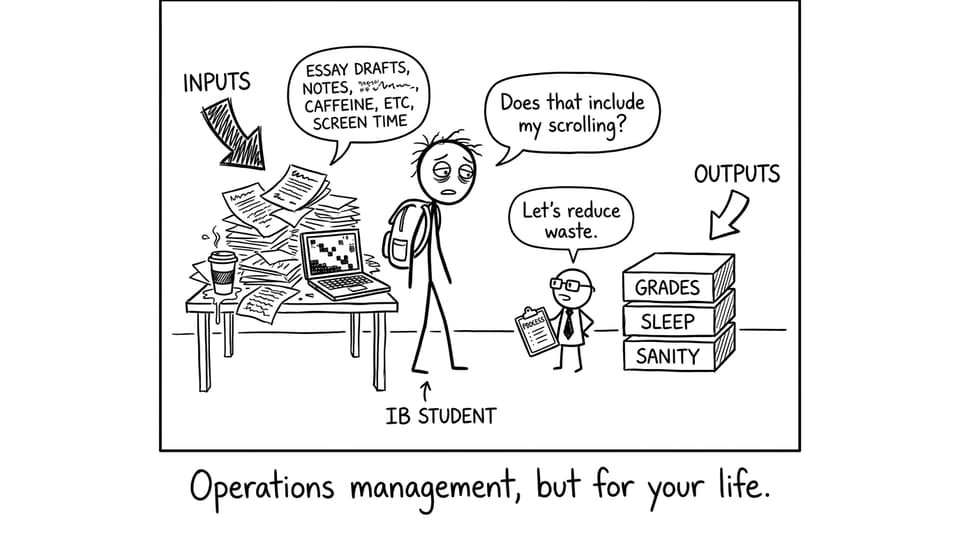
That’s why IB Business Management treats operations management as more than a “factory topic.” Operations is the quiet engine that turns plans into reality: it converts inputs (labour, materials, tech, time, capital) into outputs customers actually want, delivered reliably.
If you’re revising for exams, operations management is also one of the easiest areas to score well in, because it rewards clear cause-and-effect thinking.
Operations management importance: a quick exam checklist
Use this mini-checklist when you see an operations question in IB Business Management:
-
Efficiency: how does the business reduce waste and raise productivity?
-
Quality: how does it keep standards consistent?
-
Capacity planning: can it meet demand without overload or idle resources?
-
Cost control: where can processes or suppliers reduce costs?
-
Continuous improvement: how does it adapt and innovate over time?
-
Coordination: how does operations link to marketing, finance, and HR?
For syllabus-aligned revision, start with 5.1 Introduction to operations management and 5.1.1 The Role of Operations Management.
IB Business Management: how operations management supports business success
Efficiency turns effort into advantage
In IB Business Management, efficiency is about producing more value with fewer resources. Operations teams design processes that reduce bottlenecks, minimise waste, and make work repeatable. That matters because cost savings don’t just boost profit; they create flexibility. A business can lower prices, invest in better equipment, or survive a tough competitor.
To revise efficiency precisely, connect process improvements to measurable results like productivity. RevisionDojo’s Productivity Metrics Notes help you use the right terminology and formulas when needed.
Quality keeps promises (and protects reputation)
Customers rarely remember the one perfect experience. They remember inconsistency.
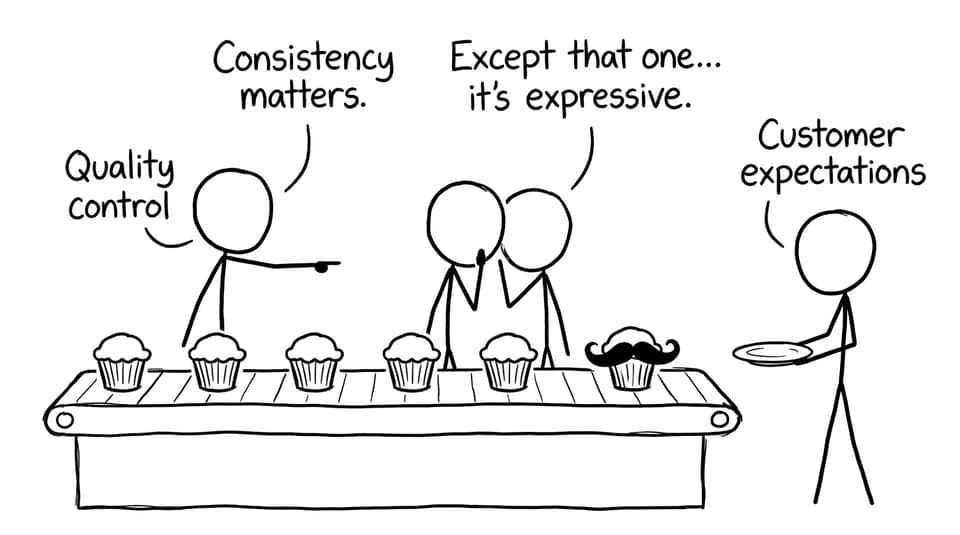
Operations management sets quality standards, trains staff, monitors processes, and uses quality control to detect errors before customers do. In exam responses, link quality to customer satisfaction, repeat purchases, and brand reputation.
Capacity planning prevents chaos
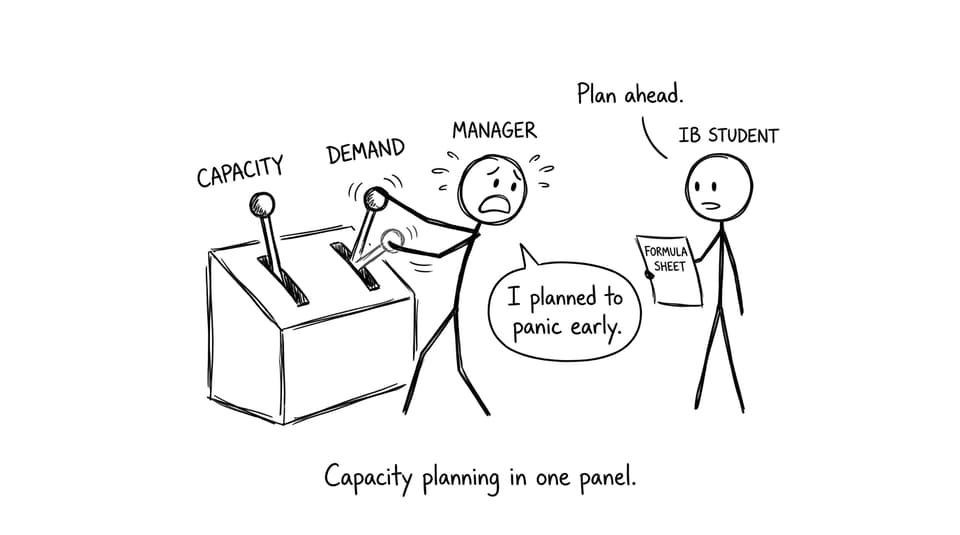
Capacity planning is the difference between “busy” and “broken.” If a business underestimates demand, it gets delays and shortages. If it overestimates demand, it wastes money on idle machines, excess labour, or unused inventory.
In IB Business Management, strong answers explain the trade-off: capacity must be high enough to meet demand, but not so high that costs explode. This is also where you can evaluate short-term fixes (overtime, outsourcing) versus long-term decisions (new equipment, new location).
For a broader view of the unit, use IB Business Management Unit 5: Operations Management.
Operations links every department
Operations doesn’t work alone. Marketing can promise fast delivery, but operations must make it real. Finance can set budgets, but operations decides how to spend them (equipment, suppliers, automation). HR can recruit great people, but operations must train and organise them.
That “whole business” perspective is central to IB Business Management. If you need a refresher on how functions connect, see Business functions notes.
How to revise operations management faster with RevisionDojo
If you want operations to feel simpler (and more scoreable), RevisionDojo is built for it:
-
Use the Questionbank for targeted practice in Unit 5: Operations Management Questionbank and 5.1 Questionbank.
-
Lock in definitions with Flashcards: 5.1 Flashcards and 5.1.1 Flashcards.
-
Build understanding step-by-step with Lessons for Unit 5.
-
When you’re ready to connect everything, start at the IB Business Management hub for Study Notes, AI Chat, Grading tools, Predicted Papers, Mock Exams, the Coursework Library, and Tutors.
Conclusion: operations management is where strategy becomes real
Operations management matters because it’s the bridge between ideas and outcomes: efficiency, quality, capacity, cost control, and continuous improvement. In IB Business Management, it’s also one of the most practical areas to revise, because every point can be explained with a clear “so what?”
If you want to turn operations theory into exam marks, use RevisionDojo’s Questionbank, Study Notes, Flashcards, AI Chat, Grading tools, Predicted Papers, Mock Exams, Coursework Library, and Tutors through the IB Business Management hub.