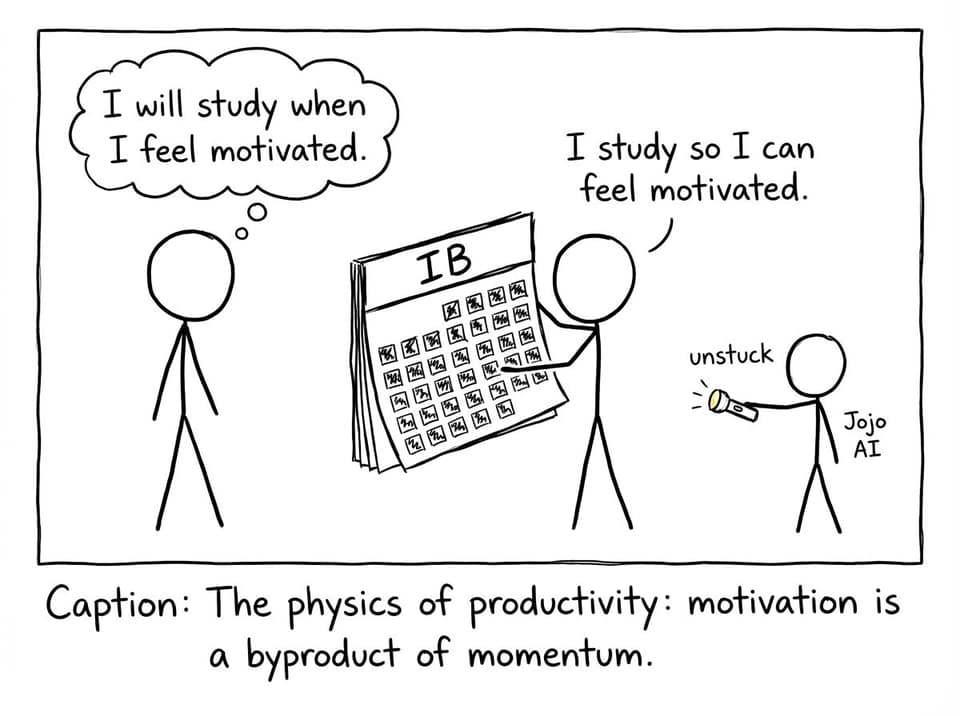

The IB motivation myth: that it should feel steady
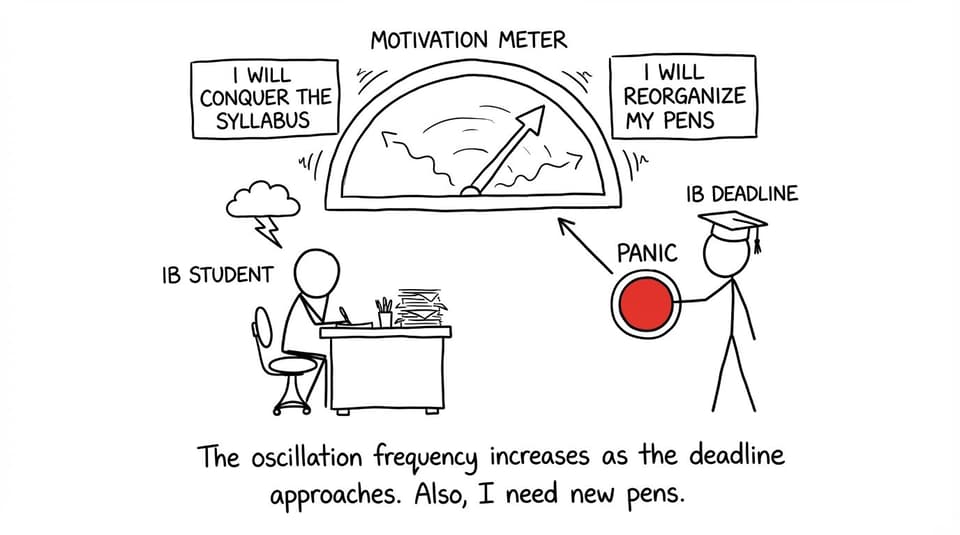
One week, you wake up and the IB feels almost elegant. Your notes are tidy, your plan is realistic, and you can picture exam day like a calm scene you are moving toward. Then, without warning, the next week you open your laptop, stare at your to-do list, and feel nothing except static.
That swing can make you question yourself: Am I disciplined enough for the IB? Do I even want this? But the truth is quieter and more useful. IB motivation is not a personality trait. It is a weather pattern. It changes with feedback, sleep, clarity, and whether your effort is producing visible progress.
If you are an IB student preparing for exams, the goal is not to "stay motivated." The goal is to build a system that still runs on the days motivation disappears.
A quick IB checklist for when motivation drops
Save this for the next time the IB feels heavy. This is the smallest reliable reset.
- Pick one IB subject and one topic.
- Set a timer for 25 minutes.
- Do active recall (questions or flashcards), not rereading.
- Record one measurable result (accuracy %, questions completed, one weak subtopic identified).
- End by choosing tomorrow's first task, so you do not renegotiate with yourself.
If you want a single place to run this loop, start with All your IB revision needs, in one place.
Why IB motivation comes and goes (it is usually logical)
IB motivation tends to fall for reasons that make sense. Your brain is not trying to sabotage you. It is trying to protect energy.
Your brain wants proof, not promises
Early in the IB, motivation is often powered by novelty and ambition. Later, it requires evidence. If you study for hours but cannot tell whether you are improving, your brain begins to treat revision as "expensive" effort.
That is why practice-first revision is so stabilizing for IB students. It produces feedback. It gives your brain proof that today mattered.
A good place to build that proof loop is the RevisionDojo Questionbank, because every session creates visible outcomes you can track: what you missed, why you missed it, and what to do next.
Decision fatigue is an underrated IB motivation killer
Six subjects means constant switching: different question styles, different command terms, different mark logic. Even choosing what to do first can drain you.
Motivation often vanishes when the next step is unclear. Not because you are lazy, but because "revise Biology" is vague and emotionally expensive. "Do 15 questions on Topic 2.3 and review mistakes" is specific and easier to start.
If you need a broader plan that removes guessing, use How to Study for IB Exams: Step-by-Step Guide.
Stress steals motivation by making effort feel pointless
IB stress does a strange thing: it makes you work while feeling like you are not moving. You reorganize notes, you highlight, you reread. It looks like study, but it does not create traction.
That is why many students feel a motivation crash right when the pressure rises. Their effort is real, but the feedback loop is missing.
If this is you, read IB stress: stay motivated without burning out.
The IB principle that changes everything: motivation follows momentum
Most people think the sequence is:
-
Feel motivated
-
Start studying
-
Make progress
In the IB, the sequence is usually the reverse:
-
Start small
-
Make progress
-
Feel motivated
Motivation often arrives late. It shows up after your brain gets evidence that the session is working.
That is why RevisionDojo is designed as a loop, not a hype machine: Study Notes for clarity, Flashcards for daily recall, Questionbank for exam-shaped practice, AI Chat when you get stuck, Grading tools for rubric feedback, Predicted Papers and Mock Exams for realism, plus a Coursework Library and Tutors when you need human support.
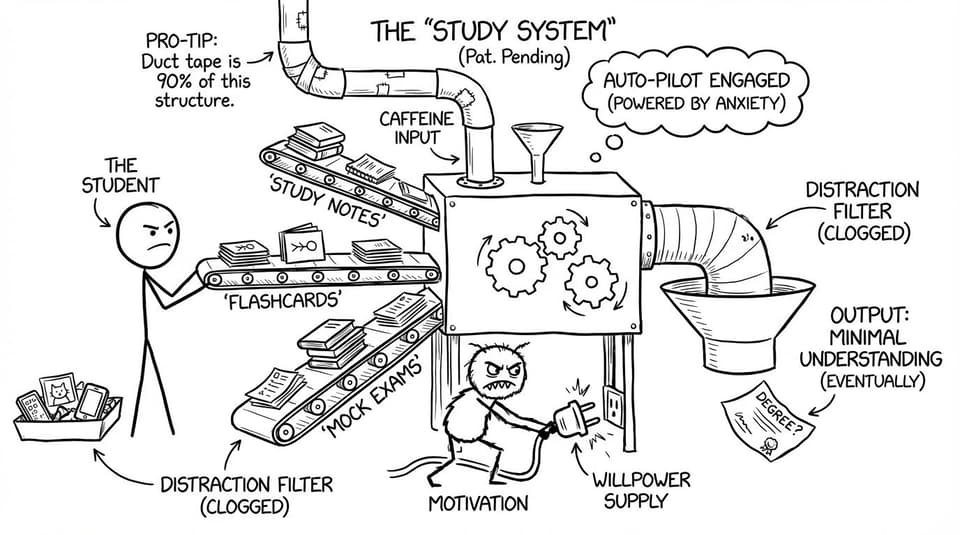
How to rebuild IB motivation using a simple feedback system
The goal is not to "study more." It is to shorten the distance between effort and feedback.
Learn fast, then test immediately (IB loves application)
If you only reread, you can feel busy without getting better. IB exams reward the ability to produce answers.
A high-ROI loop looks like this:
- Read one small section of Study Notes
- Ask yourself: "What would the IB ask me to do with this?"
- Do 10-20 questions in the Questionbank
- Review mistakes and write one "error rule" (a sentence you can reuse)
This is also why digital notes can help close to exams: fast search, fast refresh, then straight into practice. See Digital IB Study Notes: Access Anywhere, Anytime.
Make recall daily and lightweight
Motivation collapses when you believe you need a huge session to make it count. The IB punishes that belief because the course is too long.
A better approach is to treat memory like brushing your teeth: small, repeatable, non-dramatic.
Use Flashcards for 7-12 minutes a day. You are not "covering everything." You are keeping key definitions, processes, and essay evidence alive so you do not restart from zero each week.
Use "unstuck" tools to protect momentum
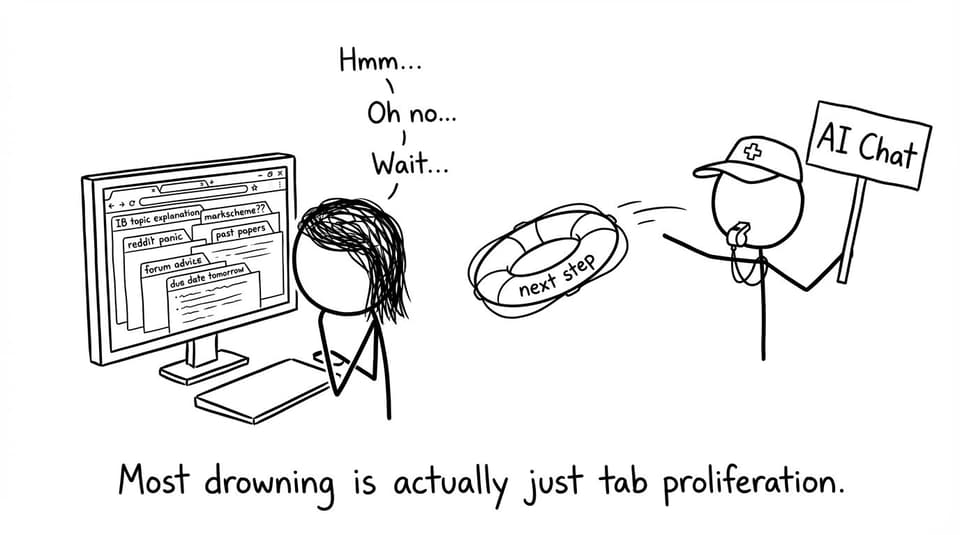
The fastest way to lose IB motivation is to hit confusion and spiral. You open tabs. You read three explanations. You feel worse.
That is why Jojo AI Chat matters in practice: it shortens confusion. It turns "I am stuck" into "here is the next step."
If you want the full workflow of how all tools connect, see RevisionDojo App: The Smarter Way to Prep for IB Exams.
Why realistic practice restores IB motivation faster than inspiration
A hidden truth about the IB is that anxiety often points to uncertainty, not weakness.
You feel unmotivated because:
- You are not sure what the exam will look like.
- You are not sure how answers are marked.
- You are not sure you can finish on time.
The fastest way to restore IB motivation is to remove that uncertainty with controlled exposure: timed practice, feedback, and repetition.
Two RevisionDojo tools are built for that:
- Mock Exams (timed practice and stamina building)
- Predicted Papers (full-paper realism and structure)
To run timed practice properly, use How to Run Timed IB Mock Exams in RevisionDojo (Exam Mode + Test Builder). And if you want an example set to explore, see IB Biology Predicted Papers.
A calm weekly rhythm for IB students (when motivation is unreliable)
Use this as a template during exam prep.
Low-friction days (4-5 days/week)
- 10 min flashcards
- 25-40 min Questionbank (one topic)
- 10 min review of mistakes + one "error rule"
High-focus days (2-3 days/week)
- 45-90 min harder content (HL problem sets, essay plans, data response)
- One timed section (Exam Mode or a mini-mock)
- Review: patterns, not just wrong answers
Reset day (1 day/week)
- Short reflection: what improved, what is still unclear
- Choose next week's 3 priority topics
If you want science-backed habits that make consistency easier, read 5 Proven IB Revision Hacks Backed by Science.
Closing: the real reason IB motivation comes and goes
IB motivation comes and goes because the diploma asks you to do something unnatural: care consistently about many hard things for a long time. You are not failing when motivation dips. You are meeting the true shape of the IB.
What matters is what you do next. Build a feedback system that works even on low-energy days: Study Notes for clarity, Flashcards for daily recall, Questionbank for exam practice, AI Chat for quick explanations, Grading tools for coursework relief, and Mock Exams plus Predicted Papers for realism. Then let momentum do what willpower cannot.
If you want the calm center of your IB revision in one place, start here: All your IB revision needs, in one place.