


Depreciation is one of those IB Business Management ideas that feels small until you see what happens without it.
Picture a café that buys a $20,000 espresso machine. In the year it’s purchased, profits suddenly look awful. The next year, profits look amazing (because the cost already “happened”). Nothing about the café’s real performance changed. Only the accounting story did.
Depreciation exists to make that story honest. In IB Business Management, it’s your bridge between real-world operations (machines wear out) and exam-world analysis (profits, asset values, decision-making).
Depreciation in IB Business Management (fast checklist)
Use depreciation to explain how businesses:
-
Match expenses to revenue over time
-
Show a more realistic profit figure in the Statement of Profit or Loss
-
Estimate the carrying/book value of non-current assets
-
Plan for replacement and budgeting
-
Improve the reliability of final accounts for stakeholders
If you want the syllabus-aligned version, start with 3.4 Final Accounts and the 3.4 Final Accounts Notes.
Why businesses use depreciation in IB Business Management
Matching costs with revenue (profit becomes meaningful)
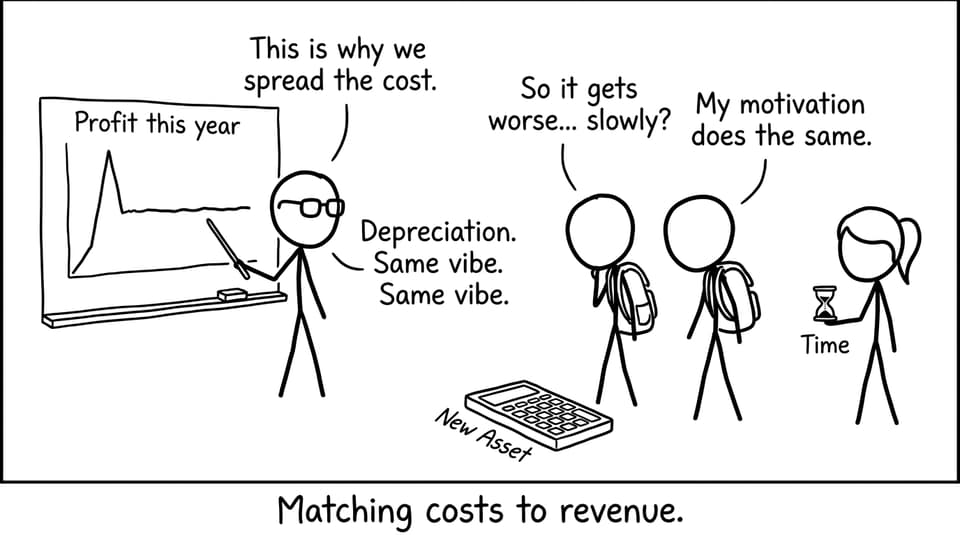
The most exam-friendly reason is the matching principle: businesses spread the cost of a long-term asset across its useful life. That way, each year records a fair share of the cost that helped generate that year’s revenue.
In IB Business Management, this is how you avoid “lumpy profits” that mislead managers and stakeholders. Depreciation makes profitability trends easier to interpret, especially when comparing periods.
To practice how this appears in exam questions, use the 3.4 Final Accounts Questionbank.
Understanding realistic asset values (not sentimental values)
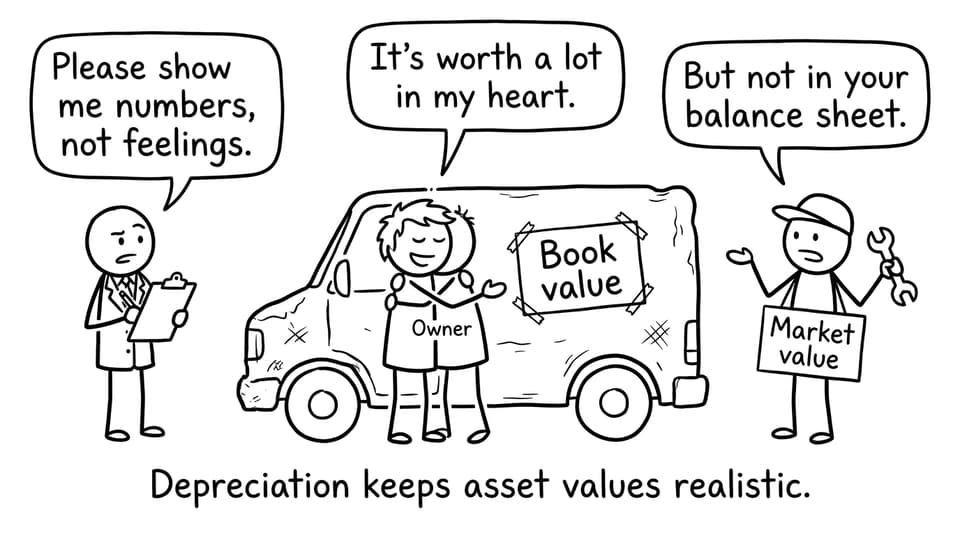
Non-current assets like machinery and vehicles typically lose value due to wear and tear, obsolescence, and time. Depreciation reduces the asset’s value on the Statement of Financial Position so the accounts don’t pretend the business still owns something “as good as new.”
That realism matters when a bank, investor, or even internal management asks, “What is the business actually worth in productive capacity?” Depreciation helps answer that in a disciplined way.
Planning replacements (and avoiding surprise costs)
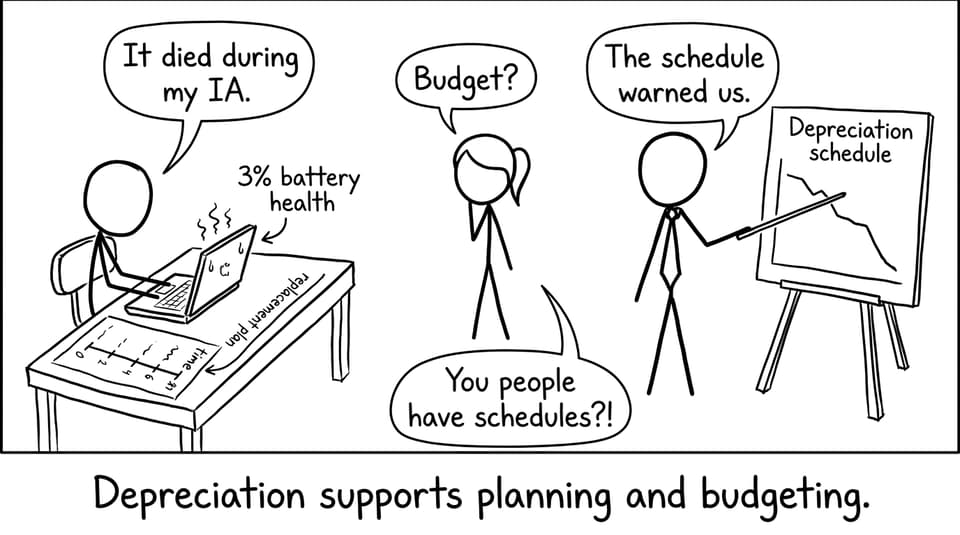
Depreciation is also a planning tool. If you know assets are being used up year by year, you can forecast when replacements or upgrades will be needed and build those into budgets.
In IB Business Management, this links nicely to operational efficiency and finance decisions: replacement timing affects cash flow, productivity, and competitiveness.
For connected revision, explore 3.8 Investment Appraisal and 3.2 Sources of Finance Questionbank.
A quick methods note (because exams love it)
Different depreciation methods change the pattern of expenses, even if the total over the asset’s life is similar.
-
Straight-line depreciation spreads the expense evenly.
-
Other methods can front-load depreciation.
If you need a clean explanation with business implications, read How Straight-Line Depreciation Helps Businesses Plan for the Future and the syllabus-specific 3.4.4 Depreciation Methods (HL).
Bring it home (and revise it the smart way)
Depreciation helps businesses understand three big truths: profit should reflect reality, assets should be valued honestly, and future spending shouldn’t be a surprise. That’s exactly why IB Business Management exam questions return to it again and again.
To lock this down quickly, use RevisionDojo’s Study Notes, Flashcards, and Questionbank, then check your written explanation with AI Chat and the Grading tools. When exam season tightens, build confidence with Mock Exams, Predicted Papers, the Coursework Library, and targeted help from Tutors on IB Business Management Resources.