


If you have ever watched a school laptop slowly become “vintage” before your eyes, you already understand the emotional side of depreciation. Businesses live with the financial version of that same reality: assets wear out, become outdated, and eventually need replacing. In IB Business Management, straight-line depreciation matters because it turns that messy reality into a calm, predictable number you can plan around.
What straight-line depreciation is (and why it shows up in IB Business Management)
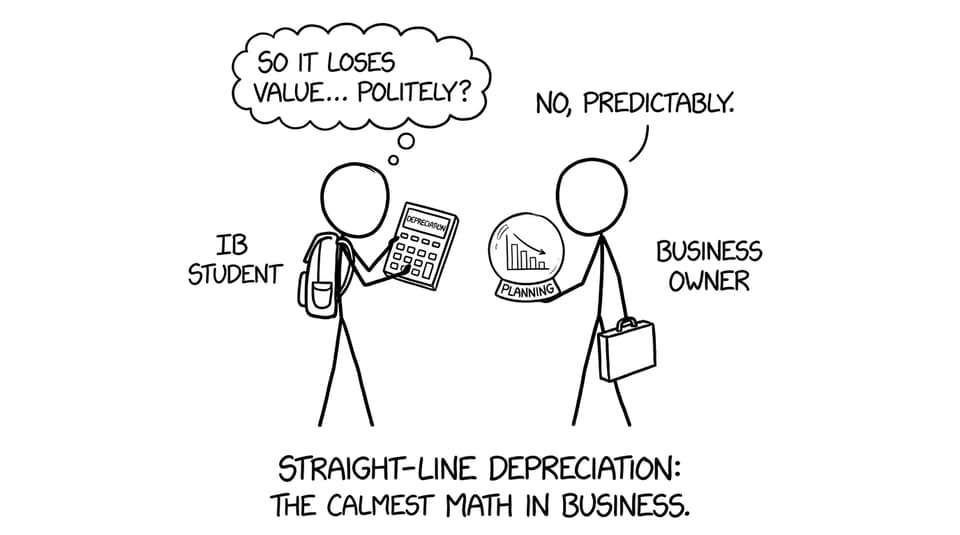
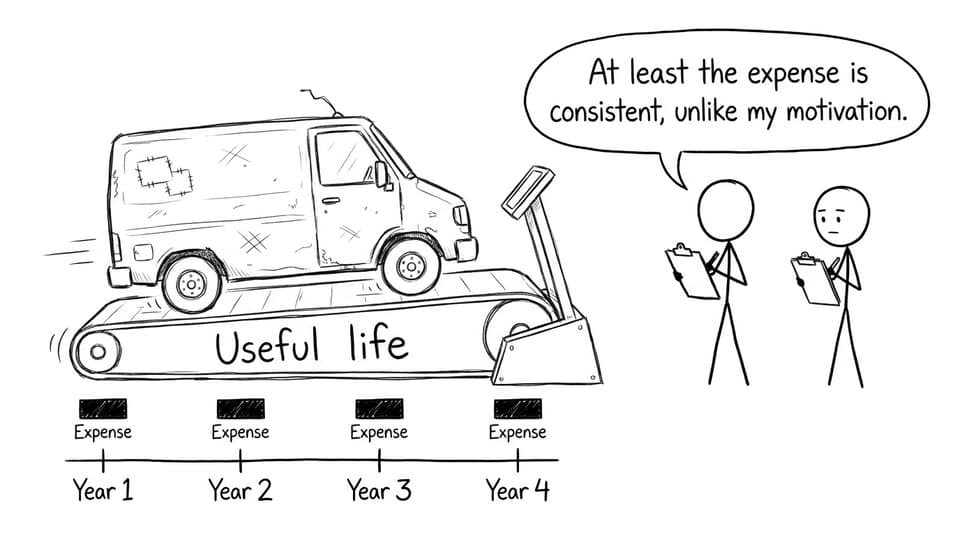
Straight-line depreciation spreads an asset’s cost evenly over its useful life. In exam terms, it is the “steady staircase” method: same depreciation expense each year.
In IB Business Management, that predictability is the point. It supports budgeting, financial reporting, and decision-making, especially when you connect depreciation to profitability, cash flow, and stakeholder confidence.
If you want the syllabus-aligned version, use RevisionDojo’s topic pages for 3.4 Final accounts and 3.4.4 Depreciation Methods (HL Only).
A quick planning checklist (exam-friendly)
When a question asks how straight-line depreciation helps businesses plan for the future, hit these points:
-
Predictable annual expenses make budgets easier.
-
Smoother profit trends support better performance analysis.
-
Replacement timing becomes clearer (useful life implies a schedule).
-
Clearer reporting improves stakeholder understanding.
-
Decision support: repair vs replace becomes easier to evaluate.
For definitions that sharpen your wording, lean on the IB Business Management glossary.
Predictability: the budgeting superpower in IB Business Management
Straight-line depreciation gives the same expense every year. That sounds boring, and that is exactly why finance teams love it.
A predictable depreciation charge helps a business plan operating budgets without sudden “accounting shocks.” In IB Business Management, you can link this directly to:
-
more stable profit figures (useful for trend analysis), and
-
easier forecasting when managers are trying to set prices, allocate resources, or justify investment.
To practice how this appears in questions, use the 3.4 Final Accounts Questionbank.
Planning replacements: turning “someday” into a timeline
Assets rarely fail at a convenient time. Straight-line depreciation forces managers to take useful life seriously, which nudges them toward a replacement plan.
Because the method assumes steady consumption of value, businesses can:
-
estimate when a machine, vehicle, or IT system is likely to be replaced, and
-
build a long-term funding habit instead of scrambling later.
In IB Business Management, this is a great place to add evaluation: straight-line works best when asset usage is fairly consistent. If usage varies a lot, another method may better match reality. RevisionDojo covers that comparison clearly in 3.4.5 Appropriateness of Depreciation Methods (HL Only).
Clear reporting: stakeholders trust what they can understand
Stakeholders like lenders and investors do not just want “good numbers.” They want numbers that are consistent and interpretable.
Straight-line depreciation produces smooth, understandable expense patterns, making year-to-year comparisons cleaner. In IB Business Management, that becomes a stakeholder argument: clearer reporting can reduce perceived risk and support access to finance.
To connect the wider finance unit, explore IB Business Management Unit 3: Financial Management.
Profit analysis (and the trap students should avoid)
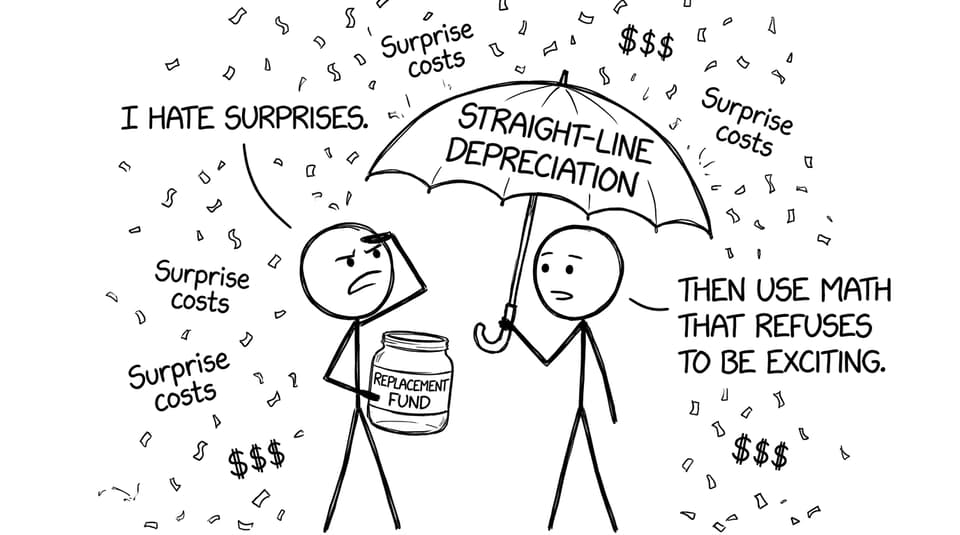
Straight-line depreciation can make profits look steadier because the expense is evenly spread. That helps managers spot real operational changes rather than noise from uneven depreciation charges.
But in IB Business Management, do not confuse profit stability with cash stability. Depreciation is a non-cash expense, so a firm can show healthy profit and still struggle to pay bills. Pair this point with RevisionDojo’s explanation of the difference between profit and cash flow, and you instantly sound more analytical.
The takeaway (and how to revise it faster)
Straight-line depreciation helps businesses plan for the future because it makes costs predictable, reporting clearer, profit analysis steadier, and replacement decisions less reactive. That is exactly why it is a core idea in IB Business Management.
To lock this in for exams, use RevisionDojo as your all-in-one toolkit: drill calculations in the Questionbank, reinforce definitions with Flashcards, clarify tricky edges with AI Chat, and sharpen exam technique using Study Notes, Grading tools, Predicted Papers, Mock Exams, the Coursework Library, and Tutors. Start with IB Business Management resources and build momentum from there.


