


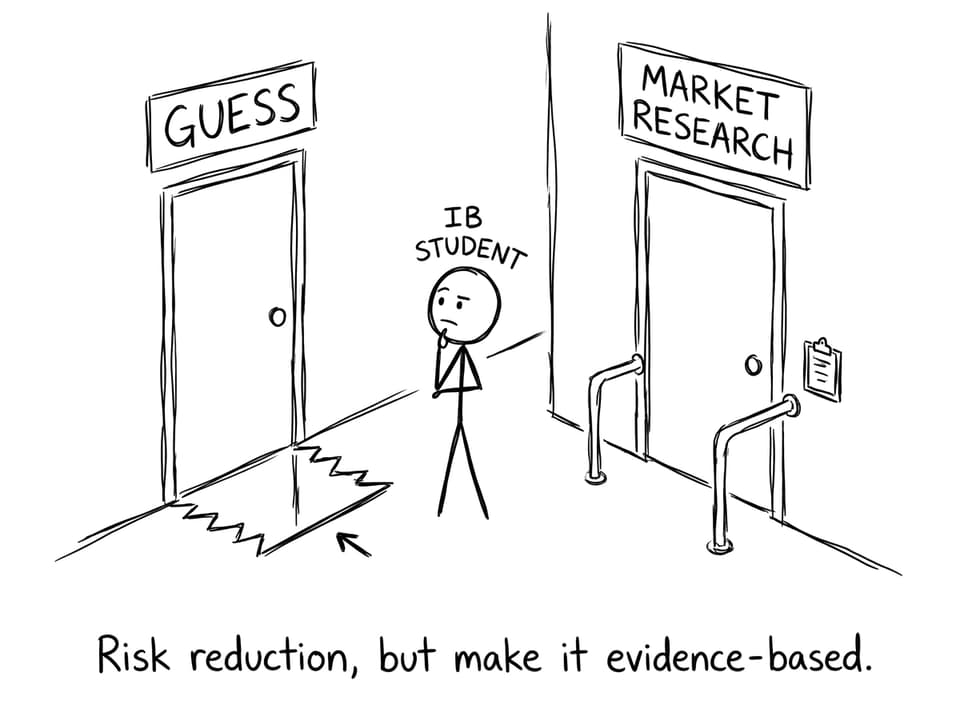
Market research is the moment a business stops guessing.
Picture a manager about to approve a product launch. The spreadsheets look tidy. The branding is polished. Everyone in the meeting room says, “I’d buy it.” And yet, somewhere outside that room, real customers might be shrugging.
In IB Business Management, this is the central tension: decisions feel confident until the market proves otherwise. Market research exists to shrink that gap between what a business believes and what customers actually do. It reduces risk by turning uncertainty into evidence you can act on.
A quick IB Business Management checklist: why firms research
Use this as a fast “Paper 1 paragraph plan” for IB Business Management:
-
Clarify customer needs (what problems matter)
-
Estimate demand (how many will buy, how often)
-
Test price sensitivity (what feels “fair”)
-
Improve promotion and messaging (what language resonates)
-
Track competitors (gaps, positioning, differentiation)
-
Support forecasting and planning (trends and seasonality)
For the full syllabus-aligned version, see IB Business Management 4.4 Market Research.
Why businesses conduct market research (and what it protects)
Understanding customers before building for them
Businesses research to avoid building a solution to a problem nobody has. In IB Business Management, this links directly to market orientation: start with customer wants, then design the offer.
When research reveals what customers value (speed, simplicity, status, sustainability), product decisions become less of a bet. If you want to connect that idea, revise Market orientation vs product orientation.
Estimating demand so resources are not wasted
Demand mistakes are expensive in both directions: overproduce and you tie cash up in unsold stock; underproduce and you lose sales and reputation. Market research helps firms approximate market size, target segment behavior, and likely adoption rates.
In exam terms, you can frame this as reduced operational and financial risk, especially when linked to planning tools in Marketing planning notes.
Strengthening marketing communication so spending is efficient
Promotion is where money evaporates quietly. Research helps businesses learn which messages customers remember, which channels they trust, and what tone fits the brand.
If you want a broader refresher that pairs well with this, read IB Business Management: Why Marketing Matters.
How market research reduces risk in IB Business Management
It replaces “confidence” with evidence
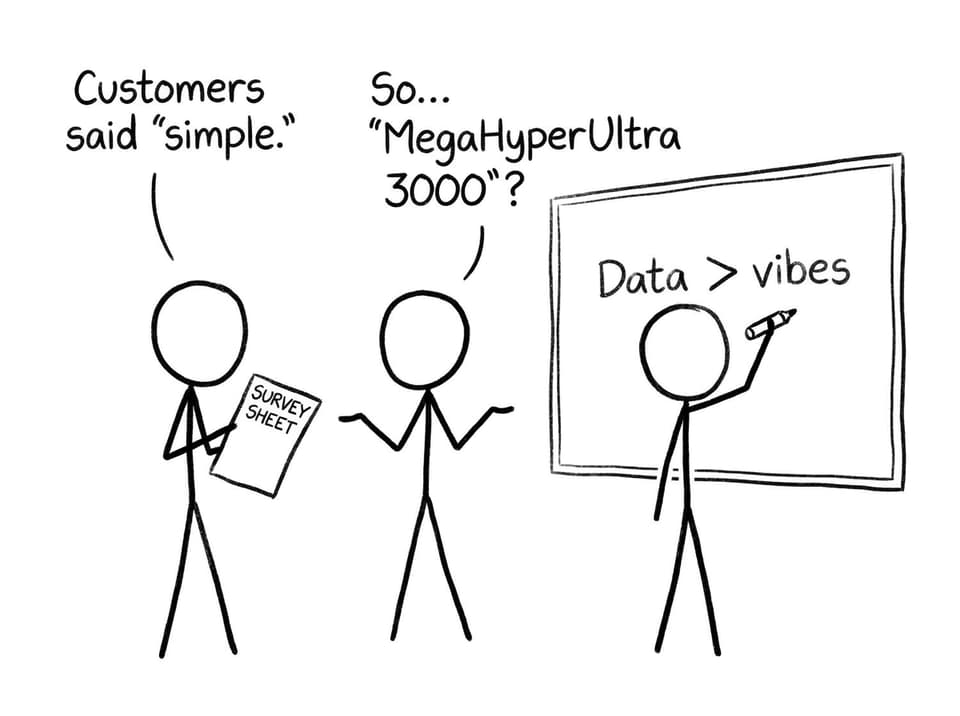
A team can be extremely confident and still be wrong. Research reduces risk by checking assumptions against real data: surveys, interviews, focus groups, observation, and test marketing.
To revise the methods clearly, use Primary vs secondary research explained.
It reveals competitor realities (without the drama)
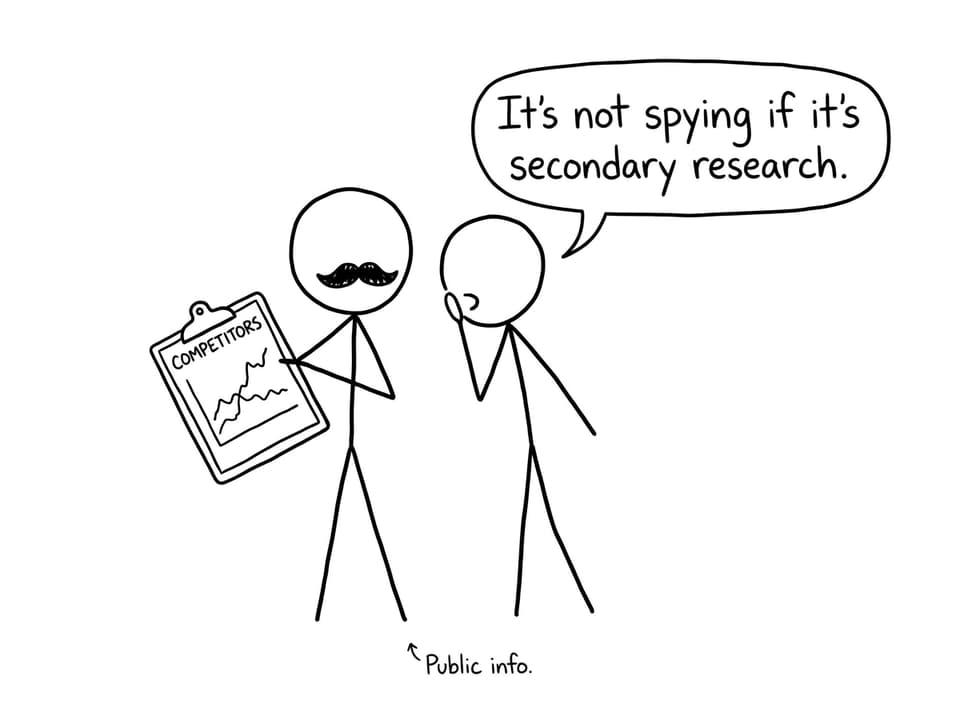
Competitors set reference prices, shape customer expectations, and occupy positions in the market map. Secondary research can reveal their features, pricing, and messaging, helping a business differentiate rather than imitate.
For unit context, explore IB Business Management Unit 4: Marketing Management and build links to the 7Ps and positioning.
It improves forecasts and lowers decision error
Research feeds forecasting by identifying patterns: seasonality, emerging needs, and shifts in preferences. Better forecasts reduce the risk of poor capacity decisions, cash-flow strain, and rushed strategy changes.
For practice that feels like the exam, drill this with 4.4 Market Research Questionbank.
Bring it home: turn market research into exam marks
In IB Business Management, market research is more than a definition; it’s a logic for safer decisions. When you write about research, always connect it to what risk is reduced (wasted spending, wrong target market, mispricing, weak positioning) and how the data changes the decision.
To train that skill quickly, use the IB Business Management resources hub to combine Study Notes, Flashcards, and the Questionbank. Then tighten your explanations with AI Chat, check exam technique with Grading tools, and simulate pressure using Predicted Papers and Mock Exams. If you want examples for coursework-style thinking, the Coursework Library helps, and Tutors can turn your rough paragraphs into examiner-ready structure.
When you’re ready, revise IB Business Management market research one more time, then go practise it, because evidence only reduces risk if you actually use it.