A business rarely fails because it didn’t try. It fails because it tried with the wrong information.
In IB Business Management, market research is one of those topics that feels simple until the exam asks: Which method should this business use, and why? The difference between primary and secondary research isn’t just a definition to memorize. It’s a decision about time, cost, accuracy, and risk.
Quick checklist: choosing the right research method
Use this in IB Business Management responses to show judgment:
-
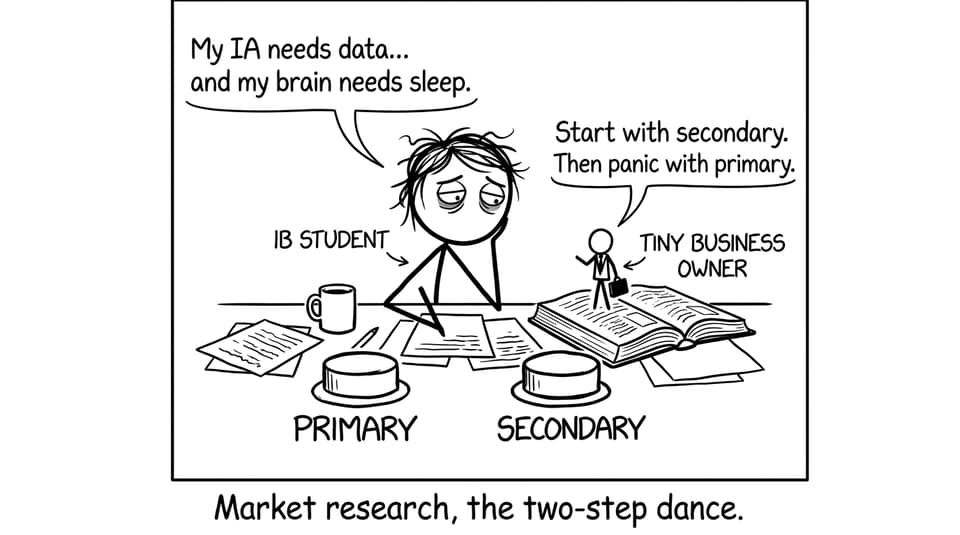
Start broad: Use secondary research to understand the market and competitors.
-
Go specific: Use primary research to answer the business’s exact question.
-
Match to constraints: Consider budget, time, and access to customers.
-
Reduce risk: Combine both when stakes are high (new product, new market).
For syllabus-aligned coverage, anchor your revision in 4.4 Market research and then drill the two methods separately.
What is primary research in IB Business Management?
Primary research is new, firsthand data collected directly from customers or potential customers. In IB Business Management, examiners love when you name a method and link it to the case study.
Common primary research methods include:
-
Surveys and questionnaires
-
Interviews
-
Focus groups
-
Observation
-
Product trials and test marketing
The big strength is relevance. If a business needs feedback on this packaging, this price, or this feature, primary research can be designed to fit.
If you want a tight list of methods with exam wording, revise 4.4.2 Methods of primary market research and the supporting primary research notes.
When should businesses use primary research?
Businesses use primary research when they need precise answers. For example:
-
Launching a new product and testing customer reactions
-
Entering a new market and checking local preferences
-
Finding the best price point for a specific target segment
The trade-off is that primary research can be slow and expensive, especially if the sample must be large or carefully targeted.
What is secondary research in IB Business Management?
Secondary research uses existing data that someone else has already collected. Think of it as the “zoom out” method in IB Business Management.
Typical sources include:
-
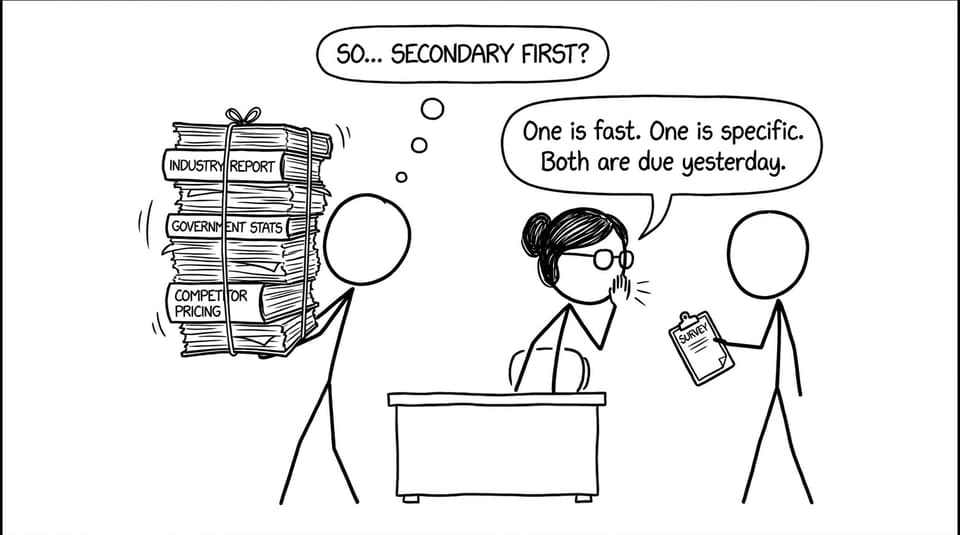
Government statistics
-
Industry reports
-
Academic studies
-
News articles
-
Competitor websites and published prices
-
Online databases
Secondary research is usually faster and cheaper. It can also help a business spot trends before spending money collecting new data.
To revise it cleanly, use 4.4.3 Methods of secondary market research and the matching secondary research notes.
When should businesses use secondary research?
Businesses use secondary research when they need background and context, such as:
-
Estimating market size and growth
-
Comparing competitor pricing strategies
-
Understanding demographic patterns before choosing a location
The weakness is fit. Secondary data might be outdated, too general, or collected for a different purpose, which can lead to shaky conclusions.
The best exam answer: use both, in the right order
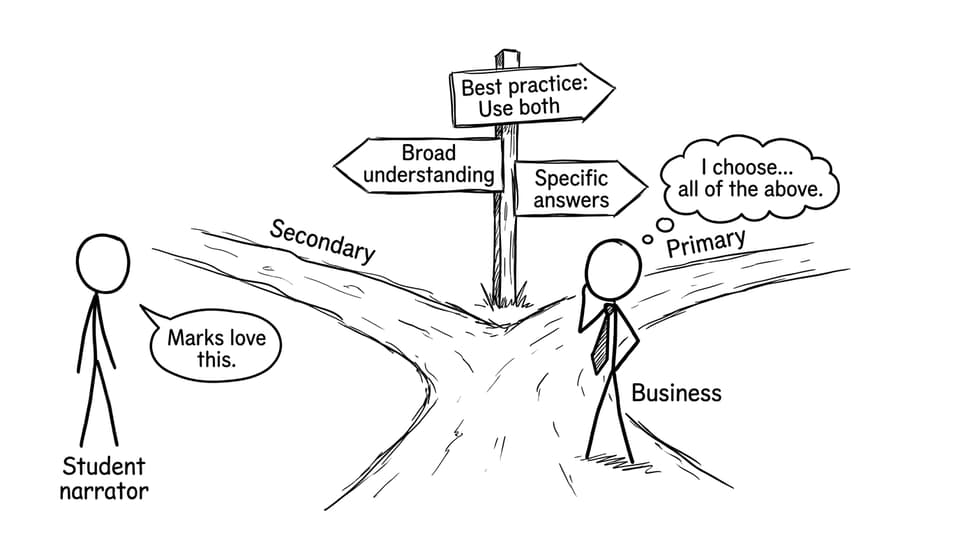
A high-mark IB Business Management response often says: start with secondary research to understand the market, then use primary research to fill gaps.
A business might read industry reports first, then run a small survey to test whether the trend actually applies to its target audience. That sequencing reduces risk while controlling cost.
To connect research to decisions, link it to marketing choices like product, price, and promotion. This pairs well with how the marketing mix creates value and the wider marketing unit hub: Unit 4: Marketing Management.
Conclusion: turn research into marks
Primary research gives depth. Secondary research gives breadth. In IB Business Management, the best answers explain which type fits the decision, why it reduces risk, and what the limitations are.
When you want to revise this fast, use RevisionDojo as your basecamp: syllabus-aligned Study Notes, rapid Flashcards, exam-style Questionbank practice, and AI Chat when a definition won’t stick. Then tighten your exam technique with Grading tools, Mock Exams, Predicted Papers, the Coursework Library, and Tutors when you need that final layer of confidence.
Keep it simple in the exam: secondary first to map the landscape, primary next to test the business’s exact question. That’s how research becomes strategy, and strategy becomes marks.

